I am your innocence Bring the broken bones Wrapped in woven sack Tied then opened Released and spread out
Assembled they are a body For you to collect again To gather and place back in woven sack
Placed on shelf Amongst the past Awaiting to be opened In candle light
The footsteps at the door The handle slowly turns Take me to your factory Spread me on the floor Tell me you understand For I am nothing but your innocence I have nothing left to hide
Geomorphology is the captivating scientific exploration of Earth’s diverse landforms and the dynamic forces that sculpt them over time. Geomorphologists strive to unravel the mysteries behind the landscapes we observe today—deciphering their origins, unraveling their evolutionary history, and forecasting how they might transform in the future. This intricate pursuit blends meticulous field observations, innovative physical experiments, and sophisticated numerical modeling to reveal the complex interplay of natural processes shaping our planet’s surface.
Rooted at the crossroads of physical geography, geology, geodesy, engineering geology, archaeology, and geotechnical engineering, geomorphology draws from a rich tapestry of disciplines. This multidisciplinary foundation fuels a vibrant spectrum of research approaches and perspectives, enriching our understanding of Earth’s ever-changing terrain.
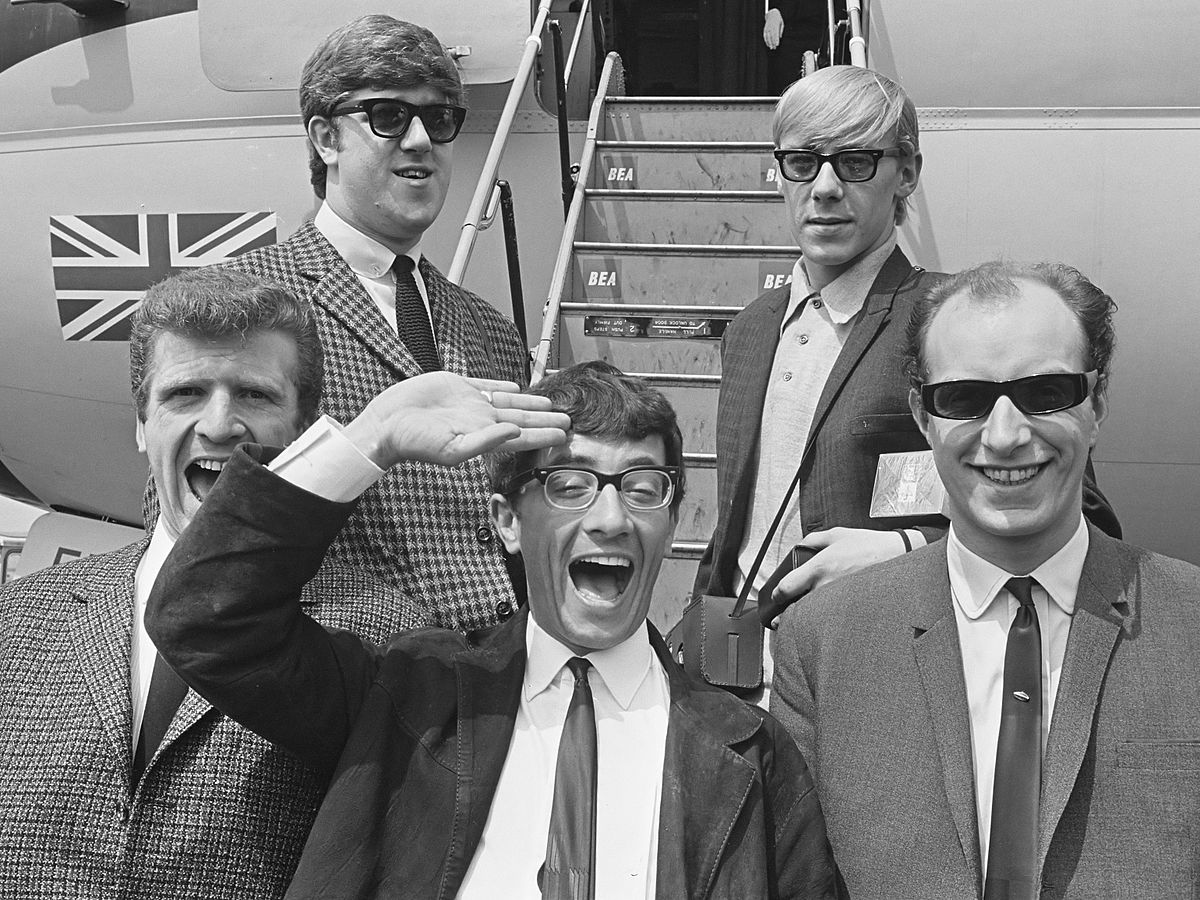
Freddie and the Dreamers were an English band famous for their string of hits between May 1963 and November 1965. Their secret weapon? The comic chaos of lead singer Freddie Garrity—just 5-foot-3 but bouncing wildly across the stage, arms and legs flailing in full showman mode.
Their biggest hit, If You Gotta Make a Fool of Somebody (1963), climbed to number 3 in the UK charts. But at the same time, another “Freddie” — were dreaming up a far darker hit. A tune that would take nearly 50 years to explode: the 2007 global financial meltdown. This crisis threw millions out of work and wreaked irreversible damage on economies and lives worldwide. Enter the University of Freiburg, a European research hub where Freddie (Friedrich) August Hayek began shaping his neoliberal economic theories.
By 1984, Hayek had been honoured by Queen Elizabeth II, on Margaret Thatcher’s recommendation, for his “services to economics.” The U.S. followed suit, awarding him the Presidential Medal of Freedom. Revered by followers as one of the greatest modern economic thinkers, Hayek left a deep ideological footprint.
In his essay Why I Am Not a Conservative, Hayek slammed traditional ‘one nation’ conservatism. Post-WWII, this moderate wing embraced social consensus on issues like employment and housing. But Hayek dismissed it, warning, “conservatism is only as good as what it conserves.” His message was a call to shake up centre-right parties and reject old compromises.
Once a leftist, Hayek now fiercely opposed government economic planning as a threat to freedom and a barrier to free markets. In 1974, the Centre for Policy Studies was founded by Sir Keith Joseph and Margaret Thatcher to promote his free-market ideas—the birth of neoliberal politics, with Hayek as its first director.
In 1975, during a visit to the Conservative Research Department, Thatcher stunned party aides by slamming Hayek’s Constitution and Liberty on the table, declaring, “This is what we believe in.” Sir Keith Joseph later admitted he only fully embraced Conservatism after 1974, acknowledging the profound shift underway.
Over the next decade, ‘one nation’ conservatives were sidelined, replaced by Thatcher’s hardline neoliberals. Even when Michael Heseltine helped end Thatcher’s reign, the damage was done—a quiet Conservative coup with consequences far beyond party politics.
Across the Atlantic, Hayek’s influence took hold at the University of Chicago (1950-62), alongside economists like Robert Fogel and Milton Friedman. Fogel infamously argued that slave owners treated slavery as business and slaves were better off than northern industrial workers—a controversial, cold calculation based on plantation records.
Friedman advised Reagan and Thatcher, and even Chile’s brutal dictator Augusto Pinochet, whose regime tortured and killed thousands.
Together, Hayek, Fogel, and Friedman forged the backbone of neoliberal policies in the UK and USA post-1979. Their obsession with unregulated markets is summed up by Hayek’s chilling claim: “free choice is to be exercised more in the marketplace than in the ballot box.” For him, markets trumped democracy.
This toxic trio’s dogma ignored the realities of everyday life, laying the groundwork for today’s economic chaos—deregulated banks and stock markets running wild, greed supplanting productive industry, replaced by complex financial derivatives that serve only the wealthy elite.
When disaster struck, governments flung open the doors to bail out the rich—an obscure form of socialism for the privileged few—while workers faced global competition and widening inequality.
The UK’s “Big Bang” on October 27, 1986, symbolized this shift: deregulating financial markets, abolishing fixed commissions, and unleashing new financial products. Money flowed freely—home loans, credit, refinancing—but the nation stopped making things. Public assets were sold off in privatizations, effectively selling what we already owned back to us.
The 2011 U.S. Senate Levin-Coburn Report blamed the 2007 crash on risky financial products, conflicts of interest, and regulatory failure. Yet no government dared challenge the neoliberal orthodoxy laid down by Hayek, Friedman, and Fogel. Even Labour under Tony Blair embraced it, championing the same market-driven framework.
That worked—until the money ran out.
Now, as we face a new dawn, the question is: can we break free from this cycle? Can we truly change the rules instead of remixing the old hits? Because no one needs another version of If You Gotta Make a Fool of Somebody blaring through the modern day X Factor of economic folly.
Amazing reds and yellows merge with satin black to make such a beautiful camouflage. To conceal, disguise and yes deceive, although without malice intent but survival in mind, for the butterfly life is short.
How can something so beautiful, so bold be so delicate as butterfly wings? Becoming disabled and unable to rejoice in the freedom of clear blue skies when touched by my mere human hands.
Drawn by a naked flame, captured in their beauty, distant within their vulnerability. Hidden beneath your camouflaged heart, I find your butterfly wings. Enslaved within a prism, darkened by a reluctant essence.
Your buttery wings when open display a world so fragile and innocent, when closed they attempt to conecl your natural wonder, beauty, your inherent power.
While walking along unblemished river banks, drifting through feral grass from the corner of my eyes, I see your butterfly wings. Gently they glide, hovering, capturing sunbeams and occasionally stopping to rest and gather valuable energy from wildflowers.
Then gone.
Leaving only flighting memory.
A moment captured in time.
Now so different.
As winter exhales her chilly breath.
No fantastic reds and yellows merge with satin black.
On these insular riverbanks, I await a warm breeze.
Blue skies.
Chrysalis Birth.
Your butterfly wings.


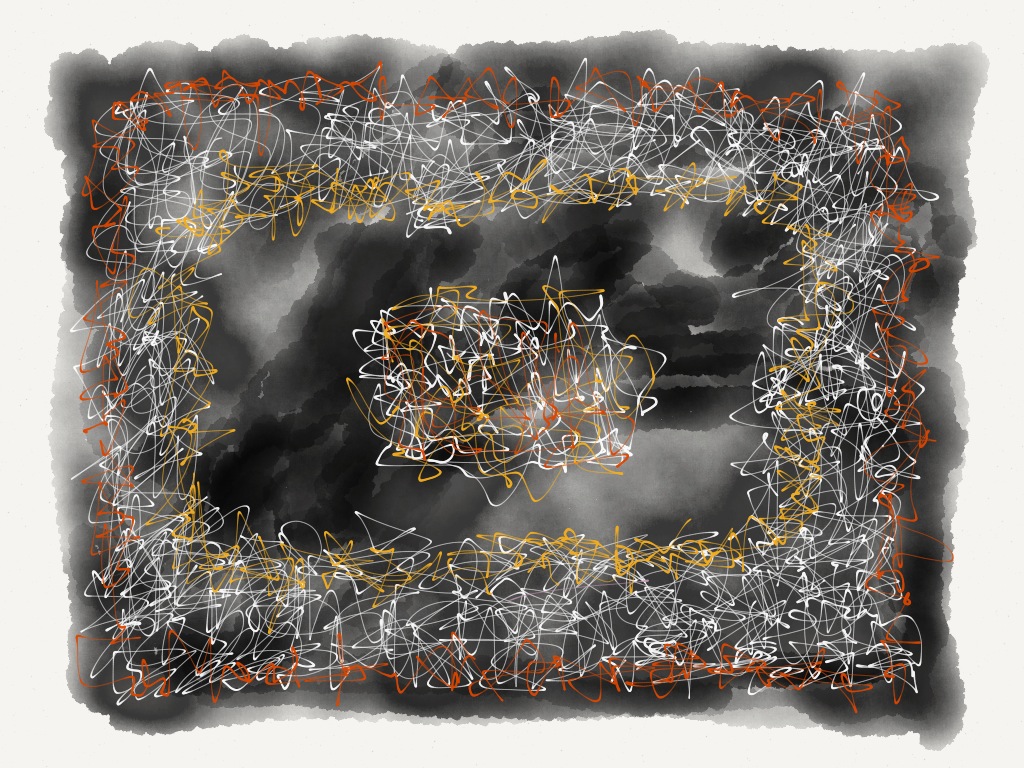
 So colourful.
 Irregular Frequencies