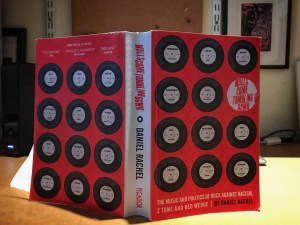
By Daniel Rachel
Some books do more than recount history — they revive the pulse of an era. Daniel Rachel’s Walls Come Tumbling Down is one such work: a sprawling 500-page testament to the intertwined music and politics of Rock Against Racism, 2 Tone, and Red Wedge, charting a turbulent but transformative period from the mid-1970s to the early 1990s.
For me, these were not just historical movements. They formed the soundtrack to my own coming of age, shaping me from child to adult, both musically and professionally. Rock Against Racism sparked my political awareness; Red Wedge made me an active participant. Rachel captures this journey in a meticulously structured, linear timeline — part oral history, part cultural encyclopedia — that documents the key figures and pivotal events with the weight they deserve.
Reading it in today’s context, I could not help but draw parallels to the energy and urgency of Black Lives Matter. While much has changed since the overtly racist culture of the 1970s — a time when prejudice was not only tolerated but celebrated — the persistence of hate, both on the streets and in the shadows of social media, reminds us that progress is fragile.
Rachel’s book lands at a time when cities still reel from racially-motivated violence, when online platforms amplify ignorance, and when political leaders rely on fear and slogans to paper over complex truths. Walls Come Tumbling Down is not just a chronicle of past activism; it is a mirror held to the present, asking uncomfortable but necessary questions about who we are and what we stand for.
In the end, Rachel reminds us that while good intentions can inspire, only action changes the world. The music may have been the rallying cry, but it was — and remains — the movement behind it that matters most.
 Irregular Frequencies