I took some time out to read the Gender Wage Gap briefing by the Institute for Fiscal Studies, which was reported in the press today. One of the most striking observations in the report, which I came across but failed to get any reporting or comment by those lazy politicians who jump on headlines was the following remark,
“Looking at women who leave paid work, hourly wages for those who subsequently return are, on average, about 2% lower for each year that they have taken out of employment in the interim. This relationship is stronger, at 4% per year, for women with at least A-level qualifications. We do not see such a relationship for the lowest-educated women, which is likely because they have less wage progression to miss out on or fewer skills to depreciate.”
The concept of anybody being paid less simply because of their gender is just fundamentally wrong, but there is also an elephant in the room called class but let’s be honest it’s not fashionable to mention that.
One would think that such a momentous issue as the European Union referendum in the UK, would infect a nation into a lively and confident debate. In contrast to the Scotish Independence debate, we witnessed south of the border what we are currently witnessing is nothing short of a kindergarten dispute founded on scare mongering and ludicrous claim after ludicrous claim. Bogeymen are paraded by the Out Campaigners, unnamed bureaucrats wanting to control the shape of bananas, the international conspiracy of benefit seekers attacking the white cliffs of Dover. Our very own tuppence ha’penny Churchill wannabe Boris Johnson leading the Out Campaign even managed to dig up the premier league of bogeymen Adolf Hitler, which made him sound like an archaic outtake from a 1970s BBC sitcom, which failed to be recommissioned after its pilot series. Meanwhile, the Remain Campaign produce dense technical reports setting out their assumption of an economic shock if we were to leave the EU, house prices to crumble, the cost of food to escalate, jobs to be lost. These reports contain detailed graphs showing how the economy will fall off a cliff edge like an army of lemmings. Not to mention the threat of World War 3 and the suggestion that the leader of IsIs is a supporter of the Leave Campaign.
The nature of the in-out debate is a reflection of the health of our democracy, and ultimately nobody is more responsible for the infantile status of this discussion than people like us. We have over the past few decades distanced ourselves from the democratic and political process and increasingly became casual observers like transfixed children watching a Punch and Judy Show from behind a soundproof window called a Television. Our political process is no longer about the use of power and accountability, but soundbite and spin. A process that may require an occasional change of actors, but the script remains the same.
Complex issues and political choices are simply not the domain of 140 words scrambled together in a tweet. They require information, careful deliberation, and the mutual exchange of ideas before forming a decision. But this is incredibility difficult in an environment where politicians, through their irresponsibility, have allowed their important role in our democratic fabric to be vilified. Powerful concepts like equality, rights, and equity have been spun out of our political language and replaced with passive surrogates like fairness, choice and opportunity that are constantly regurgitated and repackaged. Those elected to provide vision and enthuse engagement are acting like middle managers more preoccupied with process rather than building bridges, sharing honest information and working alongside communities to shape solutions. Their primary game is the maintenance of tribal power and the avoidance of accountability, ensuring the average looks better than what it actually is and ensuring blame sits elsewhere.
There is little doubt that the EU institutions are inaccessible and the warbling defence of them by the Remain Campaign is rather pitiful in the same way the Out Campaigners claim the UK parliament is a holy grail of democracy, which it is not. Remember it was the UK government that has taken us into one disastrous war after another in recent history. The Lords remains entirely unelected. Some local councils have a mandate of less than 25%. Only 66% of people eligible to vote bother to do so at general elections. The current UK government was only elected on 36% of those who actually voted. There is the banal talk of ‘voter apathy’ in an attempt to divert responsibility from the established political elite, but they fail to realise that through this lazy analysis that they are part of the problem.
The ugly side of the Little Britain caricature is no more prevalent than when the issue of migration is brought into a debate. There are many good politicians out there, but they do not seem to have the confidence to navigate such a sensitive issue with fear of being labelled racist. The movement of people across the globe is a result of political, economic and environmental instability. If we are truly interested in tackling the issue then we do so by understanding the problem and not demonising those who seek stability from conflicts we often instigate, support or finance. Human beings deserve much better than being left to the cut-throat pirates who trade on their misery through illegal smuggling. These concerns can only be resolved through increased international cooperation rather than less.
To support continued membership of international and cross-border bodies is not defacto support for the culture and purpose of the existing institutions. Those making the case for the UK to leave on the basis the EU is a relic of the past do not seem to be making the same case for the UK to leave NATO. The UK, of course, has the potential to be an economic island throwing out trade agreements across a global free market economy. As an internationalist it’s not the vision I’m interested in, I will be voting remain. I want to see increased integration across Europe, socially, culturally and politically. I do not fear the free flow of labour no more than the free movement of capital.
During the fierce and unforgettable miners’ strikes of the 1980s, I stood alongside the brave families and communities who bore the weight of struggle and sacrifice. I poured my heart into raising funds to support those who refused to be broken, those whose courage echoed through every pit and every home. My solidarity was with the proud men and women of Dawdon Colliery — a place steeped in history and resilience.
Dawdon was no ordinary pit. Born from the vision of the Marquess of Londonderry in the late 19th century, it grew to become a powerhouse of coal production, a lifeblood for generations of families, and a shining jewel in the crown of both the Londonderry legacy and later the National Coal Board. Yet, despite its glory and the sweat of countless pit men, Dawdon was ruthlessly closed in July 1991, crushed under Margaret Thatcher’s relentless campaign to dismantle mining communities.
Today, I remember the pit men and boys who gave everything — some paid with their very lives — at Dawdon Colliery. Their names, their ages, their sacrifices are etched in my heart. To them, and to the communities that still carry their spirit, my thoughts burn with respect, sorrow, and unwavering solidarity. You are not forgotten.
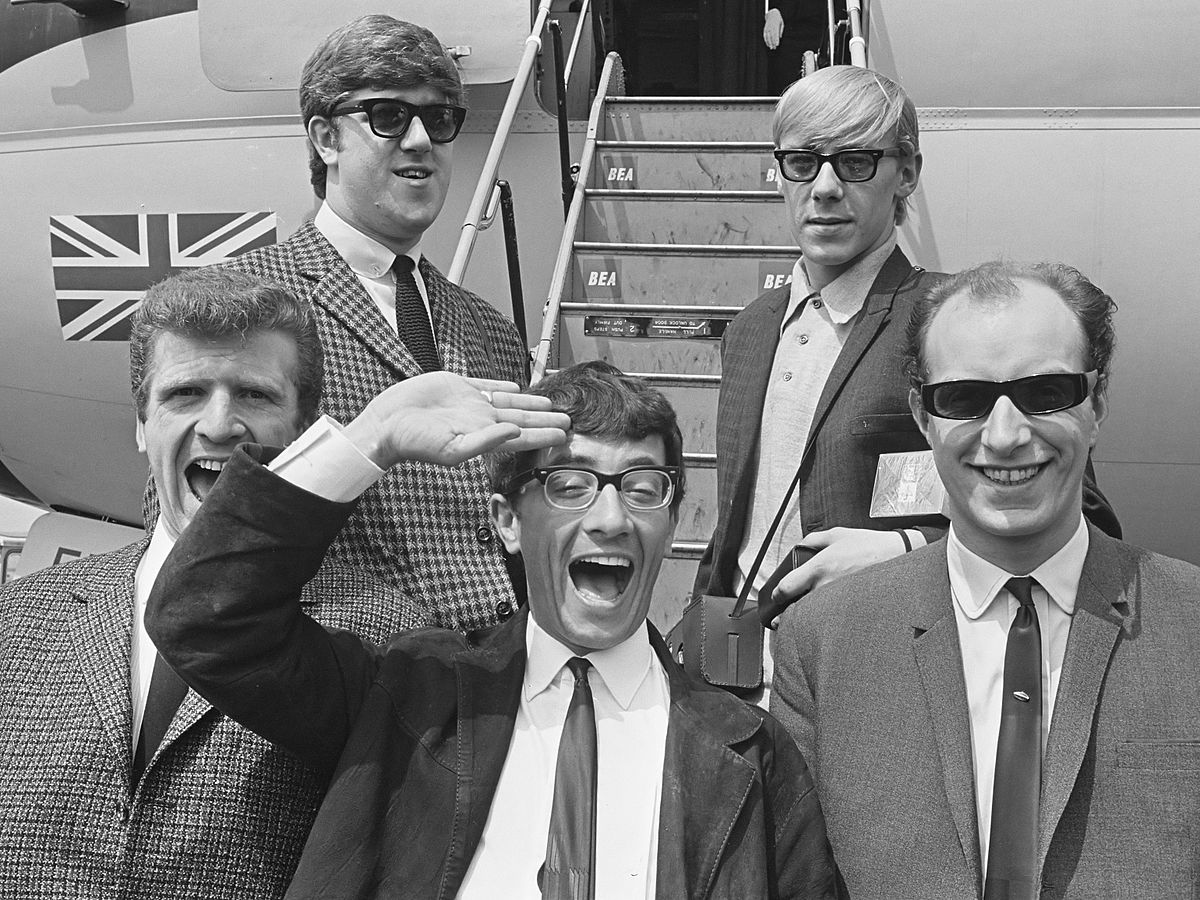
Freddie and the Dreamers were an English band famous for their string of hits between May 1963 and November 1965. Their secret weapon? The comic chaos of lead singer Freddie Garrity—just 5-foot-3 but bouncing wildly across the stage, arms and legs flailing in full showman mode.
Their biggest hit, If You Gotta Make a Fool of Somebody (1963), climbed to number 3 in the UK charts. But at the same time, another “Freddie” — were dreaming up a far darker hit. A tune that would take nearly 50 years to explode: the 2007 global financial meltdown. This crisis threw millions out of work and wreaked irreversible damage on economies and lives worldwide. Enter the University of Freiburg, a European research hub where Freddie (Friedrich) August Hayek began shaping his neoliberal economic theories.
By 1984, Hayek had been honoured by Queen Elizabeth II, on Margaret Thatcher’s recommendation, for his “services to economics.” The U.S. followed suit, awarding him the Presidential Medal of Freedom. Revered by followers as one of the greatest modern economic thinkers, Hayek left a deep ideological footprint.
In his essay Why I Am Not a Conservative, Hayek slammed traditional ‘one nation’ conservatism. Post-WWII, this moderate wing embraced social consensus on issues like employment and housing. But Hayek dismissed it, warning, “conservatism is only as good as what it conserves.” His message was a call to shake up centre-right parties and reject old compromises.
Once a leftist, Hayek now fiercely opposed government economic planning as a threat to freedom and a barrier to free markets. In 1974, the Centre for Policy Studies was founded by Sir Keith Joseph and Margaret Thatcher to promote his free-market ideas—the birth of neoliberal politics, with Hayek as its first director.
In 1975, during a visit to the Conservative Research Department, Thatcher stunned party aides by slamming Hayek’s Constitution and Liberty on the table, declaring, “This is what we believe in.” Sir Keith Joseph later admitted he only fully embraced Conservatism after 1974, acknowledging the profound shift underway.
Over the next decade, ‘one nation’ conservatives were sidelined, replaced by Thatcher’s hardline neoliberals. Even when Michael Heseltine helped end Thatcher’s reign, the damage was done—a quiet Conservative coup with consequences far beyond party politics.
Across the Atlantic, Hayek’s influence took hold at the University of Chicago (1950-62), alongside economists like Robert Fogel and Milton Friedman. Fogel infamously argued that slave owners treated slavery as business and slaves were better off than northern industrial workers—a controversial, cold calculation based on plantation records.
Friedman advised Reagan and Thatcher, and even Chile’s brutal dictator Augusto Pinochet, whose regime tortured and killed thousands.
Together, Hayek, Fogel, and Friedman forged the backbone of neoliberal policies in the UK and USA post-1979. Their obsession with unregulated markets is summed up by Hayek’s chilling claim: “free choice is to be exercised more in the marketplace than in the ballot box.” For him, markets trumped democracy.
This toxic trio’s dogma ignored the realities of everyday life, laying the groundwork for today’s economic chaos—deregulated banks and stock markets running wild, greed supplanting productive industry, replaced by complex financial derivatives that serve only the wealthy elite.
When disaster struck, governments flung open the doors to bail out the rich—an obscure form of socialism for the privileged few—while workers faced global competition and widening inequality.
The UK’s “Big Bang” on October 27, 1986, symbolized this shift: deregulating financial markets, abolishing fixed commissions, and unleashing new financial products. Money flowed freely—home loans, credit, refinancing—but the nation stopped making things. Public assets were sold off in privatizations, effectively selling what we already owned back to us.
The 2011 U.S. Senate Levin-Coburn Report blamed the 2007 crash on risky financial products, conflicts of interest, and regulatory failure. Yet no government dared challenge the neoliberal orthodoxy laid down by Hayek, Friedman, and Fogel. Even Labour under Tony Blair embraced it, championing the same market-driven framework.
That worked—until the money ran out.
Now, as we face a new dawn, the question is: can we break free from this cycle? Can we truly change the rules instead of remixing the old hits? Because no one needs another version of If You Gotta Make a Fool of Somebody blaring through the modern day X Factor of economic folly.
 I took some time out to read the Gender Wage Gap briefing by the Institute for Fiscal Studies, which was reported in the press today. One of the most striking observations in the report, which I came across but failed to get any reporting or comment by those lazy politicians who jump on headlines was the following remark,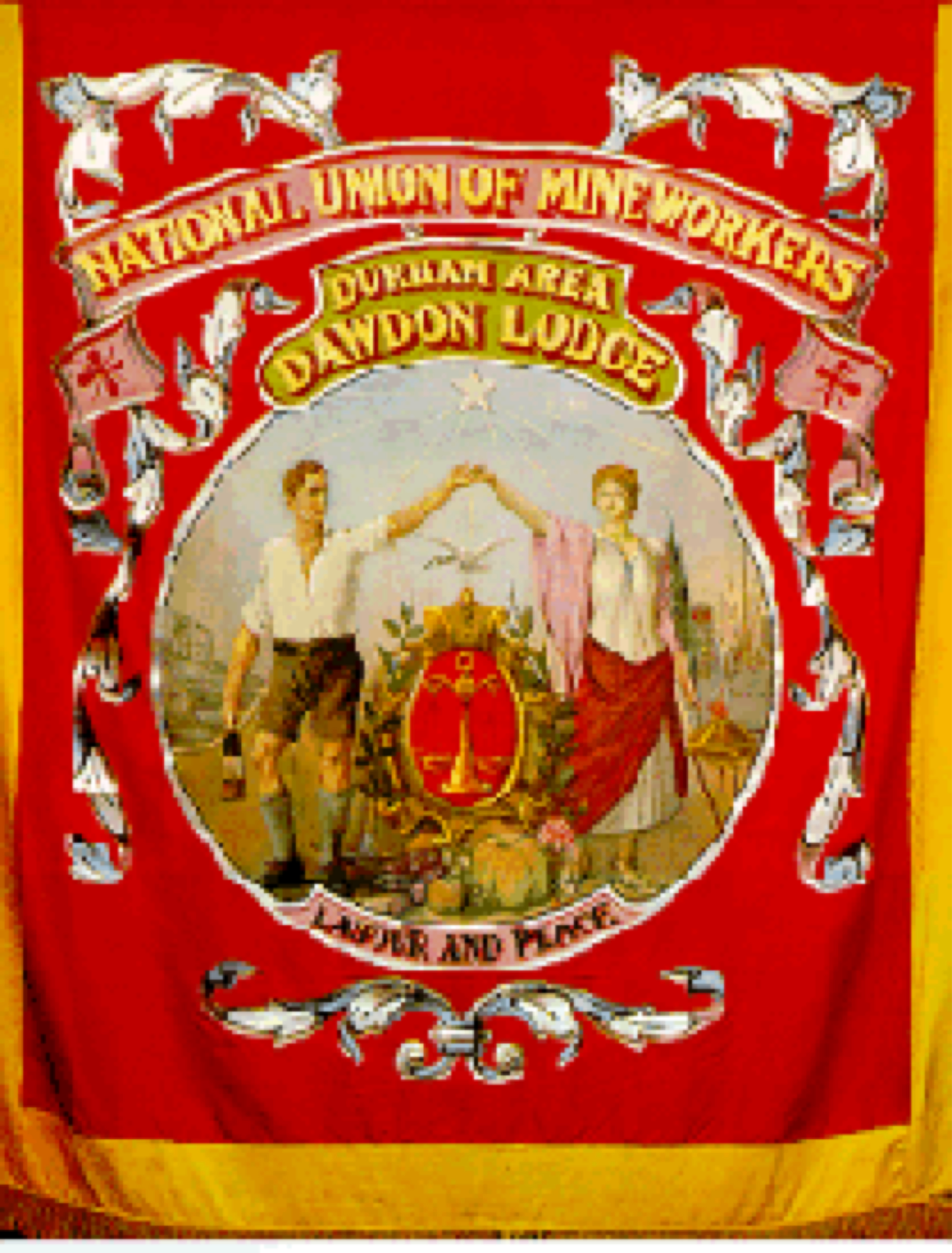
 Irregular Frequencies