I know. You feel like a lone voice in the organisation championing a closer and more creative relationship with the local voluntary and community sector, but your colleagues have had a bad experience and your politicians are not convinced. It’s a challenging position you find yourself in, but don’t worry you are not alone. A good start is to develop a compelling narrative. Once you have this in place you then have the platform to press on, but your task will not be easy and potential pitfalls and tripwires await you. Whilst your resilience needs to be strong remember to listen, reflect and adapt because you will not achieve much by yourself – building alliances both internally and externally of the organisations will be crucial. Also remember not to become part of the problem by bad mouthing the organisation you work for – be the change you want to see in others. Be positive, be a leader and be focused because you know local authorities need the voluntary and community sector and the voluntary and community sector need local authorities.
It’s an interdependent relationship given 70% of business between the voluntary and community sectors and the state takes place in the locality and not with Central Government. So why is the relationship so difficult at times and practically what can you do to improve the situation? The answers are often complex and very much localised requiring a change of lightbulb to enable a better view. Firstly, it’s not all is bad. I’ve worked in most regions of England. My first decade of employment was with a local voluntary sector group. In my younger idealistic days, I spent time as an elected councillor. I’m not embarrassed to admit I’ve made my fair number of mistakes along the way, learnt a good few lessons and feel i’ve achieved many successes. In time so will you.
I’ve come across great examples of the voluntary and community sectors collaborating brilliantly with local authorities, sharing expertise, knowledge and resources to obtain a common goal. These situations do not happen by accident, chance, or indeed luck, equally, I’ve come across some pretty awful situations where the sectors are barely acknowledging one another. Acting as if in some type of phycological convert warfare with each another. When it gets this bad it takes a lot of energy, time and resource to put the relationship right before improvements are able to deliver benefits for local residents. How can you help to mend it?
The first stage is to understand the context.
Let’s start from a political perspective because local authorities are political organisations. The Centre Right tend to view the voluntary and community sector via a lens of non-state charitable benefit whilst the Centre Left tend to view the sector through the lens of participatory democracy and the effusion of power. The observation I give is very simplistic and overlapping grey areas between both perspectives exist in abundance, but this simplistic starting point is critical when left right compounded by the style of local government in the locality. Regardless if a political administration is left, right and centre they can all be equally centralistic in nature and style.Needless to say, you will have read about the tension between the political class and voter, which give the impression politicians understand themselves more than they understand the wider population. This impression may, or may not warrant some justification, but we still live in a centralised state where politics and government seem distant from everyday life and a disproportion of politicians come from middle and upper-class professions. A good all round politician will immerse themselves in their community, its diversity, its conflicting aspirations, tensions and its social networks. This is where the ward councillor can come into their own because one of the bridges into this diverse world is the voluntary and community sectors and you have an important role to play in helping the ward councillor navigate this world.
At its best the voluntary and community sector is dynamic, championing causes, influencing social policy, and tailoring activity to meet the needs of residents and communities. A vibrant, strong, positive and challenging sector should be embraced and nurtured in every neighbourhood, community, borough and city. The voice of the sector is just as equally important as the services it provides. As a commissioner, this voice helps me shape my approach, design service and facilitate good decisions. The key is to listen and to amass date and information then cross reference what you are hearing with the information you are reading.
Sadly, as will most sectors of the economy, I have witnessed some quite appalling service delivery and fraudulent activities perpetrated by some voluntary and community groups and organisations. I’ve come across deliberate conspiring to exclude people, faced violent because my work has threatened the self-interest of a few people who claim to be the voice of a community. I’ve also participated in workshops after workshop hearing representatives of the sector consistently in a state of negativity and blaming their predicament on everybody else, but themselves. It can be relentless. This is often intensified when an organisation holds a local authority contract and believes this will not ultimately impact on their independence, or they are may be facing the prospect of losing the contract for whatever reason. Yet, as imperfect as the sector is I believe it remains one of the best modes available for meeting need, providing value for money and enabling innovation.
Decommissioning is a part of the service life-cycle full stop and funding should never be provided on a never-ending cycle of demand. As soon as a voluntary and community organisation accepts money from the state then there is a financial and legal interdependency. By providing money to voluntary and community sector organisations for the purpose of delivering a particular service a local authority is effectively discharging itself from the responsibility to deliver that service and handing its responsibility to the voluntary and community sector group, although local authorities cannot discharge themselves of their accountabilities. For example,a council can commissions a private company to be responsible for collecting rubbish, but the same council remains legally accountable for ensuring the rubbish is collected. There is an interdependency, so the money comes with strings attached. If groups don’t like the strings then advise them not to take the money!
wpid-risk-managementAs a local authority officer you are employed to manage and oversee the implementation of services and policies. Its a risky business, seriously. You are navigating and balancing a minefield of political expectations, limited resources, management frameworks, unmet needs and demands, complaints and legal requirements. The whole process encourages a culture of risk aversiveness rather than risk awareness. The consequences are plain to see and result in organisational systems, processes and policies that stiffly opportunities for voluntary and community sector engagement. You are caught in the middle of this world and finding a way will to be easy, so here are some ideas to help you. They are not exhaustive, but simply provided to help and offer encouragement.
1. The Compact: I have mixed views on the joint Compact between voluntary and community sector and Local Government, but if your local authority does not have one why not see if there is an appetite to develop one. But make sure the continues are right. Ensure the Compact has a means to an end rather than being viewed as a strict contractual document. Nobody needs to play Neville Chamberlin waving a peace treaty in the air and no it should not require a compact officer to police it. Remember a compact is not essential if it does not exist and there is no appetite for one life goes on, so move on, it’s not worth the battle.
2. Asset Transfer Policy: A good community asset transfer policy will encourage innovative approaches and creates access to affordable spaces. The policy should provide options and not be consigned to getting rid of them problem buildings, which the local authority now finds itself lumbered with.
3. Volunteering policy: a council policy that provides all employees with an opportunity to volunteer with a local group. This helps build alliances and break down misconceptions.
4. Staff secondments: When I became a senior manager for the first time I was able to arrange for members of my team to go on short term work based secondments with a local voluntary and community sector group. This was built into annual appraisals and personal development plans. This is very different from a volunteer policy (as above).
5. Behaviours: A staff behaviours and skills framework that promotes how staff should work collaboratively with voluntary and community sector groups.
6. Capacity Building: Invest in the sector to manage assets and services. This can be achieved in two ways. Firstly, commissioning technical support through a specialist organisation. Secondly, by using 3 and 4 above.
7. Collaborate: Establish demonstration projects with individual voluntary and community sector organisations that will achieve common goals, or address a long-running problem in the locality. This will build confidence across both sectors.
8. Take some risks: If you manage a budget (regardless how small) try and set aside a small budget to explore something new and innovative with the sector.
9. Capital Challenge Fund: Establish a challenge that requires match funding from the voluntary and community sector.
10. Take decisive action: If something is going wrong do not let it fester. The vast majority of voluntary and community sector groups will not tolerate misbehaviour or fraud within the sector and nor should you. If a group or organisation is ripping the tax payer off take action quickly – it will enhance your credibility. Just make sure the action is proportionate, justified and you understand all the impacts, so you are able to inject mitigations, if required.
Finally, you are not a lone wolf in the chicken pen. If your approach reflects this then you face a up hill battle and may face the consequence of being burnt out and frustrated pretty quickly. Take small practical steps. Changing attitudes is about both hearts and minds. You can only achieve this by demonstration – think about it?

 Sirius Scarcliff’s disfigured existence brought terror and trepidation to those facing his judgement. Those gathered to witness his deathly endeavours prayed in fear of avoiding a similar predicament. A short reading from his black leather Bible and a slight nod of his cloaked head, the hangman pulled the rope, the final whimpered cry as the struggling torso swung from the water bank and then slowly stillness. Silence. The wretched soul of his latest victim departed from their mortal existence. Upon the execution of his deadly deed, Sirius would turn to those gathered, warning them of the dangers of witchcraft in the village. To be vigilant of their friends, neighbours and family. The witchfinder for Brislington, Bristol 1694-1696. Sirius had been appointed by the Puritans of the village who wanted to purify their church and community. Sirius was tasked with undertaking the exorcisms of demonic possession. He had come to prominence during the Salem witch trials of 1692–1693. During his ruthless charge, he showed no mercy in applying his judgement regardless of age or circumstances. His youngest known victim was a seven-month baby boy, whose parents had reported the child for demonic possession. A 70-year old village elder fell foul of his judgement for speaking in the tongue to other witches, when alone, although the most notorious case that set off a sequence of events, which ultimately led to his demise, is the case of the Morgan Family.
 The head of the Morgan Family was Oswyn 38 years old. His wife Katherine was 33 years old. Their two sons were Daniel (12 years old) and Samuel (8 years old). Following accusations of witchcraft Sirius consulted his book of Daemonologia (published in 1567) and the whole family were subject to persecution. Katherine Morgan was thrown into the nearby river Avon with her thumbs tied to her opposite big toes. If she were to float, she would be guilty of witchcraft, but if Katherine sank then she was innocent. Kathrine Morgan was to die from her experience. After initially submerging below the current her body surfaced and floated on the river. Her body was brought back for judgement, alongside the rest of the Morgan family. The sentence of death for witchcraft was given. Oswyn, Daniel and Samuel were simultaneously executed from the village hanging tree, which to this day can be found on the Brislington Brook trail. Katherines lifeless body was burnt nearby. The persecution and subsequent execution of the Morgan family had caused both anger and revulsion, which also came at a time of growing unrest at Sirius’s murderous reign of terror.


 Berry. Bob Dylan influenced singer/songwriter tracks, The harmonies of the Beach Boys, blues numbers, psychedelia, children’s songs and even Karlheinz Stockhausen is there in the most surreal tracks. The guitar-led songs arguably set the blueprint for the heavy rock phenomena that was to emerge. It’s difficult to see what musical influences it did not draw from and at the same time in its aftermath what musical genres it did not affect. It’ got everything. I heard the White Album when it came out in 1968; I bought it a year afterwards because I did not have enough pocket money. Sgt. Peppers was the first album I bought and I purchased Abbey Road the day after its release. I remember people taking copies of Abbey Road back to the shop because they thought the hissing on the last track on side 1 was a fault, but it was, of course, static that was supposed to be on the record. It’s always dangerous to listen to music in your youth because it sticks with you for the rest of your life. My first 4 albums were Sgt. Pepper, Abbey Road, The White Album and Revolver, not a bad start I guess.
 four of them credited in the band Jeremy Spencer (guitar, vocals, piano), Danny Kirwan (guitar, vocals), John McVie (bass guitar) and Mick Fleetwood (drums, percussion). Although Christine (Perfect) McVie provided backing vocals and keyboards, is uncredited. Christine Perfect, who was married to bassist John McVie, made her first appearance with the band as Christine McVie at Bristol University in May 1969 just as she was leaving Chicken Shack. She had success with the Etta James classic, “I’d Rather Go Blind.” Kiln House is an homage to rock n roll but done very softly with tracks like Buddy’s Song, a tribute to Buddy Holly, written in his style. Kirwan and Spencer were left with the task of filling Peter Green’s boots in live shows and recordings. Kirwan’s songs on the album moved the band in the direction of rock, while Spencer’s contributions focused on re-creating the country-tinged “Sun Sound” of the late 1950s. I like it because hardly anybody knows of the album outside of Fleetwood Mac diehards. It was recorded during the period following Peter Green’s departure, but before Lindsey Buckingham and Stevie Nicks joined.
 original recording from an all black cast touring show, which came over from South Africa to the UK. After being a hit in South Africa in 1959, the musical played at the Prince’s Theatre in the West End of London in 1961. It’s an amazing mix of township jazz and African beats. A brilliant and iconic album. The liner notes for the London cast recording state: “No theatrical venture in South Africa has had his sensational success of King Kong. This musical, capturing the life, colour, and effervescence as well as the poignancy and sadness of township life, has come as a revelation to many South Africans that art does not recognise racial barriers. King Kong has played to capacity houses in every major city in the Union [of South Africa], and now, the first export of indigenous South African theatre, it will reveal to the rest of the world the peculiar flavour of township life, as well as the hitherto unrecognised talents of its people. The show, as recorded here, opened at the Princes Theatre, London, on February 23, 1961.” The song “Sad Times, Bad Times” was considered a reference at the time to the infamous South African Treason Trial in Pretoria, which had begun in 1956 and lasted for more than four years before it collapsed with all the accused acquitted. Among the defendants were Albert Luthuli (ANC president), secretary Walter Sisulu, Oliver Tambo and Nelson Mandela. According to John Matshikiza, King Kong′s first night was attended by Mandela, who at the interval congratulated Todd Matshikiza “on weaving a subtle message of
  support for the Treason Trial leaders into the opening anthem” The shows key performers included Miriam Makeba, Nathan Mdledle. There was a cast of 72 that included Hugh Masekela, Abdullah Ibrahim, Kippie Moeketsi and Thandi Klaasen. The London cast also included Patience Gowabe and former Miss South Africa 1955 Hazel Futa, who went on to provide backing vocals for “She’s Fallen In Love With The Monster Man” by Screaming Lord Sutch and the Savages (1964).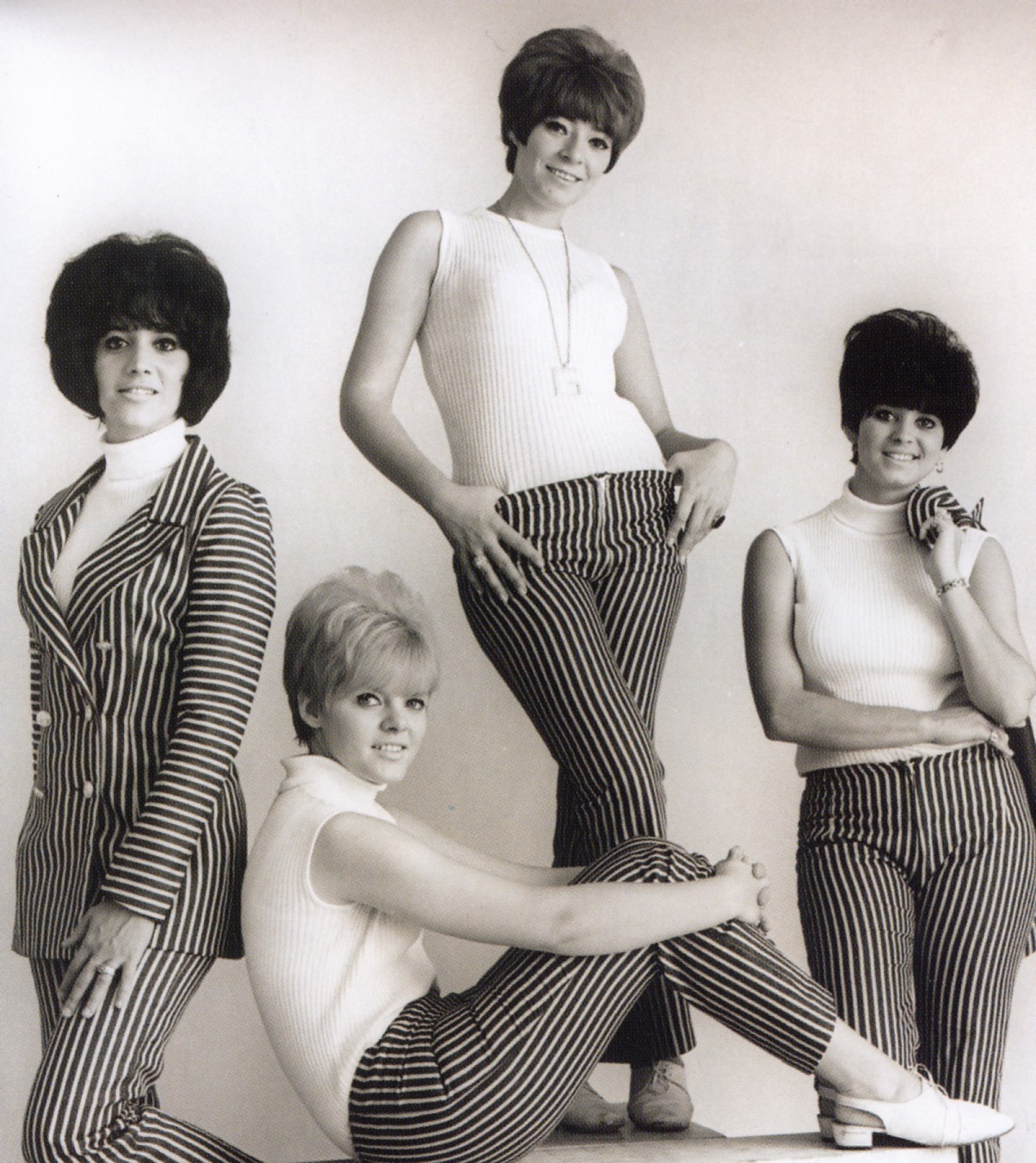




 Irregular Frequencies