Our hero strides away from the retail park, a grin tugging at the corners of his mouth, excitement prickling through his veins. A small, involuntary drip of pee seeps down the inside of his left thigh—an unspoken testament to his anticipation. He’s just secured his prize: a gleaming 50-inch Samsung widescreen, a portal to endless pleasure and distraction.
That cool, slightly damp feeling against his skin only fuels the eagerness. He can barely wait to wrestle this beast inside, to peel back its black-tinted glass doors and unleash a flood of colour and sound. There, waiting like a treasure trove behind those sleek panels, lies a marathon of action-packed shows, Netflix’s glossy revivals of wars long past, and a world of Xbox adventures begging to be conquered.
Clutching his fragile, slightly bent joystick—his trusty sword in these digital crusades—he’s ready to journey through mythical lands and storm enemy fortresses, all from the sanctity of his living room.
But first: the cardboard box. A looming mountain of packaging, bulky and conspicuous. Where to stash it without inviting the gaze of neighbours or the prying eyes of postmen? Then, a flicker of inspiration sparks in his reptilian brain. Slithering through shadows, he slips to the nearby public park under the cloak of night, abandoning the box like a guilty secret in the moonlight.
Back home, pride swelling in his chest, our self-made hero lets out a satisfied sigh. The screen flickers alive—radiating artificial light, exploding in bursts of radiant green, red, and pulsating blue. The room comes alive with electric energy.
And there he is—the wanker, king of his castle, ruler of pixels and cardboard kingdoms alike.
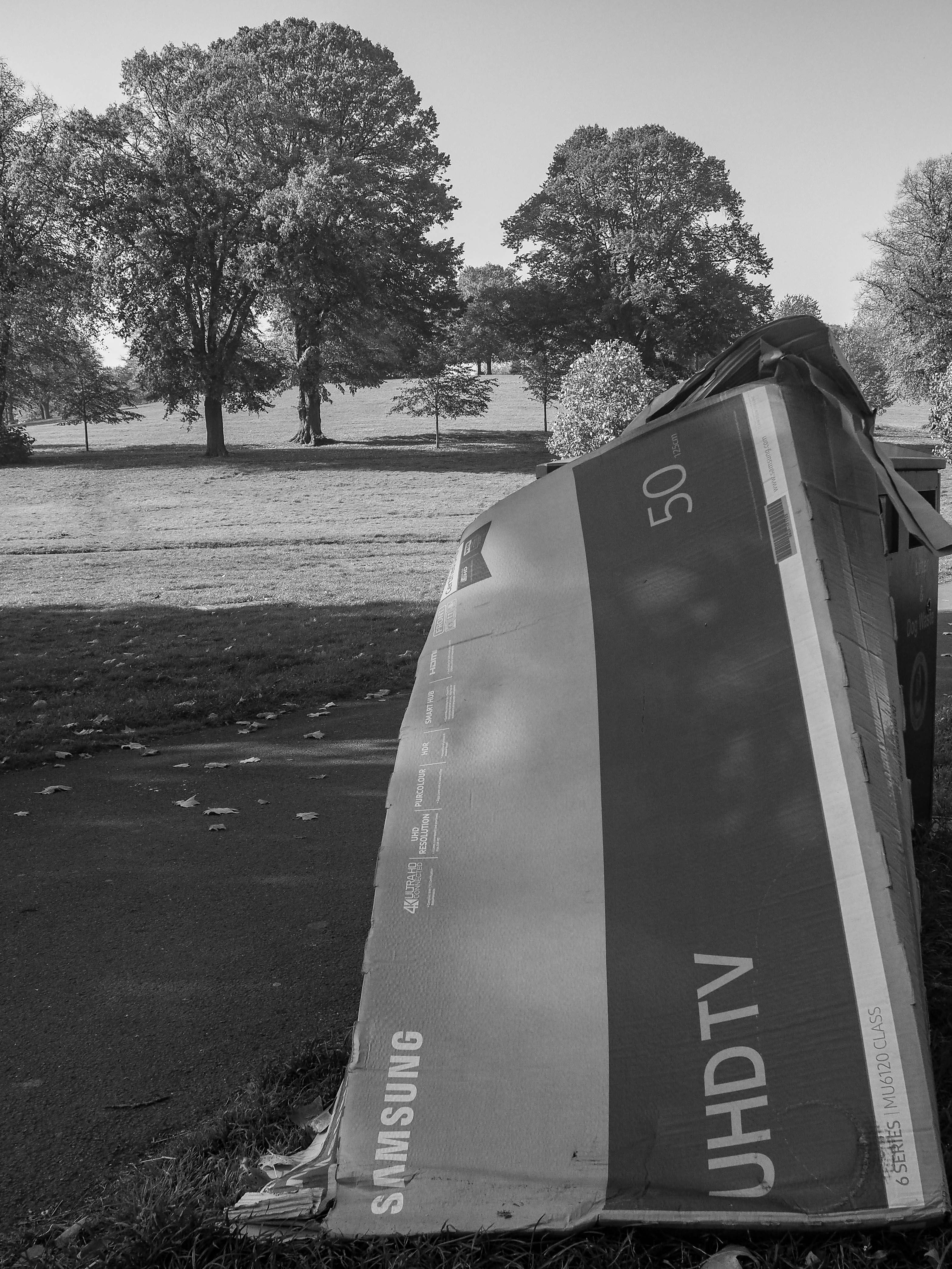
 Here in the UK, we manage to produce more than 100 million tonnes of waste every year. In less than two hours, the waste we produce would fill the Albert Hall in London, every eight months it would fill Lake Windermere, the largest and deepest lake in England. The cost of cleaning up all that litter costs taxpayers almost a billion pounds every year.£1billion would fund 38,644 social care workers or pay the running costs of 4,400 libraries. Alternatively, it would enable the NHS to pay for 33,200 nurses or 26,900 paramedics or allow the fire brigade to fund 31,990 extra firefighters each year. The £1billion spent on cleaning our streets could pay for 704,200 elderly household electricity and gas bills for a year or pay for one billion free school dinners – more than enough for every primary school child in England for a year. The money could be invested in the green economy to help support more sustainable and healthy ways of life. Help make more than 333,000 homes more energy efficient or create more than 193,000 community food growing spaces.
 Irregular Frequencies