Tag Archives: UK

The Government’s Capacity Delusion

For 25 years, I have worked in professional environments where the word capacity is often wielded less as a measure of actual output and more as a convenient justification for inertia or underperformance. Never has this been more evident — or more dangerous — than in the government’s public claims about coronavirus testing.

Back in late March, Prime Minister Boris Johnson proudly announced the UK’s intention to ramp up daily COVID-19 tests from 5,000 to 10,000, then 25,000, and “hopefully very soon” to 250,000. A month on, with Johnson convalescing from the virus himself, his deputy Dominic Raab declared the government had a capacity of 40,000 tests per day, soon to reach 100,000.

But this is where government rhetoric turns from hopeful to hollow. Ministers are no longer talking about tests actuallyconducted but about capacity — a nebulous term implying that all the ingredients and infrastructure exist to perform those tests, even if they are not currently being fully utilised.

The difference is profound. Having capacity means having resources — kits, labs, staff, supply chains — theoretically ready to deliver. Actual testing, however, depends on the seamless operation of a complex system: from procuring supplies and managing labs, to collecting samples and returning results swiftly to patients.

Here lies the rub: Britain’s health and care sector does not possess this holistic capacity. Years of market-driven reforms — privatisation, outsourcing, the creation of artificial internal markets — have fragmented the system. Coupled with austerity-driven underfunding, this has left the supply chain riddled with vulnerabilities.

The government doesn’t conduct tests itself. Instead, it relies on a patchwork of private contractors, local NHS trusts, public health bodies, and commercial laboratories. Without integrated coordination and investment, these pieces struggle to function as a cohesive whole.

The consequences go beyond testing. Personal protective equipment shortages, care home crises, delayed contact tracing — all are symptoms of a fractured health and social care ecosystem ill-prepared for a pandemic. The care home scandals, epitomised by Winterbourne View and numerous subsequent cases, are a tragic reminder that the pursuit of market competition in health and social care has often come at the expense of patient safety and quality of care.

So while ministers boast about the government’s “capacity” to test 100,000 people daily, the stark reality is that the system to deliver those tests at scale remains deeply flawed. “Capacity” in government statements is often little more than political spin — a way to deflect blame while avoiding the hard work of fixing structural weaknesses.

This fixation on capacity also masks the lived experience of NHS and social care workers, who struggle daily with inadequate resources and conflicting directives. The government’s focus on hitting headline targets obscures the pressing need to build a genuinely resilient and integrated testing and care system.

The broader lesson here is that words matter. In politics and public health, capacity cannot be a euphemism for promise. It must translate into delivery. To claim otherwise is to gamble with lives.

The government must move beyond the illusion of capacity as a comforting statistic and confront the fragmented reality of Britain’s health and social care infrastructure. Only by addressing these long-term systemic failures can we hope to manage this pandemic — and the next crisis — effectively.

Until then, the difference between what the government can do and what it merely plans to do will remain a deadly chasm.

Accountability

The decisions made by Boris Johnson’s Conservative government have had a direct impact on the lives — and deaths — of thousands across the United Kingdom. When lives are at stake, accountability becomes paramount. It was this fundamental truth, alongside growing personal anxieties, that compelled me to write my first blog on the government’s handling of the coronavirus crisis on 28 May 2020. The response was swift and polarised — drawing both criticism and praise.

Throughout history, governments have risen and fallen on the strength of their decisions. Yet in today’s era of “fake news” and a largely compliant media landscape, Johnson’s administration seems to operate with near impunity. His American counterpart once arrogantly declared, “I could shoot somebody and not lose voters.” This chilling admission reflects a dangerous disconnect: a leader unaccountable to a passive electorate. Boris Johnson and his government mirror this same national complacency — shielded by a weak opposition and an electorate reluctant to demand answers.

The UK government behaves like a sponge, absorbing public opinion but spinning it through a narrow populist ideology, endlessly bobbing and weaving through political icebergs. It doles out empty promises, deflects responsibility, and drowns discourse in a flood of meaningless soundbites. Behind the scenes, the administration panics as it struggles to maintain fragile political alliances, blinded by the delusion of representing a “one nation” party. The Prime Minister, terrified of media scrutiny, and a senior advisor bent on “draining the swamp” of the civil service, have fostered a toxic environment where effective governance is impossible.

Meanwhile, on the global stage, Donald Trump threatens to defund the World Health Organisation. At home, the UK government urges footballers to take wage cuts to support the NHS — yet ministers, many of whom are multi-millionaires drawing taxpayer-funded salaries, refuse to make any financial sacrifice themselves. This cynical pantomime serves only to distract from failures with lethal consequences.

Comparisons in UK media focus on countries hardest hit by the virus, such as the US, Spain, and Italy. Rarely are other nations held up — those managing better outcomes for their citizens. The Johnson government’s evasions cannot hide these uncomfortable questions:

  • Why is the UK’s testing capacity so woefully inadequate?
  • Why does the government only publish hospital death figures, excluding community and care home fatalities, unlike France or other countries?
  • Why are frontline NHS and care workers left without adequate personal protective equipment, while the government invests in symbolic gestures like badges?
  • Why did the government allow flights from some of the worst-affected regions without proper screening?

Closer to home, the Republic of Ireland cancelled large gatherings and St Patrick’s Day celebrations early on. The UK, by contrast, permitted events like the Cheltenham Festival, large concerts, and major sporting tournaments — even involving teams from heavily affected countries. At the time of writing, Ireland’s death toll stood at approximately 400, compared to 12,000 in the UK. Adjusted for population, that equates to 7.4 deaths per 100,000 in Ireland versus 17 deaths per 100,000 in the UK — more than double.

Across the Atlantic, California — despite a dysfunctional White House — implemented bans on large gatherings as early as 9 March, followed by stricter limits. The state’s population density may be lower than Britain’s urban centres, but the key difference lies in taking the threat seriously from day one. Dr Neha Nanda, Medical Director of Infection Prevention at Keck Medicine, University of Southern California, told the BBC: “Even being one day ahead can have a huge impact… the mortality we will be able to avert is huge.”

No one yet knows how this pandemic will ultimately conclude for the UK, Ireland, or any nation. But the facts at this moment are stark: British citizens are dying at twice the rate of their Irish neighbours. This reality is neither abstract nor inevitable — it is a consequence of political choices and public health failures.

So why does our national press shy away from reporting this? Why is such a glaring disparity missing from the headlines?

When lives are literally on the line, the public deserves truth, transparency, and most of all, accountability.

the Cost of Complacency

Public exposure to government missteps has steadily mounted. Just over a week ago, officials admitted a “communications mix-up” caused the UK to miss a critical deadline to join an EU scheme for acquiring additional ventilators — a glaring failure that exposed the cracks beneath the polished surface.

Until then, No. 10 had appeared ahead of the curve, buoyed by a new Chancellor adept at managing the public message. But such fiscal and rhetorical sleight of hand can only cover so much before the illusion fades.

Let us recall that as early as January 2020, governments worldwide were aware of the severity of COVID-19. Countries that responded quickly — taking decisive early action — now find themselves better positioned to manage the crisis. While no one claims the challenge is simple or painless, these nations report proportionally fewer deaths and have deployed strategies such as lockdowns, clear public health advice, and significant economic stimulus packages to cushion the blow.

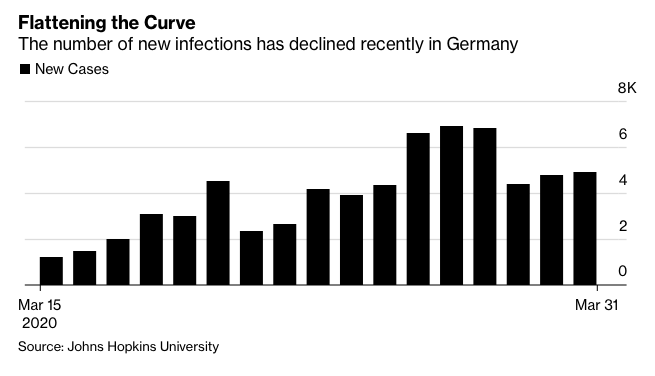
At the heart of effective response lies mass testing — a vital tool to hunt down the virus, trace its spread, and impose targeted restrictions where necessary. Germany epitomises this approach, with its rigorous testing programme enabling swift, informed decision-making and a more controlled outbreak.

Herein lies a stark contrast in leadership styles and preparedness between Germany and the UK. German Chancellor Angela Merkel, armed with a doctorate in quantum chemistry, possesses the scientific literacy and intellectual discipline to understand and trust the counsel of experts. Germany benefits from a well-resourced healthcare system and a robust industrial base, equipping it with both the capacity and capability to mount a measured response.

In the UK, by contrast, we have a Prime Minister better known for his populist rhetoric and a penchant for a “pound-shop Churchill” performance than for grounded, evidence-based leadership. This style may rally certain segments of the public but does little to inspire confidence in the complex task of pandemic management.

The consequences are tangible and grave. The government’s hesitancy to ramp up testing, the delayed lockdown, and the absence of clear, consistent communication have all contributed to a response less effective than it could have been.

This is not merely a question of political style but one of lives saved or lost. As the crisis unfolds, the gulf between countries that acted decisively and those that hesitated becomes clearer, with real human costs.

In a moment that demands clarity, competence, and humility, political theatre and spin will not suffice. The UK’s future will depend on learning from these missteps, embracing scientific expertise, and rebuilding public trust — all of which begin with honest accountability.

For those willing to look beyond the headlines and memes, the real story is far from over.
From January to March 2020, the Johnson administration was marked by an unusual blend of unorthodox advisers — a self-styled cadre of “weirdos and misfits.” These mavericks, operating with skepticism toward the traditional Whitehall civil service, appeared to fixate on a controversial and deeply flawed strategy: herd immunity.

It has been widely reported — though the veracity remains debated — that Dominic Cummings, the Prime Minister’s chief adviser, suggested a brutal calculus: “if a few old people die, so be it. The priority is to protect the economy.” Whether true or not, the broader narrative remains clear. During this critical period, Boris Johnson publicly spoke about herd immunity, seemingly advocating for the virus to be allowed to “take it on the chin.” He famously encouraged handshakes in the early days, downplaying the severity of the threat and treating COVID-19 as little more than a seasonal flu.

To understand why this approach was so perilous, we must revisit the concept of herd immunity. Herd immunity occurs when a sufficient portion of a population becomes immune to an infectious disease, either through previous infection or vaccination, thereby reducing its spread. For diseases like measles, herd immunity protects vulnerable individuals because the virus cannot propagate effectively once a critical mass is immune.

Johnson’s inner circle apparently believed that allowing the virus to sweep through roughly 60 per cent of the UK’s population would confer herd immunity and end the epidemic naturally. This “let it run” strategy ignored a fundamental reality: unregulated viral spread risks overwhelming healthcare systems with catastrophic consequences.

With a population of approximately 70 million, 60 per cent equates to 42 million people. Even with a conservative 1 per cent mortality rate, this implies 400,000 deaths. Current estimates suggest the COVID-19 mortality rate in the UK hovers closer to 5 per cent, potentially translating to a staggering 2 million deaths under this scenario.

The moment of reckoning came as the severity of the virus’s impact became undeniable. Johnson appeared to recognize the catastrophic consequences of his initial approach — the misplaced confidence in a herd immunity strategy promulgated by his “weirdos and misfits,” whose disturbing fascination with eugenics seemed to overshadow the immediate imperative to save lives.

While many governments were already mounting decisive responses, Johnson remained caught up in a world of privilege and university nostalgia — social circles where discussions of “progressive eugenics,” a term coined by fellow Tory Toby Young, were not unheard of.

Faced with mounting criticism and an escalating crisis, Johnson shifted gears, retreating from public scrutiny as he isolated due to his own infection. From his confinement, he sought to regain control of the narrative, proclaiming that “testing would unlock the puzzle.”

The question remains: how many lives might have been saved had he acted decisively from the outset, heeding scientific advice rather than political ideology? The early months of the pandemic exposed a fatal combination of complacency, misplaced priorities, and political calculation — a lesson with profound implications for public trust and future crisis management.

Faced with mounting criticism and the stark reality of the crisis, Boris Johnson abruptly shifted course, backtracking on his earlier policies while retreating from public view. Now self-isolating and effectively shielded from scrutiny, he has placed himself beyond direct accountability. From this isolation, he continues to issue proclamations—his latest being the assertion that “testing would unlock the puzzle.”

Firstly, this is not some inscrutable puzzle—it is a virus. Like all viruses, the only way to defeat it is to track it relentlessly and eradicate it. And to do that, you need one critical thing: information. That information comes solely through mass testing.

Secondly, Johnson now appears to be spinning out of control, repeating phrases and ideas he clearly does not grasp. This approach echoes the Trump playbook—repeat a claim often enough, and some will accept it as truth. In times of fear and uncertainty, people crave reassurance, and many will cling to any narrative that offers hope, however unfounded.

Yet, the stark reality is that the UK lags behind other nations in testing capacity. Take South Korea, for instance. With a slightly smaller population, South Korea operates twice as many testing laboratories and processes roughly two and a half times the number of tests per week. This disparity underscores the missed opportunities and the urgent need for a clear, science-led strategy in the UK.

At the end of the day, people have died as a direct consequence of Boris Johnson’s misjudgments and mismanagement. While thankfully the majority will not face the heartbreak of losing a loved one due to these failings, the human cost remains undeniable. Any reasonable observer disillusioned by Johnson’s handling of the crisis may be forgiven for questioning his fitness to lead on the world stage once this ordeal has passed.

This critique targets his policies and competency, not the man himself. I sincerely wish Johnson and his partner a full and speedy recovery.

Behind the Scenes of Global Metal Trading: The London Metal Exchange and Its High-Stakes Future

It might seem dry — even dull — but beneath the surface, the London Metal Exchange (LME) is a cornerstone of the global economy. Situated at 10 Finsbury Square, London, the LME is the undisputed hub for trading industrial metals ranging from lead to gold. In 2018 alone, it handled a staggering $15.7 trillion worth of trades, moving 4.1 billion tonnes of metal ‘lots’ worldwide.

The LME’s story took a pivotal turn in 2012 when Hong Kong Exchanges and Clearing Limited (HKEx) acquired the 135-year-old institution for approximately £1.4 billion. HKEx, itself formed in 2000 through the merger of three Hong Kong financial entities, has positioned itself as a global market giant with a strategic focus on “China Connectivity.”

The acquisition raised eyebrows at the time. The Financial Times reported that the deal was a lucrative windfall for major banks and brokers, with JPMorgan, Goldman Sachs, and the Bagri family (owners of Metdist) receiving hundreds of millions in payouts. Meanwhile, the LME’s Chief Executive was reportedly set to receive a bonus nearing £10 million.

Seven years later, the ambition to build a seamless commodities bridge between East and West has fallen short. As HKEx Chief Executive Charles Li candidly put it: “All you need to think about is if this is the right asset for us. The rest is detail. You don’t worry if the price is right.”

The geopolitical and financial context continues to evolve rapidly. In December 2019, Valdis Dombrovskis, the European Commissioner for Financial Stability, issued a stark warning to the UK. Post-Brexit, London’s financial sector risks losing its privileged access to EU markets unless it maintains close regulatory alignment. Speaking to the Financial Times, Dombrovskis underscored that “access will depend on Britain not starting to engage in some kind of deregulation.”

As tensions simmer in Hong Kong — where Beijing accuses foreign powers of fomenting unrest — China watches closely the unfolding UK-EU negotiations. The LME itself is not idle, maintaining a strategic presence on the 7th floor of the MYP Centre in Singapore, clearly positioning itself amid shifting global trade currents.

In a world where markets, politics, and diplomacy intersect, the future of the London Metal Exchange will be a barometer not only of metal prices but of broader geopolitical alignments — a silent, yet potent, indicator of the times.

Summer Holidaze

Stanley stood rigid at the curb, Doris by his side, her hand brushing his. Down the hill, the driverless bus thundered toward them, metal beast on wheels, scraping inches past where they waited. Inside, a tempest roiled.

Passengers brawled, voices cracking like broken glass. Village faces peered anxiously, jaws tight, eyes wide.

Theresa sat just behind the empty driver’s seat, fingers stuffed in her ears, lost to the storm. Opposite her, Jeremy covered his eyes, peeking through his fingers at the vacant wheel, whispering a prayer—hope and defiance tangled on his breath.

Behind them, Nigel’s long finger jabbed accusingly at the last few who’d boarded. “Sabotage!” he barked, voice sharp enough to cut glass.

A small mob spat curses—at one another and at the chaos itself. The bus jolted over bumps, and Ariaf’s grip slipped. A vanilla shake splattered over Tommy’s new school uniform. He wailed, clutching Bernard, his pet snail, now hidden away in a cardboard box. “How’m I gonna tell Mum?” he sobbed, finger already pointing.

Vince bounced up and down, desperate for notice after being banished for helping David—the driver—to escape through the emergency hatch.

Nearby, self-styled ideologues debated, trading grudging praise for the 1939 Molotov–Ribbentrop Pact, their eyes glittering with twisted admiration.

Caroline sat alone, calm and patient, knitting a jumper stitch by stitch, waiting.

As the looming brick wall hurtled closer, Chuka, Anna, and Heidi linked hands with others, raising their voices in ancient hymns.

Nicola shouted for a show of hands—any brave souls willing to climb to the roof. Ariene screamed, “No surrender!” as the wall grew impossibly close.

Meanwhile, the nation sat glued to radios, Cliff Richard’s Summer Holiday on eternal repeat, young faces exchanging helpless, desperate looks.

Stanley caught Doris’s eye, his voice soft but certain. “Ah Doris, Brexit means Brexit.”

She licked her melting ice cream, then turned to the pelican crossing button. The sharp beeping sliced the chaos, halting cars. Hand in hand, they stepped off the curb, away from the madness, crossing to the bus station as if nothing had changed.