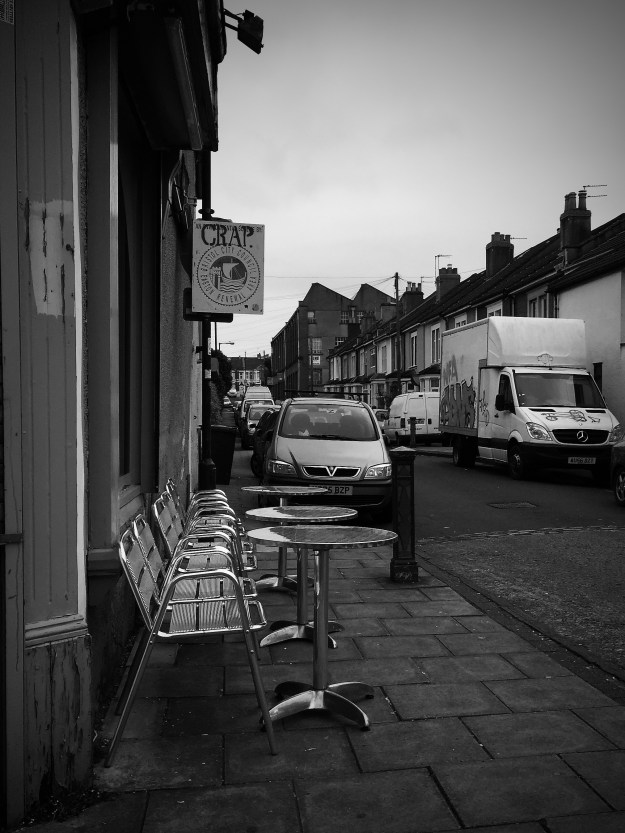
Derek Dodd is the Area Coordinator for the West Holts Stage, Glastonbury Festival. I’ve Known Derek for almost 20 years. Over these year’s we have been to many concerts and festivals, so armed with my camera, notebook, a recorder and an electric hammer drill (don’t ask) we sat on his attic floor chatting and I asked him to select five vinyl records from this collection.


The Beatles, White Album (1968) was the second or third album I bought from Lesley Browns, Stockton, which was the place to go as a teenager when you wanted to buy records in the 1960s and 1970s. The shop had personal listening booths where you could listen to the records before you purchased them. I remember my Mam lacerating her hand on the sliding door of the booth when we went to listen to Twist and Shout EP – there was blood everywhere!! Each copy of the White Album is numbered and my copy is No. 0094165. It’s an amazing album because it is just so musically vast and a pivotal point, not only for the 1960s but the 20th century. It has all the influences the first track (Back in the USSR) is an homage to Chuck Berry. Bob Dylan influenced singer/songwriter tracks, The harmonies of the Beach Boys, blues numbers, psychedelia, children’s songs and even Karlheinz Stockhausen is there in the most surreal tracks. The guitar-led songs arguably set the blueprint for the heavy rock phenomena that was to emerge. It’s difficult to see what musical influences it did not draw from and at the same time in its aftermath what musical genres it did not affect. It’ got everything. I heard the White Album when it came out in 1968; I bought it a year afterwards because I did not have enough pocket money. Sgt. Peppers was the first album I bought and I purchased Abbey Road the day after its release. I remember people taking copies of Abbey Road back to the shop because they thought the hissing on the last track on side 1 was a fault, but it was, of course, static that was supposed to be on the record. It’s always dangerous to listen to music in your youth because it sticks with you for the rest of your life. My first 4 albums were Sgt. Pepper, Abbey Road, The White Album and Revolver, not a bad start I guess.
Brinsley Schwarz, Silver Pistol (1972) are also pivotal. They were a bit before their time. I suppose they were a neo-punk band. It’s just a beautiful album combining a low-key pub rock sound, mixed with folk, country, psychedelia and pop influences. Nick Lowe plays bass, guitar and provides vocals on the album. Shortly after the band’s demise in 1974, Brinsley Schwarz briefly joined Ducks Deluxe before forming The Rumour and going on to achieve success with Graham Parker and the Rumour.
Fleetwood Mac, Kiln House (1970) Its the most obscure of Fleetwood Mac albums. It is weird. Officially there is only 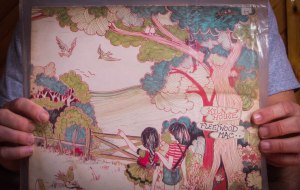 four of them credited in the band Jeremy Spencer (guitar, vocals, piano), Danny Kirwan (guitar, vocals), John McVie (bass guitar) and Mick Fleetwood (drums, percussion). Although Christine (Perfect) McVie provided backing vocals and keyboards, is uncredited. Christine Perfect, who was married to bassist John McVie, made her first appearance with the band as Christine McVie at Bristol University in May 1969 just as she was leaving Chicken Shack. She had success with the Etta James classic, “I’d Rather Go Blind.” Kiln House is an homage to rock n roll but done very softly with tracks like Buddy’s Song, a tribute to Buddy Holly, written in his style. Kirwan and Spencer were left with the task of filling Peter Green’s boots in live shows and recordings. Kirwan’s songs on the album moved the band in the direction of rock, while Spencer’s contributions focused on re-creating the country-tinged “Sun Sound” of the late 1950s. I like it because hardly anybody knows of the album outside of Fleetwood Mac diehards. It was recorded during the period following Peter Green’s departure, but before Lindsey Buckingham and Stevie Nicks joined.
Then there is this thing, which is incredible it’s called King Kong, All African Jazz (1961). I love this album. It’s the  original recording from an all black cast touring show, which came over from South Africa to the UK. After being a hit in South Africa in 1959, the musical played at the Prince’s Theatre in the West End of London in 1961. It’s an amazing mix of township jazz and African beats. A brilliant and iconic album. The liner notes for the London cast recording state: “No theatrical venture in South Africa has had his sensational success of King Kong. This musical, capturing the life, colour, and effervescence as well as the poignancy and sadness of township life, has come as a revelation to many South Africans that art does not recognise racial barriers. King Kong has played to capacity houses in every major city in the Union [of South Africa], and now, the first export of indigenous South African theatre, it will reveal to the rest of the world the peculiar flavour of township life, as well as the hitherto unrecognised talents of its people. The show, as recorded here, opened at the Princes Theatre, London, on February 23, 1961.” The song “Sad Times, Bad Times” was considered a reference at the time to the infamous South African Treason Trial in Pretoria, which had begun in 1956 and lasted for more than four years before it collapsed with all the accused acquitted. Among the defendants were Albert Luthuli (ANC president), secretary Walter Sisulu, Oliver Tambo and Nelson Mandela. According to John Matshikiza, King Kong′s first night was attended by Mandela, who at the interval congratulated Todd Matshikiza “on weaving a subtle message of
  support for the Treason Trial leaders into the opening anthem” The shows key performers included Miriam Makeba, Nathan Mdledle. There was a cast of 72 that included Hugh Masekela, Abdullah Ibrahim, Kippie Moeketsi and Thandi Klaasen. The London cast also included Patience Gowabe and former Miss South Africa 1955 Hazel Futa, who went on to provide backing vocals for “She’s Fallen In Love With The Monster Man” by Screaming Lord Sutch and the Savages (1964).
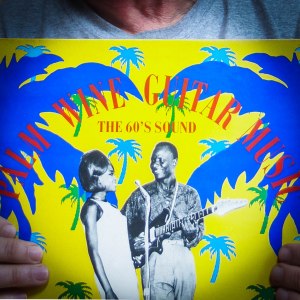
Finally, Palm Wine Guitar Music The 60s Sound by S.E. Rouge (1988). S.E Rouge is an amazing guitarist from Sierra Leone. A tailor by trade he became a professional musician in the 60s, singing in four languages. After touring America he moved to England in 1988. I saw him play during the early 90s at an arts centre in Taunton of all places. He had an amazingly warm, happy, very uplifting sound. I spoke to him after the gig, he took my phone number and about 3 months later he rang me up asking if I could promote a gig for him in Bristol, but I was not putting on gigs at the time. Shortly after that call, he died. He had just completed the recording of his last album, Dead Men Don’t Smoke Marijuana. He had undergone heart bypass surgery some months earlier but against medical advice travelled to Russia, where he lost consciousness while performing onstage.