Category Archives: Chewing the Fat

The Drum and Monkey

The old Drum and Monkey Pub sits on the corner of Bowesfield Lane and Adams Street in Stockton on Tees. Once surrounded by a network of thriving and mainly family owned businesses like iron foundries.  At a lunch times the guys working  in the immediate locality would congregate here for a quick pint, sandwich, chat, exchange banter, place their £1 coin on the pool table in the hope they could grab a quick game before heading back to the intense heat and dust of the furnace and the toil of hard labour. The body fluid lost during a 5 hour morning shift would constantly need replenishing and the men would be encouraged to drink a pint of bitter shandy at lunch time. This was before any notion of health and safety regulations and we would often be joined by the foundry owner who on a good day would pay for the drinks (especially on a Friday).
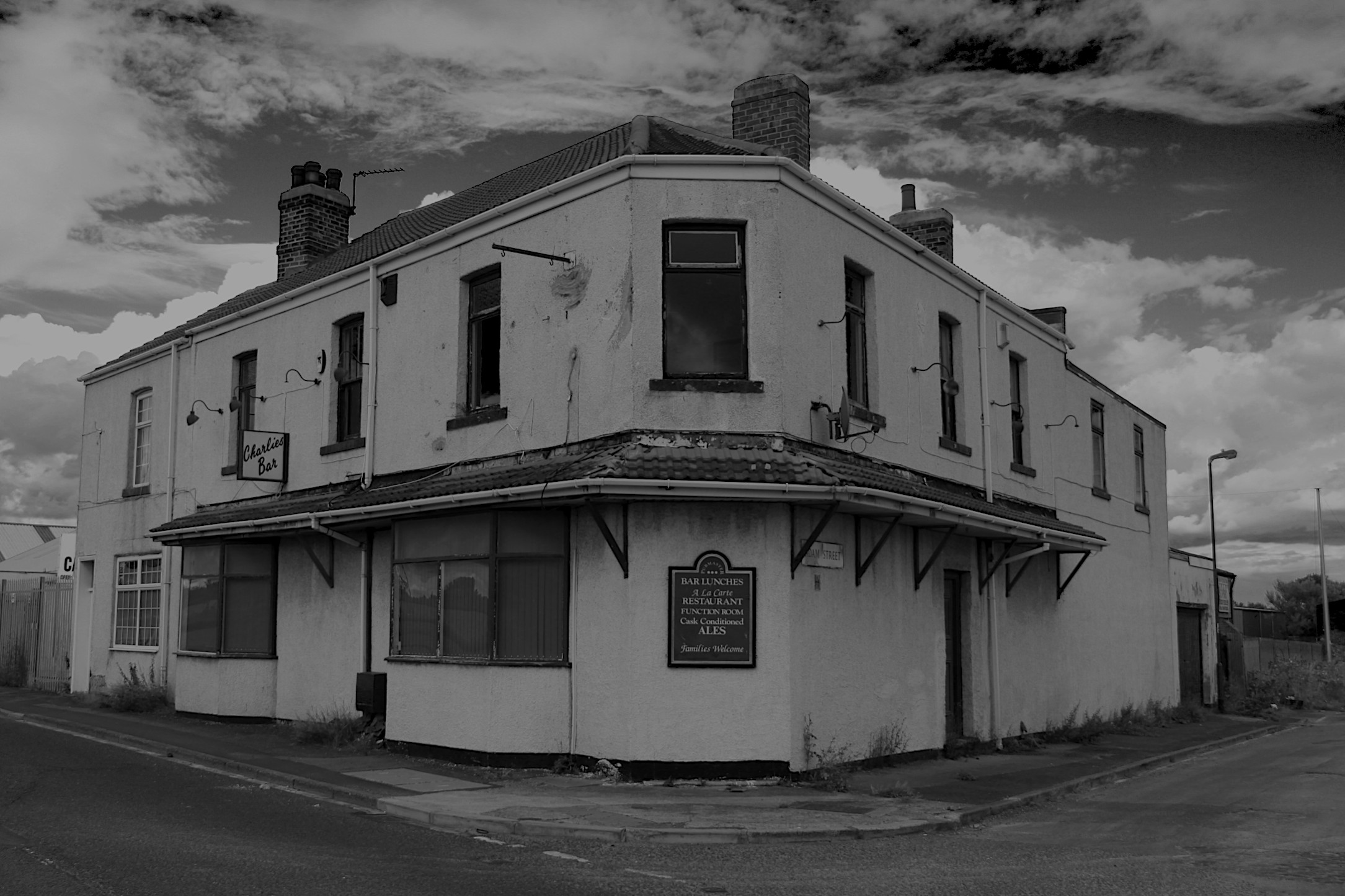
Drum and Monkey

Today not much remains of these industries and indeed the men that toiled often on 12 hour shifts 5 days a week. Working in conditions that would not be tolerated today. Not many people retired from this line of work, the dust, sulphuric fumes and everyday hazards of working with moulting metal took their tole with lung infections, cancers, scares, missing fingers and teeth, burns and dirt that seeped into the skin to leave engrained tattoo like marks on your hands. The afterwork showers and expelling of inhaled dust from the chest and nostrils made for gruesome sounds and a dark tar like effluent running through the communal outflow from the shower cubicles.  A single foundry struggles to survive today, but is highly automated and relies upon a handful of men to operate it. The surrounding area is now awash with car showrooms, office blocks for white collar workers in insurance, legal, or financial services. Large shopping and retail outlets provide their customary part time work opportunities and modern housing developments have sprung up.

When I worked in a foundry during the 1970s new technologies were promoted as the great advancement of the working class. Quality leisure time would be in abundance as robots took up the hardwork. This was of course before the venture capitalist and edge fund fraudsters got their claws into ordinary peoples lives and ripped communities apart in the 1980s. For those too young to know it Bowesfiled Lane is where then PM Margaret Thatcher came to open a new electric furnace and infamously called working people “moaning mini’s.”   2 years later the electric furnace was closed down, knocked down and 100s of men and women joined the dole queue. Today where once proud people worked is a modern housing estate with pretty maintained lawns, whose literal foundations have been built on the sweat of their fathers and mothers.

Progress is good and there are a lot of really exciting things happening in my home town. The local council against the backdrop of the global free market does its best to protect the local economy, but an economic system that pits worker against worker,  enables multinational and faceless industrial owners who no longer see through the lens of community, or indeed national boarders to exploit labour costs.

Long gone is the days when the foundry owner would pop down to the pub with the workers on a Friday afternoon and buy the round. Today that pint you have to buy yourself, the industry you work in, the shoes you are walking in and the money you are spending are all properly supplied by the same faceless and unaccountable bunch of financiers.

One Friday afternoon before the Christmas holiday’s around 1978  we were in the Drum and Monkey and I called the owner of the foundry I was working at a  “greedy tosser” because he only bought one round for the guys. He shrugged, laughed and after some piss taking from the rest of the guys bought two more rounds. Accessibility, democracy and worker power in action and its about time for the multinational financing tossers now.
The Road Between Woolwich to Eltham

Woolwich, a small corner of London often overlooked, tells a tragic story of a community caught between change, division, and neglect.

Like shifting fault lines beneath the surface, Woolwich is vulnerable to social fractures. It shares London’s diversity—a mix of cultures, faiths, and races—but unlike much of the capital, it remains deeply polarised. Here, acceptance often feels reluctant and tolerance begrudged. Despite nearby developments, Woolwich never benefited from the economic boom of the 1980s, and it continues to bear the harsh consequences of austerity measures.

Until the 1960s, Woolwich’s white working-class communities provided much of the labour for the military industries that dominated the area. Today, many have moved away to neighboring areas like Charlton, Eltham, and Plumstead, while new populations have settled in peripheral estates such as Thamesmead—an area defined by stark Brutalist architecture, famously used as the backdrop for Stanley Kubrick’s A Clockwork Orange.

Woolwich’s industrial heritage runs deep. It is the birthplace of Woolwich Arsenal Football Club—known today simply as Arsenal—a club whose nickname, ‘The Gunners,’ remains a reminder of its origins. Football was once the heartbeat of working-class life here, a cheap and accessible escape, tightly woven into community life alongside trade unions, local pubs, and family-run businesses.

However, the collapse of Britain’s industrial base in the 1970s, combined with globalisation and increased migration, radically transformed Woolwich. The area became home to large numbers of immigrants seeking affordable housing and new opportunities. This demographic shift brought cultural richness but also rising tensions—between first, second, and even third-generation immigrants, and between new arrivals and established residents.

Local institutions, including mosques, evolved to serve increasingly diverse congregations. Yet while middle-class Britain has largely embraced multiculturalism through cultural festivals and events, many in Woolwich’s white working-class communities have felt left behind—economically, politically, and socially.

As opportunities vanished and political representation faded, extremist groups found fertile ground. The National Front’s notorious bookshop in nearby Welling was led by Richard Edmonds, a veteran of far-right politics. Racial tensions between youth gangs escalated, culminating in the murder of Stephen Lawrence in 1993—a killing that shocked the nation and exposed deep flaws in policing and race relations.

Twenty years later, Woolwich was once again the scene of a shocking and violent event. On May 22, 2013, Lee Rigby, a 25-year-old soldier and father, was brutally murdered on the streets. Two men attacked him with knives and cleavers in broad daylight. The attack was captured on mobile phones and broadcast widely, leaving the country in stunned disbelief.

I know Woolwich. I lived and worked nearby. I know the streets where Lee Rigby was murdered, where families and colleagues walked safely just days before. Whatever one’s views, nothing justifies this act of violence and horror.

Soldiers often follow orders without control over political decisions. The families in conflict zones who lose loved ones share the same hopes for peace and stability that Woolwich’s residents seek for their children.

In the aftermath, far-right leader Nick Griffin visited Woolwich, a move widely seen as opportunistic and inflammatory.

Now is a time for dignity, reflection, and unity—not division. The wounds in Woolwich remain open—racial and social fault lines that, if left unaddressed, threaten further violence and mistrust. These tensions play out daily in real life—in schools, markets, and neighbourhoods—waiting for the next spark. The murders of Stephen Lawrence and Lee Rigby are grim reminders of this reality.

My deepest respect goes to their families and to the brave Woolwich residents who tried to help on that terrible day. One image stands out: two Black women tending to Lee Rigby’s lifeless body, holding his hand, offering comfort amid horror.

Twenty years on, Woolwich remains a place of challenge—new developments are springing up, big money is changing its face and community once again. Where do the people who can’t afford to buy into this new world go?

Freddie and the Dreamers V Friedrich Hayek

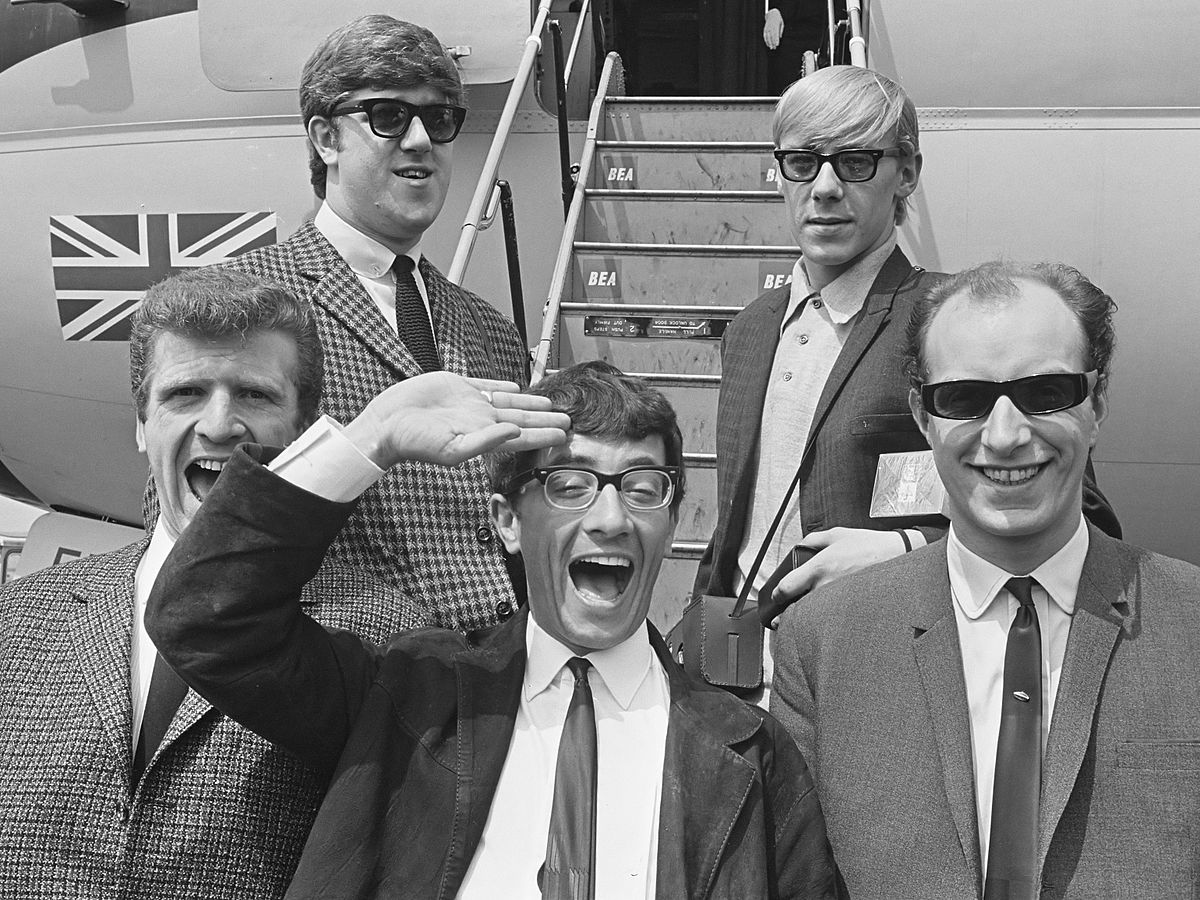
Freddie and the Dreamers were an English band famous for their string of hits between May 1963 and November 1965. Their secret weapon? The comic chaos of lead singer Freddie Garrity—just 5-foot-3 but bouncing wildly across the stage, arms and legs flailing in full showman mode.

1200px-freddie_en_the_dreamers_1964

Their biggest hit, If You Gotta Make a Fool of Somebody (1963), climbed to number 3 in the UK charts. But at the same time, another “Freddie” — were dreaming up a far darker hit. A tune that would take nearly 50 years to explode: the 2007 global financial meltdown. This crisis threw millions out of work and wreaked irreversible damage on economies and lives worldwide. Enter the University of Freiburg, a European research hub where Freddie (Friedrich) August Hayek began shaping his neoliberal economic theories.

By 1984, Hayek had been honoured by Queen Elizabeth II, on Margaret Thatcher’s recommendation, for his “services to economics.” The U.S. followed suit, awarding him the Presidential Medal of Freedom. Revered by followers as one of the greatest modern economic thinkers, Hayek left a deep ideological footprint.

In his essay Why I Am Not a Conservative, Hayek slammed traditional ‘one nation’ conservatism. Post-WWII, this moderate wing embraced social consensus on issues like employment and housing. But Hayek dismissed it, warning, “conservatism is only as good as what it conserves.” His message was a call to shake up centre-right parties and reject old compromises.

Once a leftist, Hayek now fiercely opposed government economic planning as a threat to freedom and a barrier to free markets. In 1974, the Centre for Policy Studies was founded by Sir Keith Joseph and Margaret Thatcher to promote his free-market ideas—the birth of neoliberal politics, with Hayek as its first director.

In 1975, during a visit to the Conservative Research Department, Thatcher stunned party aides by slamming Hayek’s Constitution and Liberty on the table, declaring, “This is what we believe in.” Sir Keith Joseph later admitted he only fully embraced Conservatism after 1974, acknowledging the profound shift underway.

Over the next decade, ‘one nation’ conservatives were sidelined, replaced by Thatcher’s hardline neoliberals. Even when Michael Heseltine helped end Thatcher’s reign, the damage was done—a quiet Conservative coup with consequences far beyond party politics.

Across the Atlantic, Hayek’s influence took hold at the University of Chicago (1950-62), alongside economists like Robert Fogel and Milton Friedman. Fogel infamously argued that slave owners treated slavery as business and slaves were better off than northern industrial workers—a controversial, cold calculation based on plantation records.

Friedman advised Reagan and Thatcher, and even Chile’s brutal dictator Augusto Pinochet, whose regime tortured and killed thousands.

Together, Hayek, Fogel, and Friedman forged the backbone of neoliberal policies in the UK and USA post-1979. Their obsession with unregulated markets is summed up by Hayek’s chilling claim: “free choice is to be exercised more in the marketplace than in the ballot box.” For him, markets trumped democracy.

This toxic trio’s dogma ignored the realities of everyday life, laying the groundwork for today’s economic chaos—deregulated banks and stock markets running wild, greed supplanting productive industry, replaced by complex financial derivatives that serve only the wealthy elite.

When disaster struck, governments flung open the doors to bail out the rich—an obscure form of socialism for the privileged few—while workers faced global competition and widening inequality.

The UK’s “Big Bang” on October 27, 1986, symbolized this shift: deregulating financial markets, abolishing fixed commissions, and unleashing new financial products. Money flowed freely—home loans, credit, refinancing—but the nation stopped making things. Public assets were sold off in privatizations, effectively selling what we already owned back to us.

The 2011 U.S. Senate Levin-Coburn Report blamed the 2007 crash on risky financial products, conflicts of interest, and regulatory failure. Yet no government dared challenge the neoliberal orthodoxy laid down by Hayek, Friedman, and Fogel. Even Labour under Tony Blair embraced it, championing the same market-driven framework.

That worked—until the money ran out.

Now, as we face a new dawn, the question is: can we break free from this cycle? Can we truly change the rules instead of remixing the old hits? Because no one needs another version of If You Gotta Make a Fool of Somebody blaring through the modern day X Factor of economic folly.