Gina Miller: Bristol Festival Ideas: 04.10.18

A Portrait of Division and Defiance Tuesday evening found me in the company of Gina Miller, a figure best known for her landmark legal challenge that forced the UK Government to seek Parliamentary approval before triggering Article 50 and beginning the Brexit process. In today’s fractured political landscape, Miller has, willingly or not, become a beacon for those desperate for leadership and clarity amid the chaos.

But the price of such visibility has been horrific. Miller has endured an unrelenting torrent of abuse—threats of violence, racial harassment, and vile misogyny. Her personal office has received dangerous packages, her legal team harassed outside their workplaces. Even members of the aristocracy have targeted her with vile, hate-filled public remarks, including the 4th Viscount St Davids, who called her a “boat jumper” and offered a bounty for someone to “accidentally” run her over. The vitriol is a stark and disturbing reminder of the dark undercurrents roiling beneath our society.

How did we get here? It’s a question that haunts me, no matter what side of the political divide you stand on. What has stirred such profound hostility, such a corrosive bitterness? This isn’t mere political disagreement—it is a deep, painful darkness that strikes at the heart of community and civility. It is the ugly resentment of the “grumpy uncle” or the neighbour who blames everyone but refuses to reflect.

Just last Sunday, I spent over two hours at a public meeting discussing a proposed winter shelter for the homeless in my neighbourhood. Such topics are always delicate, often inflaming frustrations about local governance and the fear of change. Yet none of that could excuse the venom directed not only at the council but, heartbreakingly, at those most vulnerable in our community—the homeless men and women who face the real threat of freezing to death this winter.

Concerns over property values and personal safety are understandable, and the council must address them calmly and clearly. But the atmosphere of the meeting was poisoned by hostility—a relentless, almost physical rage. Hands clenched, faces reddened, and interruptions were constant. This was not debate, but a display of emboldened intolerance and disregard for others. It mirrored the wider social fracturing Gina Miller speaks of—our inability to listen, empathize, and engage with each other as fellow citizens.

Miller’s analysis tonight resonated deeply. She spoke candidly about Brexit, the erosion of political accountability, and the urgent need to open dialogues across our fractured nation. Yet, some of her hopes—like the promise of a kinder, more socially aware capitalism—felt, at times, overly optimistic. Waiting for the financial elite to embrace genuine reform is a hope long deferred, especially for those who have borne the brunt of failed market-based solutions since the 1980s.

The mood in the room was one of grief and bewilderment, particularly during the Q&A when Miller called for outreach to those who voted for Brexit. An elderly man’s question, “How do we get into their heads to change their minds?” spoke volumes—not just about political division, but about a profound misunderstanding. It’s not about “getting into heads,” but about listening, showing empathy, and supporting policies that address real economic injustice.

Gina Miller is an extraordinary woman—a symbol of courage and common decency in an age where both are in short supply. The hatred she endures is despicable and must be condemned unequivocally. While her recent switch from Labour to the Liberal Democrats may disappoint some, it reflects her commitment to an ethos of “kinder capitalism,” even as we acknowledge the irony of austerity policies that sowed seeds of Brexit under the previous coalition government.

Perhaps, in the aftermath of Brexit’s tumult, we will better appreciate the value of Miller’s work. For now, as I finish this reflection, a new report from the Institute for Public Policy Research lands in my inbox. It calls for a “radical overhaul” of Britain’s economy comparable to post-war reforms or Thatcher’s revolution, to confront decades of stagnation since the 2008 crash.

Insightful, well-meaning—but for many, it feels like a call made while Rome burns.

Cuts: Dream Voyager

Sea Change Festival

24/08/18 – 25/08/18 I have not been to Totnes for at least 30 years and to be honest I had no plans to revisit until being introduced to the Sea Change Festival by a good friend. There is little to recall from this last visit apart from faded memories of a pleasant and a quintessential quiet English country town. Totnes today seems a bubbling town with independent shops, eco-friendly shops, which include a very good veggie restaurant Willow, (87 High Street) definitely worth a visit and the excellent Drift Record Shop (103 High Street) amongst others.

This is the 3rd Sea Change Festival, and the convincing ingredient for my attendance is the regular presence of artists signed to the Erased Tapes label. Over the years artists from the label have increasingly featured in my music collection. This year the festival is effectively a two-site affair with the core of the business taking place within the town, while a larger stage (offshore) is located in a field at Dartington Hall approximately 1.6 miles apart. The line up is once again diverse, imaginary and offers excellent contrast, a full list of the artists can be found on the Sea Change Festival website, so here are my personal highlights and small grumble.

Hatis Noif

Hatis Noif is a vocal performer from Japan and now resides in London. A delicate and diverse mixture of avant-garde, classical Japanese music, operatic in styles with hints of Gregorian Chanting were perfectly framed in St. Mary’s Church. The programme proposed a beautiful ambiance atmosphere, and she did not fail to deliver. Gwenno (Saunders), in the civic hall, who is a sound artist, DJ and singer from Cardiff added some psychedelic power watts to the proceedings, along with the mysteries of songs performed in entirely Cornish. The Immix Ensemble Present: Kosmologie Ancience by Jane Weaver and Sam Wiehl, back to the St. Mary’s Church and you can’t keep a good cornet player down! A multi-disciplinary performance, which included voice, guitar, classical instruments and a visual trance-like, projected backdrop. Folk singer Shirley Collins gave a fascinating, heartfelt and often humorous talk about her life in music and how she traveled the word collecting songs before performing a number of songs from her recent album. Listening to these stories, but a totally different slant on the songs, as if you have been let into a hidden secret.

Those people (like me) who are long-time fans of the hugely influential German band Can were given good opportunity to bathe in our obsession on both days of the festival. Let’s start with Saturday, which provided the chance to listen in on a conversation with Rob Young, author of All Gates Open: The Story of Can. A meticulously researched piece of work. Back to Friday night and the 1.6-mile journey to the Offshore stage at Dartington Hall to catch Damo Suzuki (ex-lead singer of Can) supported by Japanise noise band, Bo Ningen leads to my only criticism of the weekend. Firstly, and I appreciate some people will wholeheartedly disagree with me here, but the performance had no heart and it just felt everybody was going through the motions. Secondly, I felt no cohesion between what was happening in the town centre and what was taking place at the Offshore stage. They seemed and felt like two entirely separate types of events, which in turn run the risk of one part dragging the other down. I voted for the intimacy of the town centre venues and did not return to the offshore site for the remainder of the festival, although there was a perfectly strong line up on offer. It’s a dilemma, which I am sure the organisers knew would be challenging and one that they will need to juggle in future years, but based on my experience at this year’s festival it’s not quite right. Setting these little grumbles aside, which you will find with all festivals, I would happily recommend this little gem of a festival.

Hide

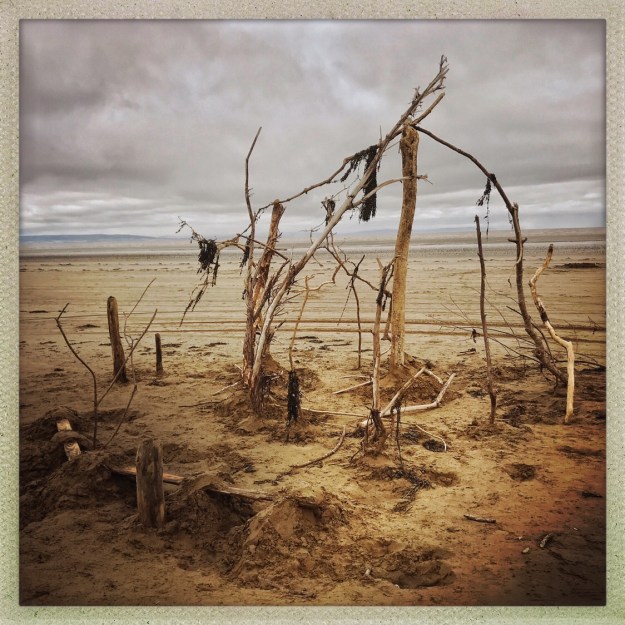
25.8.08: A place to hide. Often found through a casual chat with friends. Hidden Treasure. A tip-off, a forgotten space where nobody else goes. You can share with your past memories, a conjuring taste for adventure, a distance of forgiveness that feels within touching distance, but you will never eclipse the stretch. I woke at 6am each day to sit and watch the sun glide through the tree-tops until she stood announced, bright. The damp morning dew under my bare feet made me feel alive, no noise other than birdsong. It was then I thought for one moment of traffic, the march to labour, the conflicts of office politics, but yesterday is yesterday like a passing breeze gone. I sit here, watch the bees and then cook breakfast on an open fire.

Today I stumbled Upon: Arthr

In the crowded world of music production, I’m always on the lookout for artists and bands promoting their wears in an innovated way and with this in mind, the Arthr project recently caught my ears and eyes. The project is ‘born from a love of live performance, electronic and experimental music, alongside animation. The character Arthr represents the imagery, ideas, and creative identity behind the project, placed into real-world environments where he explores themes of nostalgia and time.’

The latest Arthr release is Whisperings of the World (featuring King Colobus), which also came in an elaborate limited edition cassette format (20 copies). Each cassette comes with a little self-made Arthr figure attached with only four (at the point writing) remaining for sale. You can see more information of this release by clicking here

The trials, tribulations, and frustrations of creating the little Arthr figures are captured in a recent blog message from the project, which you can read by clicking this link. You can also catch up on Arthr’s journey through nostalgia and time at the official You Tube where you can also see some of the creative background work going into building this fascinating project and concept, including live performances. Take a look, listen and Join the journey.


The B Movie is being Re Ron

“The first thing I want to say is mandate my ass” the opening words from Gil Scott Heron in his 1981 (15-minute) track B Movie.

B Movie served as the B side to the single Re-Ron both quintessentially criticising the election of populist right-wing actor Ronald Reagan to the White House. It was also the closing track on his 1981 album Reflections. While some of the detail within the lyrics will seem dated I defy anybody not to listen and draw parallels with the ongoing American car crash we are all now witnessing. 30 years later and in many ways all that seems to have changed is the actor.

Relics

Aphex Twin: T69 Collapse