The 1990s were no stranger to bloodshed and greed, yet amid the chaos, there were flickers of progress — small seeds of hope that seemed, for a moment, to promise a better future.
1991: The Berlin Wall’s collapse triggers a domino effect, toppling authoritarian regimes across Russia and its former Soviet satellites.
1995: The world, united for once, confronts an environmental threat. The production of CFC gases — silent destroyers of the ozone layer — is banned.
1997: The IRA calls a ceasefire, paving the way to the Good Friday Agreement a year later, a rare and hard-won peace on European soil.
2000: The Camp David Summit gathers Israeli and Palestinian leaders in an attempt at reconciliation, the latest chapter in a long and bitter history.
These events, in different ways, underpinned a resurgence of social democracy that, for some, found its symbolic peak in the election of Barack Obama in 2009. And then — it turned to ash.
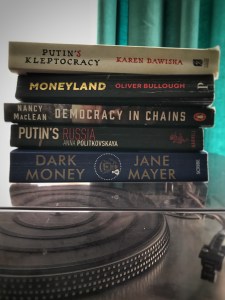
During lockdown, I sought to understand how we had arrived at our current moment. The geopolitical drama surrounding Russia and China added urgency, but what I found was not simply a tale of foreign villains. I read voraciously — five books that, in their own ways, peel back the layers of this era:
- Putin’s Kleptocracy – Karen Dawisha
- Moneyland – Oliver Bullough
- Democracy in Chains – Nancy MacLean
- Dark Money – Jane Mayer
- Putin’s Russia – Anna Politkovskaya
Each opens a door for the inquisitive mind, though they make for uneasy reading. They reveal a pattern in which wealth buys power, power buys protection, and the rules are rewritten to safeguard the interests of a global elite.
Yes, there is ample evidence of corruption in both Russia and China. But the narrative that frames our predicament as a simple clash between “us” and “them” is lazy at best, willfully misleading at worst. This is not a danger born of Reds lurking under our beds; it is a creation of our own making. The roots stretch back long before the Soviet collapse or China’s economic rise.
The oligarchs of Russia and the medal-clad tycoons of the People’s Republic have simply claimed their seats at a table already set by Western plutocrats. Together, they form a new aristocracy — global in reach, united in purpose, and accountable to no one but themselves.
What can be done? We can start by recognising that their influence depends on our consent. And then, with clear eyes and a little courage, we can refuse to elect their paid agents. The world we inherit depends on the choices we make now — not in the corridors of power, but at the ballot box.
 Irregular Frequencies