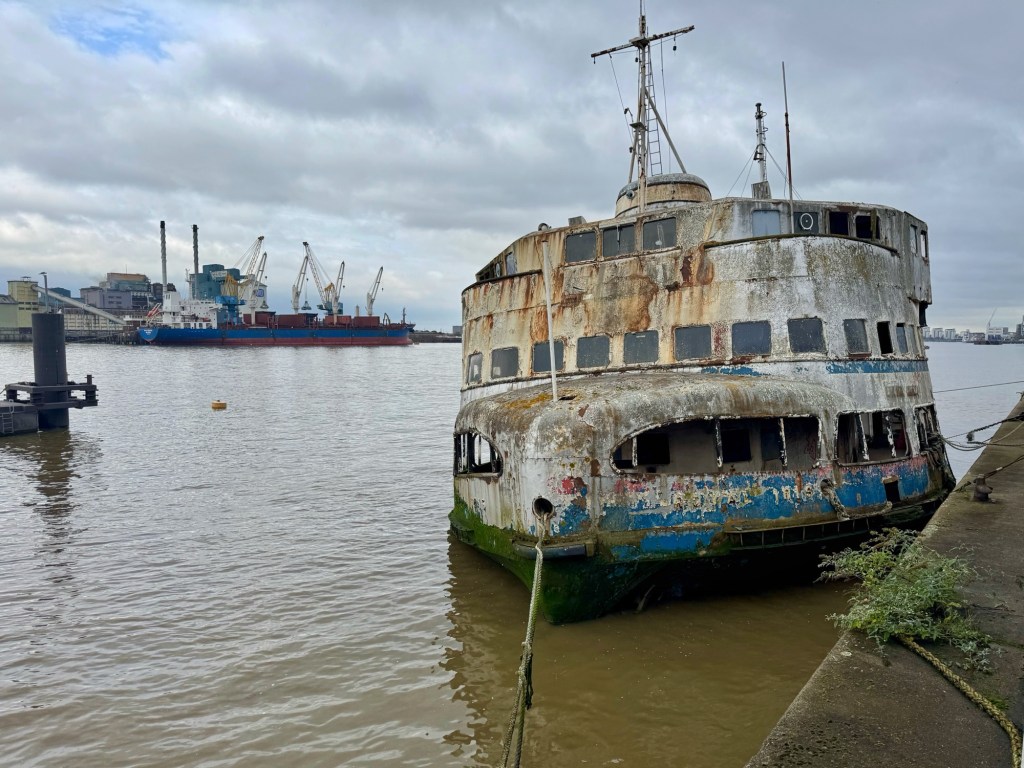
The Royal Iris, originally named MV Mountwood, was constructed in 1950-1951 by William Denny and Brothers Shipbuilders in Dumbarton, Scotland.
Commissioned by the Wallasey Corporation to serve as a passenger ferry for the Mersey Ferry service, operating between Liverpool and the Wirral Peninsula.
First of its kind, being the first non-steam powered ferry to operate on the Mersey River. The Royal Iris was powered by diesel engines and had a capacity of over 2,000 passengers. Its sleek and modern design, with strong Art Deco influences, made it an iconic vessel of its time.
Serving as a passenger ferry for several decades, she became known for her comfortable seating, spacious decks, and panoramic windows that offered stunning views of the Mersey River. In addition to its regular passenger service, the Royal Iris also played a significant role in the music scene of Liverpool. In the 1960s, it became a popular venue for rock and roll concerts, hosting performances by well-known bands such as The Beatles, The Who, and Jerry Lee Lewis. These events, known as the “Riverboat Shuffles,” attracted large crowds and contributed to the vessel’s cultural significance.
However, as the years went by, the Royal Iris started facing financial challenges and was eventually decommissioned in 1991.
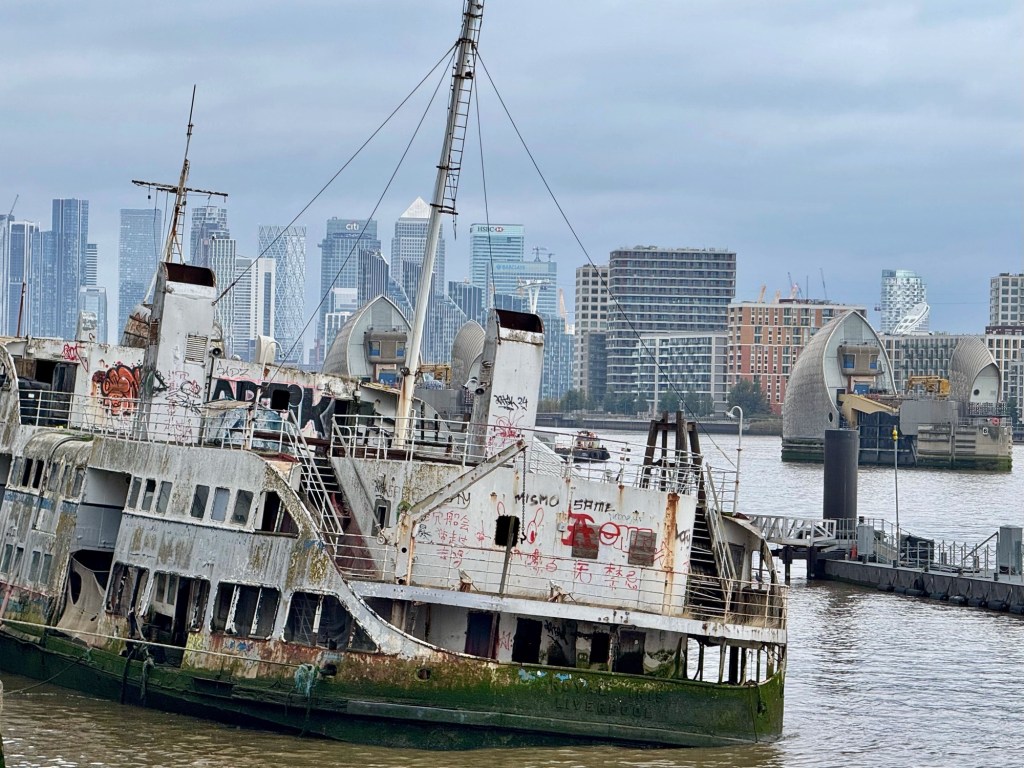
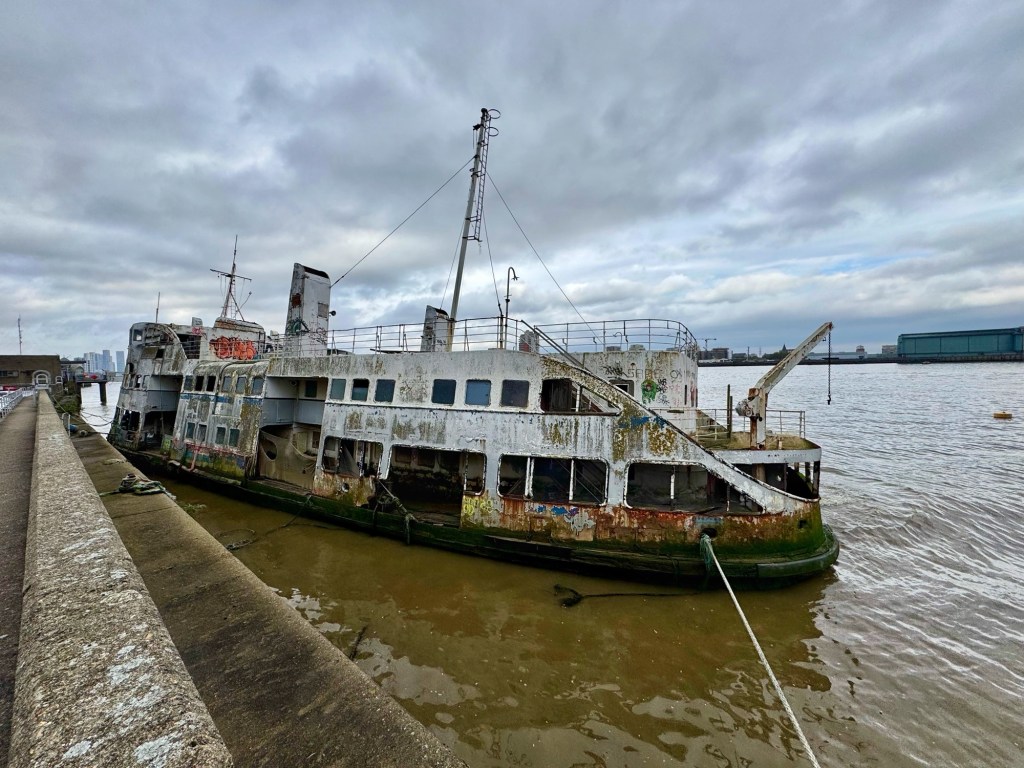
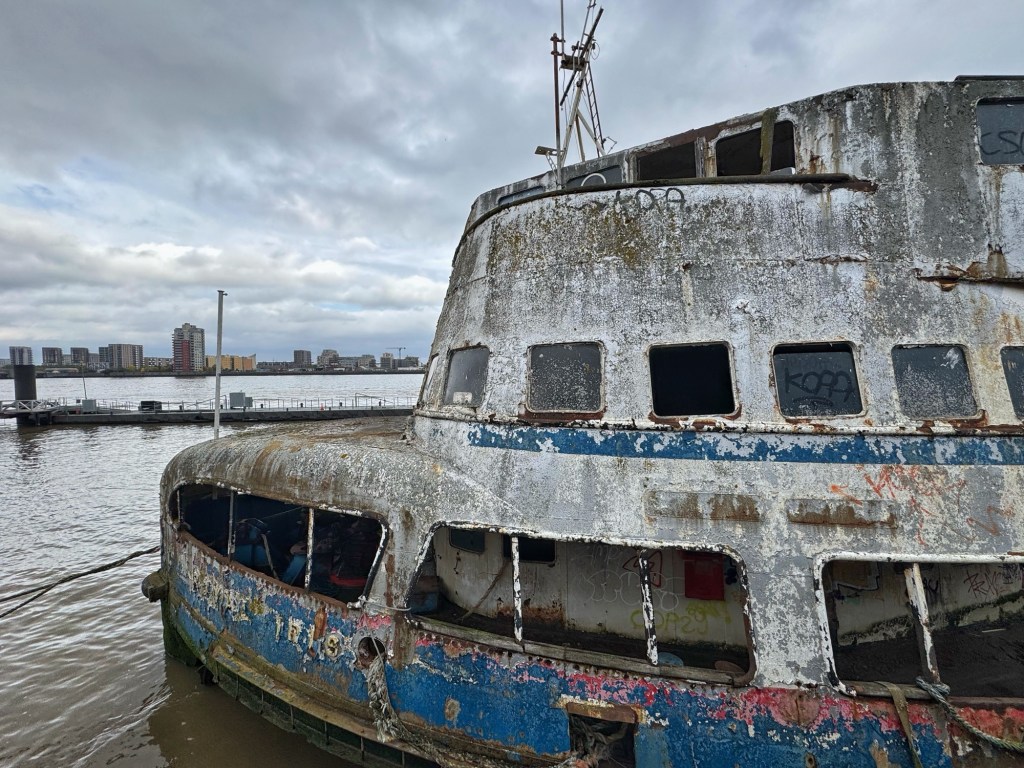
Although plans were made to convert the ferry into a floating entertainment venue, they did not materialize, and the Royal Iris fell into disrepair. Today, she rests on the banks of the River Thames near the Thames Barrier in London.
In the fizzing heart of 1920s Manhattan—where cigarette smoke curled above café tables and the clatter of typewriter keys mingled with jazz—there strode a woman who seemed conjured from another dimension. Elsa von Freytag Loringhoven, the self-styled “Lobo,” was not merely a fixture of Greenwich Village; she was its pulse. A German immigrant and fearless Dadaist, she prowled the cobblestones as if the streets were an extension of her body, each step a challenge to the timid architecture of convention.
Draped in a riot of fabrics, tin cans, feathers, and anything else her imagination could bend into ornament, Elsa transformed herself into a walking collage. Her hair, a wild storm of curls, rose beneath hats fashioned from birdcages, kitchen strainers, or whatever defied sense that morning. People didn’t just see Elsa—they collided with her. She was the art, the performance, the provocation.
Her circle included the titans of the avant-garde—Marcel Duchamp, Man Ray, Peggy Guggenheim—drawn to her ungovernable spirit as moths to flame. Together, they tested the limits of artistic gravity, launching ideas like fireworks into the New York night. In The Little Review, her poems unfurled like surreal manifestos—equal parts erotic, absurd, and luminous. To pay the rent, she posed for painters and sculptors, her body becoming as much a medium as their clay or canvas.
But Elsa’s true theatre was the street. She staged impromptu performances—shoplifting as satire, darting away with a laugh that cut through the clamor of vendors. She was a prankster philosopher, a thunderclap in human form, an irritant and inspiration rolled into one. The police chased her often; the Village chased her always.
In her cluttered studio, she built sculptures from the discarded and overlooked, turning rust and rubbish into meditations on beauty and faith. One notorious piece, a plumbing fixture christened God, was both joke and revelation, a grenade lobbed at the sanctity of traditional art.
Eventually, the currents pulled her back across the Atlantic—first to a battered Germany, then to Paris, where cafés and salons again made her feel at home. She still modeled, still burned with creative hunger, but the scaffolding of friends and patrons began to crumble. Poverty’s chill crept in.
In 1927, in a small Parisian room, Elsa’s flame flickered out. She left the gas on overnight—whether by accident or design remains a riddle. The woman who once blazed through Manhattan’s bohemia and Paris’s salons vanished quietly into the ether.
Yet her ghost refuses to fade. Decades later, her name rises again, her life a rallying cry for those who believe that art should bleed into life and life into art. Elsa von Freytag Loringhoven remains a patron saint of the unruly—a living reminder, even in death, that the greatest masterpiece is the way you choose to exist.
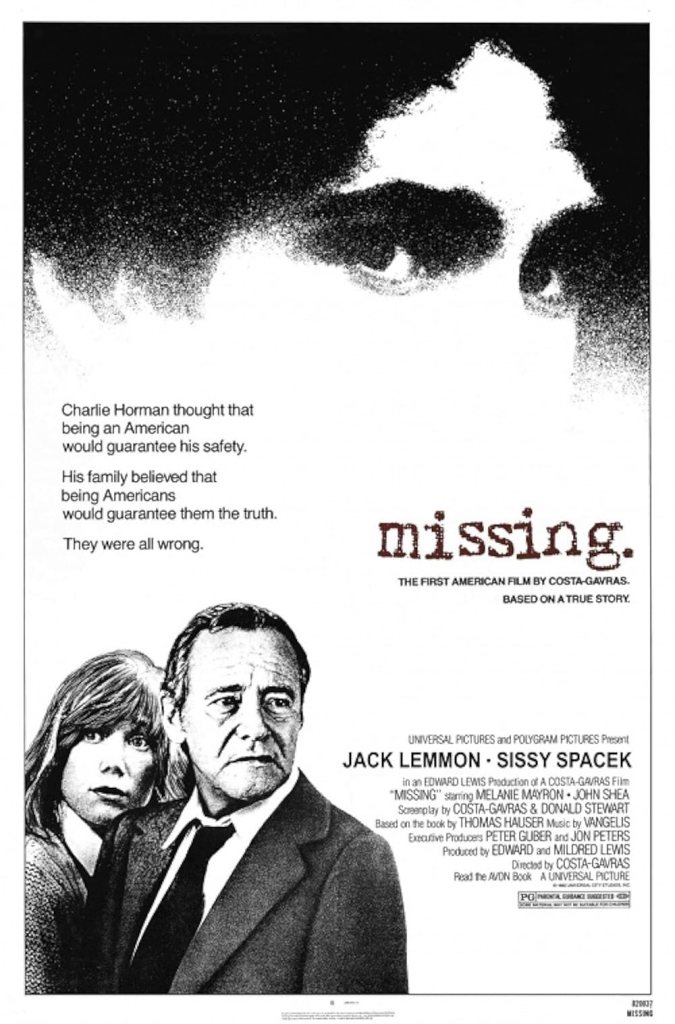
Missing (1982), directed by Costa-Gavras, is a relentless political thriller that cuts straight to the heart of a dark chapter in history—the 1973 Chilean military coup and the disappearance of American journalist Charles Horman. Jack Lemmon delivers a searing performance as Ed Horman, a father desperate to uncover the truth amid government betrayal and political chaos. Sissy Spacek matches his intensity with a quietly powerful portrayal of Beth, Charles’s wife, bringing raw emotional depth to the hunt for answers. John Shea’s depiction of the missing journalist grounds the story in heartbreaking reality.
Shot masterfully in Mexico, the film captures the chilling atmosphere of fear and oppression, driving the tension to a harrowing climax. Missing doesn’t just expose the brutality of Pinochet’s regime—it boldly calls out U.S. complicity in the repression. Awarded the Palme d’Or and an Oscar for Best Adapted Screenplay, this film remains a gripping, urgent reminder of the price of silence in the face of injustice. A must-watch political indictment that resonates as fiercely today as it did over four decades ago.






 Irregular Frequencies