
Tucked away on Sandy Park Road in Brislington, Bristol, The Sandringham Pub stands firm—a no-nonsense local, tired but proud amid the growing café culture around it. Downstairs, regulars exchange stories and catch up on the day’s events, while upstairs, political hopefuls ready themselves for a hustings meeting—an intimate, sometimes chaotic forum where candidates lay out their cases for election or re-election.
Arriving early into a near-empty room, the scene is instantly vivid: an abandoned Father Christmas costume slumps in a corner, a well-worn skittle alley runs along one side, and a Banksy print hangs silently behind. The occasional flushing of toilets, inconveniently placed near the skittle lane, forces the audience to awkwardly navigate behind the speakers—adding a quirky charm to the proceedings.
The organisers’ attempts to arrange the top table provide their own drama. Tables shuffle, six glasses of water repeatedly move back and forth, as they try different seating angles—only to concede that either the chair or a speaker will inevitably end up on the skittle alley itself.
The evening unfolds like a scene from an Armando Iannucci script, mixing pantomime and personalities with genuine grassroots politics. There are serious debates, passionate hecklers, entrenched political tribes, and the occasional bemused visitor who’s clearly taken a wrong turn on the way to bingo.
In an age dominated by spin, social media echo chambers, and soundbites, there’s something refreshingly raw and honest about these meetings. They bring people with clashing views face-to-face, encouraging listening, dialogue, and the stark realisation that shared concerns bind us more than anger divides us. Here, it’s clear: the journey matters as much as the destination.
Brexit, inevitably, looms large. Like a faltering stroke victim struggling to articulate, no other topic escapes its shadow. It’s simultaneously depressing and fascinating to watch, as each speaker’s eyes reveal a shared weariness. We’re all stuck in the same ditch, grasping for symbolic deadlines to “get Brexit done,” yet no one truly knows how to heal the fractures within families, neighborhoods, and communities.
Some politicians push for a knockout victory, but victory over whom? In life, total victory is neither practical nor desirable. The art of compromise may seem absent now—but it’s only a matter of time before she comes knocking. Let’s hope we have the wisdom to answer the door.


 In a decade peppered with cultural and economic change, the 1970s certainly churned out a vast array of musical genres. While TV sitcoms reflected the mundane of life there was also documentaries that sought out injustice and the mysteries of the world, (John Pillinger, The World in Action, Whicker’s World). In this national psyche emerged the oddity of Jake Thackray’s Yorkshire baritones penetrating the fray of well tuned southern accents, which still dominated broadcasting. My first memory of Thackray was as a young child during a magazine TV programme called That’s Life, a machine gun etiquette of consumer protection, light entertainment, performing dogs, funny shaped vegetables sitting alongside hard-hitting investigations into wrong doing. Thackray was brought up in a working-class family and enjoyed the pleasures of pale ale, rugby and pipe-smoking. After moving to Lille in France, where he taught English, Thackray became an unlikely disciple of French artists like Georges Brassen and Jacques Brel.
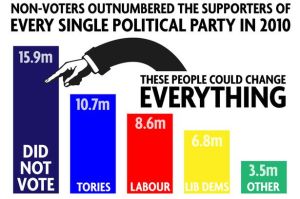 In truth, I guess there is no simple answer, disempowerment, laziness to think, willingness to participate, misguided. I’m not sure; maybe these rent-a-slogans are desperate measures to scramble together a meaning, a notion of pride, loyalty or even identity in a world where borders are falling in a virtual world to access cheap food and goods, but increasingly pursued in a physical sense. Seeking protection like a boxer caught against the ropes, awaiting the knockout punch. The best, I feel, you can do on Election Day is remember your roots, the struggles of your parents to give you a better life. That one day you will be that older person reliant on care and support and if your family fail to step up, who will? It’s also about your integrity, values, and intelligence. A whole host of pound shop economists will tell you there is no alternative because, well you’ve guessed it, ultimately the prospect of change may disturb their status, wealth or power. Protection of the status quo is their priority, albeit they will tolerate a few crumbs to offset and polish over the harder edges. No matter how we may seek it, there is never any easy way to deal with complex problems. Compassion may not seem in fashion, but without it, we turn inwards, into a spiral of darkness, blaming those less fortunate.
 Each year, Ofcom the UK’s telecom watchdog publish a report on the state of the international communications market. The report includes data from countries including the US, UK, France, Germany, and Japan. In the latest edition, it says that 39% of Americans agree or strongly agree with the statement “I am happy to provide personal information online to companies as long as I get what I want” the highest of the nine countries sampled. While 70% of respondents either agreed or were indifferent to the commercial use of their personal information in return for free services.
 Irregular Frequencies