Tag Archives: writing

Coffee Confidential

It was a town arranged from leftovers, a row of second-hand shops dealing in third hand remains: cracked mirrors still holding the blur of strangers, dead radios, suitcases with broken clasps, wedding china browned at the edges, winter coats carrying the stale shape of vanished shoulders. 

Even in daylight the street looked handled too often, worn thin by weather and repetition, as though every surface had been thumbed by generations of disappointment. People moved through it with the dull vigilance of those who had learned to expect little, pausing to point out cracks in the pavement the way farmers inspect bad soil, each split another small prophecy. The place felt abducted from itself—gagged, blindfolded, wrists cinched tight, shoved into a rusted shipping container and sent out toward Somalia, abandoned somewhere between departure and arrival, forgotten by whoever signed the papers.

A shop called Fun and Games stood near the bus stop, its sign sun-peeled and grinning above a window of warped board games, faded toy guns, and dolls whose eyes had clouded to the colour of old milk. Never had a name promised so much and delivered so little; even its doorway looked apologetic, a narrow mouth breathing out stale floor and electrical dust. The double yellow lines along the road did not forbid anything; they tempted, two tired strokes of paint inviting petty trespass, small acts of surrender, the kind committed by drivers too bored to care and wardens too defeated to enforce consequence. Wheelie bins lined the kerb in patient formation, lids half-open, solicitous as prostitutes selling their wears, their bodies offering up the sour breath of peelings, lager cans, and damp newspapers.

Speech came hard here. Conversations began, stalled, restarted; words dragged behind mouths as though each syllable had first to be hauled through mud. Laughter, when it surfaced, sounded borrowed and quickly regretted. The hotels looked like hostels pretending to dignity—peeling facades, net curtains browned by nicotine, entryways lit with that weak yellow light that belongs to places rented by the week. Faces appeared behind upstairs glass, pale and watchful, not curious so much as stranded, each pair of eyes carrying the same small hunger: not for company, not even for escape, but for somewhere the day might loosen its grip. By late afternoon the whole town seemed to lean inward, as if exhausted by the labour of remaining upright, waiting for darkness to hide what daylight had exposed.

Searching for food and coffee, I moved between places that seemed less open for appetite than for shelter, each doorway offering its own version of temporary relief. 

In The White Horse the smell of stale ale hung low beneath the lights, thick enough to wear, while men nursed pints as though time itself had to be diluted before swallowing. Shoulders rounded inside heavy coats, their coughs starting up in rough succession like old engines failing—deep, mechanical, stubborn, each one sounding as though it had been dragged up through decades of smoke and bad air. 

Dogs lay at their feet with the patience of creatures long resigned to waiting, collars slack, ears twitching only when a voice rose above the room. Talk moved in bursts: football, weather, blood pressure, lives condemned with the brittle certainty of men testing ice before stepping onto it, every opinion sharp enough to fracture if pressed too far. The laughter came hard and short, cracking across the bar before falling back into the low amber murmur of glasses, coughs, and old grievances.

I looked at the menu and left, crossed the road instead and headed to towards the corner coffee shop, which I had initially ignored, It faced The Old Town Hall, where I am working for the day. 

The coffee shop itself was one of those regional franchises built on the performance of innocence—bright menu boards, apologetic pastries, chairs arranged to suggest welcome—yet carrying the faint corporate fatigue of somewhere copied too many times to feel local and too cautious to possess character. Its windows ran the length of the right-hand side, filmed with fingerprints, strains of rain drizzle, and the slow sediment of passing traffic, each pane clouded as though transparency had become an unnecessary luxury, or perhaps a liability. 

The door sat dead-centre, opening onto warmth that smelled faintly of burnt espresso, milk, and old upholstery. Inside, sandwiches waited behind glass with a weary look, while cakes leaned under plastic domes like minor exhibits in a museum of stalled indulgence. Even here, searching for something simple—a plate, a cup, a reason to sit—the town made appetite feel like negotiation, as though hunger itself had to pass through a layer of hesitation before being served

“Americano and latte,” one of the women behind the counter called out, her voice cutting through the low mechanical hiss of steam and crockery, then hanging there for a moment, waiting to be claimed by whoever still recognised themselves in the order. 

An old man stirred from his chair with the delayed caution of someone long accustomed to his own body resisting instruction. His hearing aids sat tucked behind his ears, though they were about as discreet as a motorway pile-up—small flesh-coloured devices that only emphasised the effort of concealment, like pretending age might be edited rather than endured. 

He shuffled to the counter, shoulders pitched forward, hands already preparing themselves for the tray before it reached him, lifting it with both palms as though the cups required negotiation. The journey back to the table took concentration: each step measured, each saucer trembling faintly against porcelain. 

His wife waited opposite, hands folded, coat still buttoned despite the heat inside, her face carrying that fixed patience learned over decades of sitting through the same afternoons. He lowered the tray between them, took his seat, and she gave him only a dull nod—an acknowledgement so practised it had shed all ceremony. They said nothing. No need, perhaps. Silence sat with them like a third companion, familiar and undemanding, while their lives resumed exactly where they had paused: as they had yesterday, and the day before that, and all the quiet days before those—without surprise, without urgency, without any visible expectation that the next hour might offer something different.

Three young women in their customary black moved behind the counter with the practised rhythm of those who could work while thinking elsewhere, their conversation slipping between orders, milk jugs, receipts—half-finished sentences about nights out, cheap flights, someone’s cousin in another city, fragments of imagined departures assembled between the steam and the clatter of cups. 

They spoke of adventure as though referring to a country none of them had yet reached, somewhere beyond the machine hiss, the rinsed spoons, the endless repetition of names written on cardboard cups. Overhead, Billie Holiday hovered low through the speakers, her voice thin but insistent beneath the muttering of customers, carrying that bruised intimacy that made even ordinary air feel burdened with memory.

“Can I help you?” the eldest asked—perhaps mid-thirties.

“Could I have a large latte, extra hot, and an egg and cress sandwich please?”

By then I had already noticed how often she smiled: sometimes naturally, sometimes with the trained reflex of service, sometimes with the unmistakable effort of someone placing expression between herself and whatever the day had already done to her. 

It was the sort of smile that arrived quickly and left carefully, as though measured for effect. 

For a moment I wanted to ask what had preceded this—what ambitions once occupied her before she learned the grammar of orders and politeness, before mornings became receipts, lids, foam, and apologies—but the thought felt intrusive, almost arrogant, as though curiosity itself could become a kind of trespass. Who was I to demand biography from someone handing me coffee.

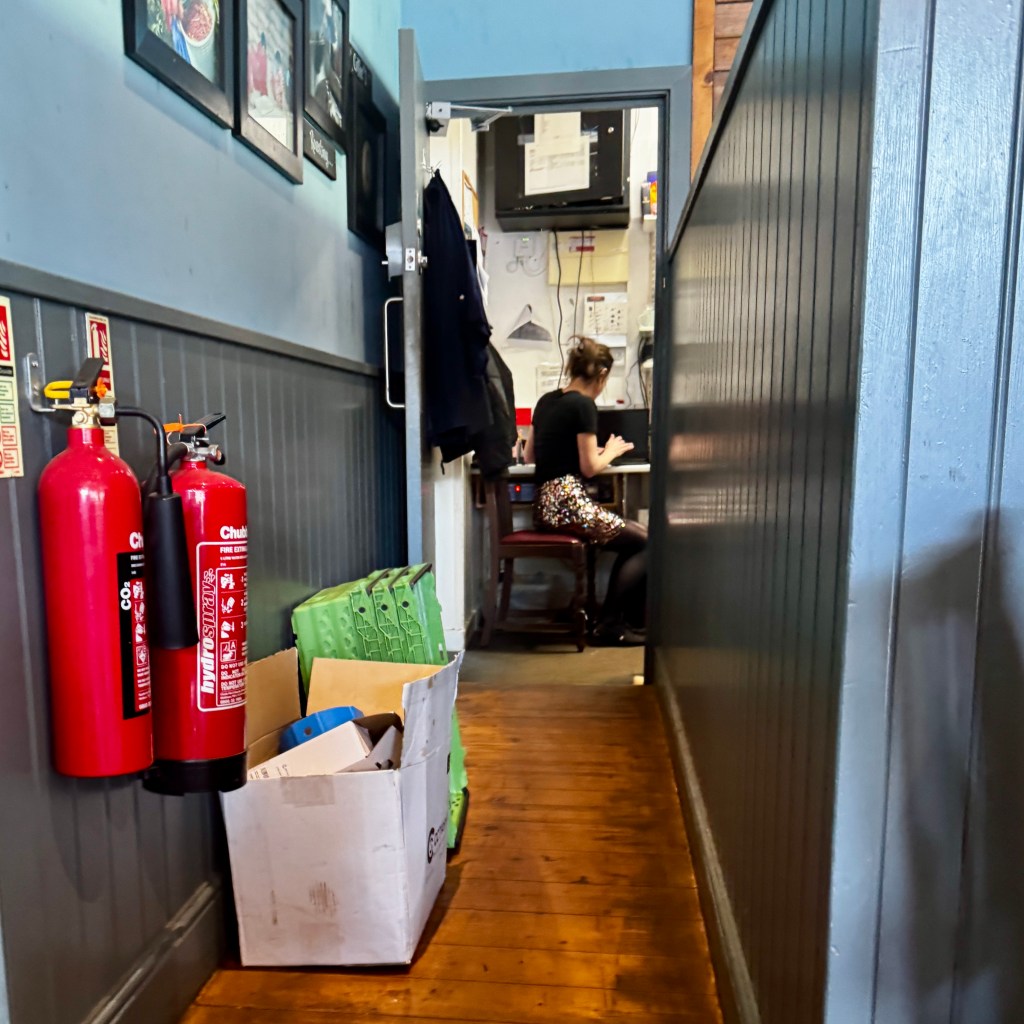
She turned to the machine, and only then did the detail appear: beneath the black apron, pulled tight at the waist and double-knotted with practical force, a sequin skirt caught the light. Dark purple and blue sequins flickered in the narrow gap where the apron parted, gathering the halogen glare and throwing it back in fractured flashes—small deliberate acts of brightness beneath uniform black. It felt less like ornament than declaration: a quiet refusal to disappear entirely into the function required of her, a small insurgency stitched into ordinary fabric, demanding that something private remain visible.

When she turned back, I smiled and thanked her. She smiled in return, and for the briefest second the expression altered—something almost imperceptible loosening at the edges, enough to suggest a life running parallel to this one: sunlight on skin, laughter without interruption, a slow walk beside the Seine, departure boards, foreign rooms, perhaps a lover who read poems badly but earnestly, someone reckless enough to believe devotion could alter geography. The thought came and vanished in the same instant, swallowed again by the next order, the next cup.

I paid with my phone, took the tray, and found a seat alone in the corner where no one would need anything from me. I switched off my hand-held radio and let the world close in—steam settling into the room, cutlery striking crockery, chairs dragging, the old couple still saying nothing, and outside the blurred windows the town continuing its slow rehearsal of itself, as if nothing here expected rescue and yet each face, in its own private way, remained faintly alert to the possibility.

As I found my seat, two police cars tore past outside, sirens flaring blue urgency across the stained windows and drowning the room in borrowed alarm. For a few seconds everything inside faltered—the hiss of the machine, the scrape of cups, even conversation itself—as every head turned instinctively toward the glass, each of us attaching our own private narrative to whatever emergency had just split the afternoon open. 

Somewhere nearby, somebody had become the centre of consequence: a fight, a collapse, a theft, a body, a domestic argument swollen beyond containment. By Monday it would be reduced to six paragraphs on page six of the local paper, padded with police statements and half-facts, then repeated online beneath photographs of cordoned pavement and speculative comments from strangers certain they understood what had happened. 

The sirens faded quickly, but their disturbance lingered, leaving behind that faint communal disappointment that nothing visible had followed.

There is something quite telling about a woman who reads hardback books—as though the object itself announced resistance to distraction. She sat two tables away, absorbed, her glasses low on her nose, a green dress falling to her ankle, tan brogues placed squarely together beneath her chair. Nothing about her invited interruption, yet nothing seemed accidental either. She carried the air of someone who had long ago negotiated a truce with solitude and learned how to occupy it without apology. 

Not loneliness exactly, but a chosen arrangement: a life edited to manageable terms after enough failed attempts at fitting elsewhere. One imagined years of compromise discarded, expectations refused, and the slow hard labour of deciding that if affection or companionship arrived now it would do so under conditions she had written herself, clauses intact, revisions closed.

Then You’re My Best Friend drifted through the sound system, and with it came the odd private violence of recognition. A song crossing decades in a few opening bars, collapsing years without warning. It returned me to the awkward brightness of youth—to first kisses conducted with more hope than knowledge, the startled electricity of touching a breast through thin fabric, the cautious ascent of a hand along a girlfriend’s thigh before her fingers closed over my wrist and stopped the gesture with practised certainty, not angry, simply firm, as though rehearsing boundaries neither of us yet understood. 

Those moments repeated themselves often enough to become their own education: desire checked, resumed, checked again, adolescence learning restraint through embarrassment. 

I found myself wondering, as I sometimes do, what became of her—what face age had drawn for her, whether she still laughed the same way, whether memory had preserved me kindly or not at all. Once or twice I had searched for her online, scrolling through names on FaceBook, convinced for a moment that recognition might survive a changed surname, but no face had declared itself, no certainty arrived. Perhaps she existed there under another life entirely, or perhaps some people remain truest only where memory leaves them: half-lit, unfinished, always just before departure. 

The woman who had perhaps learned the discipline of escape stood at the counter with both hands folded around her purse while she ordered, her voice low, almost careful, as though even here volume might count against her. Her clothes were regimented into caution: sleeves buttoned, collar neat, skirt falling without concession, every choice arranged to reveal nothing, advertise nothing, invite no unnecessary glance. 

There was something deliberate in the way she occupied herself, as if even the act of standing still had been rehearsed under scrutiny. This, I imagined, was her sanctioned hour of freedom folded into the ordinary excuse of groceries and errands—the permitted interval between obligations, small enough to pass unquestioned yet large enough to breathe inside.

When her drink arrived, she carried it to the table nearest the window, choosing a seat that allowed her both visibility and warning. She did not settle so much as station herself there, posture alert, gaze repeatedly lifting to the street with the vigilance of a soldier assigned to a quiet checkpoint where danger rarely announces itself but is never entirely dismissed. 

Each time the door opened her face altered almost imperceptibly: not panic, but calculation, the old habit of measuring who entered and whether their presence altered the room. Worry sat plainly in her expression, not dramatic, simply worn in—the kind that had been practised often enough to become part of the face itself. Yet beneath it there was also something faintly ceremonial in the way she held the cup, as though this coffee marked a private observance, a modest celebration of surviving another week unnoticed.

I wanted to believe she kept money hidden somewhere no one thought to search: folded notes tucked inside a rusted biscuit tin at the back of a cupboard, beneath sewing things or expired receipts, a private arithmetic of departure assembled coin by coin. 

I wanted to imagine that at night, when the house finally thinned into silence, she lay awake with her phone turned low, listening again and again to Leaving On A Jet Plane sung by John Denver, not because she mistook the song for rescue, but because repetition gave shape to a possibility: that one morning the hour of freedom would lengthen, the groceries would remain unbought, the cup unfinished, and the seat by the window empty for reasons no one could immediately explain.

A white man sat alone far end of the cafe: jeans pulled tight beneath a large belly, bald head catching the flat interior light, blue T-shirt stretched across a body that looked as though time had arrived early and settled heavily. He kept stretching his back in short, irritated movements, then folding his arms again across his chest with a kind of practised defiance, a posture that tried to suggest indifference but could not quite conceal the undertow beneath it—something nearer despair, or exhaustion hardened into habit. 

He was probably years younger than me yet had spent those years with such determination that he seemed to have sprinted toward age, arriving early through some private alliance of cigarettes, bad sleep, disappointment, and the slow corrosion of routine.

He watched the room the way some men watch weather: alert to changes, suspicious of interruption. His gaze moved from the counter to the door, to the woman with the hardback, to the old couple, then back again, until now and then it landed on me and stayed there a fraction too long. 

Each time our eyes met there was that brief, unspoken testing—two strangers measuring one another without admitting to it, each deciding what sort of life the other might have carried in. His stare had judgement in it, but not the clean kind; something angrier lay below, banked and waiting, like heat trapped beneath volcanic stone, never erupting, only radiating upward in faint, constant pressure.

For a moment it crossed my mind that he knew exactly what I was doing: that he recognised the writer’s theft in prolonged looking, understood that observation can feel like trespass, that a stranger’s attention may strip a person more efficiently than conversation ever could. It felt possible he knew I had already begun making him into language, gathering the clues of him—the crossed arms, the watchfulness, the silence—as though his vulnerabilities might be kneaded into shape like putty if only, I stared long enough. But cruelty has never interested me; whatever else writing takes, it ought at least to know when to step back. So, I left him his silence.

After a while he stood, tugged awkwardly at the waist of his jeans to relieve himself of discomfort no dignity could disguise, then went outside and lit a cigarette. Out there he changed slightly. People passing acknowledged him with nods, brief words, small exchanges that opened his face just enough to admit a smile—nothing deep, only those basic transactions by which human beings confirm one another’s existence without obligation. 

He answered each greeting with surprising softness, smoke lifting past his head while traffic moved behind him. Then he came back in, ordered another drink, and returned to exactly the same seat, resuming the same folded posture as though some invisible hand had placed him there again. No book, no newspaper, no phone—just stillness, deliberate and faintly ceremonial, like a broken Buddha left in a garden gone to weed, weathered but stubbornly upright.

Here, I thought, was a man who had almost certainly loved and been loved, who had known at some point the ordinary justices of life: shared bills, Sunday meals, arguments over nothing, laughter in kitchens, perhaps a child asleep upstairs, perhaps grief delivered by phone, perhaps papers signed in a solicitor’s office under fluorescent light. 

A divorcee, a widower, or simply a man whose whole bearing now suggested caution so ingrained it resembled warning: keep clear, do not mistake stillness for invitation, do not offer what you cannot sustain. And yet even in that guardedness there remained something else—not hope exactly, but the residue of someone who still came out each day to sit among others rather than disappear entirely, which is, in its own modest way, a kind of refusal. 

A young couple drifted into the shop, hands clasped so tightly it was almost a declaration. She tugged at her top constantly, a nervous, unconscious invitation, the fabric shifting to reveal more than the day demanded. He followed her with a gaze that was unguarded, unashamed, worshipping her, I could feel sex radiating from him—a heat focused, blunt in its clarity, fixated on the curve of her body, the intent clear before words were ever spoken.

They ordered sugar-laden drinks, syrupy, bright, indulgent, the kind made to dazzle the tongue and fuel the nerves of those who believe life is something to be consumed in excess. 

Both seemed built to endure it, to weather the excess of sweetness and laugh it off, to let the rush of caffeine and sugar be nothing more than the background to their larger intoxication: the thrill of being young, untested, alive. They laughed freely, leaned into each other’s space, mouths brushing shoulders, hips nudging subtly, as though every touch, every glance, was a rehearsal for life itself.

Their bodies moved with the confidence of inexperience, knowing neither restraint nor consequence yet. Moments seized in back seats of cinemas, laughter spilling over the dark, hands exploring forbidden maps of skin, the world outside reduced to a blur of streetlights and passing cars. For them, nothing beyond the shop mattered—not bills, not worry, not tomorrow.

To be young was to be fearless, to grip happiness as though it were tangible, something inherited at birth, a god-given right to be owned and displayed. They existed in the perfect clarity of now, every breath a claim, every kiss a small revolt against the slow, creeping weight of adulthood.

A family of four moved into the shop with the quiet authority of those who already know their place in the world. She led, a mother with curls of blonde that bounced with every step, her right arm traced with tattoos of butterflies, each winged creature a fleeting mark of individuality.

She carried herself with a slow, deliberate voluptuousness, the beautiful curves of a mother, that turned space around her into something warmer, heavier, more alive. He followed, shoulders back, chest open, a long grey beard tapering to points that caught the light with quiet dignity. He might have been ten years her senior, but the age carried weight rather than decline—commanding respect, envious attention, even mine, without ever asking for it.

Their children trailed politely, eyes curious but mannered, questions posed and answered with the natural rhythm of those raised in care, discipline, and affection. No theatrics, no forced smiles, no calls for attention—these were parents for whom the act of being good was inseparable from the act of existing. 

Authority here did not need to be declared; it radiated through posture, tone, and the subtle rhythm of the family moving together. They ordered, collected, and returned to their table with the quiet certainty of people who had long ago learned that respect is earned in the small motions of life: a hand on a shoulder, a gentle correction, a shared glance that held understanding.

Around them, the shop seemed to bend subtly, approvingly, as if the air itself acknowledged competence wrapped in warmth, and for a moment the ordinary routine of cups, coffee, and conversation paused to accommodate something almost ceremonial, a family simply being itself.

I say goodbye to the lady behind the counter, with a sequin dress and make my way back to the venue.

It was close to eleven when The Delines  slipped into The Oil Rigs At Night, that slow, bruised opening carrying across the hall with the weary certainty of a confession already made too many times to be withdrawn. It had always struck me as one of the finest songs ever written about a woman leaving a man—not dramatic, not vindictive, simply resolute: tenderness sharpened by the knowledge that departure, once chosen, becomes its own kind of mercy. 

From behind the mixing desk, I was already half elsewhere, listening and dismantling at the same time, my head moving ahead of my hands—cables already coiled in thought, DI boxes, mic stands lowered, lids imagined closing over foam-lined compartments, the van outside waiting like the final sentence of a long day. The music still filled the room, but mentally I had begun the derig before the last chorus had even found its shape.

Out of the corner of my eye, I caught sight of the voluptuous woman from the coffee shop, now without the four children who had earlier orbited her with such easy discipline. She stood near the back with her man pressed close behind, his arms around her waist as though the space between them could not be risked, as though even oxygen required negotiation before it passed. 

He held her with that absent-minded certainty some men carry when affection has become instinct rather than performance. Her head rested back into the hollow beneath his chin, and together they swayed almost imperceptibly to the song, her body yielding just enough to trust his balance. Nothing theatrical, nothing displayed for others—only that small, private rhythm couples acquire when years have worn away the need to prove themselves.

I took the first box down the side stairs and out into the night. The air had sharpened since dusk; cold enough now for breath to show. As I crossed toward the van, a car slid up beside the kerb and paused, waiting for two pedestrians to cross. Bass thudded so heavily inside it the side windows trembled with each beat, the sound leaking through the metal like pressure escaping a sealed room—insistent, repetitive, determined to announce itself to anyone within range. 

The car itself was all effort: polished bodywork, fitted spoiler, cheap alloys, the usual vocabulary of speed attached to something built more for appearance than velocity. Behind the wheel sat the young man from the café, his hands high on the steering wheel, face lit briefly by dashboard blue. Beside him the young woman—sugar-drunk bright, alive in every movement—nodded her head to the rhythm, laughing at something he had said. Their windows were up, but youth travelled easily through glass: that conviction that night belongs to you, that consequence remains abstract, that every road opening ahead is invitation rather than warning. He revved once, the crossing cleared, and they shot off into the dark, exhaust hanging briefly behind them like punctuation.

By the time I brought the second box out, laughter came shrieking up the pavement before the women themselves appeared. Five of them, moving in loose formation, all bright voices and bare shoulders despite the cold, singing fragments of 90s disco as though the street itself had become an extension of the night they intended to exhaust. 

Pink sashes crossed their chests—Kate’s Hen Party printed in glittering capitals—and one of them, leading the procession with the solemn absurdity such things demand, carried a male blow-up doll under her arm, its plastic limbs knocking against her hip. Their skirts were too tight for comfort, heels unsuited to the uneven pavement, makeup beginning to soften at the edges under drink and weather. Then the nearest one turned her head, and I recognised the sequin skirt: dark purple and blue catching the streetlight exactly as it had beneath the café apron earlier that day. The barista, now liberated from coffee foam and paper cups, her friends laughing and singing hard. As she gripped the inflatable figure for balance. It seemed right somehow—that what had flashed in secret under halogen at noon now belonged fully to the night.

A taxi drifted past slowly enough for the rear seat to catch the streetlight. Inside sat the woman who had read the hardback book, her face turned to the window, features pale behind the glass, distant and suspended, as though already half removed from wherever she had spent the evening. 

She looked not at anything in particular but at everything passing at once, her expression flattened by reflection until she seemed almost aquatic, like a mermaid transported badly inland and learning to survive behind glass. I smiled something between greeting and reflex. If she saw it, the taxi moved too quickly for her answer to arrive.

The third and final box was heavier, awkward through the shoulders, the kind that makes you aware of the hour in your spine and your age. Across the road, outside Wetherspoons on Park Road, the bald man from the coffee shop leaned against the wall rolling a cigarette with thick fingers that no longer entirely obeyed him. 

His large belly pushed against the hem of his blue T-shirt; his balance had loosened into something uncertain. He cupped the cigarette from the wind, lit it, inhaled, then stayed there for a moment with one shoulder against the brick as if checking whether the wall intended to remain trustworthy. When he finally moved, he did so in a slow diagonal toward the town park—wobbling, correcting, muttering to himself, a private ruin making its negotiated way home through the dark.

Back inside, the hall had emptied into practical silence. The audience were gone, applause already memory. Musicians packed guitars into hard cases, folded leads, checked pockets for tuners and capos. A snare drum tightened once, then stopped. Someone laughed softly near the stage. The venue manager moved through the room with the tired efficiency of habit while I checked what remained to be lifted in the morning. 

One final look at the stage, then the lights went out in sections, darkness arriving from the corners inward until only the stairwell glowed. She armed the alarm, locked the doors, shook my hand, wished me good night, and disappeared into her own end of the evening.

Keys in hand, I moved toward the van. It was then I noticed movement in the coffee shop doorway opposite: slight, still, almost folded into shadow. Something in the posture stopped me—an instinct older than thought, the body recognising distress before the mind names it. I took a few steps closer.

It was the woman who had spent the afternoon by the window, the one whose freedom had seemed measured in stolen minutes and careful glances. Coat buttoned to the throat, collar neat, skirt falling with the same severe discipline as before. Even now, every part of her looked arranged to reveal nothing, advertise nothing, invite no unnecessary question. 

She raised her head.

The bruise on her cheek caught the streetlight. 

Fresh, red-blue, recent. There were scratches along one hand, thin and angry, and her eyes had that swollen brightness crying leaves behind. 

“Are you alright? Can I help?”

For a second she tried to answer and nothing coherent arrived, only breath catching against whatever words had become too large to carry.

“Can I phone somebody for you?”

She bent, lifted the suitcase, and when she straightened there was something newly set in her face—not calm exactly, but resolve hardened enough to stand upright inside fear.

I’m leaving on a jet plane,” she said.

At that exact moment a taxi pulled up behind me, engine idling, indicator clicking into the night like a second hand marking the moment she stopped belonging to wherever she had come from.
Webster Street

On my walk today I passed a black wheelie bin with the number 57 painted boldly across it in white—thick strokes, the sort of handwriting that seems to speak in warning: keep off, or else. What else amounts to in older age I am never entirely sure; as a child it usually implied some immediate threat of violence, vague but convincing enough to be obeyed.

But I digress. The number caught me because I was born in a house numbered 57: a small two-up, two-down terrace on Webster Street, a street that no longer exists. We went to watch it being demolished, sometime around 1968. I remember holding my father’s hand while the great iron ball at the end of a crane swung with careless authority, striking the buildings until they opened in heavy blooms of dust. Rooms we had occupied surrendered one by one. Wallpaper from walls beside which I had played peeled briefly into view before collapsing into heaps of brick and plaster. Men in overalls, boots, hard hats, faces greyed with dirt, gestured upward to the crane driver, directing where the next blow should fall.

Something died for me that day, though I have never fully managed to name it. Even now I struggle to understand the feeling. Perhaps every ending contains a small death and asks for its own measure of grief. Perhaps that is all it was. Or perhaps my mind still arranges these things like an old Rock Hudson film—life once lived in rich colour, but memory projected back in black and white. Certainly, there is no colour in that scene when it returns.

Yet I can still walk through 57 Webster Street in memory with remarkable precision. The stone step before the front door. The dark green wood, the dull black fittings worn by years of touch. Inside, the staircase immediately ahead, and the walls lined with discoloured woodchip wallpaper, curling at the top as though attempting escape. The front room held an open fire, a settee, a single chair, collapsing leaf table and chairs, small wardrobe—nothing remarkable, yet complete in itself.

Beyond that, the kitchen: a large Belfast sing, drawers so badly fitted they required a kind of ritual wrestling before surrendering, and a gas cooker that permanently smelt faintly of escape gas and answered every lit match with a sharp explosion of flame. I still remember watching my parents strike the match, ignite the burner, then instinctively pull their hand away with a curse before calm returned, as though this small domestic violence belonged to the accepted order of things.

Outside was the enclosed yard: the toilet block, coal store, and wash house where a twin-tub machine stood among bottles of chemicals kept firmly out of reach. A tin bath hung from a hook on the wall, waiting its turn. Above, the washing line stretched across the yard with its wooden prop holding the weight of damp sheets against the sky.

Upstairs there were two rooms only, held tightly beneath the roof as though the house itself had little more space to give. In my parents’ room their bed took most of the floor, with my own bed placed at its foot beneath a wood-framed window, leaving barely enough room to edge sideways between the two. In winter the glass gathered cold so completely it felt as though the night itself had leaned against it.

Beside it was the doorway to my sisters’ box room, scarcely larger than the bed it contained, with only a small chest of drawers pressed in beside it, as though furniture and walls had negotiated terms and neither had much won.

A tall cupboard stood crooked in an alcove in my parents’ room, slightly leaning, its door reluctant on its hinges. That was where I hid whenever my father came looking for me after my latest act of upheaval or minor rebellion—holding my breath in the darkness, convinced the thin wood might somehow grant invisibility.

The old fireplace had long since been boarded over, surrendering whatever warmth it once offered, and in the far corner my mother’s dressing table sat awkwardly fitted into the remaining space: a large mirror at its centre, two small drawers either side, and two deeper drawers beneath, all carrying the faint, mixed scent of face powder, hairspray, and old wood.

As a child I would often sit before that mirror and stare at my own face for long stretches, studying it with quiet seriousness, trying somehow to imagine what age would do to it—what shape the years might carve, what kind of man might one day look back at me from the glass.

It seemed then an impossible distance, old age belonging to other people entirely. Yet now, when memory returns me to that room, I sometimes think the child looking forward and the man looking back are still measuring one another across the same mirror

The Night of the Hunter

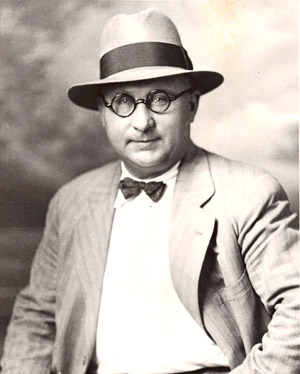
Harry Powers

Harry Powers (Cornelius O. Pierson)

On the 20th September 1931 Harry Powers was hurriedly taken by police to Moundsville State Penitentiary for his own safety. A large and angry crowd had gathered outside the small County Jail demanding Powers be handed over to them, so they could dispense mob justice by lynching him in the streets. The local Fire Department set their water hoses upon the crowd in an attempt to disperse them, but it would take the engagement of tear gas before the authorities could gain control of the situation.  

Moundsville State Penitentiary, West Virginia was an imposing gothic style building that would not go a miss in a Stephen King novel.  On March 18, 1932, Harry Powers was taken to its scaffolds. Upon his arrival he was offered the opportunity to make a last statement, but declined. A cap was placed over his head and at 9:00 am the guard pushed the button. Powers dropped through the trap door and 11 minutes later he was pronounced dead.


Cornelius O. Pierson

Operating under the alias Cornelius O. Pierson, Harry Powers wrote a succession of letters to Asta Eicher who was a recently widowed mother of 3 children. After a brief romance Powers took Eicher on a trip leaving her 3 children with a friend, Elizabeth Abernathy. Shortly afterwards Abernathy received a letter advising her that Powers would be coming to pick the children up to join their mother. Powers then made contact with Dorothy Lemke, who lived in Masschuetts and was seeking love through a lonely hearts advert.  Asta Eicher, her 3 children and Dorothy Lemke all disappeared with no explanation.

Police investigating their disappearances became suspicious when the name Cornelius O. Pierson appeared as one of the last known contacts of Asta Eicher. The police quickly established there was no one registered under the name of Cornelius Pierson, but his description matched that of Harry Powers who was arrested and a search warrant was issued for his home.  Blood, clothing, hair and a burned bankbook where all found and following the excavation of freshly filled ditches the bodies of Asta Eicher, her children and Dorothy Lemke were uncovered. Postal records later indicated that Powers had opened up his own lonely hearts ad using his alias Cornelius O. Pierson. Replies to his advertisement were pouring in at a rate of 10 to 20 letters per day. Love letters were also discovered on the property addressed to several women, whom he intended to kill and steal their money.

Romance, musicals and mellow dramas

The 1950s are synonymous with films featuring the likes of James Dean, Henry Fonda, James Stewart, Marlon Brando and Frank Sinatra. The majority of these films tended to be musicals, clean cut American westerns, mellow dramas and comic romances. Whilst films presenting more challenging narratives were starting to emerge like Rebel Without a Cause these films were rare due to the emergence of TV. The big film studios did not want to potentially disturb or frighten away their family audience who also brought vast amounts of  popcorn, ice-cream and soda drinks during the cinema visits.

Strange Author 

The author Davis Grubb had a distinct characteristic of only being able to write whilst on a train. An extreme recluse, refusing to travel in cars and seldom spoke to anybody.  Using the case of Harry Powers, Grubb in 1953 wrote The Night of the Hunter.  In the book Grubb explores murder, social corruption, misogyny, domestic violence, the hypnotic force of religion, family breakdown, alienation, poverty and child cruelty. The book’s main character (Harry Powers), who after serving a sentence for stealing a car presents himself to the outside world as a prison chaplain. Using information he discovered in prison from his soon to be executed cellmate the “Reverend” Powell cons his executed cellmate’s widow into marrying him with the hope that her children will tell Powers where their father hid the $10,000 from his last bank robbery. After killing their mother Powell embarks on a hunt for the children.

NightofthehunterposterIn 1955, the book was made into a film. Remaining true to the narrative of the book the plot focuses on a corrupt reverend-turned-serial killer Harry Powers, superbly played by Robert Mitchum. The director of the film was no other than the legendary actor Charles Laughton. The lead role of Powers was initially earmarked for Laurence Olivier, but the studios were not eager to associate the clean Olivier image with the film. When approached by Laughton to play Powers, Mitchum is reported to have replied, “If you are really going to make a movie about a wife murdering, child stalking manic of a preacher, doing his evil deeds in God’s name, them count me in.”  

The author of the book Davis Grubb was also an accomplished artist who drew sketches of the characters he would write about. Learning of this Charles Laughton kept in contact with Grubb and repeatedly asked him to send visualisations of facial expressions he had in mind when writing the book. Grubb obliged by sending over 100 pen and ink drawings during the making of the film. This process helped contribute towards the stark realism and bold expressionism throughout the film.

I first came across The Night of the Hunter in the mid 1970s one Saturday evening in my teenage years. Having seen the name Robert Mitchum listed in the TV schedule I decided to tune in and was expecting a run of the mill western. The opening sequence quickly dispelled that notion as Miss Cooper’s (the savour of orphans in the film) disembodied head narrates from a heavenly night sky, “Beware of false prophets…”  Robert Mitchum is then introduced singing hymns as he travels in search of his victim. Tortured by his hatred of women Mitchum’s character carries a switchblade pocket knife, which he considers his holy sword.

The murder of the Shelley Winters character is reminisce of a vintage black and white silent movie and shortly afterwards  the children hiding in the cellar of the family home whilst Mitchum sits outside calming singing to the children inside before he starts to terrorise them is particularly unnerving. As the children make their escape on a boat downriver Mitchum pursues them on horse bank.  Upon seeing the silhouette of the murderer on the ridge of the hill cast by the moonlight one of the children chillingly remarks, “Don’t he ever sleep?”  After the films first private screening with only  Charles Laughton and Paul Gregory (producer) present both sat in complete silence as the last of the film flickered through the reel. They had not expected the film to have been so odd. Gregory turned to Laughton (who was a fragile soul at the best of times) and said, “Charles they’re not going to know how to sell this picture and I think we are going to be in trouble.” He was right. The Night of the Hunter was not a commercial success upon release and Laughton fell into deep depression. Whilst he had several film projects lined up Laughton would never direct another film.

In many respects the film has not faired well with time. Its dialogue, script, acting and editing through today’s eyes may seem clumsy and even corny,  but the authentic innovation and atmospheric feel the film presents has influenced many film makers Spike Lee, The Cohen Brothers, Jim Jarmusch, David Lynch and Martin Scorsese have all tipped their hats to The Night of the Hunter as a major influence on their craft. Whilst dated this highly original and brilliant good-and-evil parable, with “good” represented by a couple of farm kids and a pious old lady, and “evil” literally in the hands of a posturing psychopath is rightly considered a classic.


Oh bondage up yours!

This girl is no fool

This women is nobody’s fool

“Biblically chauvinistic” is how the Rolling Stone magazine described the James Brown 1966 record “It’s a Man’s Man’s Man’s World.” As a record it certainly takes some beating when promoting a stereotype. A stereotype, which has been continuously reinforced throughout the music business since its conception.

Whilst the mainstream charts may be dominated by female artists research constantly reveals that women working in the music business earn far less than their male counterparts – a staggering 47% of women in the music business earn less then £10,000 per year.

It is a business that is dominated by male executives who control its means of production, marketing and recording output. Recording artist Lily Allen recently observed, “You will also notice of the big successful female artists, there is always a ‘man behind the woman’ piece. If it’s Beyoncé, it’s Jay Z. If it’s Adele, it’s Paul Epworth. Me? It was Mark Ronson and the same with Amy Winehouse.”  These attitudes prevail throughout the music business right down to the basement end of manufactured pop. The banality of Miley Cyrus ‘tweaking’ caused a media stir, which was possibly related to Cyrus’s history as a child star for the Disney Corporation. Whilst Cyrus’s performance might be seen as silly and tedious the fact is Iggy Pop has been ‘twerking’ for 40 years, including the odd penis exposure as well as regularly humping his amplifiers on stage – yet he is considered a rock god.

There is something very disturbing about a popular culture that increasingly portrays women as disposable commodities frequently being hunted down by a serial killer or subjected to the creepy attention of a male artist who is acting like a potential candidate for inclusion on the sex offenders register. Although given the recent spate of celebrities facing sexual assault charges in the UK they may not be acting. Equally repugnant are those fellow men who shout “political correctness has gone mad” every time these issues are raised. Let’s be honest if you are the type of tool who enjoys women being portrayed in this way then it is highly unlikely you have read this far into this blog and you are properly jerking off to that misogynist Robin Thicke video.

“Ignore it” you may say after all there is an off button I can push  Well I did, but ignoring it does not make it a right. Switching off a TV does not mean switching off your brain and that is the real choice here. I am not for one minute advocating censorship far from it. In my view those who produce this material should be exposed to additional taxation. The revenues generated should be earmarked for support services for women who become victims of male violence. If a sovereign country was inflicting such harm on another country surely we would be expecting intervention, possibly economic sanctions.

Those women who have stood up, challenged and turned the tables on the status quo have faced ridicule or worse. The singer-songwriter, multi-instrumentalist, actress, author and philanthropist Dolly Parton has throughout her career been the subject of ridicule from taunts of trailer trash, cheap, dumb blonde and least we forget the breast obsession. Web sites are dedicated to crude jokes about Parton.  Realising these circumstances Dolly Parton played the card of self-parody as well as deploying her very clever business brain. This has enabled her to amass a financial fortune and make music that she wants to make.  This attitude towards women is not a modern phenomenon, which has  been cooked up by dead beat rappers with their pathetic lyrics of ‘hoes and bitches.’

holiday

Billie Holliday – used and abused

The harrowing demise of Billie Holliday in the 1950s is a prime example. Most media stories concerning Holliday’s torturous death tend to focus on sexual violence and illicit substances. What is often overlooked is that in her final years Holliday was swindled out of her earnings and died with $0.70 in the bank.  As an incredibly gifted, yet troubled artist Holliday was hounded to the very end. Whilst dying police raided her hospital room and placed her under arrest until she passed away on 17th July 1959. She was 44 years old.

The magnificent Nina Simone became the catalyst for change in the 1960s. Strong, intelligent, outspoken and a versatile musician she became a role model for musicians (female and male). Simone started playing the piano at 3 years old and by the age of 10, she was perfuming piano recital in the town library. Like Holliday, she was ripped off by the record companies. She saw very little money from her first record, the top 20 hit of “I Love You Porgy.” Simone always characterised record companies as “pirates.”   

Over the coming decades, Simone took increased control over her career and destiny as an artist, which not only provided financial rewards but enabled increased creative freedom. At the time this was unparalleled for both a female and Black artist.  The song Mississippi Goddamn, which she released in 1964 was written by Simone after the murder of Medgar Evers. Although the song contains a jolly rhythm it is a scathing anti-racist tour de force.  Towards the end of her life Simone became increasingly erratic with legendary mood swings. In 1985 she fired a gun at a record executive whom she considered was stealing her royalties claiming that she tried to kill him, “but missed.”

The 1960s produced many iconic female artists Dusty Springfield, Nico (Velvet Underground) Grace Slick (Jefferson Airplane) and Janis Joplin for example. It is a decade that increasingly witnessed the use of  ‘tabloid sensationalism’ as a weapon against women. Singer, songwriter and actress Marion Faithfull were subjected to sordid and untrue media reports in 1967 concerning her sexual relationship with Mick Jagger. Whilst the headlines and speculation did little to hinder Jagger’s career. In fact, the stories further enhanced his bad-boy reputation, but for Faithfull, her career was badly damaged. 27 years later Faithfull observed, “It destroyed me, a  woman in that situation becomes a slut.” Before Beyonce, there was Diana Ross (formerly of The Supremes).

The Supremes were a product of Barry Gordy’s Motown conveyor belt of popular hits during the 60s and 70s. Gordy was the original Simon Cowell with the gift of identifying and bringing together pop talent, along with tightly controlling and carefully managing their public image. Whilst Ross and Gordy were romantically entwined for Gordy it quickly became a case of biting off more than you could chew syndrome when it came to Diana Ross.

Whilst The Supremes were on a UK tour in the 1960s Gordy insisted The Supremes perform a version of Dean Martin’s “You’re Nobody Till Somebody Loves You.” Gordy believed that such a performance would enable The Supremes to access a slot on a mainstream UK television programme. Ross refused outright. “I could not explain anything that made sense to her,” Gordy said. “She refused to do it completely.” That’s when Gordy realised, “if she didn’t do it, I knew I could not manage them.” Ross went on to become one of the biggest selling female solo artists in music history.

Joni Mitchell produced and released her seminal Blue album in the early 70s whilst at the same time Jazz drummer Karen Carpenter was persuaded to move centre stage and sing for the brother/sister duo the Carpenters. It may have taken until 1979 for Suzi Quatro to score a hit in her country of birth (USA), but Quatro was a constant presence throughout the 70s in the UK charts. Quatro’s trademark leather jacket, jeans, bass playing leadership and pop-rock anthems presented an altogether edgier imagine that had a significant influence and impact. An influence that has sadly been underestimated given for many young people Suzi Quatro was the first female artists who were seen to be the leader of the pop-rock group on mainstream TV. By the mid-70s Kate Bush and Patti Smith emerged. Two diametrically opposed artist who commanded respect through their craft. Smith went on to release what many still consider to be one of the most quintessential and influential rock album’s of all time ‘Horses.’  

1975 also saw the release of the electro-pop ‘Love to Love You Baby’ by Donna Summer that pounded the dance floors of every credible disco. The song, which featured Summer moaning and groaning as if in the raptures of an organism would cause controversy around the world. It also presented the artist in a highly sexually charged way that would take Summer years to shake off. The song and its producers eventually left Summer feeling like she had no control over her life and went on to suffer from bouts of depression and insomnia. Summer would later become a born-again Christian and sue the producers of the record. After the legal settlement Summer decided to exclude “Love to Love You Baby” from her concert playlists and did not perform it until 25 years later.

As the 1970s were drawing to a close there was something quite different about the female artists who were emerging outside the mainstream. Whilst the recording output varied according to taste. The confidence and attitude of the female artists was not in dispute. Operating within an increasingly political environment a whole bunch of strong, independent, intelligent and often conformational female artists were playing a leading roll in the rock scene.  It was a time when Siouxsie Sioux (Siouxsie and the Banshees), Fay Fife (The Rezillos), Gaye Advert (The Adverts), Debbie Harry (Blondie), The Slits, Pauline Murray (Penetration),  Tina Weymouth,(Talking Heads), Joan Jett (The Runaways) and the glorious Poly Styrene (X-Ray Spex) to name a few took a male-dominated world and shook it by the throat. A quick search on Google for Penetration performing ‘Don’t Dictate’ live will emphasis the point as Pauline Murray tackles men in the audience head-on. It was another song from this period, which had a greater influence on me personally.

Released in 1977 “Oh bondage up yours” was the debut single by X-Ray Spex.  Polly Styrene was the bands’ lead singer and main songwriter who described the song, “as a call for liberation. It was saying: ‘Bondage—forget it! I’m not going to be bound by the laws of consumerism or bound by my own senses.’ It has that line in it: ‘Chain smoke, chain gang, I consume you all’: you are tied to these activities for someone else’s profit.” 

As I grow older and start to see the world more holistically I can often look back at key moments when a stake was placed in the shifting sands of my life. These stakes are important because they create a focus point when somethings clicked. When I get a cold chill after being exposed to yet another pile of misogynist crap by a retarded hunk in plastic bling rubbing his small codpiece against a scantily dressed women. I can point back to buying the original 12″ vinyl version of “Oh bondage up yours” in 1977.

Every cause has a counter effect and what had been achieved in the 1970s was to be challenged throughout the 1980s free for all and sod thy neighbour attitude. Samantha Fox’s was 16 years old when her mother submitted several photographs of her daughter in lingerie to a Sunday tabloid newspaper competition (Girl of the Year amateur modelling contest). By the 198os Samantha Fox was a popular topless glamour model in a daily tabloid. In 1986 Fox choose to take up a new career as a pop star. Her first release was the tacky ‘Touch Me (I Want Your Body)’ that reached No. 1 in seventeen different countries. She went on to sell more than 30 million albums and co-wrote the song “Dreams” for girl group All Saints’s 2000 album, Saints & Sinners. Although she was credited as “Karen Wilkin” because the group refused to record the song if Fox’s real name was used. In 1984 Sheena Eastern had a hit with a Prince written song ‘Sugar Walls’ a pseudonym for Eastern’s vagina.  By the close of the 80s Cher was to be seen cavorting around a battleship in a fishnet body stocking rattling out the hideous ‘If I could turn back time.’  Amongst this drivel there were occasional rays of sunshine from the likes of Chrissie Hynde (The Pretenders) and the Sugarcubes whose lead singer Bjork was to became one of the most original and innovative female recording artists of all time.

2778_Bjork_photo_1

Thank god for Bjork

As with most cases in life, it is not those at the vanguard who reap the rewards of their struggles. Kim Gordon (Sonic Youth), Courtney Love (Hole), PJ Harvey, Riot Grrrl, Sleater-Kinney, Grace Jones, Beth Ditto (Gossip), Poison Ivy Rorschach (The Cramps) and the stunning Skin (Skunk Anansie) were to find their journeys just that little bit more easier because of the women who had gone before. In turn, this made for a more creative and fertile music scene for the rest of us to enjoy. It would of be interesting to hear the views of these female artists regarding female artists in the mainstream pop world today. I can only guess that for many it will be a case of raised eyebrows and recognition that syrup manufactured girl pop groups will always have a place.

I struggle to envisage many will sign up to the ‘girl power’ of the Spice Girls call to arms, “I wanna, I wanna, I wanna, I wanna, I wanna really really really wanna zigazig ha.”  In truth, their struggle and achievements will seldom be recognised in the mainstream, because the mainstream needs to be controlled and manipulated from above. The advent of technologies has in many ways released the creative artist to pursue their particular path, but success on a scale that will enable economic independence remains a long way off for many female artists.  As a father of 3 daughters, it is with great relief that when foraging around Bandcamp I have discovered such an amazing range of female artists who are producing some truly magnificent material. To name a few:

xray


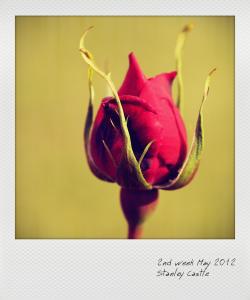
Stanley’s Magical Rose

2nd week May 2012Silence. The fragility of stillness is like numb and paralysed limbs void of energy, redundant. Disturbed only by the rhythm of breathing. Life’s ever-decreasing cycle, unachieved ambitions. Closed eyes and memory flickered dreams projected like old camera films on stained wood chip walls. The taught rituals of work from the first day to first weeks pay. Good days, the bad days and the in-between days, but always the grind. Homemade sandwiches, canteen-banter. Dirt pitted hands, stewed tea, page 3 and practical jokes. Dust in the hot foundry that told no lies and hid no secrets. Shudders and cries of sweat covered men as splashes from molting metal discovered unprotected skin. The cranking cogs that churn day in and day out. Sulfated sands. Weakened lungs are wheezing accidental poetry. Now speeches are made, and words evaporate from unintended lips. A £250.00 gift voucher. A shake of hands. A promise of continued friendships followed by a thoughtful,“ goodbye.”

Awaken. The first sense is confirmation of surrounds. Open eyes. Traffic was passing without intent. A chilly June morning beckons as the 6 am alarm sounds. The first domino of the day falls for Stanley, and the momentum starts anew. A routine of acceptances had to be maintained. A deceiving Sunbeam has penetrated the gaps of his faded paisley curtains. Across the polka dot duvet, it searches up the chimney breast, glancing the photograph of his parents who offer warmth in returning judgments.

The bookshelves constructed while listening to a transistor radio and interruptions from his mother with offers of tea,  one sugar, tuna fish sandwiches, and a custard cream biscuit. The shelves crammed with diaries, poetry books, autobiographies, George Orwell novels, photograph albums and the occasional treasure discovered in second-hand bookshops. A shower and piss down the plughole. Watching the yellow whirlpool dilute and disappear.

Dressed, tea, two pieces of toast. Stanley stands by the front door, pauses, inhales a profound conscious breath, turns the lock, and opens the door and steps outside. The housing estate is quiet. It’s young inhabitants whose lives seem full of noise and disputes sleep, recharging their batteries like the mobile phones they possess on pay as you go contracts with unlimited texts. Stanley stands motionless. The bus is late. The glass panels of the shelter lay shattered and, like the fragmented lives, he witnesses on most days nobody was keen to pick up the pieces and put it back together again. Warm breath lifts like clouds. The shattered glass grates under his feet as he steps onto the bus. He nods to the driver who nods back; no words are exchanged, none is necessary, and the bus pass is presented.

Faraway places were to remain distant places for Stanley. Although he envied those who travelled he was not bitter, he celebrated their fortune and sought any opportunity to find travellers to discuss their experiences. Often disappointed with tales of cheap alcohol, crowded beaches, and industrialised hotels. Since his redundancy from work five years ago Stanley had been volunteering three days a week at a local charity bookshop. The shop had become his universe where he learned and explored faraway cultures from abandoned books delivered to the stores from house clearances after an elderly death.

2nd week in May 2012, It was 3 years ago when cleaning old stock from the dark basement that he came across a book entitled ‘Physic Transformational Meditation, as Practiced by the North Korean Talesi Monks.’ Little is known of the Talesi Monks, and it was the only book Stanley discovered on the subject after extensive searches of local libraries, the Internet and retail bookshops.

Feared by their Japanese rulers in the early 1900s and the secretive North Korean regime all Talesi monasteries had been systematically destroyed, their practices outlawed, old monks sent to isolation camps and the separated young to state re-education programmes. The book brought instant warmth to his hands when he picked it up, which had encouraged him to set it aside. Upon opening the book, he discovered a small white-foiled package, which was acting as a bookmark for the section entitled ‘Teaki the practice of dreaming and dying.’

The little white-foiled packet contained a single seed. An individual child Stanley was born to parents who were much older than any of his peers. By 15, he became the part-time carer for his aging parents. His parents had both died while Stanley was in his 50s. Now he found himself at 71 years old living alone in the house where he was born, brought up and no doubt one day would die in. Reflecting on his circumstances, he knew his choices, which he had made without regret.

To avoid the constant disputes between neighbours, children beavering away like a colony of worker ants intent on dismantling the housing estate brick by brick and the regular intrusion of police raids seeking to extract the latest suspect for questioning Stanley timed his arrival home in the early evening. It was March when Stanley planted the seed and placed the small pot by the kitchen window. He had tendered to its every need with daily dedication. When the foliage was about 2 inches long, he feeds the plant a high nitrogen food to encourage foliage and stem growth. When the stems started to elongate, he had decreased the nitrogen feed to promote a full bloom. During late May, the buds began to open and expose the delicate dark red petals.

The following morning Stanley had followed his routine. With a spade in one hand and potted rose in the other Stanley made his way to the large grassed common area that lay in the centre of the housing estate. In the heart of the common area, he dug a small hole, knelt down, planted the rose and stood back. Immediately the sun’s rays broke through the morning clouds. A tender, sweet smell emerged from the rose and entered Stanley’s nostrils. He stood perfectly still. It was one hour before his neighbour Angie Ward, who had been peering at Stanley for 45 minutes through her bedroom curtains, came over to see what he was doing.

2nd-week June 2012When Angie Ward caught a smell of the tender fragrance she too immediately stood still, relaxed, let out a deep sigh and closed her eyes.Next, it’s was Tom Ridbridge, the neighbourhood thug who was to succumb then Jenny Heartbelt, one by one this reoccurrence was maintained until 11.45am. By this time every resident of the estate was standing in a large circle 100 people deep, in a state of total bliss and calm.

By 12noon the police were in attendance, but were powerless due to the numbers and density of the residents they could not access the centre of the circle to ascertain the cause nor were they able to smell the fragrance of the red rose. No matter how many times they demanded information the residents did not respond and only continued to remain silent, head slightly bowed, as if in deep sleep.

TV crews from the local media arrived. Politicians, who had not been seen on the estate for many years pronounced theories and point accusations at their opponents. Noble people from the town hall held discussions into the phenomena, which was taking place in their jurisdiction and without their consent. They passed emergency resolutions demanding the residents to disband and return home, but to no avail. As the day slowly became, night police helicopters hovered above with piercing searchlights scanning the crowd below. Barriers were erected to prevent people from entering or leaving the estate. At 11 pm the chief of police Edmond Clarke addressed the residents through his standard police issue loudhailer, “I have been ordered to disperse you all from this unlicensed gathering. I will give you until midnight to do so. If needed, I will use force, so please disperse peacefully now,” but no response was forthcoming.

At 11.55pm, Stanley opened his eyes, bent down and removed the red rose from the soil and placed it back into the pot. He stood up and like a regimented army his fellow residents slowly came to their senses, smiled, turned and calmly started to make their way back to their homes in silence.

10 am the day after; Stanley was sitting in his front room enjoying a cup of tea when he realised a calmness he had not felt for a long time was emanating from the streets outside. Calmness he had not experienced since before his parents had died. He glanced at the rose, which he had placed on the living room table. Its colour had drained. Leaning forwards Stanley took a photograph with his Polaroid Camera and wrote a single word and the date on the photo.

He sat back, closed his eyes, inhaled gently, smiled, and exhaled a deep sigh followed by a low murmur. His hands relaxed and opened on each arm of the chair. His body eased into the contours of the seat. A warm glow appeared in front of him.

Teaki