Category Archives: Chewing the Fat

the Cost of Complacency

Public exposure to government missteps has steadily mounted. Just over a week ago, officials admitted a “communications mix-up” caused the UK to miss a critical deadline to join an EU scheme for acquiring additional ventilators — a glaring failure that exposed the cracks beneath the polished surface.

Until then, No. 10 had appeared ahead of the curve, buoyed by a new Chancellor adept at managing the public message. But such fiscal and rhetorical sleight of hand can only cover so much before the illusion fades.

Let us recall that as early as January 2020, governments worldwide were aware of the severity of COVID-19. Countries that responded quickly — taking decisive early action — now find themselves better positioned to manage the crisis. While no one claims the challenge is simple or painless, these nations report proportionally fewer deaths and have deployed strategies such as lockdowns, clear public health advice, and significant economic stimulus packages to cushion the blow.

At the heart of effective response lies mass testing — a vital tool to hunt down the virus, trace its spread, and impose targeted restrictions where necessary. Germany epitomises this approach, with its rigorous testing programme enabling swift, informed decision-making and a more controlled outbreak.

Herein lies a stark contrast in leadership styles and preparedness between Germany and the UK. German Chancellor Angela Merkel, armed with a doctorate in quantum chemistry, possesses the scientific literacy and intellectual discipline to understand and trust the counsel of experts. Germany benefits from a well-resourced healthcare system and a robust industrial base, equipping it with both the capacity and capability to mount a measured response.

In the UK, by contrast, we have a Prime Minister better known for his populist rhetoric and a penchant for a “pound-shop Churchill” performance than for grounded, evidence-based leadership. This style may rally certain segments of the public but does little to inspire confidence in the complex task of pandemic management.

The consequences are tangible and grave. The government’s hesitancy to ramp up testing, the delayed lockdown, and the absence of clear, consistent communication have all contributed to a response less effective than it could have been.

This is not merely a question of political style but one of lives saved or lost. As the crisis unfolds, the gulf between countries that acted decisively and those that hesitated becomes clearer, with real human costs.

In a moment that demands clarity, competence, and humility, political theatre and spin will not suffice. The UK’s future will depend on learning from these missteps, embracing scientific expertise, and rebuilding public trust — all of which begin with honest accountability.

For those willing to look beyond the headlines and memes, the real story is far from over.

From January to March 2020, the Johnson administration was marked by an unusual blend of unorthodox advisers — a self-styled cadre of “weirdos and misfits.” These mavericks, operating with skepticism toward the traditional Whitehall civil service, appeared to fixate on a controversial and deeply flawed strategy: herd immunity.

It has been widely reported — though the veracity remains debated — that Dominic Cummings, the Prime Minister’s chief adviser, suggested a brutal calculus: “if a few old people die, so be it. The priority is to protect the economy.” Whether true or not, the broader narrative remains clear. During this critical period, Boris Johnson publicly spoke about herd immunity, seemingly advocating for the virus to be allowed to “take it on the chin.” He famously encouraged handshakes in the early days, downplaying the severity of the threat and treating COVID-19 as little more than a seasonal flu.

To understand why this approach was so perilous, we must revisit the concept of herd immunity. Herd immunity occurs when a sufficient portion of a population becomes immune to an infectious disease, either through previous infection or vaccination, thereby reducing its spread. For diseases like measles, herd immunity protects vulnerable individuals because the virus cannot propagate effectively once a critical mass is immune.

Johnson’s inner circle apparently believed that allowing the virus to sweep through roughly 60 per cent of the UK’s population would confer herd immunity and end the epidemic naturally. This “let it run” strategy ignored a fundamental reality: unregulated viral spread risks overwhelming healthcare systems with catastrophic consequences.

With a population of approximately 70 million, 60 per cent equates to 42 million people. Even with a conservative 1 per cent mortality rate, this implies 400,000 deaths. Current estimates suggest the COVID-19 mortality rate in the UK hovers closer to 5 per cent, potentially translating to a staggering 2 million deaths under this scenario.

The moment of reckoning came as the severity of the virus’s impact became undeniable. Johnson appeared to recognize the catastrophic consequences of his initial approach — the misplaced confidence in a herd immunity strategy promulgated by his “weirdos and misfits,” whose disturbing fascination with eugenics seemed to overshadow the immediate imperative to save lives.

While many governments were already mounting decisive responses, Johnson remained caught up in a world of privilege and university nostalgia — social circles where discussions of “progressive eugenics,” a term coined by fellow Tory Toby Young, were not unheard of.

Faced with mounting criticism and an escalating crisis, Johnson shifted gears, retreating from public scrutiny as he isolated due to his own infection. From his confinement, he sought to regain control of the narrative, proclaiming that “testing would unlock the puzzle.”

The question remains: how many lives might have been saved had he acted decisively from the outset, heeding scientific advice rather than political ideology? The early months of the pandemic exposed a fatal combination of complacency, misplaced priorities, and political calculation — a lesson with profound implications for public trust and future crisis management.

Faced with mounting criticism and the stark reality of the crisis, Boris Johnson abruptly shifted course, backtracking on his earlier policies while retreating from public view. Now self-isolating and effectively shielded from scrutiny, he has placed himself beyond direct accountability. From this isolation, he continues to issue proclamations—his latest being the assertion that “testing would unlock the puzzle.”

Firstly, this is not some inscrutable puzzle—it is a virus. Like all viruses, the only way to defeat it is to track it relentlessly and eradicate it. And to do that, you need one critical thing: information. That information comes solely through mass testing.

Secondly, Johnson now appears to be spinning out of control, repeating phrases and ideas he clearly does not grasp. This approach echoes the Trump playbook—repeat a claim often enough, and some will accept it as truth. In times of fear and uncertainty, people crave reassurance, and many will cling to any narrative that offers hope, however unfounded.

Yet, the stark reality is that the UK lags behind other nations in testing capacity. Take South Korea, for instance. With a slightly smaller population, South Korea operates twice as many testing laboratories and processes roughly two and a half times the number of tests per week. This disparity underscores the missed opportunities and the urgent need for a clear, science-led strategy in the UK.

At the end of the day, people have died as a direct consequence of Boris Johnson’s misjudgments and mismanagement. While thankfully the majority will not face the heartbreak of losing a loved one due to these failings, the human cost remains undeniable. Any reasonable observer disillusioned by Johnson’s handling of the crisis may be forgiven for questioning his fitness to lead on the world stage once this ordeal has passed.

This critique targets his policies and competency, not the man himself. I sincerely wish Johnson and his partner a full and speedy recovery.

Don’t Pause the Film

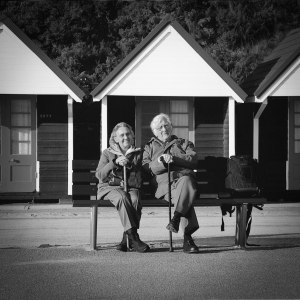
Today would have been my parents’ 64th wedding anniversary. Every year around this time, I share a photograph I’ve taken—not in sadness, but in celebration. A quiet footnote in the annuals of life, where a child pauses to recognise the incredible luck of having good parents.

I’m deeply aware that not every child has that foundation. My heart goes out to those who didn’t. It’s important to acknowledge the world’s failings, but equally vital to honour when things simply go right.

It’s now four years since my Mum passed, and three since my Dad. Yes, I miss them every single day. But I refuse to let that overshadow the lovely people they were—both as individuals and together as parents.

Life was never perfect. And I never got to fulfill those later-life plans I dreamed up for them. Time is a bugger like that—the one resource we so often take for granted, yet always runs out too soon.

If life is a film:

Don’t pause it.

Don’t rewind it.

Live it.

Embrace every frame as if it’s the last before the credits roll.

And remember—you don’t get to write those credits.

Wheels Turning

Reflections on Conservative Britain Then and Now. There is no greater truth in politics than the inevitability of cycles: what goes around, ultimately comes around. For those disillusioned and dispirited by the current state of British politics, this should serve as a cautious reminder rather than a consolation. Many look back through rose-tinted lenses at the Conservative-Thatcher era of the 1980s—the decade when the unleashed dog of unfettered greed barked loudest and reshaped the nation. But forty years on, striking parallels emerge between that turbulent era and the present day.

I grew up in the North East of England—the so-called heartland of Labour’s “red wall,” a phrase that lazy political commentators brandish with little understanding, whether from London studios or the steps of Downing Street. Yet right-wing, working-class patriotism has long been a complex, often overlooked reality behind those walls, just as it exists behind the so-called “blue wall” of places like Christchurch.

Then as now, the Conservative Party has regularly installed leaders from its elite ranks—born into privilege and crowned by birthright—whose personas are carefully crafted by spin doctors and advisors. In the 1980s, that leader was Margaret Thatcher; today, it is Boris Johnson, a man who revels in the performative trappings of populism—driving garbage trucks, swapping banter with his flat-capped mates in local pubs, and railing against foreigners across the Channel.

But the 1970s and ’80s in the UK were far more than fashion trends, pop music, or flashy consumerism. Beneath the neon lights and padded shoulders, they were a period marked by social fracture and violent unrest. Poverty soared, the gap between rich and poor widened to unprecedented levels, and cities like Brixton, Liverpool, Leeds, Manchester, and Birmingham erupted in protest and revolt.

The death of Blair Peach, killed by the Metropolitan Police’s Special Patrol Group—an infamous unit operating with near impunity—exemplified the brutal state repression of the time. Laws such as the Vagrancy Act 1824 and Clause 28 exploited ignorance and fear, targeting marginalized communities, particularly LGBTQ+ people.

Meanwhile, Thatcher’s government forged cynical alliances with apartheid South Africa, welcoming its leaders as friends while extremist voices within the Conservative Party—some linked by business interests—denounced the African National Congress as terrorists. Calls for the execution of Nelson Mandela echoed at party conferences as violence and unrest shook the country again in 1990 with the poll tax riots. A pattern repeated decades later in 2011 under David Cameron, when riots once again gripped cities across the UK.

Today, the script may be updated, spun, and tailored for the digital age—disseminated through targeted social media ads and disinformation campaigns—but the underlying narrative remains unaltered. The Johnson administration is testing boundaries, deliberately stoking tensions to gauge resistance. The deportations of Jamaicans under his watch echo the playbook of reactionary populists like Trump—dividing communities to consolidate power.

Johnson is a puppet, complicit in a reactionary political project funded by billionaires and oligarchs intent on destabilizing oversight and accountability—most visibly through their war on the EU. Unfettered greed, history tells us, will ultimately self-destruct, but not before poisoning the social fabric in ways that will take years to undo.

Looking back to the 1980s and placing them in today’s context, it is clear that the extent of the coming damage depends largely on the resistance of the younger generations. Until that resistance crystallizes, Johnson will continue to push forward, indifferent to the social consequences. Violence and unrest may not be the inevitable outcome, but given the Conservative Party’s track record, any fallout is too often treated as mere collateral damage.

The wheels keep turning—and so must we, with vigilance and resolve.
Sweetwater: The Underrated Psychedelic Pioneers of the ’60s

Sweetwater is one of those ’60s bands who, through a twist of fate and circumstances beyond their control, never quite received the recognition they richly deserved. What began as a humble house band playing the coffee shops of California quickly transformed into the regular support act for legends like The Doors and The Animals during the late ’60s.

They even charted in the US with their haunting cover of Motherless Child, a song most famously associated with Paul Robeson. Their 1968 self-titled debut album is, in my opinion, a hidden gem of the original psychedelic era—lush, inventive, and all too often overlooked.

Pop culture buffs might know Sweetwater were slated to open the original Woodstock festival in 1969. But due to overwhelming crowds and chaotic traffic jams, they never made it to the stage on time. Later that year, tragedy struck when lead singer Nansi Nevins was seriously injured in a car accident, stalling the band’s momentum just as they were poised for greater success.

My personal favourite from their debut is the mesmerizing My Crystal Spider, while the lyrics of What’s Wrong—check out the video below—feel more relevant now than ever, decades after their release.

If you’re a fan of ’60s psychedelia and haven’t yet explored Sweetwater’s work, this is the perfect moment to dive in. Welcome aboard—let the trip begin.

The Night Before

The remnants of party poppers lie scattered, half-empty glasses wait to be cleared, and the hazy memories of last night’s revelry already begin to blur. We gulp down a cocktail of hangover remedies, hoping to patch together some clarity. A collective breath is drawn—a mix of relief and exhaustion—as if the madness of the past four years might finally loosen its grip. Yet this morning feels unchanged, mirroring the day before. The same yawning chasm that haunted us then remains unbridged, and still, we dance around the fire that has consumed us.

We are mourning. Lost and confused, grasping for a sense of normality that slips through our fingers—unspoken, almost unspeakable—because those forces that shaped our world have clipped our words, our voices, our right to express freely.

‘They’—a shape-shifting specter, different for each of us—have molded us into self-imposed victims. Blame is cast outward, always someone else’s fault. But as the dust settles, and we stand solitary, the weight of accountability falls squarely on our shoulders. The pothole in the road, the endless waiting lists, the insecurity of zero-hour contracts, even the crooked bananas on the shelf—we face these realities now, with no one else to blame.

Today, we stand, chest puffed against the cold wind, alone. But the turmoil of these past years was a symptom, not the root. And last night’s fleeting celebration—no matter how loud—was never the cure.

Forgotten Spaces

I’ve always been drawn to empty houses, especially those left to decay. This fascination has been with me since childhood, and it resurfaces every time I wander the South West countryside. On these spontaneous explorations, I frequently stumble upon abandoned farm buildings. Crossing their thresholds often feels like stepping into a silent intrusion—there’s a strange intimacy in finding personal items left behind. An old tie hanging in a cupboard recess, a rusted oil lamp on a windowsill—each object quietly holds its own story. They are fragments of past lives, mirrors reflecting not only those who lived there before but also my own memories.

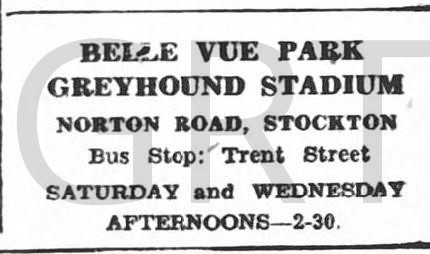
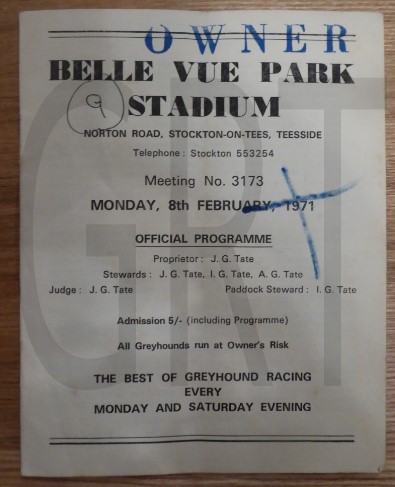
Back in my hometown of Stockton-on-Tees, there was once an old dog racing track—Belle Vue Park—that opened in 1946 and closed around 1974. Nestled within its grounds was a grand old house with a large garage. After the stadium shuttered, it didn’t take long for us kids to find a way in, sneaking under the flimsy fencing to explore this forgotten world.

We raced our bikes around the stadium, chasing the electric course hare that zipped endlessly inside the track as the dogs frantically pursued it. We found our way into the house and offices, discovering the antiquated telecom and public address system. Singing the latest Slade single into the PA, taking turns shouting swear words to rouse the local neighborhood, and inevitably drawing the attention of the police car was our version of mischief and joy.

Belle Vue Park is long gone now, much like the men who once gave us threepence to watch over their cars during race nights. In its place stand rows of tidy two-story flats, filled with inhabitants enjoying their evenings. And yet, somewhere beneath their TV dinners linger the ghosts of memories, the echoes of lives that once pulsed through those grounds.


Behind the Scenes of Global Metal Trading: The London Metal Exchange and Its High-Stakes Future

It might seem dry — even dull — but beneath the surface, the London Metal Exchange (LME) is a cornerstone of the global economy. Situated at 10 Finsbury Square, London, the LME is the undisputed hub for trading industrial metals ranging from lead to gold. In 2018 alone, it handled a staggering $15.7 trillion worth of trades, moving 4.1 billion tonnes of metal ‘lots’ worldwide.

The LME’s story took a pivotal turn in 2012 when Hong Kong Exchanges and Clearing Limited (HKEx) acquired the 135-year-old institution for approximately £1.4 billion. HKEx, itself formed in 2000 through the merger of three Hong Kong financial entities, has positioned itself as a global market giant with a strategic focus on “China Connectivity.”

The acquisition raised eyebrows at the time. The Financial Times reported that the deal was a lucrative windfall for major banks and brokers, with JPMorgan, Goldman Sachs, and the Bagri family (owners of Metdist) receiving hundreds of millions in payouts. Meanwhile, the LME’s Chief Executive was reportedly set to receive a bonus nearing £10 million.

Seven years later, the ambition to build a seamless commodities bridge between East and West has fallen short. As HKEx Chief Executive Charles Li candidly put it: “All you need to think about is if this is the right asset for us. The rest is detail. You don’t worry if the price is right.”

The geopolitical and financial context continues to evolve rapidly. In December 2019, Valdis Dombrovskis, the European Commissioner for Financial Stability, issued a stark warning to the UK. Post-Brexit, London’s financial sector risks losing its privileged access to EU markets unless it maintains close regulatory alignment. Speaking to the Financial Times, Dombrovskis underscored that “access will depend on Britain not starting to engage in some kind of deregulation.”

As tensions simmer in Hong Kong — where Beijing accuses foreign powers of fomenting unrest — China watches closely the unfolding UK-EU negotiations. The LME itself is not idle, maintaining a strategic presence on the 7th floor of the MYP Centre in Singapore, clearly positioning itself amid shifting global trade currents.

In a world where markets, politics, and diplomacy intersect, the future of the London Metal Exchange will be a barometer not only of metal prices but of broader geopolitical alignments — a silent, yet potent, indicator of the times.


 The Magic Lantern & Pete Roe

Life’s Little Eccentrics

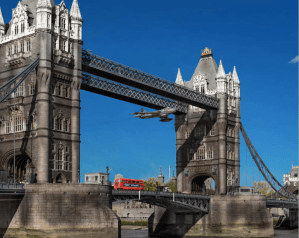
Growing up with a dad from RAF regiment stock meant stories of daring pilots and audacious flights were part of the soundtrack of my childhood. But one tale stood out — the legendary “Hawker Hunter Tower Bridge incident” from April 5, 1968.

Picture this: Flight Lieutenant Alan Pollock, a fearless RAF pilot, was none too pleased that the bigwigs weren’t planning a proper fly-past to celebrate the RAF’s 50th birthday. So, in true rebellious style, Pollock decided to take matters into his own hands — no permission needed.

He soared his sleek Hawker Hunter jet low over the Thames, skimming past the Houses of Parliament, until he reached the iconic Tower Bridge. And then, in a move that sounds more like a stunt from an action movie than a military exercise, Pollock flew underneath the bridge’s walkway! He later confessed that it was a bit of a spur-of-the-moment decision when the bridge suddenly loomed large ahead of him.

The aftermath? Pollock was promptly arrested upon landing and discharged from the RAF on medical grounds — without even a chance to explain himself in court. But for my dad, and many others, Pollock’s daring flight was less about rules and more about spirit — a bold salute to the RAF on its milestone birthday.

It’s the kind of story that reminds me how sometimes, a little rule-breaking can become the stuff of legend.

Tom Robinson (Band): It’s Yesterday Once More

24.10.18: Nostalgia is a ruthless beast.

I’ve always tried to keep it at arm’s length—especially after witnessing the Sex Pistols’ 1996 reunion at Finsbury Park. Watching legends unravel their hard-earned reputations in mere moments was a brutal lesson in how quickly credibility can crumble. Punk, that raw, rebellious force birthed in the late ’70s, has often been chewed up and spit out by time and nostalgia’s relentless grip.

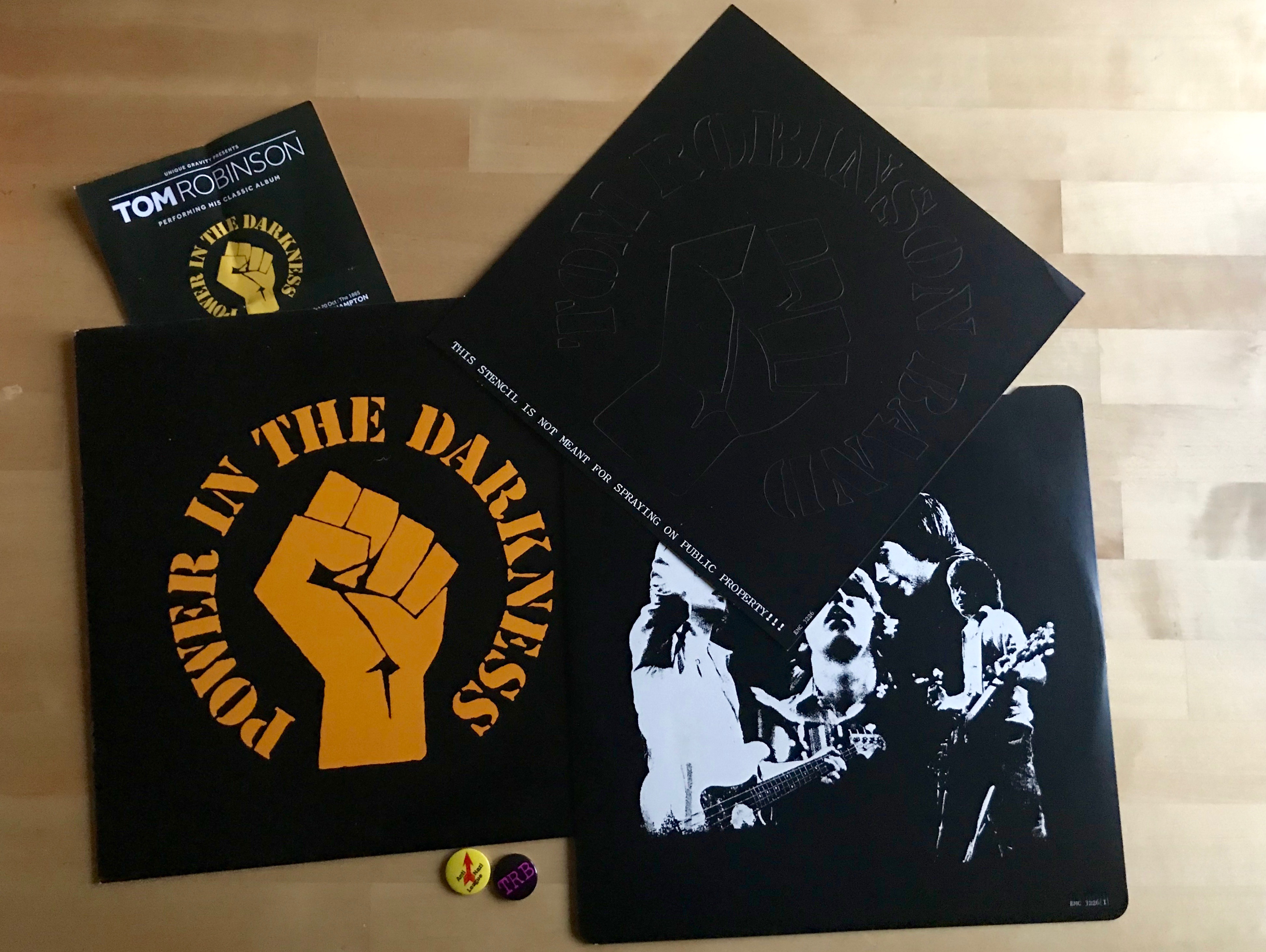
But then there’s that winter of 1977, when I was just 16, clutching a ticket alongside my mate Ste (sadly no longer with us). We hopped a bus from our gritty hometown of Stockton-on-Tees to Middlesbrough’s Rock Garden, ready to soak in the live fire of the Tom Robinson Band.

This wasn’t just another gig—it was a rite of passage, minus parental permission, with a detour through the infamous North Eastern pub. There, I knocked back two pints of Double Diamond, soaked up the boorish testosterone-fueled banter—racist, sexist, unapologetically rough—and took my first shot at pub pool (utterly demolished). I chose a track on the jukebox, The Damned’s New Rose, for the first time, then made a flimsy excuse to rush outside, gulp fresh air, and embarrass myself by throwing up in a nearby alleyway.

But within an hour, I was lost in a throng of ragged young punks, guitars jangling and voices raw, belts echoing “Glad to be Gay.” Today, that anthem might barely raise an eyebrow—even in Britain’s most conservative corners. But back then? Singing those words carried the real, looming threat of violent attack—from the hostile crowds, from the police, from a world steeped in queer bashing and racial abuse as everyday horrors. Nowhere was this uglier than in the pubs and social clubs of 1970s working-class north-east England—a toxic stew of culture I was born into, complicated and difficult to untangle.

I remember Tom’s voice that night—nervous but fierce—as he introduced “Glad to be Gay.” The crowd was hesitant at first, unsure how to respond to this bold, singalong defiance. Sweat-soaked bodies bounced to the roaring guitars, eyes flickered between confusion and courage. By the second chorus, something shifted—a raw, electric unity erupted. It was a moment where change stirred, barely perceptible yet monumental.

Fast-forward 41 years. Here I am at The Fleece in Bristol, capturing Tom Robinson performing his seminal Power in the Darkness album live, marking its 40th anniversary. And let me be clear—this remains a truly great rock record, blistering and bold. Its lyrics don’t just chart how far we’ve come—they’re a sobering reminder of how far we can still fall back into the shadows.

Tonight, I raise a glass—not only to my old mate Ste, but to Tom Robinson’s courage, his art, and the band of young rebels who crafted an album that shaped my politics, my understanding, and my fight.