
James Dean Doll
On July 23, 2011 singer Amy Winehouse was found dead in her London apartment at the age of 27. During her short life, Winehouse accumulated a net worth of $10 million, but like so many other celebrities she may end up earning more money in death than in life. Dying young captures the eternal spirit of a musician and artist, which helps create a mythology that often projects the person behind their human fragility to one of almost god like status with fans increasingly desperate to be connected in some way with their deceased hero.
The first sign of this phenomena was actor James Dean who died in a car crash September 30, 1955 (aged 24). Dean’s major films identified him in roles like Jim Stark’s Rebel Without A Cause depicting the dilemmas of a teenager, who feels that no one, not even his peers, can understand him. During the 70s no self-respected adolescent facing the doomed prospect of being young would be seen without their James Dean t-shirt. Today James Dean merchandise is in abundance and fans can if they so wish reacquaint themselves with their hero via the James Dean doll for £25. Michael Jackson posthumously earned millions from music video marathons, radio airplay, and album sales immediately following his death. The dad of death merchandise goes to the proclaimed King of Rock n Roll Elvis Presley. who remains one of the most celebrated musicians of the 20th century. Commercially successful in many genres, including pop,blues and gospel, Elvis is the best-selling solo artist in the history of recorded music. He died August 16, 1977 (aged 42). The King of Rock ‘n’ Roll has long earned money after his death, largely due to an immense portfolio of licensing and merchandise deals and Graceland admissions. Given the manner of the Kings death some of the mechanise should, shall we say is beyond contempt?

Purchasing one of these dolls is like buying Courtney Love lifelong memberships to the NRA. (copy right Bill Hicks)
“You Know You’re Right” was written in 1993, making it one of the last known Kurt Cobain compositions. A studio version of the song was recorded at Nirvana’s final session, on January 30, 1994. By 5th April 1994 Cobain was dead at the mere age of 27 following several attempts at suicide he finally succeeded. The recording became the object of much legal wrangling between Courtney Love and the surviving Nirvana bandmates Dave Grohl and Krist Novoselic. Grohl and Novoselic had wanted the song for a planned Nirvana box set, but Love blocked its release, and a battle over Nirvana’s legacy ensued. In September 2002, the lawsuit between Love and the surviving Nirvana members was settled, and it was announced that “You Know You’re Right” would arrive on a one-CD history of the band. What is not disputed is the business empire that emerged following Cobain’s death, books, films, posters and of course the obligatory t-shirt that is later years would also include Cobain’s suicide note. Fans may also want to purchase the Kurt Cobain doll with replicated rife, so to rein-act their heroes desperate final hours. Death of course does not stand in the way of the deceased artist contributing to new commercial venture. Several artists have been resurrected from the grave to help generate new sales and revenues streams for their “estate.” The advent of new technologies has also enabled new material to be produced (sic)! Unforgettable is a popular song written by Irving Gordon. The most popular version of the song was recorded by Nat King Cole in 1951. In 1991, after Elvis Presley’s musical director Joe Guercio had the idea, Cole’s original 1951 recording of the song was edited and remixed to create a duet with his daughter, Natalie.
John Lennon was resurrected in 1995 through the magic of technology to ghost voice with the remaining Beatles on the lacklustre Free as a Bird track that did little to undermine Lennon’s image as a creative icon. Originally recorded in 1977 as a home demo by John Lennon the track was released as a single by the Beatles, 25 years after the Beatles break-up and 15 years after the death of Lennon. George Martin, who had produced most of the Beatles’ 1960s recordings, turned down an invitation to produce Free as a Bird due to, “hearing problems” though he subsequently managed to produce and direct the Anthology series. The track ends with the voice of John Lennon played backwards. The message, when played in reverse, is “Turned out nice again.” A sentiment that would not be shared by many die hard Beatles fans given production for the track went to Jeff Lynne of Electric Light Orchestra fame. So it came to pass that the Beatles would be morphed into a derivative of the ELO sound and production. There was to be one more foray into Lennon’s demos with the equally suspicious Real Love track, which would be thankfully be the last released record of so called new material credited to the Beatles. The Beatles of course set the business template for pop merchandise during the 1960s with everything from t towels, models to lunch boxes being mass produced to support album releases. Given the band by the mid to late 60s were predominately a studio based enterprise this source of merchandise became an increasingly important element of their business.

Hmmmmm No.
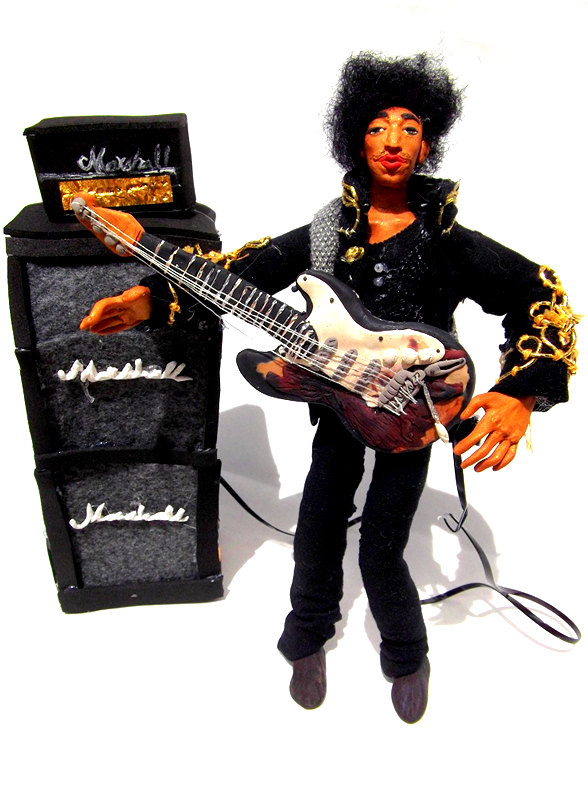
When Dr. John Bannister pronounced Jimi Hendrix dead on September 18, 1970 the story of this iconic musician should have come to graceful ended with his legacy being the foundation for old and new fans alike, although unlike his predecessors Hendrix was already subject to the unscrupulous dealings of the dark side of the music business. By 1967, as Hendrix was gaining in popularity, many of his pre-Experience recordings were marketed to an unsuspecting public as Jimi Hendrix albums, sometimes with misleading later images of Hendrix. The recordings, which came under the control of producer Ed Chalpin, with whom Hendrix had signed a recording contract in 1965, were often re-mixed between their repeated reissues, and licensed to record companies. Hendrix publicly denounced the releases, describing them as “malicious” and “greatly inferior.” These unauthorized releases have long constituted a substantial part of Hendrix’s recording catalogue, amounting to hundreds of albums. In 1993, MCA Records delayed a multi-million dollar sale of Hendrix’s publishing copyrights because Hendrix’s father Al Hendrix was unhappy about the arrangement. Under a settlement reached in July 1995, Al Hendrix prevailed in his legal battle and regained control of his son’s song and image rights. He subsequently licensed the recordings to MCA through the family-run company Experience Hendrix LLC, formed in 1995. In August 2009, Experience Hendrix announced that it had entered a new licensing agreement with Sony Music Entertainment’s Legacy Recordings division which would take effect in 2010. Legacy and Experience Hendrix launched the 2010 Jimi Hendrix Catalog Project, starting with the release of Valleys of Neptune in March of that year.
In the months before his death, Hendrix recorded demos for a concept album tentatively titled Black Gold, which are now in the possession of Experience Hendrix LLC. The demo tapes consist of 16 songs, all created by a solo Hendrix armed only with his voice and a Martin acoustic guitar. Months later, at the Isle of Wight Festival, Hendrix gave the tapes to his drummer Mitch Mitchell to have him listen and comment on the necessary rhythm section requirements for recording the songs. After Hendrix’s death in September 1970, Mitchell simply forgot about the tapes, apparently unaware that they were one-of-a-kind masters. For 22 years, the Black Gold tapes sat in a black Ampex tape box that Hendrix tied shut with a headband and labelled “BG”. It was not until 1992 that Tony Brown, the avid Hendrix collector and biographer, interviewed Mitchell and learnt that the mythical Black Gold tapes, thought to have been stolen from Jimi’s apartment by vandals who ransacked it for collectibles soon after his death, were lying in Mitchell’s home in England. Mitchell also possessed the Martin guitar that was used to create the material. Brown was invited to review the tapes and published a summary of his account, but to date the material has not been released and is not available to Hendrix collectors. Mitch Mitchell’s association with Experience Hendrix LLC was an indicator that Black Gold might see worldwide release. Mitchell’s death, however, means that the future and whereabouts of Black Gold are even more uncertain. In March 2010, Janie Hendrix stated that Black Gold will be released this decade. “Suddenly November Morning” was included in the album West Coast Seattle Boy: The Jimi Hendrix Anthology, released in November 2010. This is the only track from Black Gold ever released.
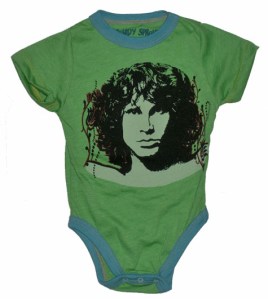
Jim Morrison Infant Snapsuit
An American Prayer is the ninth and final studio album by the Doors. In 1978, seven years after lead singer Jim Morrison died and five years after the remaining members of the band broke up, Ray Manzarek, Robby Krieger, and John Densmore reunited and recorded backing tracks over Morrison’s poetry (originally recorded in 1969 and 1970). The album received mixed reviews and still divides critics, yet it has managed a platinum certification in the US. When the album was originally released, longtime Doors’ producer Paul Rothchild labeled the album the “rape of Jim Morrison.” Morrison himself, prior to leaving for his ill-fated Paris visit, had approached composer Lalo Schifrin as a possible contributor for the music tracks meant to accompany the poetry, with no participation from any of the other Doors members. Since the demise of The Doors as a functioning band their back catalogue of albums has been subjected to all forms of digital re-editing, special anniversary mixes, bonus material that inevitable consists of weak studio outtakes of classic tracks, as wells banal studio chitchat. The dreadful licensing of tracks to superstar DJ’s who in turn have managed single-handily to tear the heart of the material for a so called new generation of fans. Over 20 live official live albums have subsequently been released, including Live at the Aquarius Theatre: The First Performance and Live at the Aquarius Theatre: The Second Performance. In 2002 two of the original Doors, Ray Manzarek and Robby Krieger reunited and produced a new version of The Doors, called The Doors of the 21st Century. The lineup was fronted by Ian Astbury of The Cult.
John Densmore the bands original drummer subsequently claimed that he had not been invited to take part in the reunion. By February 2003, it was reported that Densmore filed an injunction against his former band mates, hoping to prevent them from using the name The Doors of the 21st Century. It was further reported that both Morrison’s family and that of Pamela Courson had joined Densmore in seeking to prevent Manzarek and Krieger from using The Doors’ name and in July 2005 Densmore and the Morrison estate won a permanent injunction. This caused the new band to switch to the name D21C. Densmore has been steadfast in refusing to license The Doors′ music for use in television commercials, including an offer of $15 million by Cadillac to lease the song “Break on Through (To the Other Side)”, feeling that that would be in violation of the spirit in which the music was created. Densmore wrote, “People lost their virginity to this music, got high for the first time to this music. I’ve had people say kids died in Vietnam listening to this music, other people say they know someone who didn’t commit suicide because of this music…. On stage, when we played these songs, they felt mysterious and magic. That’s not for rent.” I guess it cannot be put any better.
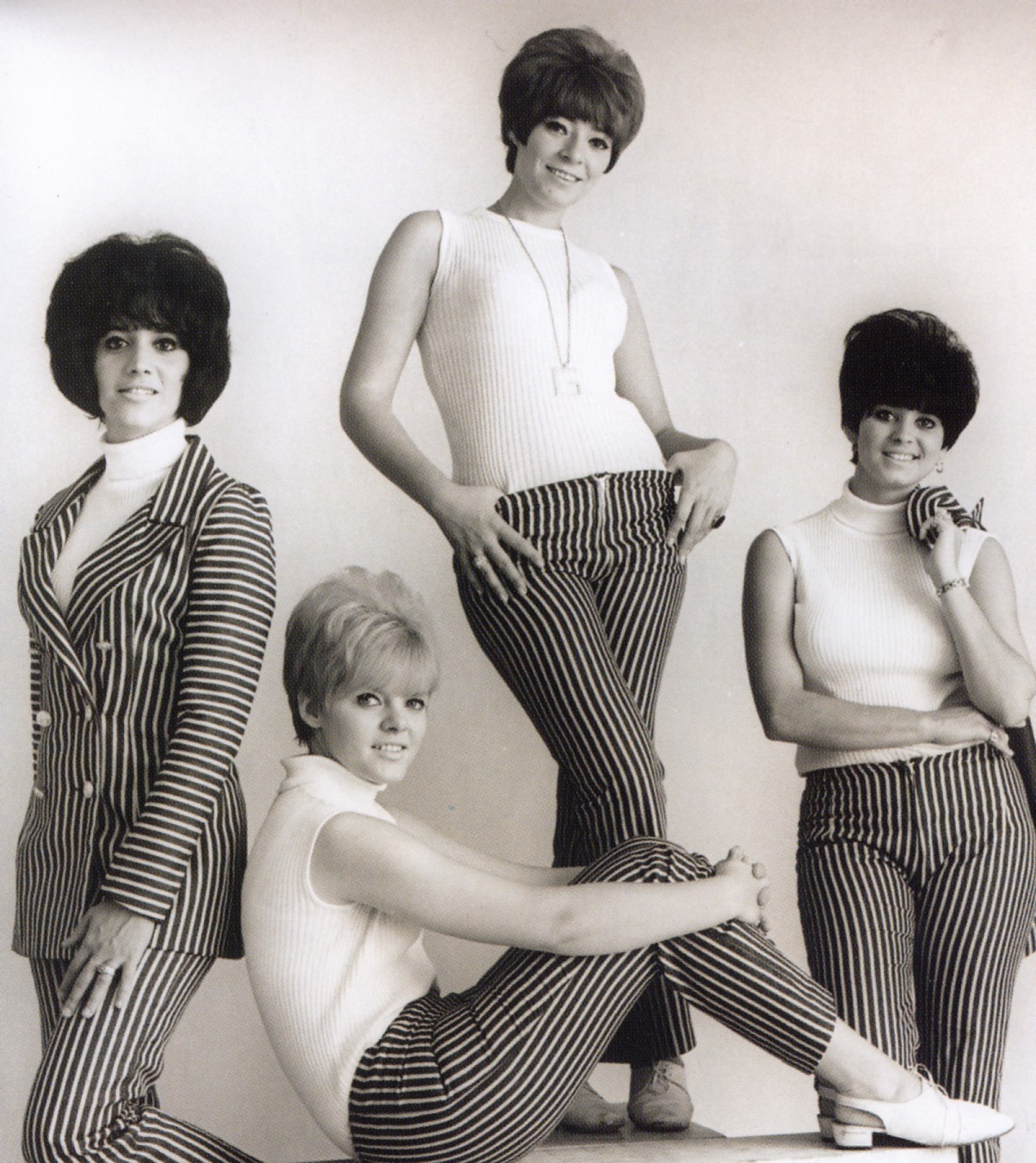 Whilst all-female rock bands during the 1960s were generally being ignored Goldie & The Gingerbreads were signed to Decca Records in 1963. The band consisted of Genya Ravan (vocals, percussion and sax), Ginger Bianco, (drums, percussion), Margo Lewis, (organ, keyboards) and Carol MacDonald, (guitar, background vocals). In the UK the band went on to tour with The Rolling Stones, The Animals, The Beatles, Manfred Mann, The Yardbirds, The Hollies and The Kinks. The band became resident in the UK for a 2 year period and through their hard work and determination managed to secure a minor hit in 1965 “Can’t You Hear My Heartbeat” that reached No. 25 on the singles charts. Although extensively touring North America the band failed to achieve similar success in the U.S. where they were generally viewed as a novelty. When “Can’t You Hear My Heartbeat” was released in the U.S. a recording of the same song by Herman’s Hermits was also released with great fanfare the impact of which fatally undermined the chances of them achieving a hit single in their native U.S. A lesser known fact is that Goldie of Goldie & The Gingerbreads (Genya Ravan) was the first person to record the song “Going Back” which was written in 1966 by Gerry Goffin and Carole King. Over the years “Going Back” has been recorded by many artists, although it’s the Dusty Springfield version most people take as the authentic benchmark.










 Irregular Frequencies