Paul Weller has been the soundtrack to my adult life—through all his musical reinventions and evolutions. Now, it’s not that every release hits the mark for me, but what sets him apart is his unwavering commitment to authenticity. His artistic integrity and continuous growth have made him a true standout, especially among artists emerging from the late ’70s scene.
Watching the fan bash tonight, it’s clear there’s a deep nostalgia for the glory days of The Jam and The Style Council—and I get it, those classics are timeless. But Weller often shines brightest when he and his band cut loose on his later work, revealing a raw, loose energy that feels fresh and vital.
For me, Paul Weller is simply the Ray Davies of our generation—a storyteller and musical craftsman who continues to evolve while staying true to himself.
Ding, ding — round two. Back in the ring with Idles.
After first catching their incendiary performance on April 8th at the Komedia in Bath, six months later it’s clear: this band is on a rocket-fueled trajectory. Since then, Idles have dropped their second album, smashing into the UK Top Five, stormed the globe on tour, flooded TV and radio waves, and now, with a sold-out UK tour under their belt, they’ve firmly cemented themselves as the most vital band to emerge from these shores in recent memory.
Tonight, at SWX in Bristol, the volume is cranked, the pace relentless. Support band, Heavy Lungs impress with their raw, jagged sound, but it’s clear where the night’s true pulse lies. Idles tear through their set with the manic energy of the Village People on acid — chaotic, exuberant, utterly uncontainable.
At Bath, their live energy carried them through, but here? With an ever-growing and wildly responsive crowd, their confidence is sky-high — and rightly so. It takes guts to invite fans onstage; it takes pure, unshakeable confidence to hand over your instruments to them. What follows is glorious mayhem — a glorious, beautiful shambles — feeding the band’s raw, unfiltered energy, making this performance feel like a living, breathing beast.
There’s a rare and electric bond between band and audience tonight, a connection that harks back to punk’s wild heyday in the late ’70s, or the anarchic stage invasions at early Smiths gigs. Idles shows are celebrations of life — raw, flawed, unapologetic — a much-needed antidote in an era where hate and division have become disturbingly mainstream.
Sure, rock bands have always had their audiences eating from their hands. But in today’s sterile, overproduced musical landscape, it’s a rare gift to witness a band that means more than just the product they sell. Tonight, that gift belongs to Idles.
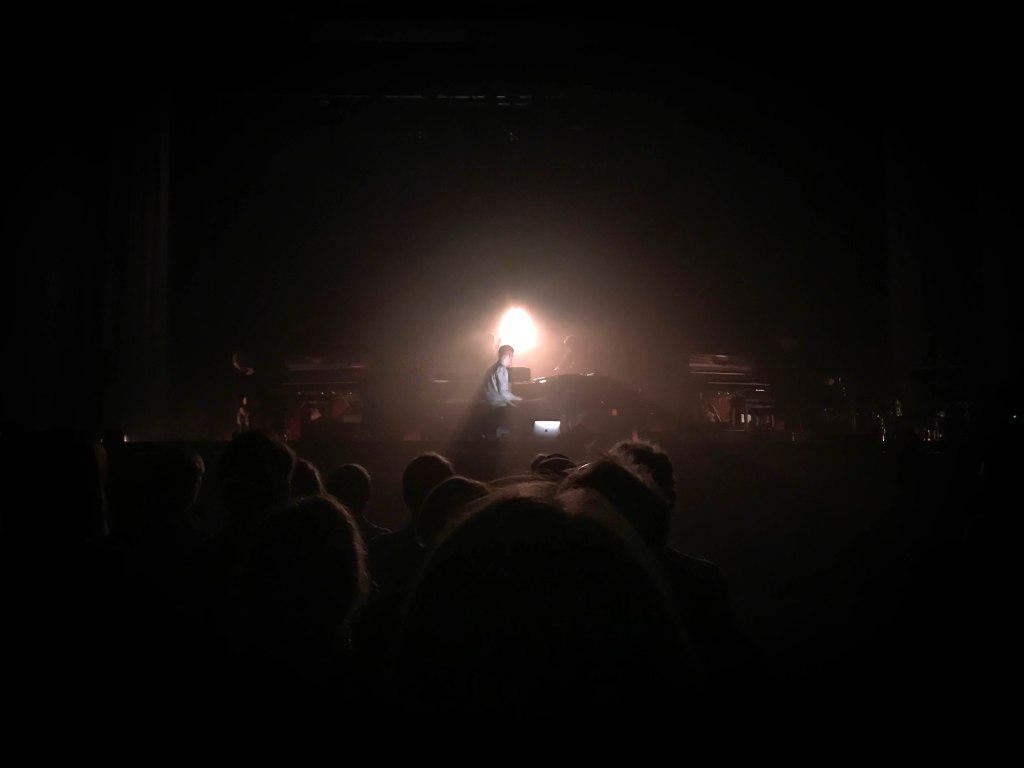
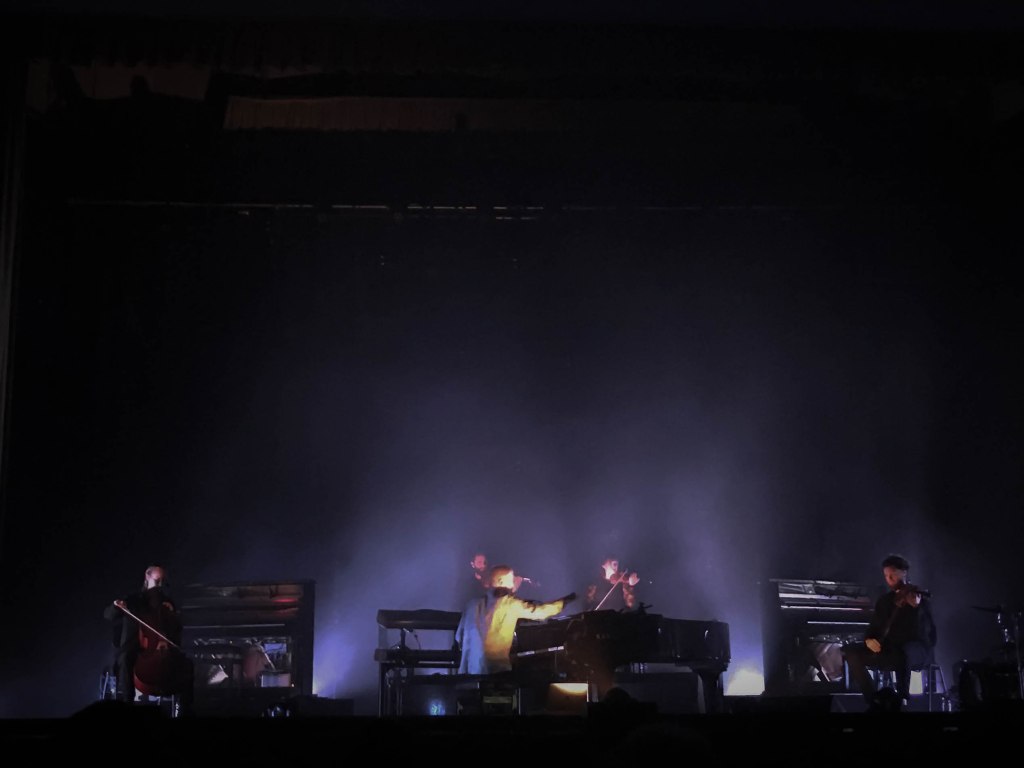
A Journey Through Silence, Sound, and Soul – From the moment Ólafur Arnalds steps onto the stage, it’s clear this is no ordinary concert — it’s a voyage. Between delicate, haunting melodies tonight, Arnalds shares glimpses into his world of constant travel and deep reflection. When not touring, he confesses, he escapes by wandering the globe, drawing inspiration from the places he visits. On this night, it was the Balinese Nyepi — the “Day of Silence” — a day when the entire island shuts down in quiet meditation. The irony isn’t lost on him when he jokes about taking a hot bath on Bath’s own Hot Bath Street earlier that day — a moment of surreal connection between his travels and the city hosting him.
But tonight’s experience goes deeper than travel anecdotes. Arnalds pulls back the curtain on his unlikely journey from hardcore punk drummer to one of modern classical’s most sensitive voices. He reminisces about his first visit to Bath in 2007, pounding the drums for the underground punk band Fighting Shit in cramped pubs. It’s almost impossible to reconcile that rough-edged past with the fragile beauty he now creates.
Yet, the seeds of this musical transformation were planted early, nurtured by the tender influence of his grandmother. The metal-loving, punk-thrashing Ólafur would sit with her, enveloped in Chopin’s sonatas, a stark contrast to his own youthful rebellion. He shares a poignant memory: at her deathbed, she lay frail yet serene, listening to Chopin one last time. “She was old and sick, but very happy and proud,” he says softly. “I kissed her goodbye and left. She passed away a few hours later.”
That intimate connection reverberates through tonight’s final piece — Lag Fyrir Ömmu (Song for Grandma). As the first notes fill the room, the full circle of his story settles over the audience like a warm embrace. It’s a fragile, evocative farewell that makes every note, every silence, profoundly meaningful.
Ólafur Arnalds’ music is a journey — through time, memory, and emotion — and tonight, it’s impossible not to be carried along.










 Irregular Frequencies