The Moco Museum in London assembles an enviable roster of late-20th-century cultural heavyweights: Banksy, Warhol, Emin, Basquiat, Haring, etc.
On paper, such a line-up ought to radiate urgency, wit, and the frisson of artistic risk. In situ, however, the experience is oddly inert — less a gathering of vital provocateurs than a tableau of hustlers, lingering on a street corner long after their work has been codified, packaged, and sold.
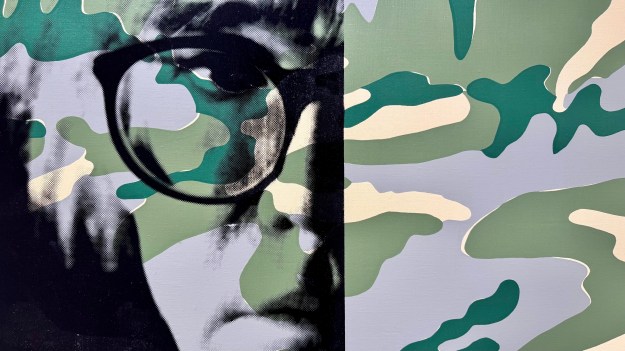
This inertia is not rooted in the intrinsic quality of the works, or indeed the artist themselves, but within Moco’s tightly curated, boutique-style environment, the edge is blunted. Warhol’s prints, originally a calculated affront to distinctions between art and commerce, now appear as well-worn brand assets, their iconography as familiar — and as unthreatening — as the consumer products they once critiqued.
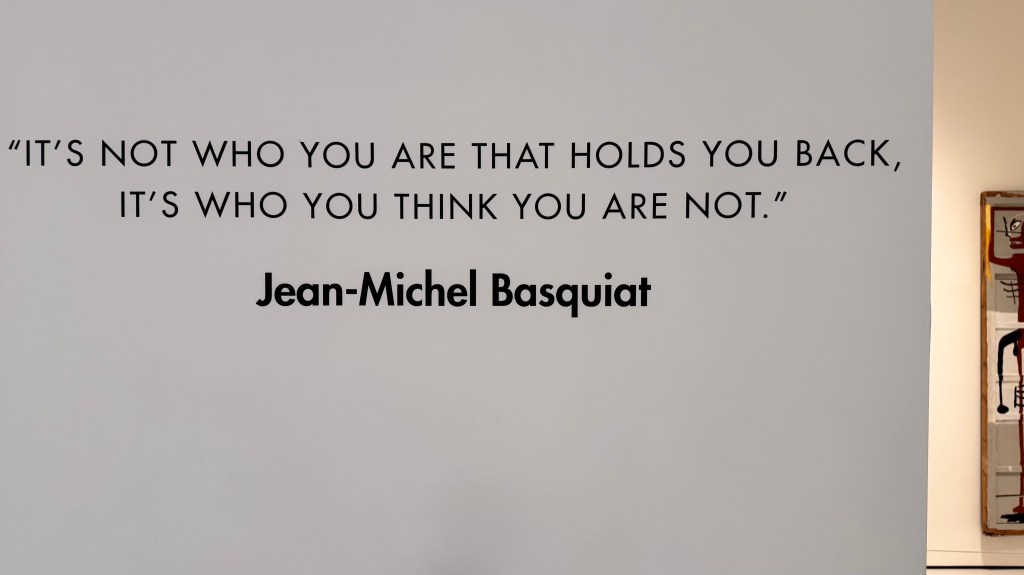
Similarly, Tracey Emin’s confessional works, initially brimming with the intensity of public vulnerability in this setting feel as a predictable as a drunk uncle retelling stories at a family gathering. Basquiat’s canvases, infused with graffiti influences and a sense of urban immediacy, are diminished to mere high-value décor, their socio-political significance overshadowed by the mitigating effects of wall text and carefully orchestrated lighting.
Banksy’s inclusion underscores the paradox. His practice depends upon context — the unmediated encounter on a city street, the intervention into public space — to function as political commentary. Here they are divorced from site and circumstance, the work shifts register: from subversive gesture to collectible commodity. The transaction becomes aestheticised rebellion, stripped of consequence.
The result is a museum experience that frames radicalism within a safe, consumable format. It invites visitors to encounter these figures not as insurgents within the cultural field, but as fixed points in a canon that has already been stabilised for mass circulation. The presentation favours recognisability over confrontation, producing an environment in which dissent has been fully domesticated.
What emerges is a broader institutional question: can works born of defiance retain their potency within the commercial and museological apparatus that ultimately validates them? Moco’s exhibition suggests that, once integrated into the art-market economy, even the most oppositional practices risk becoming part of the very system they once sought to disrupt.
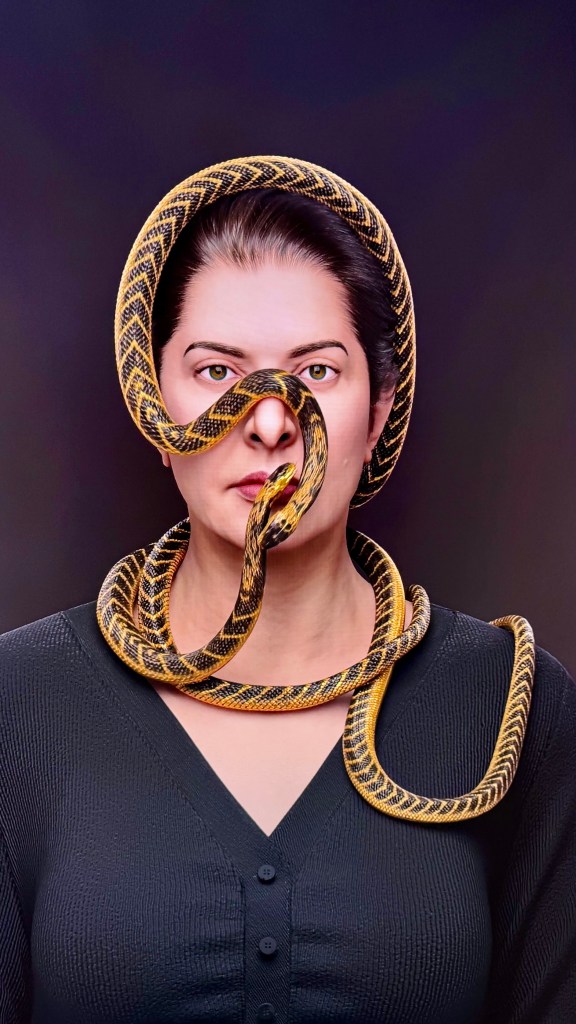
If Moco’s upper floors feel like a nostalgic playlist on shuffle, the basement is a live wire. Go for that head to the basement for the Marina Abramović collection. Abramović’s work resists embalming because it was never about static images or neat objects. It is about endurance, presence, and the unmediated exchange between artist and audience. Even when translated into photographs, videos, and documentation, her performances retain a charge — the sense that something visceral, uncomfortable, and unpredictable once took place. The gaze still meets you. The tension still hums in the air. You can’t domesticate the feeling of holding another person’s gaze for minutes at a time. There is no easy reproduction, no endlessly shareable clip that captures the weight of the moment.
Standard tickets £25 with concessions for students, over 65s, etc.
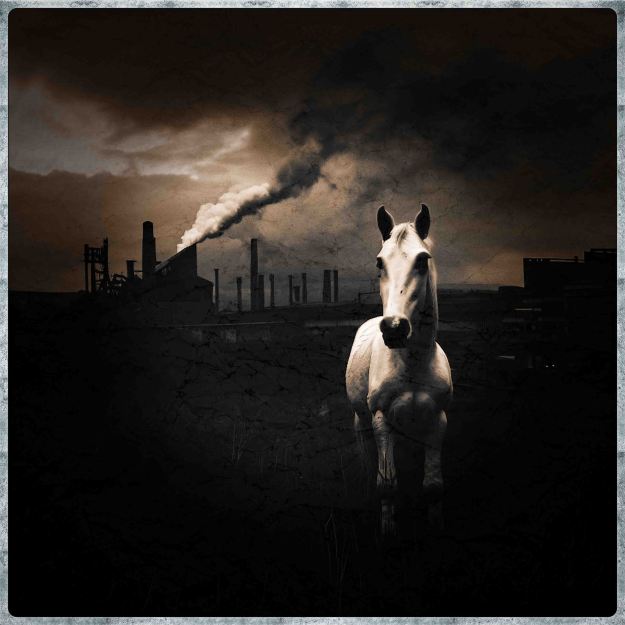
Amidst the choking haze and iron skeletons of a desolate industrial wasteland, where the sky is veiled in a shroud of relentless smoke and the earth trembles with the ceaseless clamour of machines, a singular vision emerges—a majestic white horse, radiant as a beacon from a forgotten dream. Its coat glows with an ethereal light, pure as freshly fallen moonlight, untouched by the grime and ruin that surround it.
It moves not as a creature of this harsh world, but as a spectral guardian, its every step a slow and deliberate ritual that seems to hush the clanging for just a moment. The horse’s eyes, deep pools of ancient knowing, hold the weight of countless stories—of hope, of endurance, and of a world beyond the gray.
In the midst of this landscape, where iron giants belch their poison and the air hangs heavy with despair, the white horse stands as a living symbol of transcendence. It is the last flicker of light before the darkness, the silent promise that purity, grace, and beauty can survive even in the shadow of ruin.
This luminous creature is no mere animal—it is a myth made flesh, a spirit of hope galloping through the ashes, reminding all who behold it that from the harshest forge of life, something radiant and eternal may yet arise.








 Irregular Frequencies