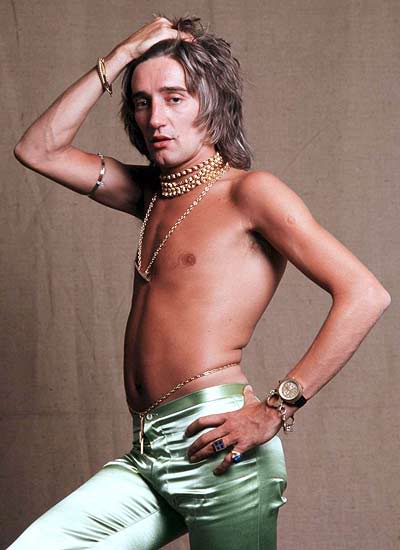
The long journey up north past my native North East over Hadrian’s Wall and to Glasgow where the wonderful Electric Company Label is beckoning me on the next stop of my old man adventures. Unknown to myself, well until I wrote this blog, I have a deep appreciation of the Scottish rock scene beyond the parody that is Rod Stewart. I will blame Rod for my ignorance given he inflicted his phoney Scottish jiggery pokery on me from a young age, caused serious trauma and inflicted Scottish blindness. At a time when any self respecting youngster was exploring The Clash, Pistols, Damned, Ramones and Buzzcocks, Rod in 1977 released his Hot Legs single from the equally bombastic album Footloose and Fancy Free. Unlike now there was no fast forward on live TV, so we duly had to sit through Rod swinging his thing before 3 minutes of punk was allotted its given time on Top of the Pops. My trauma was recently reinvigorated when I discovered Bon Jovi apparently perform Hot Legs occasionally as part of their live set, but a quick google search for Rod Stewart 1970s and then Jon Bon Jovi 1980s and it all makes perfect sense.
Like Sun
Anyway enough of this nonsense. A quick dig through my music collection whilst preparing this blog reveals Jesus and Mary Chain, Primal Scream, Teenage Fan Club, The Vaselines, The Rezillos, Belle and Sebastian, but to name a few all lurking there and all originate from Scottish shores. I hold my hand up in shame and accept my ignorance, which I take responsibility to tackle. As with any vibrant music scene an ecosystem is required, which is is independent, experimenting with the past and probing the future to produce a glorious wall of sound. This cultural ecosystems by its very nature is often known only to the locals until a buzz emerges, but the rise of the internet has created opportunities for the virtual traveler to be exposed to these gems. This is particularly rewarding when, if like me, you have a leaning towards lo-fi fussy guitar rock and sublime songwriting with twisted lyrics that often fail to penetrate the mainstream pop world. Yet it is these humble cultural ecosystems, which create the fertile ground for mighty musical oaks to grow and the catalogue of Glasgow’s Electric Company label sits there like a shiny emerald.
Launched in April 2013, Electric Company release and distribute music by some of the most exciting and forward-thinking artists, on a wide range of formats, including vinyl, cd, cassette and digital download. Boasting a passion for DIY ethics and armed with their own studio enables the label to support artists to be heard without the pull of corporate strings. This in turn creates a unique artistic hub where everything from recording, artwork and merchandise to live booking can be done in house and purely for the love of music. As with any small business running an independent music enterprise takes nerves, commitment and to a certain degree of passion bordering on obsession. So it is always an immense pleasure to stumble across a label like Electric Company. On my initial dip into the label’s catalogue I purchased 3 offerings.
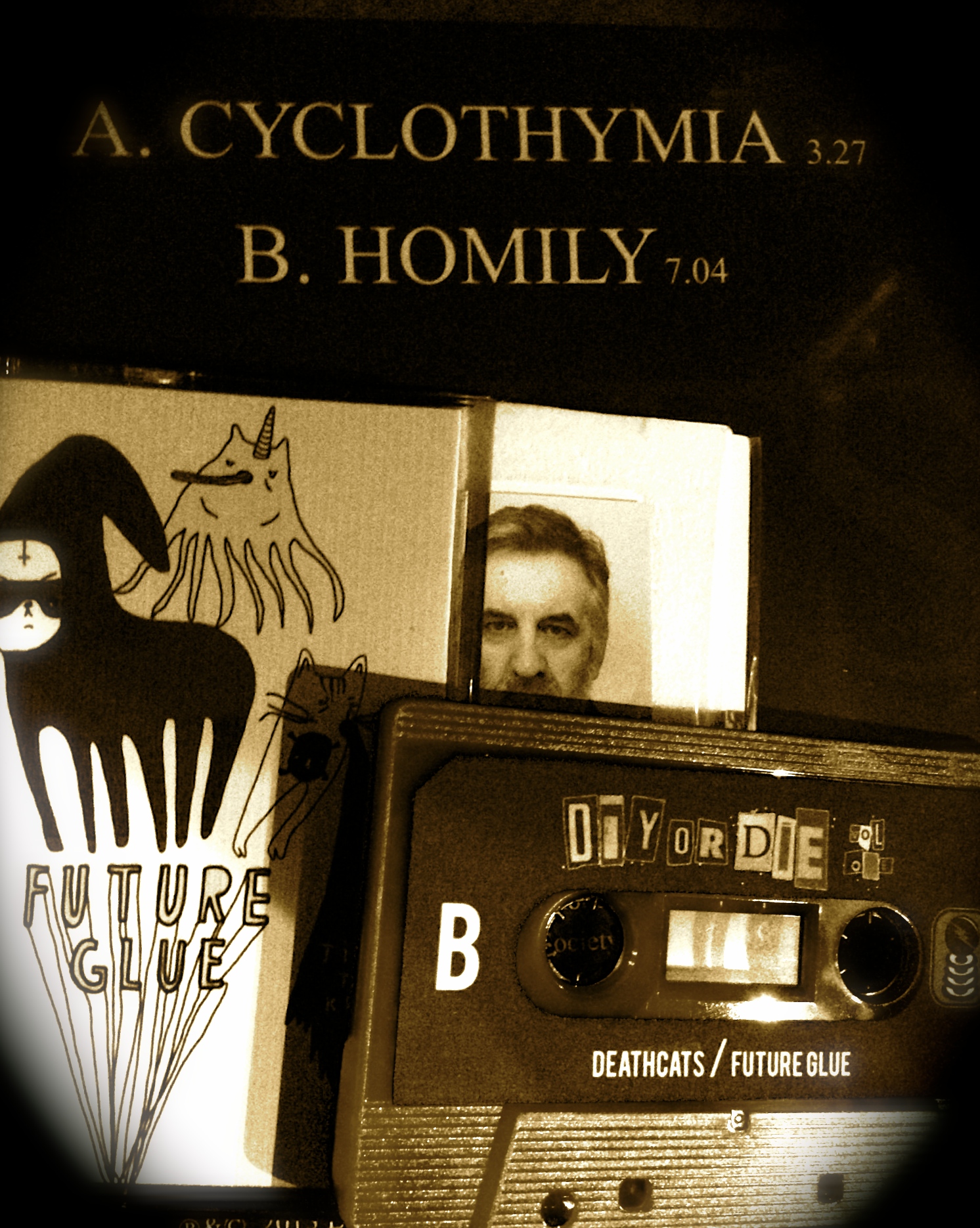
The New Fabian Society: Cyclothymia/Homily 7″ vinyl and digital download £5 (digital download £2)
Released on a limited run of 250 copies Cyclothymia is a pulsating 3 minutes 27 seconds of glorious guitar infused post punk delivered at Ramones break neck speed whilst Homily is reminiscent of Joy Division (before the hype) at their desolate best. The band follow up release Barbarossa which is also available on Bancamp (name your price offer) demonstrates a band growing in skill attitude and craft Provided with the right opportunities and presented with the necessary good luck all artists require this band have all the credentials to develop into something rather special.
The Dirty Lies: Release EP cassette and digital download £5
The Release EP is a collection of 6 brilliantly twisted pop songs. Athough I feel it only right to give you a little warning before you take a listen. Beneath the pleasant beats and harmonies are some rather spine chilling lyrics, which make one feel the songwriter was abandoned on the steps of a church at birth and left to be reared by a couple of zealots. The sublime opening lyrics to Shallow Grave, “I hope you fail in love, I hope you break your heart, I will be your enemy, I’ll be your shallow grave” are just about the most soberingly and brilliant opening lyrics for a track I’ve heard for quite some time. Each track on the cassette comes in at about 3 minutes, which means there is little too no fat in production and delivery.
Various: DIY or Die Volume 1 cassette and digital download £4
Four bands, four songs for four quid no bad going and a cassette thrown as well. The cassette opens with Twin Mirror’sNew Edition a good old fashioned punk rally. Secret Motorbikes – Is Dis 4 real a swaggering pop anthem. Deathcats – Saturday Night Golden Retriever a guitar riffed to the ceiling romp. Future Glue – Time to Kill a burning blend of punk surf meets 1950s trash rock. All together this is a mighty fine split tape, which is ready made for rolling down the car window on a warm summers evening and terrifying the neighbourhood.
My ignorance has been well and truly laid to rest and like Bristol, Manchester, Liverpool and London, Glasgow is up there with the best and I thank Electric Company for the education.
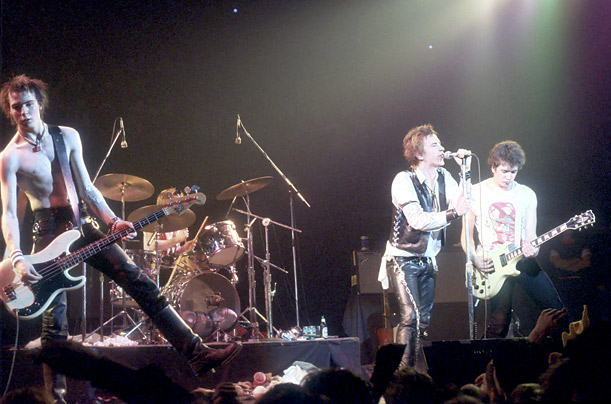
14th January 1978, The Winterland Ballroom, San Francisco, USA and the Sex Pistols have just brought their set to an end with a version of the classic Stooges song No Fun. As the final traces of feedback belch from the amplifiers and over the heads of the assembled audience Johnny Rotten is poised, crouched down and defiantly staring at the crowd. He utters the immortal words, which are etched on the toilet walls of the Rock N Roll Hall of Fame, “ha, ha ever get the feeling you’ve been cheated.”
No sooner had the band left the stage the disintegration started and within days the Sex Pistols crumbled into dust. Guitarist Steve Jones and drummer Paul Cook went on to prostitute what dignity remained of the band. The ex manager (Malcolm McClaren) desperately cobbled together an embarrassing film called The Great Rock n Roll Swindle with a very dubious narrative. By February 1979 Sid Vicious (bass player) died a lonely and squalid death from a heroin overdose whilst being under investigation for the murder of his girlfriend. Meanwhile former frontman John Lydon (aka Johnny Rotten) had jetted off to Jamaica with no other than Richard Branson to scout reggae bands for Branson’s Virgin record label. The Sex Pistols were to leave behind a maze of legal wrangles and bad taste. The punk scene sunk into wall to wall leather jackets and mohican haircuts.
In the hands of McClaren The Sex Pistols legacy was to become a parody, although what emerged from the ashes was to be much more musically interesting. By May 1978 John Lydon was already assembling his new band and later that year under the name Public Image Ltd they released their self titled single ‘Public Image’ The record was well received and reached No.9 in the UK charts.
As a teenage fan of Lydon I recall dashing down town on release day to scour local record stores and seek out a copy that also featured a limited edition newspaper insert. At the time the single with its insert were considered the holy grail and from small independent record shops to the high street dealers I ventured, bus journey’s to the neighbouring town (Middlesbrough) my crusade continued through the day and occasionally bumping into fellow fans on the same crusade. The song written by Lydon whilst still a member of the Sex Pistols bares the hallmarks of a Pistols track with its sneering lyrics directly aimed at his ex band mates. The A-side of the single was not a major departure and as such held little surprise. It was the singles B-side the aptly entitled The Cowboy Song that was to provided a glimpse of where the band were heading. The Cowboy Song sounded like a rambling assortment of studio outtakes and random noises all mashed together in no particular order. Uponfirst listening it was easily forgettable. Lydon himself viewed the track, “it cost us approximately £1 to make. It’s just a jolly good disco record and it came about cos we were bored and couldn’t think of a b-side.” It was not until the first album appeared that the creative manifesto for the band started to be exposed to their fans.
A beautiful mess
Public Image, First Edition was released in December 1978 is now considered groundbreaking, but at the time of its release the record polarised fans and was met with outright hostility from music critics. The earlier single release had provided a false sense of expectation for those fans seeking solace in Public Image Ltd becoming The Sex Pistols mark 2. The album was in effect pulling in two different directions. A type of confused halfway half way house between looking backwards and pointing forward.
Dub baselines, traditional rock/pop tracks, screeching guitar work, a poem left many fans confused given the albums lack of focus and mixing seemed disjointed. This was no doubt a consequence of the band running out of money during its production, which necessitated recording sessions to be concluded hastily. The album to this day remains one of experimentation, a band findings its way with mixed results from the sublime ‘Low Life’ assault on the personality Sid Vicious had became towards the end of his life and through to the amusing, but largely forgettable ‘Fodderstompf’. Record boss Richard Branson who commissioned the LP was reported to be less then impressed. Whilst the record was a moderate success in the UK staying in the album charts for 11 weeks and peaking at 22. It would take until 2013 before the album received its full American release given it was deemed to be far too uncommercial for American ears by record executives. Love or hate this album its importance cannot be disputed given it laid down the blueprint for what many would call the post punk period.
The results were far from pretty, but to the credit of Lydon and his fellow bandmates they had decided upon a route away from the commercial mainstream, which at the time was an open door beckoning for Lydon after the demise of the Sex Pistols.With the first album completed PIL ventured out into the world to perform live. Playing 4 concerts in late 1978, Brussels Theatre Belgium on 20th December, Paris Le Stadium 22nd December and Christmas Day and Boxing Day at the Rainbow Theatre, London. By early 1979 PIL were left with the challenge that often demolishes many bands – the fatal 2nd album.
Its all in a tin
The glorious Metal Box/Second Edition LP arrived in November 1979 and is generally considered to be one of the most influential albums of all time. In many ways the album was a radical departure from the first album and ventured more towards avant-garde territory. With its cryptic lyrics, brooding baselines, tribal drum patterns, metallic guitar, synthesised drones and random noises the album was unlike anything before in sound or presentation. The original album packaging consisted of a 16mm film canister tin embossed with the bands logo, which contained three 12″ singles. The album drew from several influences including deep-dub-raggae in particular the early work of dub pioneer Keith Hudson known as the “dark prince off reggae” and bands like Can. The opening track Albatross sets the standard. Recorded in free form the track gathers a life of its own as it weaves along. The songs structure is reminisce of the interplay between Jim Morrison and the Doors when their performed live.
Check the line up
Metal Box/Second Edition was a far more focused effort, which unlike its predecessor was received with critical acclaim and considered a classic of its genre sitting alongside the likes of Can and Captain Beefheart. The albums influence cannot be emphasised enough, Sonic Youth, The Strokes, Simple Minds, REM, Joy Division, Portishead, Manic Street Preachers, Massive Attack, Radiohead have all drawn influence from the album.
In 2001 Thom Yorke during an interview with The Wire Magazine said, “We could never do a record on a par with Metal Box.'” The Rolling Stone Magazine listed Metal Box in the top 500 albums of all time. With album literally in the tin PIL started to increasingly perform live, although like their studio output the norm was not to be expected. In New York the band decided to perform behind large screens creating a physical barrier between them and a bewildered audience who had come to see the band perform a more traditional rock show. The resulting disturbances required the concert to be cancelled mid way through as the crowd throw items at the screen and started to dismantle the stage equipment.
In Leeds the band were met with hostility when the audience became bored with the new material and demanded Sex Pistols songs. PIL ignored the audience, often turn their backs against them and carried on until they simply walked off stage.
The 1980 live album ‘Paris au Printemps’ offered little to nothing in terms of creative output. In fact Lydon reputedly advised fans not to buy it because the band only got involved in the project to earn enough money to pay for Metal Box.By 1981 and the bands 3rd album ‘The Flowers of Romance” the wheels had already started to fall off the first incarnation of the band. Jah Wobble who provided the brooding bass on the first two albums had been sacked for allegedly using PIL material as backing tracks for his solo work. The name ‘The Flowers of Romance’ was taken from an early band Sid Vicious and Jah Wobble were members, as well as it being the title of a very early Sex Pistols track, which was never studio recorded and released.
Not for the faint hearted
The stark, severe and minimum style of the album is in contrast with the bass heavy influences of Metal Box. A variety of sources were deployed and used to generate sounds for the album including amplified wristwatches, reversed piano, televised opera. John Lydon played violin and saxophone, although he was not know to be trained to play any particular instrument. Keith Levane the groups pioneering guitarist played through reversed tapes, treble distortion and synthesisers drones.
Interviewed at the time Levene pointed out that, “AII itamounts to is that we don’t like any music at the moment.” John Lydon added, “well it ain’t rock & roll, that’s for sure.” The album quickly gained a reputation for being the most uncommercial LP to have been made and presented to a mainstream record company.
The Flowers Of Romance entered the UK Charts where it stayed for 5 weeks and reached No. 11 in April 1981. The album spawned a minor hit single in the same year that reached No. 24 and stayed in the charts for 4 weeks. The third studio album for many concluded PIL’s pioneering period. Similar to Jah Wobble original guitarist Keith Levene left the band acrimoniously shortly afterwards. John Lydon then shifted the sound and structure of the band towards a more commercially friendly zone with differing results given the creative challenges were not putting the breaks, or shaping some of Lydon’s ideas. By the late 80s PIL effectively Lydon and an assortment of musicians were touring America extensively, including a support slot for the Australian band INXS on their Kick tour.
The end for PIL was more a damp fizzle than bang. By 1992 and with a lack of interest from the general public Lydon put PIL into hiatus whilst he concentrated on other projects, including his autobiography, TV work and ultimately regrouping with the original Sex Pistols line up for a number of lucrative tours, which properly provided the only real opportunity for the original 4 members to earn any significant cash from their legacy. In September 2009 Lydon announced that PiL would reform for five UK shows, their first live appearance in 17 years. The regrouping of PIL was financed via the money Lydon earned through a UK television commercial, “The money that I earned from that has now gone completely – lock stock and barrel – into reforming PiL” The pursuing concerts were warmly received and the band has continued to perform live since, as well as releasing new material.
Like father like daughter
As one review of the first 3 PIL albums states, “PIL managed to avoid boundaries for the first four years of their existence, and Metal Box is undoubtedly the apex it hardly sounds like anything of the past, present, or future”. These first 3 albums, including the glorious Metal Box/Second Edition alone has secured my enduring respect for Lydon.
30th June 2013 and 35 years after buying the first Public Image Ltd single (with the limited edition newspaper insert) I find myself with my 14 year old daughter walking aimlessly through the Glastonbury Festival site. We have not paid much attention to the running list on the various stages. We are just soaking up the atmosphere, floating along with the crowd and just stopping to watch whatever emerges before us. Its a glorious summers days and in the near distance I hear driving base of PIL’s Death Disco vibrating through the air. We quickly make our way to the Other Stage and sure enough we find John Lydon and co.
I look to my daughter and ask if she is enjoying it? She relies, “yes.” I turn my attention back to the stage, feel the sun on the back of my neck, scan the large crowd and look back at my daughter – we smile at each other. Sometimes things just fall into place for all the right reason.
“Biblically chauvinistic” is how the Rolling Stone magazine described the James Brown 1966 record “It’s a Man’s Man’s Man’s World.” As a record it certainly takes some beating when promoting a stereotype. A stereotype, which has been continuously reinforced throughout the music business since its conception.
Whilst the mainstream charts may be dominated by female artists research constantly reveals that women working in the music business earn far less than their male counterparts – a staggering 47% of women in the music business earn less then £10,000 per year.
It is a business that is dominated by male executives who control its means of production, marketing and recording output. Recording artist Lily Allen recently observed, “You will also notice of the big successful female artists, there is always a ‘man behind the woman’ piece. If it’s Beyoncé, it’s Jay Z. If it’s Adele, it’s Paul Epworth. Me? It was Mark Ronson and the same with Amy Winehouse.” These attitudes prevail throughout the music business right down to the basement end of manufactured pop. The banality of Miley Cyrus ‘tweaking’ caused a media stir, which was possibly related to Cyrus’s history as a child star for the Disney Corporation. Whilst Cyrus’s performance might be seen as silly and tedious the fact is Iggy Pop has been ‘twerking’ for 40 years, including the odd penis exposure as well as regularly humping his amplifiers on stage – yet he is considered a rock god.
There is something very disturbing about a popular culture that increasingly portrays women as disposable commodities frequently being hunted down by a serial killer or subjected to the creepy attention of a male artist who is acting like a potential candidate for inclusion on the sex offenders register. Although given the recent spate of celebrities facing sexual assault charges in the UK they may not be acting. Equally repugnant are those fellow men who shout “political correctness has gone mad” every time these issues are raised. Let’s be honest if you are the type of tool who enjoys women being portrayed in this way then it is highly unlikely you have read this far into this blog and you are properly jerking off to that misogynist Robin Thicke video.
“Ignore it” you may say after all there is an off button I can push Well I did, but ignoring it does not make it a right. Switching off a TV does not mean switching off your brain and that is the real choice here. I am not for one minute advocating censorship far from it. In my view those who produce this material should be exposed to additional taxation. The revenues generated should be earmarked for support services for women who become victims of male violence. If a sovereign country was inflicting such harm on another country surely we would be expecting intervention, possibly economic sanctions.
Those women who have stood up, challenged and turned the tables on the status quo have faced ridicule or worse. The singer-songwriter, multi-instrumentalist, actress, author and philanthropist Dolly Parton has throughout her career been the subject of ridicule from taunts of trailer trash, cheap, dumb blonde and least we forget the breast obsession. Web sites are dedicated to crude jokes about Parton. Realising these circumstances Dolly Parton played the card of self-parody as well as deploying her very clever business brain. This has enabled her to amass a financial fortune and make music that she wants to make. This attitude towards women is not a modern phenomenon, which has been cooked up by dead beat rappers with their pathetic lyrics of ‘hoes and bitches.’
Billie Holliday – used and abused
The harrowing demise of Billie Holliday in the 1950s is a prime example. Most media stories concerning Holliday’s torturous death tend to focus on sexual violence and illicit substances. What is often overlooked is that in her final years Holliday was swindled out of her earnings and died with $0.70 in the bank. As an incredibly gifted, yet troubled artist Holliday was hounded to the very end. Whilst dying police raided her hospital room and placed her under arrest until she passed away on 17th July 1959. She was 44 years old.
The magnificent Nina Simone became the catalyst for change in the 1960s. Strong, intelligent, outspoken and a versatile musician she became a role model for musicians (female and male). Simone started playing the piano at 3 years old and by the age of 10, she was perfuming piano recital in the town library. Like Holliday, she was ripped off by the record companies. She saw very little money from her first record, the top 20 hit of “I Love You Porgy.” Simone always characterised record companies as “pirates.”
Over the coming decades, Simone took increased control over her career and destiny as an artist, which not only provided financial rewards but enabled increased creative freedom. At the time this was unparalleled for both a female and Black artist. The song Mississippi Goddamn, which she released in 1964 was written by Simone after the murder of Medgar Evers. Although the song contains a jolly rhythm it is a scathing anti-racist tour de force. Towards the end of her life Simone became increasingly erratic with legendary mood swings. In 1985 she fired a gun at a record executive whom she considered was stealing her royalties claiming that she tried to kill him, “but missed.”
The 1960s produced many iconic female artists Dusty Springfield, Nico (Velvet Underground) Grace Slick (Jefferson Airplane) and Janis Joplin for example. It is a decade that increasingly witnessed the use of ‘tabloid sensationalism’ as a weapon against women. Singer, songwriter and actress Marion Faithfull were subjected to sordid and untrue media reports in 1967 concerning her sexual relationship with Mick Jagger. Whilst the headlines and speculation did little to hinder Jagger’s career. In fact, the stories further enhanced his bad-boy reputation, but for Faithfull, her career was badly damaged. 27 years later Faithfull observed, “It destroyed me, a woman in that situation becomes a slut.” Before Beyonce, there was Diana Ross (formerly of The Supremes).
The Supremes were a product of Barry Gordy’s Motown conveyor belt of popular hits during the 60s and 70s. Gordy was the original Simon Cowell with the gift of identifying and bringing together pop talent, along with tightly controlling and carefully managing their public image. Whilst Ross and Gordy were romantically entwined for Gordy it quickly became a case of biting off more than you could chew syndrome when it came to Diana Ross.
Whilst The Supremes were on a UK tour in the 1960s Gordy insisted The Supremes perform a version of Dean Martin’s “You’re Nobody Till Somebody Loves You.” Gordy believedthat such a performance would enable The Supremes to access a slot on a mainstream UK television programme. Ross refused outright. “I could not explain anything that made sense to her,” Gordy said. “She refused to do it completely.” That’s when Gordy realised, “if she didn’t do it, I knew I could not manage them.” Ross went on to become one of the biggest selling female solo artists in music history.
Joni Mitchell produced and released her seminal Blue album in the early 70s whilst at the same time Jazz drummer Karen Carpenter was persuaded to move centre stage and sing for the brother/sister duo the Carpenters. It may have taken until 1979 for Suzi Quatro to score a hit in her country of birth (USA), but Quatro was a constant presence throughout the 70s in the UK charts. Quatro’s trademark leather jacket, jeans, bass playing leadership and pop-rock anthems presented an altogether edgier imagine that had a significant influence and impact. An influence that has sadly been underestimated given for many young people Suzi Quatro was the first female artists who were seen to be the leader of the pop-rock group on mainstream TV. By the mid-70s Kate Bush and Patti Smith emerged. Two diametrically opposed artist who commanded respect through their craft. Smith went on to release what many still consider to be one of the most quintessential and influential rock album’s of all time ‘Horses.’
1975 also saw the release of the electro-pop ‘Love to Love You Baby’ by Donna Summer that pounded the dance floors of every credible disco. The song, which featured Summer moaning and groaning as if in the raptures of an organism would cause controversy around the world. It also presented the artist in a highly sexually charged way that would take Summer years to shake off. The song and its producers eventually left Summer feeling like she had no control over her life and went on to suffer from bouts of depression and insomnia. Summer would later become a born-again Christian and sue the producers of the record. After the legal settlement Summer decided to exclude “Love to Love You Baby” from her concert playlists and did not perform it until 25 years later.
As the 1970s were drawing to a close there was something quite different about the female artists who were emerging outside the mainstream. Whilst the recording output varied according to taste. The confidence and attitude of the female artists was not in dispute. Operating within an increasingly political environment a whole bunch of strong, independent, intelligent and often conformational female artists were playing a leading roll in the rock scene. It was a time when Siouxsie Sioux (Siouxsie and the Banshees), Fay Fife (The Rezillos), Gaye Advert (The Adverts), Debbie Harry (Blondie), The Slits, Pauline Murray (Penetration), Tina Weymouth,(Talking Heads), Joan Jett (The Runaways) and the glorious Poly Styrene (X-Ray Spex) to name a few took a male-dominated world and shook it by the throat. A quick search on Google for Penetration performing ‘Don’t Dictate’ live will emphasis the point as Pauline Murray tackles men in the audience head-on. It was another song from this period, which had a greater influence on me personally.
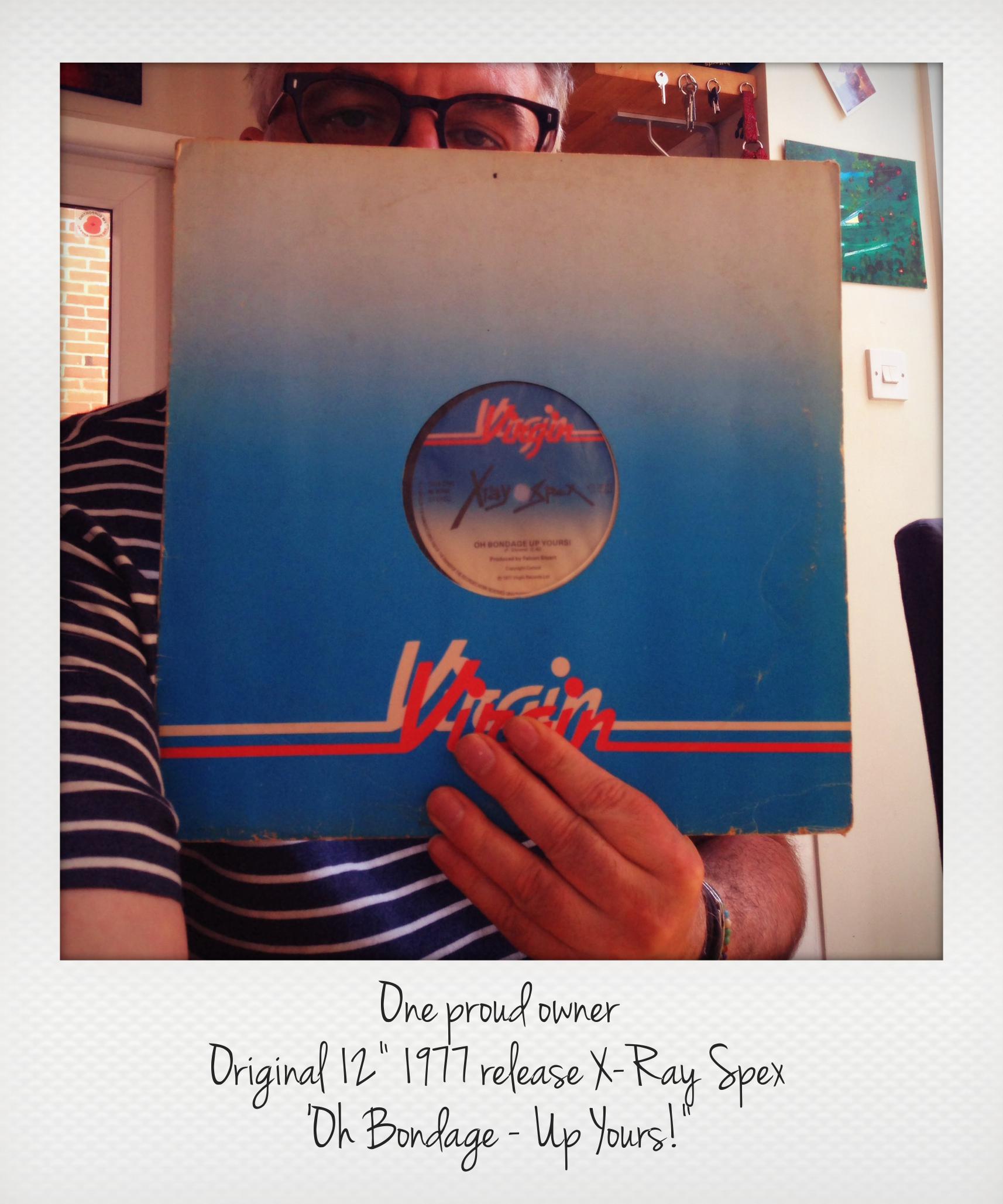
Released in 1977 “Oh bondage up yours” was the debut single by X-Ray Spex. Polly Styrene was the bands’ lead singer and main songwriter who described the song, “as a call for liberation. It was saying: ‘Bondage—forget it! I’m not going to be bound by the laws of consumerism or bound by my own senses.’ It has that line in it: ‘Chain smoke, chain gang, I consume you all’: you are tied to these activities for someone else’s profit.”
As I grow older and start to see the world more holistically I can often look back at key moments when a stake was placed in the shifting sands of my life. These stakes are important because they create a focus point when somethings clicked. When I get a cold chill after being exposed to yet another pile of misogynist crap by a retarded hunk in plastic bling rubbing his small codpiece against a scantily dressed women. I can point back to buying the original 12″ vinyl version of “Oh bondage up yours” in 1977.
Every cause has a counter effect and what had been achieved in the 1970s was to be challenged throughout the 1980s free for all and sod thy neighbour attitude. Samantha Fox’s was 16 years old when her mother submitted several photographs of her daughter in lingerie to a Sunday tabloid newspaper competition (Girl of the Year amateur modelling contest). By the 198os Samantha Fox was a popular topless glamour model in a daily tabloid. In 1986 Fox choose to take up a new career as a pop star. Her first release was the tacky ‘Touch Me (I Want Your Body)’ that reached No. 1 in seventeen different countries. She went on to sell more than 30 million albums and co-wrote the song “Dreams” for girl group All Saints’s 2000 album, Saints & Sinners. Although she was credited as “Karen Wilkin” because the group refused to record the song if Fox’s real name was used. In 1984 Sheena Eastern had a hit with a Prince written song ‘Sugar Walls’ a pseudonym for Eastern’s vagina. By the close of the 80s Cher was to be seen cavorting around a battleship in a fishnet body stocking rattling out the hideous ‘If I could turn back time.’ Amongst this drivel there were occasional rays of sunshine from the likes of Chrissie Hynde (The Pretenders) and the Sugarcubes whose lead singer Bjork was to became one of the most original and innovative female recording artists of all time.
Thank god for Bjork
As with most cases in life, it is not those at the vanguard who reap the rewards of their struggles. Kim Gordon (Sonic Youth), Courtney Love (Hole), PJ Harvey, Riot Grrrl, Sleater-Kinney, Grace Jones, Beth Ditto (Gossip), Poison Ivy Rorschach (The Cramps) and the stunning Skin (Skunk Anansie) were to find their journeys just that little bit more easier because of the women who had gone before. In turn, this made for a more creative and fertile music scene for the rest of us to enjoy. It would of be interesting to hear the views of these female artists regarding female artists in the mainstream pop world today. I can only guess that for many it will be a case of raised eyebrows and recognition that syrup manufactured girl pop groups will always have a place.
I struggle to envisage many will sign up to the ‘girl power’ of the Spice Girls call to arms, “I wanna, I wanna, I wanna, I wanna, I wanna really really really wanna zigazig ha.” In truth, their struggle and achievements will seldom be recognised in the mainstream, because the mainstream needs to be controlled and manipulated from above. The advent of technologies has in many ways released the creative artist to pursue their particular path, but success on a scale that will enable economic independence remains a long way off for many female artists. As a father of 3 daughters, it is with great relief that when foraging around Bandcamp I have discovered such an amazing range of female artists who are producing some truly magnificent material. To name a few:




 Irregular Frequencies