Category Archives: Chewing the Fat

Elsa von Freytag Loringhoven

In the fizzing heart of 1920s Manhattan—where cigarette smoke curled above café tables and the clatter of typewriter keys mingled with jazz—there strode a woman who seemed conjured from another dimension. Elsa von Freytag Loringhoven, the self-styled “Lobo,” was not merely a fixture of Greenwich Village; she was its pulse. A German immigrant and fearless Dadaist, she prowled the cobblestones as if the streets were an extension of her body, each step a challenge to the timid architecture of convention.

Draped in a riot of fabrics, tin cans, feathers, and anything else her imagination could bend into ornament, Elsa transformed herself into a walking collage. Her hair, a wild storm of curls, rose beneath hats fashioned from birdcages, kitchen strainers, or whatever defied sense that morning. People didn’t just see Elsa—they collided with her. She was the art, the performance, the provocation.

Her circle included the titans of the avant-garde—Marcel Duchamp, Man Ray, Peggy Guggenheim—drawn to her ungovernable spirit as moths to flame. Together, they tested the limits of artistic gravity, launching ideas like fireworks into the New York night. In The Little Review, her poems unfurled like surreal manifestos—equal parts erotic, absurd, and luminous. To pay the rent, she posed for painters and sculptors, her body becoming as much a medium as their clay or canvas.

But Elsa’s true theatre was the street. She staged impromptu performances—shoplifting as satire, darting away with a laugh that cut through the clamor of vendors. She was a prankster philosopher, a thunderclap in human form, an irritant and inspiration rolled into one. The police chased her often; the Village chased her always.

In her cluttered studio, she built sculptures from the discarded and overlooked, turning rust and rubbish into meditations on beauty and faith. One notorious piece, a plumbing fixture christened God, was both joke and revelation, a grenade lobbed at the sanctity of traditional art.

Eventually, the currents pulled her back across the Atlantic—first to a battered Germany, then to Paris, where cafés and salons again made her feel at home. She still modeled, still burned with creative hunger, but the scaffolding of friends and patrons began to crumble. Poverty’s chill crept in.

In 1927, in a small Parisian room, Elsa’s flame flickered out. She left the gas on overnight—whether by accident or design remains a riddle. The woman who once blazed through Manhattan’s bohemia and Paris’s salons vanished quietly into the ether.

Yet her ghost refuses to fade. Decades later, her name rises again, her life a rallying cry for those who believe that art should bleed into life and life into art. Elsa von Freytag Loringhoven remains a patron saint of the unruly—a living reminder, even in death, that the greatest masterpiece is the way you choose to exist.
AI An Essay

In the 60s and 70s, computers were colossal, mysterious beasts — I once visited one that took up three entire floors at ICI Teesside. Back then, their impact on society was only whispered about.

Fifty years on, AI isn’t just knocking on the door — it’s already in our homes, studios, and pockets. Scientists warn of existential risks, but my focus is on the here-and-now: the benefits, challenges, and ethical dilemmas AI brings to the creative arts.

From questions of ownership and authenticity to new possibilities in personalisation and restoration, AI could either devalue human creativity — or unleash it.

To see for myself, I typed “Abstract painting of a 1975 British industrial landscape” into free AI art software. Seconds later, a brand-new artwork appeared — a piece that never existed until that moment.

The debate is wide open. The future of creativity is being written right now — by humans, machines, or perhaps… both.

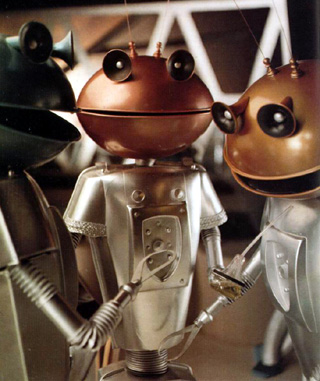
Talking to Robots About Robots

I asked an Artificial Intelligence software programme to write a statement on the dangers of AI. This was the unedited reply.

Artificial Intelligence (AI) has the potential to revolutionize the way we live and work, but it also poses significant risks and dangers. As AI becomes more advanced and integrated into our daily lives, there are growing concerns about the potential consequences of its use.

One of the biggest dangers of AI is its potential to replace human jobs. As AI becomes more sophisticated, it has the ability to perform tasks that were previously only possible for humans, such as driving cars or diagnosing medical conditions. While this may lead to increased efficiency and productivity, it also has the potential to leave millions of people without work, which could have devastating economic and social consequences.

Another danger of AI is its potential to be used for malicious purposes. As AI becomes more advanced, it could be used to create autonomous weapons or to conduct cyberattacks, which could have catastrophic consequences. There are also concerns about the use of AI for surveillance and the potential for it to be used to violate privacy rights.

Additionally, there are concerns about the lack of transparency and accountability in the development and use of AI. As AI becomes more complex and autonomous, it becomes increasingly difficult to understand how it works and to ensure that it is being used ethically and responsibly.

It is important that we recognize the potential dangers of AI and take steps to mitigate these risks. This includes investing in research to better understand the risks and benefits of AI, developing regulations and guidelines to ensure that AI is used ethically and responsibly, and promoting transparency and accountability in the development and use of AI. By taking these steps, we can harness the power of AI while minimizing its potential risks and dangers.

ethics

I was watching a film tonight about ethics, and it posed a powerful question that stuck with me. Imagine you’re walking past a pond, and there, trapped in the middle, is a small child — stranded, alone, with no parents in sight. You look down and see you’re wearing your brand-new Gucci shoes. You hesitate, thinking about ruining them. But the child is sinking fast, slipping below the surface.

Put aside the cold-hearted psychopath — almost everyone would dive in without a second thought, soaking those expensive shoes to save that child.

Now, ask yourself this: if that same child was starving, trapped in poverty instead of water, would you be willing to give £1,000 to a charity fighting that hunger? Would you?

This question lays bare the shallow vanity of consumerism, exposing the gap between instinctive compassion and our everyday choices. It’s a brutal mirror reflecting how we value possessions over people.

He Could Be Wrong – He Could Be Wrong.

As we age, face the harsh realities of life, lose loved ones, and perhaps start to contemplate our own mortality, we have choices. We can succumb to the darkness of reactionary impulses, which have built up over the years or not.

I leave an evening with John Lydon early with mixed feelings and knowing we have parted ways. Seeking to unpick Lydon today is not a joyful experience. He has long stopped being the once charismatic leader of two charismatic bands that helped shape my personal musical journey.

Lydon’s abandonment of his class politics, which I know winds a few people up, has little importance to me. However, through his physical gesturing, his mocking of Diane Abbot, the U.K. first black female MP, says far more about his current state of thinking than any words leaving his mouth. It’s mocking straight out of the Trump playbook. It’s not funny and simply gives the impression (rightfully or wrongly) of spitefulness. I do feel a sense of unease.

Lydon’s attempts at personality assassinations are predictable, often crude and dull. Refections of his time with the Pistols are old news, regurgitated stories many would have heard countless times before. His contempt for fellow Pistol’s, especially drummer Paul Cook, are delivered like an unconvincing victim who has woken to the news that nobody really cares 40 years later.

Repeating the word cunt. I genuinely believe Lydon is the last person in the room to understand it’s all wearing thin, but he keeps repeating it, time and time again. It’s silly, tedious even. Recollections of butter adverts he made over a decade ago are told as if recent glories.

By far, the best parts of the evening are when he reflects on those he holds close. His parents, brothers and wife Nora. There is a sense of genuine reflection and encouragement for those dealing with loss or faced with the prospect of losing a loved one through the horrors of Alzheimer’s Disease.

Reflections of growing up in working-class neighbourhoods ring hollow now. There is little conviction behind the words. Just an analogue image of dusty memories, fading and recast into the light through a chipped lens of fake nostalgia and patriotism.

Lydon will always have his core fanbase. Tonight it’s an overwhelmingly white, 50+-year-old, male audience. Nothing wrong with this, of course, though one can hardly ignore the reality, like a ripple in a pond, it’s a case of ever-decreasing circles.

In truth, I’m bored; he starts to end the night by instigating an Abba singalong in memory to Sid Vicious. I’m out of here. The pantomime is over.

Notes from People Watching

He stands there, a Pep Guardiola doppelgänger—if Pep had not seen better days. Slightly dishevelled, thinner, with a nervous twitch that whispers of a thousand secret battles fought with the bottle. His fingers fumble through loose change, each coin a silent confession. Around him, the world rushes by, oblivious to the storm inside him. I watch, caught between curiosity and sympathy. He looks broken.

I order a tea. The server pours it fast into a flimsy cardboard cup, the tea bag bobbing on the surface. “Say when,” he says, tipping in the milk. “When,” I reply. Our eyes meet—just for a flash—and in that brief exchange, something like a sigh echoes in the space between us, a shared moment of unspoken understanding.

Stepping away from the trailer, I clutch the cup tight and settle beside an aluminum-framed chair and its matching table. I place my tea down, along with my phone.

It’s been 22 years since I first landed in Bristol. This spot, just outside the Watershed, has always been my unofficial lookout—a small tea and coffee trailer that serves a wicked banana and chocolate crepe if you’re lucky enough to catch it.

Perfect for people-watching. A theatre of life playing out in real time, if only you looked up from your screens.

Groups of kids swarm by, trading insults I barely understand. Behind the bravado, one quiet kid lurks—awkward, shy, desperate for a place to belong. Seagulls swoop, crying out for crumbs. A wasp buzzes, menacing. Nearby, a man in a worn leather biker jacket stretches out, dragging deep on his cigarette, smoke curling around him like a lazy ghost.

The pedestrian crossing beeps, and a wave of new faces washes past. A young woman in her early twenties halts, fingers running through her long hair. She tilts her head just so, puckers her lips like a fish, snaps a selfie, and moves on—already lost in her own digital world.

The Pep Guardiola lookalike edges closer, scavenging discarded cigarette butts like they’re treasure.

My phone buzzes—a prompt to upgrade to the latest iPhone. I take a slow sip of tea, eyes drifting upward to the Weathervane spinning lazily overhead.

And then—just like that—he’s gone.

Open Memory Box

The largest homemade collection of 8mm celluloid film captures both a time, but also people loving life from the defunct German Democratic Republic. Click on the anti-archive link and just get lost in individual stories. This is the link to the full website

Irregular Patterns

Ideas left to lie dormant dissolve into the ether of well-meaning what-ifs. The pandemic lockdown, with its forced stillness, cracked open time and space to dust off my long list of stalled ideas. Hidden within was the seed of Irregular Patterns—though it had no name back then.

I’m lucky. Very lucky. A life spent immersed in the creative worlds of music and live performance has shaped me. But I’ve also seen the cracks: musicians I know struggling long before lockdowns, drained by the streaming economy’s unfair split. Even seasoned pros tell stories of exploitation—shady managers, exploitative record deals, endless pressure to perform for free. The backbone of one of the world’s greatest cultural exports is fraying fast.

Then came a game-changing conversation with local musician Gavin McClafferty. His focus, vision, and grit turned those scattered ideas into a living, breathing project. Irregular Patterns isn’t just a record label—it’s a creative hub built around the artist.

Less than a year in, we’re on the cusp of our first release, with a growing roster and an ambitious release schedule ahead. The support and encouragement we’ve received so far? Humbling.

I won’t rehash what’s already out there—the IP manifesto is our cornerstone. But here’s the truth: being the change we want in the music industry is our vital first step. The road hasn’t been easy; we’ve had to break down walls. But more than anything, this leap of faith reminds me—we’re in the happy business after all.

Paulie Fest: 31.07.21

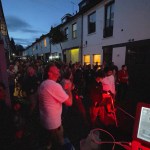
This weekend, I had the chance to spin a DJ set at a friend’s 50th birthday party in Hove — and for a few electrifying hours, it felt like a return to normal. The energy was electric, the crowd was alive, and the music brought everyone together. It wasn’t just a party; it was a celebration of connection, laughter, and pure, unfiltered fun. Almost like old times, but better.

Ode to Johnny Dowd

As we dare to imagine a world where a successful vaccine ushers us back into the electrifying embrace of live music, one artist stands out as my constant companion on that journey: Johnny Dowd. Over the years, I’ve seen him more times on stage than anyone else. I recall one unforgettable trek from Bristol all the way up to The Band Room—hands down, the greatest small venue on earth, at least according to the discerning Hanson Family—nestled deep in the wild beauty of the North Yorkshire Moors. And who could forget the raw magic of his show at The Thunderbolt in Bristol on October 19th, 2016? Pure joy from start to finish.

If Johnny Dowd’s name doesn’t ring a bell, prepare yourself: his music defies easy categorization. Call him a maverick, if you like. Imagine a potent cocktail brewed from the wild genius of Zappa and Beefheart, the gravelly storytelling of Tom Waits and Nick Cave, then add a hefty splash of dry, wry humor—thrown into a blender on full speed and left spinning unattended. The result? Something utterly unique, darkly compelling, and impossible to forget.

Among his many releases, I always find myself returning to No Regrets (2012)—an album that feels like a weathered road map through shadowy tales and sly smiles, where every track resonates long after the last note fades.