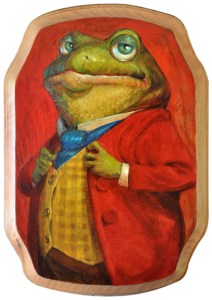
 I don’t recall his name, but it was New Years Eve 1998, the comedian walked on stage and was warmly welcomed. His opening gag, “Scotland is celebrating tonight….Lena Zavaroni has had a shit.” His comic timing was impeccable. The room filled with equal bouts of laughter, gasps and groans. It’s a gag that has stuck with me. Not because of any comic value, but its cruelty, given it was common knowledge that Zavaroni, a child star of the 1970s, had been suffering from anorexia since her teenage years and within a year of this gag the 35-year old Zavaroni was dead. The only thing I took heart from that night was the thinning audience seeking refuge in an adjourning bar where it was concluded the comic was boring, a one-shot pony, no depth and no charisma to manage an audience beyond aiming to shock. Years later 3 things often cross my mind from that evening.
- The feelings of those in the process of losing a loved one, if they were to discover their loss, suffering, pain and devastation was joke material.
- The ability to offend and be offended is an integral part of a functioning democracy and should be defended. An argument often overlooked by those on the left and misused by those of the right.
- Thirdly, by walking out of the comic’s routine, which he will have noticed, we the audience, were in effect holding him to account.
20 years later and the willingness to say something shocking, offend, slag off or degrade is epidemic, even those seeking, accepting or obtaining public office are in on the act, but like that comic, they are often dull and as sure as night follows day accountability ultimately catches them up. Alexander Boris de Pfeffel Johnson MP the illustrious Secretary of State for Foreign affairs in the UK (one of the prominent 3 positions in UK Cabinet government). Johnson has sought to position himself as a Trump type character for the common man. Endlessly projecting himself as an affable, jovial person, he is now widely viewed as an incoherent train crash on Thomas the Tank proportions.
Johnson is of that ilk, a background of wealth and privilege giving a pretentious and mistaken belief they are not constrained by the standards decent people self-regulate to demonstrate their dignity. A sense of respect towards others including those less fortunate. Johnson sense of privilege allows him to casually describe war-torn Sirte, Libya as potentially the next Dubai once the dead bodies were cleared away. In this context, it became of little surprise that Johnston ran to the defence of his fellow traveller Toby Young, (journalist and self-styled educationalist) who has recently been appointed to a government-funded educational quango (The Office of Students). Young believes people attacking his appointment is because of his ‘outspoken Tory’ views, but while this may provide logic to some people, as a parent, with a daughter entering the university sector shortly, his politics are not of my concern on this occasion.
There are principled conservatives, as there is across the political spectrum, who have a sense of service, standards and ethics. They understand the tone they adopt provides a sense of responsibility, leadership and integrity, which underpins our trust and confidence in those wishing to serve the greater public good. Toby Young is not one of them. Toby Young is my 1990s forgotten comic making observations about “huge knockers, having a dick up a woman’s arse, gloating over baps, wanking over the efforts of Comic Relief to raise money for those in need and referencing working people as stains and deformed.” The critical difference between my 1990s forgotten comic and Toby Young is simple. My forgotten comic has never, to my knowledge, sought or accepted public office.
Young’s appointment is rightly receiving the criticism it deserves, and given the noise, he has released a statement regretting “the sophomoric, politically incorrect remarks on twitter and I hope people will judge me on my actions.” Schizophrenically Young is seeking to present himself twice. The virtual Toby detached with less accountability and the Toby in the real world. The real world Toby is demanding to be taken serious convinced in his self-belief, righteous education and privilege that he was born to offer us all the benefits of his gracious service. There will be those who find Young’s observations as the pinnacle of modern ironic comedy as part of the fight back against a politically correct world constructed by the liberal elites, which he and his ilk have built in their heads. A world, which they believe suffocates their freedom to call a spade a spade. It is a world where the ‘alt-right’ see themselves as freedom fighters against disabled ramps. A world where the context of equality is determined by wealth, status, the social network you belong too and what remains is a matter of charity.
2014, in an open letter to sitting Prime Minister David Cameron, Lord Paul Bew, who chaired The Ethical Standards in Public Service wrote about the public desire of wanting those involved in public life to adhere by common ethical standards. Lord Bew hit the nail on the head when he wrote, “for the public how things are done are as important as what is done.” The ethical standards Lord Bew was talking about are Integrity, objectivity, accountability, openness, honesty and that holder of public office should exhibit these principles in their own behaviour.
By appointing Toby Young, Theresa May is setting the bar for her standards, so what next how about Roy ‘Chubby’ Brown to head up a public body into women’s health. Katie Hopkins to front up a refugee relief quango, how about an Honourary Lordship for Trump in recognition of his work in building religious tolerance? To use your own words Mr Young “I hope people will judge me on my actions.” Well for my small part here I am judging you by your actions and the standards in public life.
SaveSave
SaveSave
SaveSave
SaveSave
SaveSave
SaveSave
SaveSave
SaveSave
SaveSave
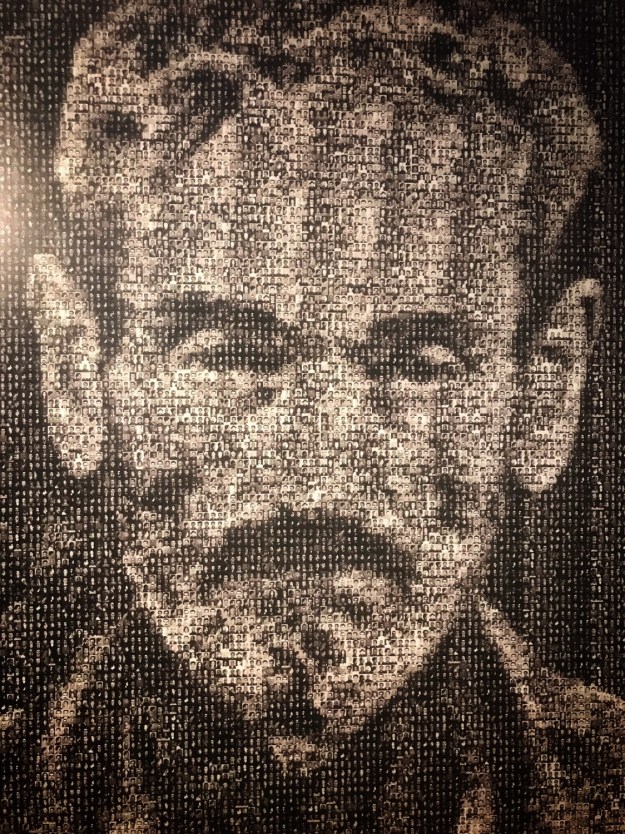
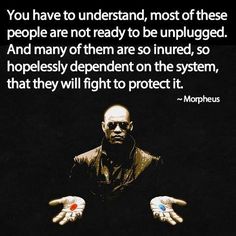 There is a crucial moment in the first Matrix film when the character Neon is presented with a life-changing choice by Morpheus between taking a
  Somethings have explanations, some things take belief, while others just leave you pondering for a rational reason for them to exist. They capture a moment, like stars when they align. On this damp, chilly September morning in the corner of my kitchen, a corner where the plants do their best to thrive, of all these days, a blooming flower stretches out seeking the sky. It’s the last flower, my father planted before he died on the 3rd March 2017, which is exactly, to the day, 12 months after my mum had passed away. The significance of this solitary flower that blooms on this damp, chilly September morning is what causes the pause, as I make a breakfast tea and say happy birthday to my mum.
 In a decade peppered with cultural and economic change, the 1970s certainly churned out a vast array of musical genres. While TV sitcoms reflected the mundane of life there was also documentaries that sought out injustice and the mysteries of the world, (John Pillinger, The World in Action, Whicker’s World). In this national psyche emerged the oddity of Jake Thackray’s Yorkshire baritones penetrating the fray of well tuned southern accents, which still dominated broadcasting. My first memory of Thackray was as a young child during a magazine TV programme called That’s Life, a machine gun etiquette of consumer protection, light entertainment, performing dogs, funny shaped vegetables sitting alongside hard-hitting investigations into wrong doing. Thackray was brought up in a working-class family and enjoyed the pleasures of pale ale, rugby and pipe-smoking. After moving to Lille in France, where he taught English, Thackray became an unlikely disciple of French artists like Georges Brassen and Jacques Brel.


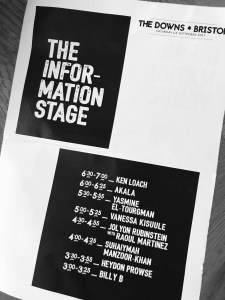 So what is to be done as we sit in self-imposed ignorant bliss, knowing the causes, but claiming to be ‘powerless’ to do anything? Being powerless can, of course, be a convenient excuse and one that in its worst condition seeks self-reflected pity on oneself. The cold reality is that some people vote to be powerless. The first step in demanding change is the realisation that you are not powerless and by actually doing something, no matter how little, you become a small, but integral part of a social movement and movements change things on a big scale. The words ‘political struggle’ in one of the wealthiest economies, had until recently, become an almost embarrassing term to use given the abundance of riches at our disposal. It is clearly back on the agenda for a younger generation who are quite rightly increasingly restless and angry at the inheritance being offered to them by a tired and self-imposed ‘powerless’ older generation. While government (nationally and locally) is blindfolded in a downward spiral of spin, apportion blaming and rebranding their diminishing resources as new. Informal networks of self-motivated people armed with nothing more than compassion and love are seeking solutions. On one hand, a growing number of people are not prepared to ‘walk on by’ and ignore the injustice staring them in the face and on the other hand young people are increasingly motivated to get involved in direct-action and structured politics. It’s too early to say if this is a fad and it may suffer the relentlessly grind wheels that have often warm many a good person down, but positive seeds have been sown.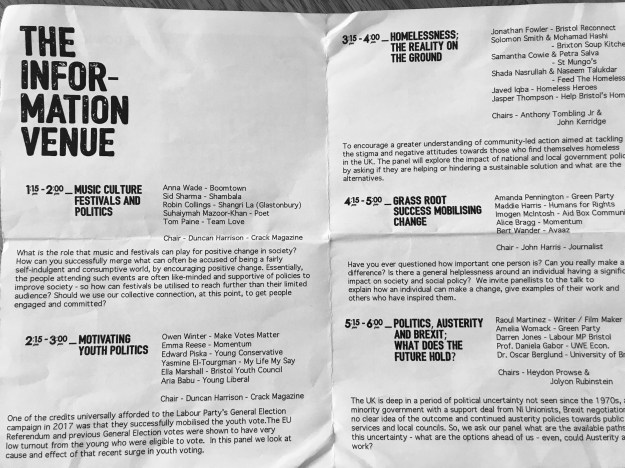
 Irregular Frequencies