Category Archives: The Sound of Music

Today I Stumbled Upon: Ghost to Falco

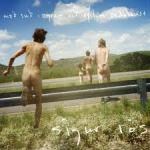
Ghost to Falco_behind_tumbleweedI find myself walking alongside the River Thames. It’s a walk I take most Thursday evenings whilst making my way to Waterloo Station for the long train journey home. It is a pleasant evening as I occasionally glance over to the House of Commons,  Big Ben, wearing my headphones and navigating the tourists, whilst flipping through the Bandcamp app on my iPhone. I’ve just pressed play. The Soft Shield album by Ghost to Falco kicks in with openner Enemies Calling and I instinctively stop, take a public seat and listen to the whole album whilst viewing the river and the features on the opposite riverbank. Finally finding my way home I purchased the album and email the brain child behind Ghost to Falco, Eric Crespo who lives in  Portland, Oregon, USA.  This blog mainly consists of email exchanges between Eric and myself, as well as the virtual digging I have managed to undertake. Portland of course has one of the most vibrant music scenes in the USA. My earliest recollection of a band from Portland was The Kingsmen, who had the hit Louie, Louie in the early 1960s. It’s a little know fact that In February 1964, an outraged parent wrote to Robert Kennedy, then the Attorney General of the United States, alleging that the lyrics of Louie Louie were obscene. The FBI investigated the complaint and, after four months of investigation, concluded that the recording could not be interpreted because it was “unintelligible at any speed”.

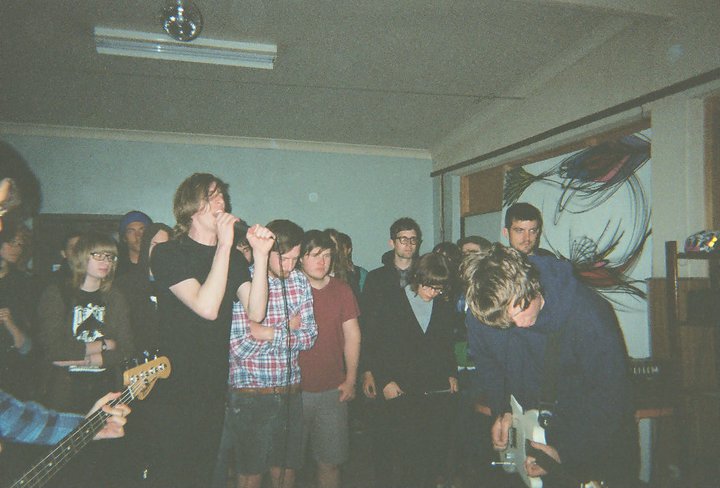
Eric Crespo was born in Los Angeles, California where he lived until eight years. at this ripe age his parents moved the family to Burlington a small town in North Carolina. Burlington is situated 40 minute drive from Chapel Hill, which would prove to be a critical influence to Eric given its underground rock music scene. Eric recalls Chapel Hill has a college town.  “In the time (mid 90’s) there was a quite a scene there.  The most noteworthy bands from Chapel Hill that were active when I started going to shows were Superchunk, Polvo, and Archers of Loaf.  Polvo was my favorite out of those three but I’d go see all of them, and they’d usually have some other interesting bands on the bill with them.  And all the touring bands would come through.  While I was a teenager I 10264709_10152161629904302_3003215836447863725_nsaw bands like Dirty Three, Mogwai, Guv’ner, Modest Mouse, Shudder to Think, Fugazi, June of 44, Pavement, Storm and Stress, Sebadoh, Blonde Redhead, US Maple, Elliot Smith, Unwound, and many more all playing at various small clubs–sometimes to about 10 people.  I saw Sonic Youth play secret shows in Chapel Hill on two different occasions at a smallish club (probably 650 capacity?) called The Cat’s Cradle.  I even saw Radiohead once at the Cat’s Cradle right after the Bends came out.  I wasn’t really a fan (and I’m still not) but I’d just go to shows..”  Eric then moved to Asheville, NC to go to college.  In his sophomore year he found himself living with friends and rightfully having fun. “I knew I had to leave though.  I felt like I was just waiting for something important to begin. I played in two bands that toured around the region a bit.  We’d go play in Atlanta or DC, but my bandmates in those bands weren’t really up for touring like I was.  Touring was all I really wanted to do at the time, so I was trying to come up with ways to play out alone just so I could tour as much as I wanted.  I may have never started Ghost to Falco if the people in my bands really wanted to tour like I did.”

10371438_10152270693314302_1731744634009158020_nSo how did the solo work start to evolve? “When I first started thinking of playing out solo my first idea was to go the acoustic guitar/singer-songwriter route.  I had a nylon string classical acoustic guitar, but I felt like I needed a steel string acoustic for some reason, and oddly enough I actually ended up finding one on the street one day.  In the middle of a crosswalk in downtown Asheville.  It seemed like it had fallen out of a car or something.  So I started trying to write songs on that but it wasn’t happening.  I had no frame of reference really for being a singer-songwriter.  I had no interest or knowledge of folk singers or anything like that.  I kind of put the acoustic away after a few months (or weeks—I can’t remember).  A little later I started messing around on my electric guitar with a looping pedal and I put my newly acquired monophonic 70’s analog synthesizer into the mix and I started making up these loose song structures that sounded pretty full even though I was the only one making the sounds, and that excited me. I thought maybe I could play shows like that but wasn’t sure. Around this time I was also getting interested in a lot more stuff that was outside of what I had grown up listening to.  Minimalist composers (Steve Reich, etc.), late 70’s industrial music, Glenn Branca, and “freer” bands of the era. Another thing about starting Ghost to Falco is that I had played in bands since I was fourteen years old.  I didn’t know how not to be in a band.  It was, and still is the way I find friends, my motivation to travel, my motivation to do anything really.  So, starting a band that could never break up unless I wanted it to was pretty appealing.  I left North Carolina in October of 2001.  My bands played our final shows, I got my wisdom teeth taken out, and then hit the road to Portland.” 

The Ghost Falco moniker began in 2001 as a solo project consisting of electric guitar loops, synthesiser sounds and field recordings. The band has gone on to became something of an underground institution with a rotating door of musicians have joined for tours and recordings bringing with them a whole range of instruments. “The first Ghost to Falco show I ever played was in Athens, GA (a place I have never lived) on the way to Portland, followed by shows in Shreveport, Louisiana, Lubbock, Texas, and a kid’s garage in a suburb of Los Angeles.  These shows were painstakingly booked by sending out a cassette of a song I sneakily recorded in the studio of my college on an exam day of my last semester.  I didn’t really know how I would feel about doing Ghost to Falco live, but it turned out that I generally felt pretty good about it so I decided to keep doing it.  I always thought I might add some band members to the mix at some point down the line and I did that in 2005 and live shows have gone back and forth between being me solo and having bandmates.  Nowadays I prefer to have bandmates in the band.”

So what are the challenges facing an artist like yourself? “Probably the biggest challenge in getting my music out there is the music I’m making!  It’s sort of always existed between worlds.  I designed it like that initially.  I liked avant-garde music and I liked good songs with singing.  I sort of wanted to do something to unite these two worlds, and in doing so I didn’t really create a new scene, but I just sort of made Ghost to Falco this free floating entity.  When you’re doing something different and it doesn’t adhere to the tenets of an established scene, or have enough people involved to create a new scene you just end up existing as a free floating anomaly.  People might agree that it’s good but people want to align themselves with things that make them a member of a tribe or a community.  People want connection.  Most of the time it takes some kind of noted tastemaker (preferably with lots of money) to step up and champion it before even a decent amount of people will take notice.  We’ve had a few minor taste makers sing our praises over the years, and that’s why today we can boast that we have 980 Facebook likes”  
Then there’s the whole music establishment?  “Let me just go off on this for a minute, because I’ve been meaning to write this down for a little while.  Within the realm of the kind of music we’re making, this is my perception of how things generally work (of course there are  exceptions):  It’s a 1978818_10152266495739302_3771852591971329847_n big whirlpool where everybody is paying each other.  The noteworthy record labels, (not even talking major labels unless you count Merge, Sub Pop, and Matador as majors, which I guess are majors at this point) are probably like the sun that all the other planets of the industry revolve around.  So these labels pay the PR firms.  The labels buy advertising on Pitchfork and other popular blogs and music magazines.  These popular blogs and music magazines are obligated to write about bands that are being pitched by PR firms who are hired by the record labels, who buy advertising on these blogs and in these music magazines, which pays the salaries of the people who run the blog or music magazine. When these bands get written about by the popular blogs and magazines then the booking agencies start calling and then these bands get a booking agent.  The booking agent book the bands on high profile tours and festivals and the bands get popular.  This system doesn’t work if the popular blogs and such write about anything that any nobody band sends them.  Then no one gets paid.   And the booking agents aren’t going to want to book a band with no hype behind them.  You can’t blame people really.   There’s only room for so many bands and writers and promotional agents and such in this world.  And there’s even less room for people who are making risky music.  To make a food analogy: Even a big city can only support a certain amount of high end vegan restaurants, while the pizza places on every other corner are turning a fine profit.  People like pizza and it’s fast and it’s cheap and it fills you up.   There’s nothing wrong with pizza.  I like pizza.   The music I tend to make requires a little more patience and a little more time, maybe it’s a little harder to find the entrance to the place, but I hope that in the end it’s going to be more nutritious.”  
 Back to the whirlpool, “there are bands that get thrown into it and don’t connect with people that happens all the time, and then they just fade away.  And some are on the edges of the whirlpool and some are right in the middle of it.  Ghost to Falco has never been in this whirlpool at all and never really had the chance to connect with a lot of people in this way. No one at a popular label (or management company who gets you on the popular label) has had enough of an interest to take Ghost to Falco on.  I wonder how we would do if we were to get thrown into that whirlpool.   We might do fine, but who knows?   It’d be nice to be able to connect with a lot more people, but it’s sort of cool running the band how we do.  We only tour when we want to and we can play whatever kind of venue and play with whatever bands we want to play with.  No one is shaping our career.  It is a freedom I appreciate.  We don’t really make money, but it’s never a situation of the label is making us tour, this sucks, kind of thing.  I’ve had friends in those situations and it seems terrible.”  

Soft Shield is Ghost to Falco’s fourth full length album. The albums initial sessions began at the Portland-based Type Foundry Studio (known for producing recorded output by the likes of  Dirty Projectors and R.E.M. among many others) in June of 2009. A few days after the first sessions Eric left town for six months of touring and traveling. When he came back with his limited funds, Eric realised that going into debt on an album at a top-of-the-line recording studio maybe wasn’t the smartest thing to do. But it was too late.  He earned money from odd jobs and spent it on studio time, and/or relied on generous favours from recording engineers. It took three-and-a-half years to finish Soft Shield. Eight different studios were used in all. The album is properly the most cohesive of any record in Ghost to Falco’s discography.

Soft Shield still casts a wide net that marks most of Ghost to Falco’s output, one could find evidence of just about every rock- affiliated musical movement of the past fifty years, but Soft Shield corrals those disparate elements into a vision that feels firmly planted in the American-West. Trippy desert guitar lines and arid pedal steel are intertwined with a lush and intimate, Northwest-specific, Twin Peaks style of mystery— a duality that points to both Eric’s love of the American desert canyon country and his longtime Portland address.  As Eric says, “There’s contentment, anger, humor, regret, fear—and hell, some of it you can even dance to” and I could not put it better myself.

During my virtual journey of discovering Eric and the Ghost to Falco’s back catalogue I came across another of Eric’s projects Centers, which was formed by Jay Demko and Eric Crespo in mid 2010.  Whilst I absolutely adore the Ghost to Falco catalogue and have no hesitation in recommending them the Centers album is also a piece of magnificent beauty and worthy of any serious music collection. 

Eric Crespo is a musical chameleon who weaves genres together and pushes creative boundaries, avant-garde sound structures, alt-country, world fusion with carefully crafted lyrics all blended together. He is the is type of artists we should increasingly celebrate given the quality of his work and the creative space he occupies often results in very few finding full commercial success. His craftsmanship finds itself at odds with the conveyer-belt of mass consumed music that is often found seeping through many a MP3 player.  Neil Young is credited with saying, “When people start asking you to do the same thing over and over again, that’s when you know you’re way too close to something that you don’t want to be near.”  It’s an interesting observation from an artists who is respected and who has influenced many. Neil Young of course had the means to take a left-field turn from middle of the road comfort before he cranked up his amplifier. In reality the true creative forces on this highway are artists like Eric Crespo, who did not take the middle of the road in the first place.

Today I Stumbled Upon: No Action

No Action in action

No Action in action

A sense of deja vu awaits as I leave the  summer drizzle descending from the clouds hovering over Glasgow and the a 24 hour flight to reach Adelaide, Australia. Yet here I am in the capital city of South Australia, the country’s fifth-largest city with a resident population of 1.29 million and the next stop on my virtual Old Man Adventure in Bandcamp. Adelaide is city with many stories emerging from its humble history. Prior to 1836 Adelaide was inhabited by the indigenous Kaurna Aboriginal nation. Today it is another ‘modern’ industrialised city dealing with its aspirations and tensions, which provide the perfect conditions for creative forces. Adelaide is also home to the joyous No Action.

Patti Smith once said, “punk rock is just another word for freedom” which I can relate too and is reflected in the reinvigorating army of small, independent, lo-fi, do it yourself bands beavering away in towns and cities across the globe. I get jaundice with people, normally men my age, who have deluded themselves with romantic memories of the 1977 punk scene as some type of musical year zero. This was not the case. The DIY garage band ethic has always been a feature in modern music with artists swimming against the tide, challenging convention and giving the middle finger to the corporations. My enduring memory from this period is not the bands who swore and spat their way into the headlines, but the small regional bands. The bands consisting of the neighbourhood shy boy who had secretly been scribbling down lyrics and the kid who had managed to achieve a 3rd chord.  A few weeks later they were to be found playing in a local pub, youth club or garage gig. The crap posters that seemed to look cool and the limited cassette run for your small group of fans. The results were often messy, but strangely beautiful given music ultimately is about people, having fun, celebration, connection and expression. No where is this reinvigoration more evident than through the band  No Action a self titled soul punk rock group. I like the injection of soul given this creative tension sums up the band perfectly.

Bandcamp comes into its own when you stumble across bands like No Action, who are an absolute gem to discover. Unlike most bands of this genre you never quite know what you are going to get with No Action be it 3 minutes of punk, a reflective acoustic number or indeed a mixture of both in a single track.  In an era of mass produced and corporately manufactured music No Action are a shining beacon of integrity. There blistering and brilliant  7″ vinyl Never Close/Riding in the Whirlwind is testament to this. Riding in the Whirlwind is a melancholic and bittersweet acoustic affair, “got a record no one wants to buy and a t shirt no one seems to fit. had a date with an empty bar” chronicling the struggles of a band and relationships. “Call me ungrateful, call me broke, call me when you’ve got the credit.”  

Never Close is a different kettle of fish altogether, which opens up with pounding drums followed by a grinding bass. As Nick Godfrey (bassist with the band) explained to me,The main influence on the Never Close song would be Silkworm and maybe Archers of Loaf but it sounds more like U2, the main influence on the Ride in the Whirlwind song was Comet Gain but it sounds more like You Am I or the Lucksmiths. The important lesson here is to BE YOURSELF and let your true creative voice shine through.” Personally, my observation would be the guitar work on Never Close is more aligned to Keith Levene (Public Image Limited) a quick search for PIL’s glorious Albatross track will confirm where U2’s The Edge stole his licks from.

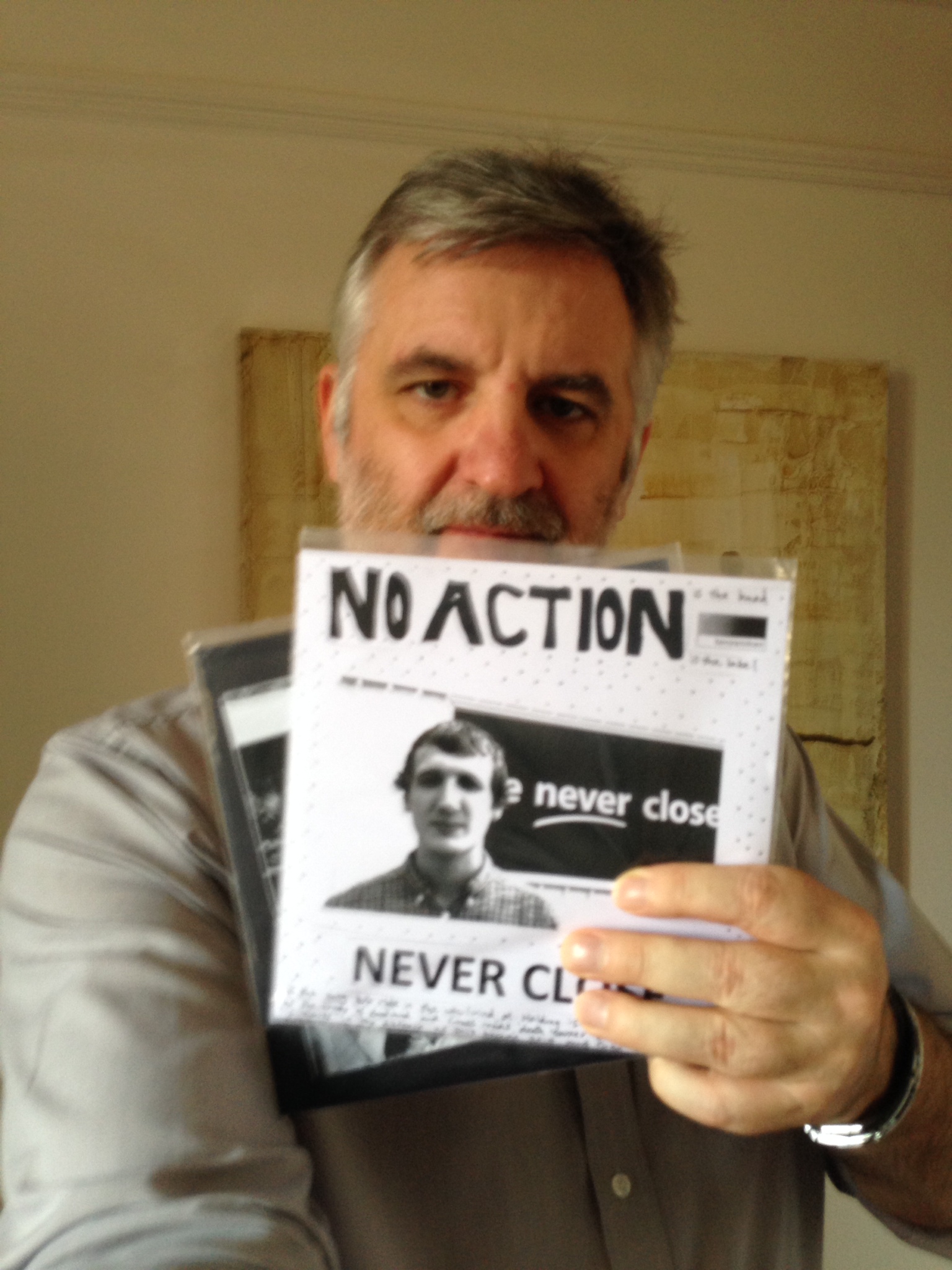
IMG_0174A further No Action release I managed to obtain is the spilt cassette tape release (yes you heard me right a cassette tape), which paired No Action with UK band Plaids from Nottingham. Plaids provide a punchy angular punk/emo rock approach played out in frenetic pace against No Actions more subtle and gritty lo-fi tracks. So what where the influences behind the two tracks provided by No Action on the spilt release I asked Nick,  “The tape is a funny story so I’ll start with that. The acoustic song was one we originally wrote when we found out we were going to do a split release with Roger King from Bakersfield California, home of Korn and Merle Haggard. Up until that point Roger King’s solo output had been acoustic stuff, so we wrote and recorded an acoustic song that would match that. Then he sent his track to us and he’d done a rockin’ plugged in track! So we ended up palming our acoustic song off to the Plaids split.”  

The two No Action tracks, which appear on the cassette, Nick rates the second track Solar Steps, as his personal favourite by the band to date, “It’s the most fun to play on the bass. It was the second song we wrote and we probably haven’t got any better since then. The rockin’ plugged in version of the Solar Steps song which will appear on our one-day-to-be-relased debut album is good too” And the IMG_0176obligatory Old Man question, If the band had the opportunity to collaborate with any other artist or band who would it be Nick, “John, this is a really tough question that I’ve been puzzling over all weekend. I like the Mars to Stay band and what they’re all about, so I’m going to say them.” 

No Action are a very coherent and exciting band who in many ways defy logic. Bands like this tend to take a single approach when facing  their musical crossroads. It is refreshing to hear a mix of influences as a platform rather than a band simply trying to replicate something they’ve heard elsewhere. So we end up with creative tensions.  Grinding punk, which is not simply trying to get as much noise and lyrics stuffed into the required 3 minutes as possible, alongside subtle acoustic offerings. The lo-fi recordings just add the imperfections that make these recordings stand out from the crowd. I can’t wait for the album when it does finally appear.

You can also enjoy further No Action tracks on their Soundcloud site and keep up with their journey via their Facebook page. Enjoy and respect.

https://www.facebook.com/theresnoaction?fref=ts

https://soundcloud.com/theresnoaction


Today I Stumbled Upon: Electric Friends

Like father

Like father

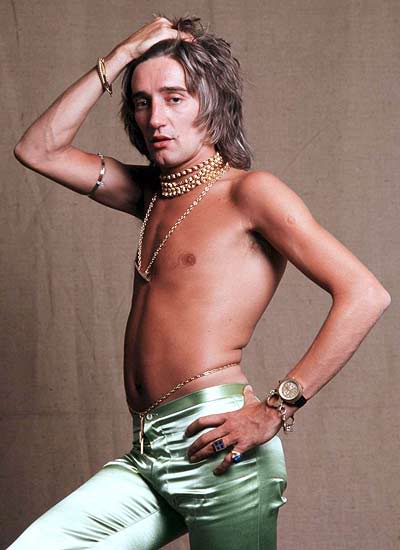
The long journey up north past my native North East over Hadrian’s Wall and to Glasgow where the wonderful Electric Company Label is beckoning me on the next stop of my old man adventures. Unknown to myself, well until I wrote this blog, I have a deep appreciation of the Scottish rock scene beyond the parody that is Rod Stewart. I will blame Rod for my ignorance given he inflicted his phoney Scottish jiggery pokery on me from a young age, caused serious trauma and inflicted Scottish blindness. At a time when any self respecting youngster was exploring The Clash, Pistols, Damned, Ramones and Buzzcocks, Rod in 1977 released his Hot Legs single from the equally bombastic album Footloose and Fancy Free. Unlike now there was no fast forward on live TV, so we duly had to sit through Rod swinging his thing before 3 minutes of punk was allotted its given time on Top of the Pops. My trauma was recently reinvigorated when I discovered Bon Jovi apparently perform Hot Legs occasionally as part of their live set, but a quick google search for Rod Stewart 1970s and then Jon Bon Jovi 1980s and it all makes perfect sense.

Like Sun

Like Sun

Anyway enough of this nonsense. A quick dig through my music collection whilst preparing this blog reveals  Jesus and Mary Chain, Primal Scream, Teenage Fan Club, The Vaselines, The Rezillos, Belle and Sebastian, but to name a few all lurking there and all originate from Scottish shores. I hold my hand up in shame and accept my ignorance, which I take responsibility to tackle.  As with any vibrant music scene an ecosystem is required, which is is independent, experimenting with the past and probing the future to produce a glorious wall of sound. This cultural ecosystems by its very nature is often known only to the locals until a buzz emerges, but the rise of the internet has created opportunities for the virtual traveler to be exposed to these gems. This is particularly rewarding when, if like me, you have a leaning towards lo-fi fussy guitar rock and sublime songwriting with twisted lyrics that often fail to penetrate the mainstream pop world. Yet it is these humble cultural ecosystems, which create the fertile ground for mighty musical oaks to grow and the catalogue of Glasgow’s Electric Company label sits there like a shiny emerald.

0001314645_100.png

Launched in April 2013, Electric Company release and distribute music by some of the most exciting and forward-thinking artists, on a wide range of formats, including vinyl, cd, cassette and digital download. Boasting a passion for DIY ethics and armed with their own studio enables the label to support artists to be heard without the pull of corporate strings. This in turn creates  a unique artistic hub where everything from recording, artwork and merchandise to live booking can be done in house and purely for the love of music. As with any small business running an independent music enterprise takes nerves, commitment and to a certain degree of passion bordering on obsession. So it is always an immense pleasure  to stumble across a label like Electric Company. On my initial dip into the label’s catalogue I purchased 3 offerings.

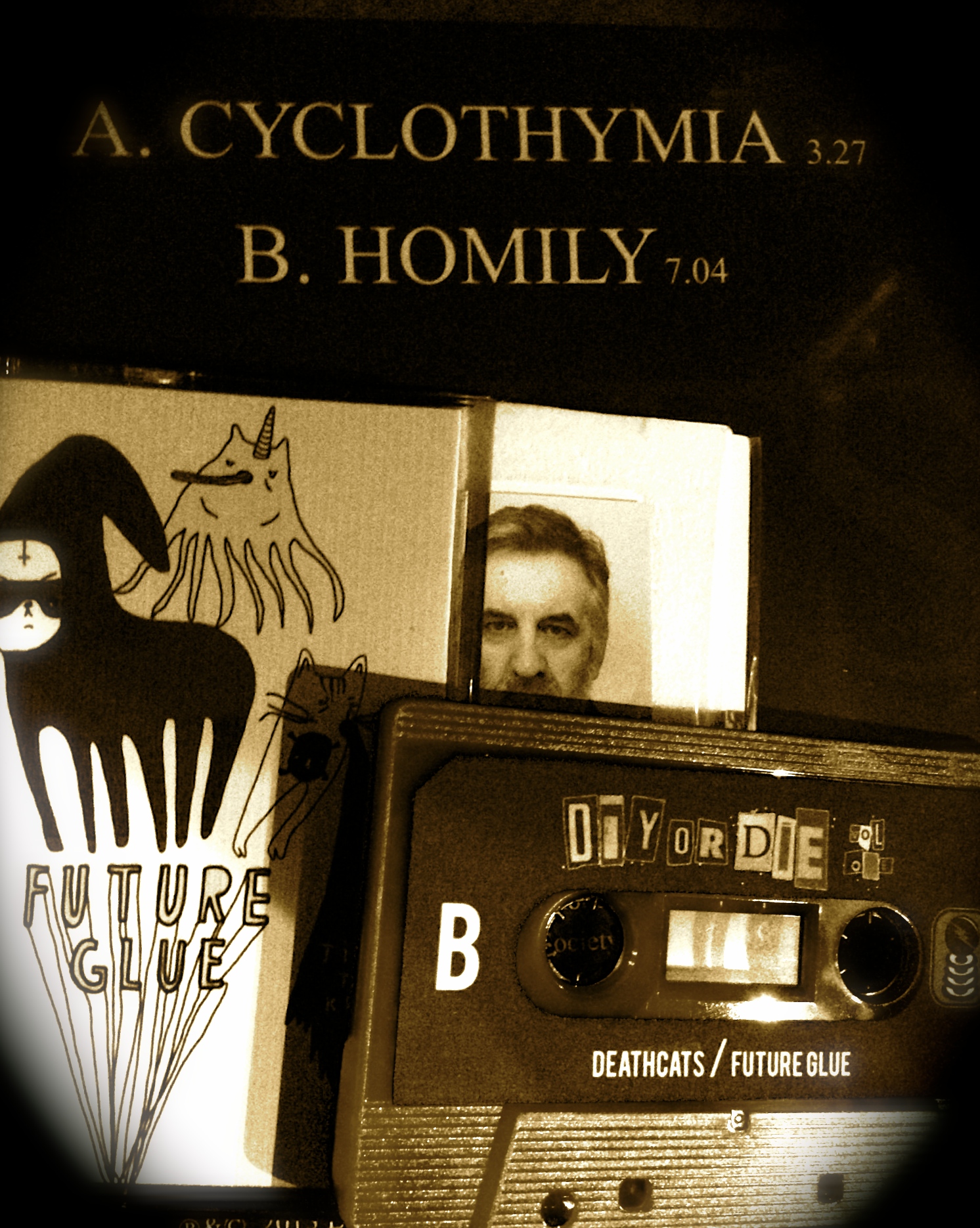
The New Fabian Society: Cyclothymia/Homily 7″ vinyl and digital download £5 (digital download £2)

Released on a limited run of 250 copies Cyclothymia is a pulsating 3 minutes 27 seconds of glorious guitar infused post punk delivered at Ramones break neck speed whilst Homily is reminiscent of Joy Division (before the hype) at their desolate best. The band follow up release Barbarossa which is also available on Bancamp (name your price offer) demonstrates a band growing in skill attitude and craft Provided with the right opportunities and presented with the necessary good luck all artists require this band have all the credentials to develop into something rather special.

The Dirty Lies: Release EP  cassette and digital download £5

The Release EP is a collection of 6 brilliantly twisted pop songs. Athough I feel it only right to give you a little warning before you take a listen. Beneath the pleasant beats and harmonies are some rather spine chilling lyrics, which make one feel the songwriter was abandoned on the steps of a church at birth and left to be reared by a couple of zealots. The sublime opening lyrics to Shallow Grave, “I hope you fail in love, I hope you break your heart, I will be your enemy, I’ll be your shallow grave” are just about the most soberingly and brilliant opening lyrics for a track I’ve heard for quite some time. Each track on the cassette comes in at about 3 minutes, which means there is little too no fat in production and delivery.

Various: DIY or Die Volume 1 cassette and digital download £4

Four bands, four songs for four quid no bad going and a cassette thrown as well. The cassette opens with Twin Mirror’s New Edition a good old fashioned punk rally. Secret Motorbikes Is Dis 4 real a swaggering pop anthem. DeathcatsSaturday Night Golden Retriever a guitar riffed to the ceiling romp. Future GlueTime to Kill a burning blend of punk surf meets 1950s trash rock. All together this is a mighty fine split tape, which is ready made for rolling down the car window on a warm summers evening and terrifying the neighbourhood.

My ignorance has been well and truly laid to rest and like Bristol, Manchester, Liverpool and London, Glasgow is up there with the best and I thank Electric Company for the education.

A right royal mix

They Only Wanted To Be Loved

No Fun

The Sex Pistols No Fun

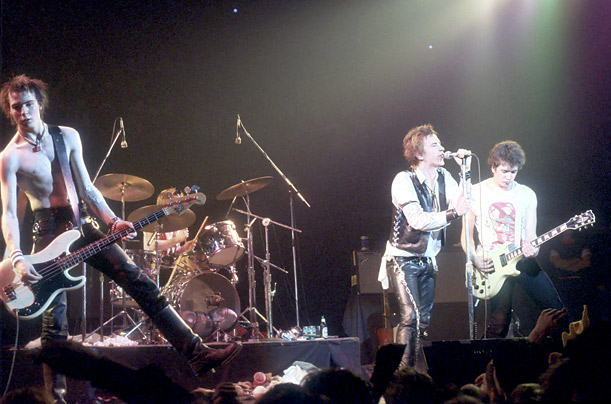
14th January 1978, The Winterland Ballroom, San Francisco, USA and the Sex Pistols have just brought their set to an end with a version of the classic Stooges song No Fun.  As the final traces of feedback belch from the amplifiers and over the heads of the assembled audience Johnny Rotten is poised, crouched down and defiantly staring at the crowd. He utters the immortal words, which  are etched on the toilet walls of the Rock N Roll Hall of Fame, “ha, ha ever get the feeling you’ve been cheated.”  

No sooner had the band left the stage the disintegration started and within days the Sex Pistols crumbled into dust. Guitarist Steve Jones and drummer Paul Cook went on to prostitute what dignity remained of the band. The ex manager (Malcolm McClaren) desperately cobbled together an embarrassing film called The Great Rock n Roll Swindle with a very dubious narrative. By February 1979 Sid Vicious (bass player) died a lonely and squalid death from a heroin overdose whilst being under investigation for the murder of his girlfriend. Meanwhile  former frontman John Lydon (aka Johnny Rotten) had jetted off to Jamaica with no other than Richard Branson to scout reggae bands for Branson’s Virgin record label. The Sex Pistols were to leave behind a maze of legal wrangles and bad taste. The punk scene sunk into wall to wall leather jackets and mohican haircuts.

In the hands of McClaren The Sex Pistols legacy was to become a parody, although what emerged from the ashes was to be much more musically interesting. By May 1978 John Lydon was already assembling his new band and later that year under the name Public Image Ltd they released their self titled single ‘Public Image’  The record was well received and reached No.9 in the UK charts.

As a teenage fan of Lydon I recall dashing down town on release day to scour local record stores and seek out a copy that also featured a limited edition newspaper insert. At the time the single with its insert were considered the holy grail and from small independent record shops to the high street dealers I ventured, bus journey’s to the neighbouring town (Middlesbrough) my crusade continued through the day and occasionally bumping into fellow fans on the same crusade. The song written by Lydon whilst still a member of the Sex Pistols bares the hallmarks of a Pistols track with its sneering lyrics directly aimed at his ex band mates. The A-side of the single was not a major departure and as such held little surprise. It was the singles B-side the aptly entitled The Cowboy Song that was to provided a glimpse of where the band were heading. The Cowboy Song sounded like a rambling assortment of studio outtakes and random noises all mashed together in no particular order. Uponfirst listening it was easily forgettable. Lydon himself viewed the track, “it cost us approximately £1 to make. It’s just a jolly good disco record and it came about cos we were bored and couldn’t think of a b-side.”  It was not until the first album appeared that the creative manifesto for the band started to be exposed to their fans.

A beautiful mess

A beautiful mess

Public Image, First Edition was released in December 1978 is now considered groundbreaking, but at the time of its release the record polarised fans and was met with outright hostility from music critics. The earlier single release had provided a false sense of expectation for those fans seeking solace in Public Image Ltd becoming The Sex Pistols mark 2. The album was in effect pulling in two different directions. A type of confused halfway half way house between looking backwards and pointing forward.

Dub baselines, traditional rock/pop tracks, screeching guitar work, a poem left many fans confused given the albums lack of focus and mixing seemed disjointed. This was no doubt a consequence of the band running out of money during its production, which necessitated recording sessions to be concluded hastily. The album to this day remains one of experimentation, a band findings its way with mixed results from the sublime ‘Low Life’ assault on the personality Sid Vicious had became towards the end of his life and through to the amusing, but largely forgettable ‘Fodderstompf’.  Record boss Richard Branson who commissioned the LP was reported to be less then impressed. Whilst the record was a moderate success in the UK staying in the album charts for 11 weeks and peaking at 22. It would take until 2013 before the album received its full American release given it was deemed to be far too uncommercial for American ears by record executives.  Love or hate this album its importance cannot be disputed given it laid down the blueprint for what many would call the post punk period.

The results were far from pretty, but to the credit of Lydon and his fellow bandmates they had decided upon a route away from the commercial mainstream, which at the time was an open door beckoning for Lydon after the demise of the Sex Pistols.With the first album completed PIL ventured out into the world to perform live. Playing 4 concerts in late 1978, Brussels Theatre Belgium on 20th December, Paris Le Stadium 22nd December and Christmas Day and Boxing Day at the Rainbow Theatre, London. By early 1979 PIL were left with the challenge that often demolishes many bands – the fatal 2nd album.

Its all in a tin

Its all in a tin

The glorious Metal Box/Second Edition LP arrived in November 1979 and is generally considered to be one of the most influential albums of all time. In many ways the album was a radical departure from the first album and ventured more towards avant-garde territory. With its cryptic lyrics, brooding baselines, tribal drum patterns, metallic guitar, synthesised drones and random noises the album was unlike anything before in sound or presentation. The original album packaging consisted of a 16mm film canister tin embossed with the bands logo, which contained three 12″ singles. The album drew from several influences including deep-dub-raggae in particular the early work of dub pioneer Keith Hudson known as the “dark prince off reggae” and bands like Can. The opening track Albatross sets the standard. Recorded in free form the track gathers  a life of its own as it weaves along. The songs structure is reminisce of the interplay between Jim Morrison and the Doors when their performed live.

Check the line up

Check the line up

Metal Box/Second Edition was a far more focused effort, which unlike its predecessor  was received with critical acclaim and considered a classic of its genre sitting alongside the likes of Can and Captain Beefheart. The albums influence cannot be emphasised enough, Sonic Youth, The Strokes, Simple Minds, REM, Joy Division, Portishead, Manic Street Preachers, Massive Attack, Radiohead have all drawn influence from the album.

In 2001 Thom Yorke during an interview with The Wire Magazine said, “We could never do a record on a par with Metal Box.'”  The Rolling Stone Magazine listed Metal Box in the top 500 albums of all time. With album literally in the tin PIL started to increasingly perform live, although  like their studio output the norm was not to be expected. In New York the band decided to perform behind large screens creating a physical barrier between them and a bewildered audience who had come to see the band perform a more traditional rock show. The resulting disturbances required the concert to be cancelled mid way through as the crowd throw items at the screen and started to dismantle the stage equipment.

In Leeds the band were met with hostility when the audience became bored with the new material and demanded Sex Pistols songs. PIL ignored the audience, often turn their backs against them and carried on until they simply walked off stage.

The 1980 live album ‘Paris au Printemps’ offered little to nothing in terms of creative output. In fact Lydon reputedly advised fans not to buy it because the band only got involved in the project to earn enough money to pay for Metal Box. By 1981 and the bands 3rd album The Flowers of Romance” the wheels had already started to fall off the first incarnation of the band. Jah Wobble who provided the brooding bass on the first two albums had been sacked for allegedly using PIL material as backing tracks for his solo work. The name ‘The Flowers of Romance’ was taken from an early band Sid Vicious and Jah Wobble were members,  as well as it being the title of a very early Sex Pistols track, which was never studio recorded and released.

Not for the faint hearted

Not for the faint hearted

The stark, severe and minimum style of the album is in contrast with the bass heavy influences of Metal Box. A variety of sources were deployed and used to generate sounds for the album including amplified wristwatches, reversed piano, televised opera. John Lydon played violin and saxophone, although he was not know to be trained to play any particular instrument. Keith Levane the groups pioneering guitarist played through reversed tapes, treble distortion and synthesisers drones.

Interviewed at the time Levene pointed out that, “AII it amounts to is that we don’t like any music at the moment.” John Lydon added,  “well it ain’t rock & roll, that’s for sure.”  The album quickly gained  a reputation for being the most uncommercial LP to have been made and presented to a mainstream record company.

The Flowers Of Romance entered the UK Charts where it stayed for 5 weeks and reached No. 11 in April 1981. The album spawned a minor hit single in the same year that reached No. 24 and stayed in the charts for 4 weeks. The third studio album for many concluded PIL’s pioneering period. Similar to Jah Wobble original guitarist Keith Levene left the band acrimoniously shortly afterwards. John Lydon then shifted the sound and structure of the band towards a more commercially friendly zone with differing results given the creative challenges were not putting the breaks, or shaping some of Lydon’s ideas. By the late 80s PIL effectively Lydon and an assortment of musicians were touring America extensively, including a support slot for the Australian band  INXS on their Kick tour.

The end for PIL was more a damp fizzle than bang. By 1992 and with a lack of interest from the general public Lydon put PIL into hiatus whilst he concentrated on other projects, including his autobiography, TV work and ultimately regrouping with the original Sex Pistols line up for a number of lucrative tours, which properly provided the only real opportunity for the original  4 members to earn any significant cash from their legacy. In September 2009 Lydon announced that PiL would reform for five UK shows, their first live appearance in 17 years.  The regrouping of PIL was financed via the money Lydon earned through a UK television commercial, “The money that I earned from that has now gone completely – lock stock and barrel – into reforming PiL” The pursuing concerts were warmly received and the band has continued to perform live since, as well as releasing new material.

36 years later

Like father like daughter

As one review of the first 3 PIL albums states,  “PIL managed to avoid boundaries for the first four years of their existence, and Metal Box is undoubtedly the apex it hardly sounds like anything of the past, present, or future”.   These first 3 albums, including the glorious Metal Box/Second Edition alone has secured my enduring respect for Lydon.

30th June 2013 and 35 years after buying the first Public Image Ltd single (with the limited edition newspaper insert) I find myself with my 14 year old daughter walking aimlessly through the Glastonbury Festival site.  We have not paid much attention to the running list on the various stages. We are just soaking up the atmosphere, floating along with the crowd and just stopping to watch whatever emerges before us. Its a glorious summers days and in the near distance I hear driving base of PIL’s Death Disco vibrating through the air.  We quickly make our way to the Other Stage and sure enough we find John Lydon and co.

I look to my daughter and ask if she is enjoying it? She relies, “yes.”  I turn my attention back to the stage, feel the sun on the back of my neck, scan the large crowd and look back at my daughter – we smile at each other. Sometimes things just fall into place for all the right reason.

The Night of the Hunter

Harry Powers

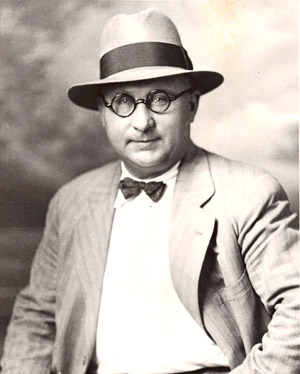
Harry Powers (Cornelius O. Pierson)

On the 20th September 1931 Harry Powers was hurriedly taken by police to Moundsville State Penitentiary for his own safety. A large and angry crowd had gathered outside the small County Jail demanding Powers be handed over to them, so they could dispense mob justice by lynching him in the streets. The local Fire Department set their water hoses upon the crowd in an attempt to disperse them, but it would take the engagement of tear gas before the authorities could gain control of the situation.  

Moundsville State Penitentiary, West Virginia was an imposing gothic style building that would not go a miss in a Stephen King novel.  On March 18, 1932, Harry Powers was taken to its scaffolds. Upon his arrival he was offered the opportunity to make a last statement, but declined. A cap was placed over his head and at 9:00 am the guard pushed the button. Powers dropped through the trap door and 11 minutes later he was pronounced dead.


Cornelius O. Pierson

Operating under the alias Cornelius O. Pierson, Harry Powers wrote a succession of letters to Asta Eicher who was a recently widowed mother of 3 children. After a brief romance Powers took Eicher on a trip leaving her 3 children with a friend, Elizabeth Abernathy. Shortly afterwards Abernathy received a letter advising her that Powers would be coming to pick the children up to join their mother. Powers then made contact with Dorothy Lemke, who lived in Masschuetts and was seeking love through a lonely hearts advert.  Asta Eicher, her 3 children and Dorothy Lemke all disappeared with no explanation.

Police investigating their disappearances became suspicious when the name Cornelius O. Pierson appeared as one of the last known contacts of Asta Eicher. The police quickly established there was no one registered under the name of Cornelius Pierson, but his description matched that of Harry Powers who was arrested and a search warrant was issued for his home.  Blood, clothing, hair and a burned bankbook where all found and following the excavation of freshly filled ditches the bodies of Asta Eicher, her children and Dorothy Lemke were uncovered. Postal records later indicated that Powers had opened up his own lonely hearts ad using his alias Cornelius O. Pierson. Replies to his advertisement were pouring in at a rate of 10 to 20 letters per day. Love letters were also discovered on the property addressed to several women, whom he intended to kill and steal their money.

Romance, musicals and mellow dramas

The 1950s are synonymous with films featuring the likes of James Dean, Henry Fonda, James Stewart, Marlon Brando and Frank Sinatra. The majority of these films tended to be musicals, clean cut American westerns, mellow dramas and comic romances. Whilst films presenting more challenging narratives were starting to emerge like Rebel Without a Cause these films were rare due to the emergence of TV. The big film studios did not want to potentially disturb or frighten away their family audience who also brought vast amounts of  popcorn, ice-cream and soda drinks during the cinema visits.

Strange Author 

The author Davis Grubb had a distinct characteristic of only being able to write whilst on a train. An extreme recluse, refusing to travel in cars and seldom spoke to anybody.  Using the case of Harry Powers, Grubb in 1953 wrote The Night of the Hunter.  In the book Grubb explores murder, social corruption, misogyny, domestic violence, the hypnotic force of religion, family breakdown, alienation, poverty and child cruelty. The book’s main character (Harry Powers), who after serving a sentence for stealing a car presents himself to the outside world as a prison chaplain. Using information he discovered in prison from his soon to be executed cellmate the “Reverend” Powell cons his executed cellmate’s widow into marrying him with the hope that her children will tell Powers where their father hid the $10,000 from his last bank robbery. After killing their mother Powell embarks on a hunt for the children.

NightofthehunterposterIn 1955, the book was made into a film. Remaining true to the narrative of the book the plot focuses on a corrupt reverend-turned-serial killer Harry Powers, superbly played by Robert Mitchum. The director of the film was no other than the legendary actor Charles Laughton. The lead role of Powers was initially earmarked for Laurence Olivier, but the studios were not eager to associate the clean Olivier image with the film. When approached by Laughton to play Powers, Mitchum is reported to have replied, “If you are really going to make a movie about a wife murdering, child stalking manic of a preacher, doing his evil deeds in God’s name, them count me in.”  

The author of the book Davis Grubb was also an accomplished artist who drew sketches of the characters he would write about. Learning of this Charles Laughton kept in contact with Grubb and repeatedly asked him to send visualisations of facial expressions he had in mind when writing the book. Grubb obliged by sending over 100 pen and ink drawings during the making of the film. This process helped contribute towards the stark realism and bold expressionism throughout the film.

I first came across The Night of the Hunter in the mid 1970s one Saturday evening in my teenage years. Having seen the name Robert Mitchum listed in the TV schedule I decided to tune in and was expecting a run of the mill western. The opening sequence quickly dispelled that notion as Miss Cooper’s (the savour of orphans in the film) disembodied head narrates from a heavenly night sky, “Beware of false prophets…”  Robert Mitchum is then introduced singing hymns as he travels in search of his victim. Tortured by his hatred of women Mitchum’s character carries a switchblade pocket knife, which he considers his holy sword.

The murder of the Shelley Winters character is reminisce of a vintage black and white silent movie and shortly afterwards  the children hiding in the cellar of the family home whilst Mitchum sits outside calming singing to the children inside before he starts to terrorise them is particularly unnerving. As the children make their escape on a boat downriver Mitchum pursues them on horse bank.  Upon seeing the silhouette of the murderer on the ridge of the hill cast by the moonlight one of the children chillingly remarks, “Don’t he ever sleep?”  After the films first private screening with only  Charles Laughton and Paul Gregory (producer) present both sat in complete silence as the last of the film flickered through the reel. They had not expected the film to have been so odd. Gregory turned to Laughton (who was a fragile soul at the best of times) and said, “Charles they’re not going to know how to sell this picture and I think we are going to be in trouble.” He was right. The Night of the Hunter was not a commercial success upon release and Laughton fell into deep depression. Whilst he had several film projects lined up Laughton would never direct another film.

In many respects the film has not faired well with time. Its dialogue, script, acting and editing through today’s eyes may seem clumsy and even corny,  but the authentic innovation and atmospheric feel the film presents has influenced many film makers Spike Lee, The Cohen Brothers, Jim Jarmusch, David Lynch and Martin Scorsese have all tipped their hats to The Night of the Hunter as a major influence on their craft. Whilst dated this highly original and brilliant good-and-evil parable, with “good” represented by a couple of farm kids and a pious old lady, and “evil” literally in the hands of a posturing psychopath is rightly considered a classic.


Today I Stumbled Upon: Cloud Ensemble

enoRenowned and often credited with being the inventor of modern ambient music, which many try to emulate. A genius he maybe, but Brian Eno certainly as a lot to answer for in my view.  Bandcamp is cluttered with lonely souls who are cramped up in desolate bedrooms with their laptops striving to create something interesting from overlaid, looped and distorted droned tones that are absent of traditional musical structures.  

Personally I’ve always been a little susceptible to the odd Eno album and must admit to having a few in my collection, but it is the type of music I purchase very sparingly.

Advancement in technology has created access for most people regardless of capabilities to produce something that would have sounded groundbreaking back in the 70s and 80s. This is healthy and to be encouraged, but this is also one of my criticism of this music genre.  We end up with a vast field of producers creating an abundance of medico material. I need to be brutally honest. Once you have heard one stretched out and droned note that has been processed to death on a computer, well it can be a down hill experience afterwards because the next offering is properly going to sound very much the same. Don’t get me wrong  whilst I consider albums like Apex Twin’s ‘Selected Ambient Works Volume 2’ a certified classic. Many artists, including Radiohead, Lou Reed, U2 and Nick Cave have all dabbled in this genre with the results (in my view)  being varied to say the least.  1995s Passengers  (U2, Eno plus guests) Album ‘Original Soundtracks No 1’ was so pretentious that even U2’s Larry Mullen quite rightly observed, “There’s a thin line between interesting music and self-indulgence. We crossed it on the Passengers record.” The only saving grace for the album was the ‘Miss Sarajevo’ track , which featured the late Italian tenor Luciano Pavarotti on vocals.

It is when ambient music is not solely dependent upon the one trick pony of synthesised drones that the genre starts to come alive and provoke something interesting for me.  Eno himself defines ambient music as, “evoking an atmospheric, visual, unobtrusive quality” and personally for me only a handful of albums over the past 15 years have stood out by using Eno’s template. Here is a selection from my collection:


The soundtrack from the film ‘Monster’s Ball’. The scores by Asche and Spencer are just spine chilling and fragility personified.  The Boards of Canada ‘Geogaddi’ is a mesmerising  kaleidoscope of sounds. Mum, ‘Finally we are no one’ is a beautiful and fragile landscape. I saw Lampchop perform ‘Nixon’ live at the Royal Albert Hall, London. I have never seen so many people on one stage create so little noise. Sigur Ros, ‘Med Sud i Eyrum’ album was for me their coming of age. The Laurie Anderson album ‘Life of a String’ is just beautifully haunting.

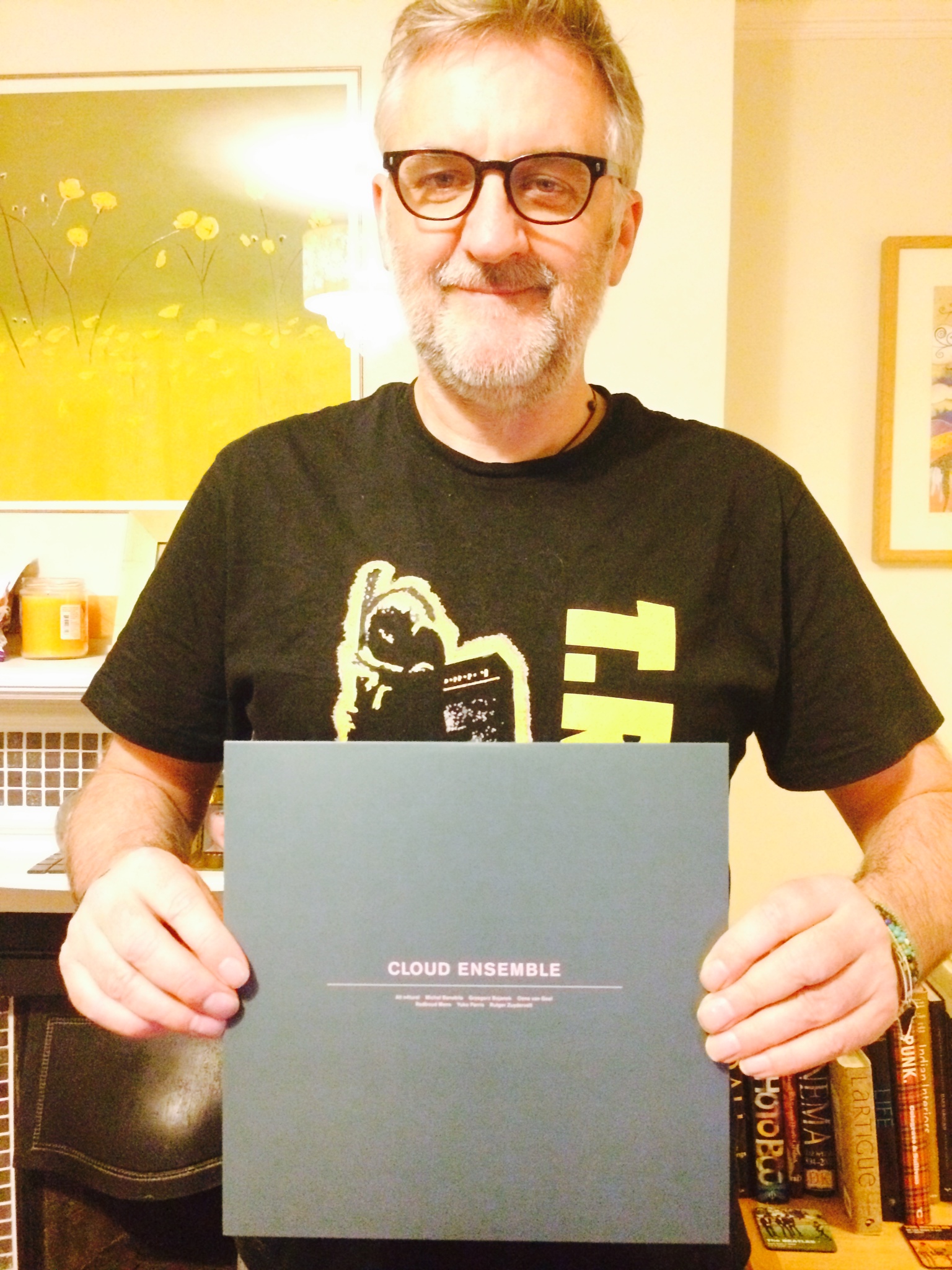
Cloud Ensemble 

I have recently added a further release to this list. The EP ‘Cloud Ensemble’ by Cloud Ensemble, which consists of 3 tracks and is the product of a file sharing project between:

Michel Banabila : ebow, guitar, logic pro, field recordings 
Grzegorz Bojanek : field recordings 
Oene van Geel : viola, stroh violin 
Radboud Mens : glass sounds, dopplo, treatments 
Yuko Parris : voice, squeaky sounds, electric piano 
Rutger Zuydervelt : philicorda organ

Here and There is a 10 minute soundscape that captures a mixture of delicate voices flowing over almost orchestrated instruments and field recordings. Perfectly blended with the voice samples the track is an absolutely sublime Friday evening wind down track, especially with headphones. Hide and Seek takes a different direction with whispered vocals the track builds and encompasses disjointed beat structures. Silent World the final track on the EP returns to the soundscape mode, but minus vocals.

I recently caught up with Michel Banabila from Cloud Ensemble and asked him the three Old Man questions:

JK: What was the main influences behind the album?

MB: Simply to collaborate. Everybody immediatly said yes. We like each others music of course. So I think there is an influence from everybody of the ensemble in the end result.

JK: Which is your favourite track and why?

MB: That might be for different for each of us. I like all three tracks. These three tracks are all a bit different from each other.

JK: If you could have a guest artist to appear on your next venture who would it be (dead or alive) and why?

MB: We are now working on the next recordings. I really hope we will do another album. So my favourite guest in future projects would simply be everybody from the Cloud Ensemble 🙂

The EP ventures into wide-eyed fairy-tale qualities at times by delivering simple melodic bliss to the listener. It will certainly not be for everybody, especially if your ear requires conventional song and rhythm structures, or crushing guitar solos. It is the conglomerate of instruments on the EP that initially gain attention, but ultimately the tender vocals on track 1 & 2 that add breadth to this beautiful journey.

There is 150 limited edition 1o” vinyl/hand numbered copies of the EP up for grabs via Bandcamp @ £6.40 (€8) plus postage, which also comes with an immediate download. A digital copy of the EP comes in @ £4.05 (€5). Enjoy.

IMG_2007

Issue No. 5

Oh bondage up yours!

This girl is no fool

This women is nobody’s fool

“Biblically chauvinistic” is how the Rolling Stone magazine described the James Brown 1966 record “It’s a Man’s Man’s Man’s World.” As a record it certainly takes some beating when promoting a stereotype. A stereotype, which has been continuously reinforced throughout the music business since its conception.

Whilst the mainstream charts may be dominated by female artists research constantly reveals that women working in the music business earn far less than their male counterparts – a staggering 47% of women in the music business earn less then £10,000 per year.

It is a business that is dominated by male executives who control its means of production, marketing and recording output. Recording artist Lily Allen recently observed, “You will also notice of the big successful female artists, there is always a ‘man behind the woman’ piece. If it’s Beyoncé, it’s Jay Z. If it’s Adele, it’s Paul Epworth. Me? It was Mark Ronson and the same with Amy Winehouse.”  These attitudes prevail throughout the music business right down to the basement end of manufactured pop. The banality of Miley Cyrus ‘tweaking’ caused a media stir, which was possibly related to Cyrus’s history as a child star for the Disney Corporation. Whilst Cyrus’s performance might be seen as silly and tedious the fact is Iggy Pop has been ‘twerking’ for 40 years, including the odd penis exposure as well as regularly humping his amplifiers on stage – yet he is considered a rock god.

There is something very disturbing about a popular culture that increasingly portrays women as disposable commodities frequently being hunted down by a serial killer or subjected to the creepy attention of a male artist who is acting like a potential candidate for inclusion on the sex offenders register. Although given the recent spate of celebrities facing sexual assault charges in the UK they may not be acting. Equally repugnant are those fellow men who shout “political correctness has gone mad” every time these issues are raised. Let’s be honest if you are the type of tool who enjoys women being portrayed in this way then it is highly unlikely you have read this far into this blog and you are properly jerking off to that misogynist Robin Thicke video.

“Ignore it” you may say after all there is an off button I can push  Well I did, but ignoring it does not make it a right. Switching off a TV does not mean switching off your brain and that is the real choice here. I am not for one minute advocating censorship far from it. In my view those who produce this material should be exposed to additional taxation. The revenues generated should be earmarked for support services for women who become victims of male violence. If a sovereign country was inflicting such harm on another country surely we would be expecting intervention, possibly economic sanctions.

Those women who have stood up, challenged and turned the tables on the status quo have faced ridicule or worse. The singer-songwriter, multi-instrumentalist, actress, author and philanthropist Dolly Parton has throughout her career been the subject of ridicule from taunts of trailer trash, cheap, dumb blonde and least we forget the breast obsession. Web sites are dedicated to crude jokes about Parton.  Realising these circumstances Dolly Parton played the card of self-parody as well as deploying her very clever business brain. This has enabled her to amass a financial fortune and make music that she wants to make.  This attitude towards women is not a modern phenomenon, which has  been cooked up by dead beat rappers with their pathetic lyrics of ‘hoes and bitches.’

holiday

Billie Holliday – used and abused

The harrowing demise of Billie Holliday in the 1950s is a prime example. Most media stories concerning Holliday’s torturous death tend to focus on sexual violence and illicit substances. What is often overlooked is that in her final years Holliday was swindled out of her earnings and died with $0.70 in the bank.  As an incredibly gifted, yet troubled artist Holliday was hounded to the very end. Whilst dying police raided her hospital room and placed her under arrest until she passed away on 17th July 1959. She was 44 years old.

The magnificent Nina Simone became the catalyst for change in the 1960s. Strong, intelligent, outspoken and a versatile musician she became a role model for musicians (female and male). Simone started playing the piano at 3 years old and by the age of 10, she was perfuming piano recital in the town library. Like Holliday, she was ripped off by the record companies. She saw very little money from her first record, the top 20 hit of “I Love You Porgy.” Simone always characterised record companies as “pirates.”   

Over the coming decades, Simone took increased control over her career and destiny as an artist, which not only provided financial rewards but enabled increased creative freedom. At the time this was unparalleled for both a female and Black artist.  The song Mississippi Goddamn, which she released in 1964 was written by Simone after the murder of Medgar Evers. Although the song contains a jolly rhythm it is a scathing anti-racist tour de force.  Towards the end of her life Simone became increasingly erratic with legendary mood swings. In 1985 she fired a gun at a record executive whom she considered was stealing her royalties claiming that she tried to kill him, “but missed.”

The 1960s produced many iconic female artists Dusty Springfield, Nico (Velvet Underground) Grace Slick (Jefferson Airplane) and Janis Joplin for example. It is a decade that increasingly witnessed the use of  ‘tabloid sensationalism’ as a weapon against women. Singer, songwriter and actress Marion Faithfull were subjected to sordid and untrue media reports in 1967 concerning her sexual relationship with Mick Jagger. Whilst the headlines and speculation did little to hinder Jagger’s career. In fact, the stories further enhanced his bad-boy reputation, but for Faithfull, her career was badly damaged. 27 years later Faithfull observed, “It destroyed me, a  woman in that situation becomes a slut.” Before Beyonce, there was Diana Ross (formerly of The Supremes).

The Supremes were a product of Barry Gordy’s Motown conveyor belt of popular hits during the 60s and 70s. Gordy was the original Simon Cowell with the gift of identifying and bringing together pop talent, along with tightly controlling and carefully managing their public image. Whilst Ross and Gordy were romantically entwined for Gordy it quickly became a case of biting off more than you could chew syndrome when it came to Diana Ross.

Whilst The Supremes were on a UK tour in the 1960s Gordy insisted The Supremes perform a version of Dean Martin’s “You’re Nobody Till Somebody Loves You.” Gordy believed that such a performance would enable The Supremes to access a slot on a mainstream UK television programme. Ross refused outright. “I could not explain anything that made sense to her,” Gordy said. “She refused to do it completely.” That’s when Gordy realised, “if she didn’t do it, I knew I could not manage them.” Ross went on to become one of the biggest selling female solo artists in music history.

Joni Mitchell produced and released her seminal Blue album in the early 70s whilst at the same time Jazz drummer Karen Carpenter was persuaded to move centre stage and sing for the brother/sister duo the Carpenters. It may have taken until 1979 for Suzi Quatro to score a hit in her country of birth (USA), but Quatro was a constant presence throughout the 70s in the UK charts. Quatro’s trademark leather jacket, jeans, bass playing leadership and pop-rock anthems presented an altogether edgier imagine that had a significant influence and impact. An influence that has sadly been underestimated given for many young people Suzi Quatro was the first female artists who were seen to be the leader of the pop-rock group on mainstream TV. By the mid-70s Kate Bush and Patti Smith emerged. Two diametrically opposed artist who commanded respect through their craft. Smith went on to release what many still consider to be one of the most quintessential and influential rock album’s of all time ‘Horses.’  

1975 also saw the release of the electro-pop ‘Love to Love You Baby’ by Donna Summer that pounded the dance floors of every credible disco. The song, which featured Summer moaning and groaning as if in the raptures of an organism would cause controversy around the world. It also presented the artist in a highly sexually charged way that would take Summer years to shake off. The song and its producers eventually left Summer feeling like she had no control over her life and went on to suffer from bouts of depression and insomnia. Summer would later become a born-again Christian and sue the producers of the record. After the legal settlement Summer decided to exclude “Love to Love You Baby” from her concert playlists and did not perform it until 25 years later.

As the 1970s were drawing to a close there was something quite different about the female artists who were emerging outside the mainstream. Whilst the recording output varied according to taste. The confidence and attitude of the female artists was not in dispute. Operating within an increasingly political environment a whole bunch of strong, independent, intelligent and often conformational female artists were playing a leading roll in the rock scene.  It was a time when Siouxsie Sioux (Siouxsie and the Banshees), Fay Fife (The Rezillos), Gaye Advert (The Adverts), Debbie Harry (Blondie), The Slits, Pauline Murray (Penetration),  Tina Weymouth,(Talking Heads), Joan Jett (The Runaways) and the glorious Poly Styrene (X-Ray Spex) to name a few took a male-dominated world and shook it by the throat. A quick search on Google for Penetration performing ‘Don’t Dictate’ live will emphasis the point as Pauline Murray tackles men in the audience head-on. It was another song from this period, which had a greater influence on me personally.

Released in 1977 “Oh bondage up yours” was the debut single by X-Ray Spex.  Polly Styrene was the bands’ lead singer and main songwriter who described the song, “as a call for liberation. It was saying: ‘Bondage—forget it! I’m not going to be bound by the laws of consumerism or bound by my own senses.’ It has that line in it: ‘Chain smoke, chain gang, I consume you all’: you are tied to these activities for someone else’s profit.” 

As I grow older and start to see the world more holistically I can often look back at key moments when a stake was placed in the shifting sands of my life. These stakes are important because they create a focus point when somethings clicked. When I get a cold chill after being exposed to yet another pile of misogynist crap by a retarded hunk in plastic bling rubbing his small codpiece against a scantily dressed women. I can point back to buying the original 12″ vinyl version of “Oh bondage up yours” in 1977.

Every cause has a counter effect and what had been achieved in the 1970s was to be challenged throughout the 1980s free for all and sod thy neighbour attitude. Samantha Fox’s was 16 years old when her mother submitted several photographs of her daughter in lingerie to a Sunday tabloid newspaper competition (Girl of the Year amateur modelling contest). By the 198os Samantha Fox was a popular topless glamour model in a daily tabloid. In 1986 Fox choose to take up a new career as a pop star. Her first release was the tacky ‘Touch Me (I Want Your Body)’ that reached No. 1 in seventeen different countries. She went on to sell more than 30 million albums and co-wrote the song “Dreams” for girl group All Saints’s 2000 album, Saints & Sinners. Although she was credited as “Karen Wilkin” because the group refused to record the song if Fox’s real name was used. In 1984 Sheena Eastern had a hit with a Prince written song ‘Sugar Walls’ a pseudonym for Eastern’s vagina.  By the close of the 80s Cher was to be seen cavorting around a battleship in a fishnet body stocking rattling out the hideous ‘If I could turn back time.’  Amongst this drivel there were occasional rays of sunshine from the likes of Chrissie Hynde (The Pretenders) and the Sugarcubes whose lead singer Bjork was to became one of the most original and innovative female recording artists of all time.

2778_Bjork_photo_1

Thank god for Bjork

As with most cases in life, it is not those at the vanguard who reap the rewards of their struggles. Kim Gordon (Sonic Youth), Courtney Love (Hole), PJ Harvey, Riot Grrrl, Sleater-Kinney, Grace Jones, Beth Ditto (Gossip), Poison Ivy Rorschach (The Cramps) and the stunning Skin (Skunk Anansie) were to find their journeys just that little bit more easier because of the women who had gone before. In turn, this made for a more creative and fertile music scene for the rest of us to enjoy. It would of be interesting to hear the views of these female artists regarding female artists in the mainstream pop world today. I can only guess that for many it will be a case of raised eyebrows and recognition that syrup manufactured girl pop groups will always have a place.
I struggle to envisage many will sign up to the ‘girl power’ of the Spice Girls call to arms, “I wanna, I wanna, I wanna, I wanna, I wanna really really really wanna zigazig ha.”  In truth, their struggle and achievements will seldom be recognised in the mainstream, because the mainstream needs to be controlled and manipulated from above. The advent of technologies has in many ways released the creative artist to pursue their particular path, but success on a scale that will enable economic independence remains a long way off for many female artists.  As a father of 3 daughters, it is with great relief that when foraging around Bandcamp I have discovered such an amazing range of female artists who are producing some truly magnificent material. To name a few:

xray


Today I Stumbled Upon: Mogo Kutu

0002289145_10It’s 8.30am on route to work in an overcrowded train from Clapham Junction to Waterloo Station London, headphones on, volume gentle, the train carriage swaying, the occasional cough from a passenger, frustrated telephone conversation, or the steel on steel wheels churning beneath my feet find a way into my private world. I’m standing and gazing around incidentally wondering about the lives of others. The sardine squeeze, people protecting their personal space, upholding their rights via the unwritten protocols of facial expressions. Obsessively we are all consuming the latest news, sports and A list gossip that is constantly streamed to our mobile devices. Smiles, sadness, hopes, regret and fears all canned up in a train moving slowly towards the City. It’s a pleasant day and the tensions of dark wintery mornings are starting to evaporate.

THIS BANDCAMP ACCOUNT NO LONGER EXISTS

Oblivious to everybody Mogo Kutu is singing in my ears and I feel good.

4217 miles away it’s about 2.30am in St. Louis, Missouri, USA. A place renowned for its blues and jazz Music. Chuck Berry, Miles Davis, Imrat Khan, Scot Joplin, Donny Hathaway, Fontella Bass, Grant Green, Tina Tuner (I forgive you for the 80s Tina) and the legendary Isley Brothers all have a connection back to St. Louis. Some happy and some not so happy connection, but regardless this creative rich list humbles any serious music fan and it is here where by accident I bump into Mogo Kutu.

So who is Mogo Kutu? As his aptly named blog One of Us is Lying (http://missouri-oneofusislying.blogspot.co.uk) states, “Mogo Kutu is just a name, It is me. It is something old, something new. One step forward, a lifetime back. To keep it simple. I make stuff. Sometimes I make music. Other times I capture images. Sometimes I write. I build up and I tear down. I regret and I laugh. I live and breathe. I want you to like this, to like what I create because I think it is good. I would not waste your time otherwise.” 

I managed to catch up with the man behind the Mogo Kutu project, Rob Woerther who has been a key figure in St. Louis contemporary songwriter scene for several years.  “I have kept and maintained a home studio and sang and played in a handful of bands through the 90s, recorded a few CDs and then got tired of packing up gear, playing in bars and smelling like smoke. Started recording local singer-songwriters as well as myself and put out 2 compilations of St. Louis singer-songwriters – Sweat Equity and Elbow Grease.”  After getting married, pursuing a career as a special education teacher, starting a family and finishing his doctorate Rob decided to give his academic career a well earned rest and start to take his songwriting and music more seriously. In December of 2013 he started to uploading his music to bandcamp.

At this point I will leave it to the storyteller, songwriter and singer to explain what is behind his collection of songs, which are now available on Bandcamp.

“Somewhere in middle America. The days are long. The creeks change with the season and at night you can still see just how small we are in this universe. When you are young all you can think of is leaving. Now I would give anything to go back.” 

G. Letters #1 started after I had found a box of letters my grandfather had written when he went off to fight in Germany during World War II. The letters, completely forgotten, had been found as we were cleaning out my Great grandmother’s house. Well into her 80s she saved a lot of our family’s history. From the family bible to these letters I slowly started to learn of my grandfather as a young man going through basic training.”  Ghost Waltz  was one of the first songs I had written on a banjo. It was also written at a time I was working through my grandfather’s letters from the war. This song is a bit different in that the characters drift away from my grandfather to a couple that was not as fortunate. The woman in the story is waiting for her husband to return only to be visited by his ghost. The war taking another victim as a wife mourns her loss. “God’s eyes came from reading a collection of short stories by Zora Neale Hurston. Ms. Hurston began collecting stories from the black southern communities in an effort to save them from being forgotten and lost. Her work helped act as a foundation for the Harlem Renaissance. While not directly an interpretation of a particular short story the song follows the loose narrative of a young man pushing his luck to see just how far he can go to prove himself.”

“As my dad has gotten older his love of baseball has become more of his persona. I appreciate him more because of it. Baseball is America’s story. In this day of modern toys and access to any information with a few clicks of a keyboard we still will huddle around a transistor radio and catch nine innings of the Cardinals versus the Cubs.  I come from a family of storytellers. Give us a good kitchen table, something to drink, and an unsuspecting audience and the laughter will echo through the house, out through the garage, and into the neighbor’s yard. It starts off innocent enough until some poor victim asks a question and then the yarns start to spin. I think I was always meant to be a songwriter because all those stories needed to go somewhere.” 

“Mud dreams came out of the past. I spent my youth surrounded by trees, creeks, and mud. The thrill of an empty day along a wide and angry river puts me at rest. Take a sip and watch your pole. Feel the breeze. Listen to the water.”

Lyrics that make you smile and reminisce about the fights, scrapes, first teenage kiss, growing pains, sunny days, family, friendship, love and the tensions of adult relationships. Mogo Kutu is pursuing the noble art of observing life’s little swerve balls and transforming them into carefully crafted songs. I genuinely find this work endearing. There is  lack of pretension and a sense of sincerity behind this artist who is writing and performing from the heart.  It is indeed the type of songwriting that is a product or age, growing maturity and experience.  I am thoroughly enjoying each release, which costs $1 (60p in the UK) for 3 tracks. Top quality music, a worthy addition to most collections, which comes highly recommended.

I walk into the office, sit down, take off my headphones, switch off the music, look around and smile. It’s a good day.

The Men Who Sold The World (1971 – 1973)

As David Bowie scans the New York skyline from his semi retirement watch tower he surely must occasionally ponder the different phases of his illustrious career and the artists he has shared it with. John Lennon, Bing Crosby, Iggy Pop, Apex Twin, Massive Attack to name a few. Bowie has not been afraid to mix it up, although normally on his terms. His joint venture with Queen ‘Under Pressure’ allegedly faced several creative challenges with Bowie and Mercury going hammer and tong at each other, although the embryonic version of the song was a Queen demo called Feel Like’ written by Queen drummer Roger Taylor. Bowie of course has his critics.  The media hyped feud with Elton John, which can be traced back 40 years when John accused Bowie of “talking shit….being a silly little boy” during a Rolling Stone interview after Bowie referenced Elton John, “the Liberace….the token queen of rock.” 

There was a time of course when Bowie did not pull all the strings. A time when he had an equal who would be both friend and rival. Creative competition can produce brilliance, or alternatively flood the world with stagnated repetition. It can instil innovation or cripple confidence. Chinese Democracy the 6th album by rock juggernaut Guns and Roses for example took 14 years (1994 -2008) to release. In complete contract 36 months in the early 1970s resulted with two incredible artists releasing 6 albums of impeccable standard. A period that would influence popular music from there on.

1971- 1973

article_4e184652f12e9223_1345445269_9j-4aaqskThe 1960s had vanished in a dust bowl of psychedelic ash. The hippy party was over and from the rubble rock music increasing splintered and spun off in all types of directions. Heroin had replaced LSD as the drug of creative choice, which brought a harder and darker edge.  Music on TV, cheap HiFi equipment on the high street made recorded music more obtainable to teenagers. Record sales in both single and album formats were at an all time high. The top selling 15 singles between 1970 and 1979 sold on average over 1 million copies each. In contrast to the present day when the average No 1 single sells around 100,000 copies , a top 10 requires 30,000 and 6,000 will normally achieve a top 40.

Black Sabbath were to release 3 albums during 1971 – 1973. Led Zeppelin performed Stair Way to Heaven live for the first time whilst Pink Floyd performed Dark Side of the Moon live for the first time. The Paul McCartney single ‘Give Ireland Back to the Irish’ was banned by the BBC. The First Glastonbury Festival was held. The Electric Light Orchestra were to perform live for the first time. Mike Oldfields Tubular Bells was released on Richard Branson’s fledgling Virgin Label.  Slade (the link between the Beatles and Oasis) released their classic Slayed album. Synth pioneers Kraftwerk released 2 albums. In these 36 incredible months the legendary CBGB Music Club opened its doors in New York, The Who released Quadrophenia.  Dr Feelgood, Neu, Sister Sledge, New York Dolls,  Roxy Music, ACDC, Cheap Trick, Bad Company, The Sugar Hill Gang, Television, The Tubes (to name a few) are formed.

Bowie/BolanIt was during this musical juncture that two young artists, whose paths had crossed in the previous decade would end up ruling popular music in new decade. They would individually create 3 classic pop-rock albums of original material each,  spawn 17 top twenty hits and 4 number 1’s.

Legend has it that David Bowie and Marc Bolan had first met each other in the offices of a talent scout in 1964.

Bowie nearly 18 years old, Bolan not quite 17 were ambitious to make it as performing artists in the music business and each had been experimenting with various sounds and styles of the day. Their attraction was instant and their friendship endured over the years and their creative rivalry was to reach its peak in the chart battles of 1971 -1973.

This blog is not about who was the best artist. It is simply a celebration of this amazing time and two artists at the top of their game.

Singles

Hot Love released in 1971 was a T Rex chart success. By 1972 David Bowie was hitting the charts with Starman, John I’m Only Dancing and The Jean Genie, but it was Bolan who was setting the pace with No. 1s Telegram Sam and Metal Guru. By 1973 Bowie’s Life On Mars  and Bolan’s 20th Century Boy all made the top 5.

Albums

Putting aside the Bolan compilation Bolan’s Boogie (1972) released when Bolan had left Fly Records to form his own distribution company and Bowie’s covers album Pin Ups, which Bowie released in 1973 predominately for the American. It is the 3 original albums they released each during 1971-1973, which have set the standard.

First of the mark was T Rex with Electric Warrior (24th September 1971) Bowie released Hunky Dory (17th December 1971) followed by his break through The Rise and Fall of Ziggy Stardust and the Spiders from Mars (6th June 1972). T Rex released The Slider (21st July 1972) and Tanx (16th March 1973). Bowie then went on to release Aladdin Sane (13th April 1973).

It may have seemed they had declared creative war on each other, but Keith Altham, who over the years acted as publicist for both artists recalled that they were very close, ‘There was a real love there. They were very similar, in so many ways. They could have been brothers.’ Bolan’s breakthrough came thanks to the American Tony Visconti, then a musician and fledgling producer.  His partnership with T Rex established Bolan as the undisputed king of glam rock. Visconti was to later transfer his professional affection from Bolan to Bowie, and this partnership would ultimately create some of the most original and enduring rock music ever recorded, including Young Americans, Low, Heroes, Lodger, Scary Monsters……

The legendary British DJ John Peel was an early champion of T Rex, but by 1970 Bolan had shifted the band from its folk roots on to a more rock structured format with its occasional homage to the likes of Eddie Cochran. This formate would help provide the template for many songs across the 3 T Rex albums during 1971-1973 and beyond.

Electric Warrior is my personal favourite and contains the classic tracks ‘Jeepster‘ and ‘Get it on.’ The Slider (album photos by Ringo Starr) contains the stomping ‘Metal Guru‘ and ‘Telegram Sam.‘ My favourite track on the Tanx album is the opener to side two ‘Mad Donna.’ An album full of melancholy ballads and rich production, Tanx showcased the T. Rex sound bolstered by extra instrumental embellishments such as Mellotron and saxophone.  Tanx would mark the end of the classic T. Rex lineup and a slow decline for Bolan until a resurgence after a spring UK tour with punk band the Damned garnered positive reviews 1977.  Whilst driving home early in the morning on 16th September of the same year Bolan was killed in a car crash, two weeks before his 30th birthday.

His death ended the band given he wrote and composed all the material. Tragedy was to fall upon all the remaining members of the band. In 1980 Steve Took (drummer) died of asphyxiation after his throat was numbed by a cocktail of morphine and magic mushrooms.  Steve Currie was to also die in a car crash by 1981. Mickey Finn died following a short illness in 2003 and Peter ‘Dino’ Dines died of a heart attack in 2004. 

All I want is easy action baby

David Bowie would also use the rock n roll structures to the max, especially  on the Ziggy Stardust and Aladdin Sane albums. But unlike Bolan, Bowie was prepared to take risks and be more adventurous and push the boundaries. He was also a genius at absorbing musical emerging trends. Bowie’s scope as an artist was simply broader and deeper in both influence and ambition.

The Hunky Dory album has two of my favourite Bowie tracks on it, ‘Kooks‘ and ‘Changes‘ whilst it also contains one of his most pretentious and forgettable offerings ‘Song for Bob Dylan.‘ Whilst most people will point to Ziggy Stardust as the classic album with obvious and credible reasons. It is Aladdin Sane that has become my favourite over the years. Coming as it did after the Ziggy Stardust episode Aladdin Sane is full of confidence and variation. Bowie and his side kick Mick Ronson meddle with the Rolling Stones, whilst  absorbing influences from the Stooges to Jacques Brel.

As a teenager it was the album cover. The lightening across the face. A vision that would be drawn religiously by adolescent boys in art classes for years to come.

On the 2nd June 1991 Bowie joined Morrissey on stage to perform the T Rex track Cosmic Dancer. A fitting tribute on several leaves.

Two great artist and 6 classic albums, which should grace the shelves of most record collections.


Today I Stumbled Upon: Clearance

There are many mysteries in this world that continue to perplex, puzzle and confound scholars and intellectuals alike. What influenced the 71 year old Harrison Ford to suddenly pierce his left ear? The ever eccentric Mr T from the 1980s trash TV show The A Team simply begs the question why? And If there is a god, why did she/he take the legendary Curtis Mayfield from us at such an early age? Into the void of the great unknown these questions must remain. But one fact is undisputed Ford, Mr T and Mayfield all originate from Chicago, Illinois, USA.  And it’s here in the great windy city where I come across the magnificent Clearance who have just released their third offering on Bandcamp “Carte Blanche” plus one .

Harvest for the world

Good things come out of Chicago

In 1833, the Town of Chicago had a population of around 200. Today it is the 3rd most populous city in the United States with 2.7 million residents. It is also home to the annual Lollapalooza and PitchFork music festivals. The city has a vibrant and creative cocktail of rock, punk, soul, jazz, hiphop, house and rave music all pitching for their adoring audiences.

In the midst of Chicago’s musical tapestry Clearance find themselves in this vast scene that is broadly described as rock. Clearance are in the space of garage and  LoFi band land, which has given us The Stooges, Danny Adler, The Fall, The Jesus and Mary Chain, Sonic Youth to but  name a few. Its a hard place to work and achieve stardom from given today’s X-Factor route to riches would be counterintuitive to the art form.

I have a live Sex Pistols bootleg from 1977 and as the drums kick-in to the Pistols version of the Stooges No Fun Johnny Rotten mutters to the audience, “I bet you thought I came here to entertain you rather than you entertain me.”  A classic chicken and egg metaphor, but one that sums up those bands who decide to follow a path of integrity and credibility to themselves. Musically it is this space that I personally find Clearance. Originally from Ann Arbor, Michigan a city renowned for its progressive politics the founding members of Clearance Mike Bellis and Arthur Velez relocated to Chicago and have since released two 7″ EP’s Dixie Motel Two-Step (April 2013) and Greensleeve (January 2014) on their own Microluxe imprint.
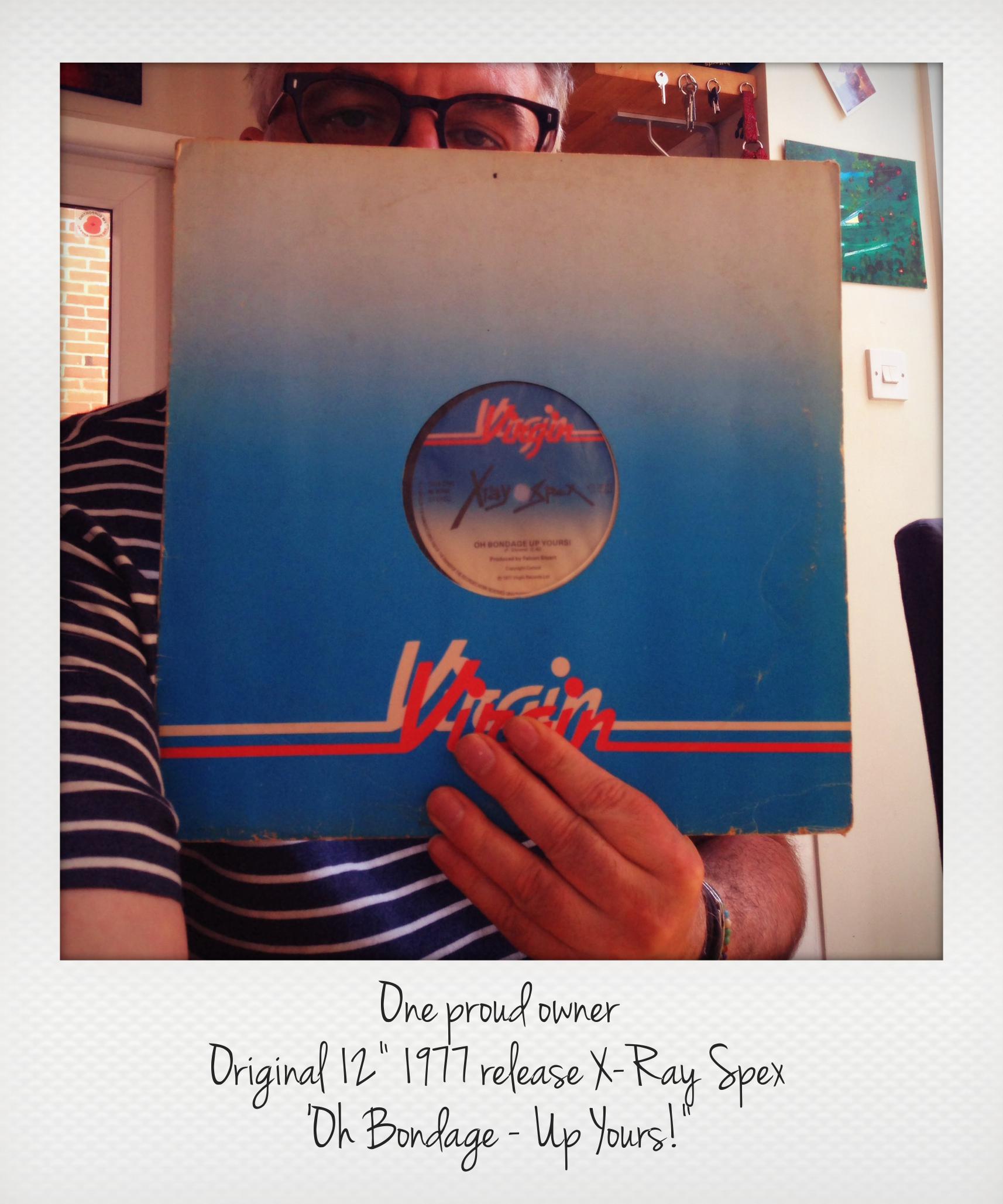
On the 29th March 2014 the band released their 3rd Bandcamp offering “Carte Blanche’ plus one

The sign of a great band lies in their ability to evolve and expand their musical horizons with each new release. Based on the evidence to date Clearance are an embodiment of this notion. There are plenty of bands around who are more than capable of churning out medico material and with the help of a few production twitches and the ad man’s expertise quickly find their faces on anxiety ridden teenage T-shirts. With Clearance you get a real sense of a hard working band seeking to secure appreciation for their art form through a dedication to maintaining independent integrity. This of course is admirable and is worth the ticket price alone, but in reality this means little if the material is not consistent in quality.

Clearance seem to have any ability to toss out brilliant, catchy and intelligent songs. This all bolds well for the future given the solid platform they are building for themselves. The songs are built around clever lyrical structures and offset by guitar textures. Their songs can initially deceive the listener, but lurking beneath a few listens is a revealing depth and intelligence.

Carte Blanche plus one (March 2014)

I’ve listened to Carte Blanche on repeat loop and its one of them songs that never seems to get stale. Looking through the eye of life via a narrative of a road trip the track bounces about gleefully with amazing drum work underscoring the building guitar textures and the eloquent lyrics,  “Darling don’t you dwell upon the exit sign and know that time is going to wound the heals.” The second track is a blend of Misdirection Prize/TV Exhaust is my personal favourite of this release and a supreme piece of work. The fade out and fade into TV Exhaust is at first a little baffling, but ends up providing a rye smile.

I managed to catch up with Mike Bellis from Clearance for a few Old Man questions about the new material:

JK:  What you guys up to at the moment?
MBLaundry, and continuing to waste our money on padding our record collections.
JK: The feel, sound and production on these two tracks demonstrate another step up. How do they feel to you and what feed back have you had?
MB: They feel fine to us – like the last two records they were also recorded in a basement, though this time it was in a different one. We had the luxury of using our friend’s tape machine this time, which always makes things sound better.
JKWhen were the tracks written and what were the main influences at the time?
MB: The tracks were written in January, and when we weren’t listening to friends bands it was probably just the Velvet Underground in ’69 or Danny Kirwan-era Fleetwood Mac. Maybe some Faust too.
JK: Will we get to see a full album release soon?
MB: Yes, eventually.
JK: Any live gigs planned? (UK maybe)?
MB: Only stateside so far, but if we can find anyone willing to pony up the change to send us across the pond we’d be delighted to meet the Queen’s acquaintance.
JK: What are you guys listening to at the moment?
MB: Older stuff mostly- Beefheart, Minutemen, Teenage Fanclub, glam-era Eno, Faust, John Cale (“Fear”), kosmische stuff. But also newer bands like Parquet Courts, Protomartyr, and The Courtneys.
JK: I hear you have a soft spot for Mark E Smith and The Fall?
MB: Who doesn’t?

Back to the Future

Clearance’s back catalogue is also available from Bandcamp – you will do music and the world a favour by purchasing them immediately.

Greensleeve 

Full of amazing hooks and skewed observations this glorious 5 track EP is a little gem. Lo-fi maybe, but high quality throughout. My stand out track: Face the Frontier. 

Dixie Motel Two – Step 

The opening track Walking Papers is simply a classic and would not have gone a miss on an early Sonic Youth album. The EP is again full of hooks and heart warming riffs. In many ways the LoFi production of this early material make it so good.

I demand an LP and I want it now!