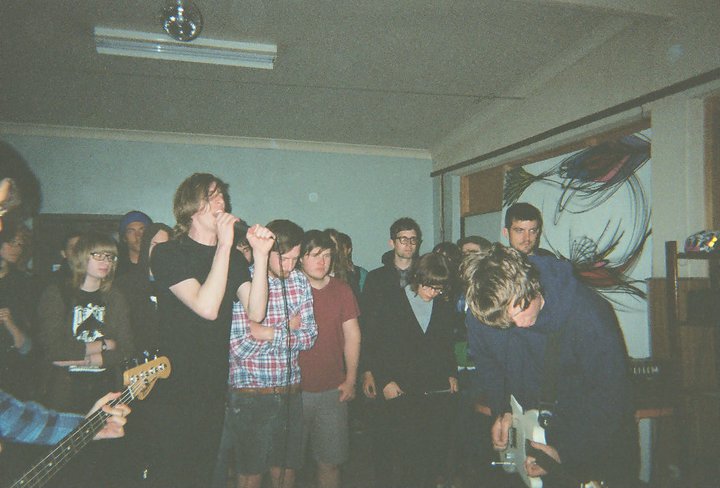
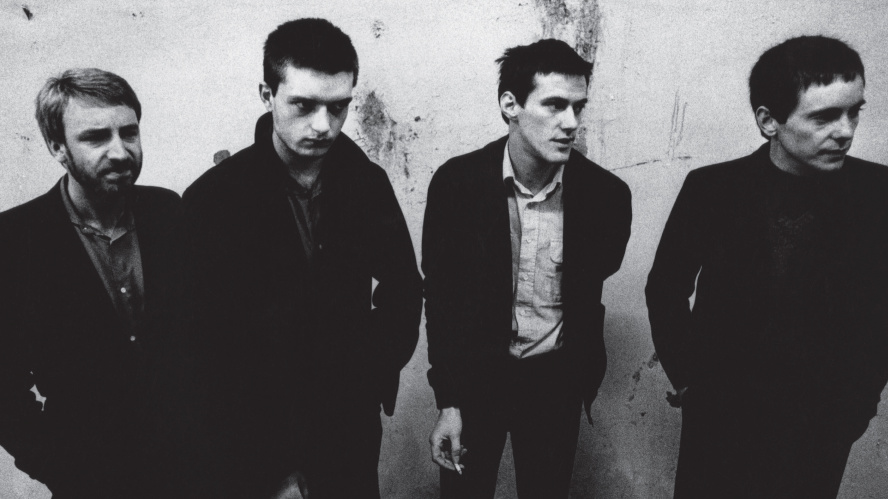
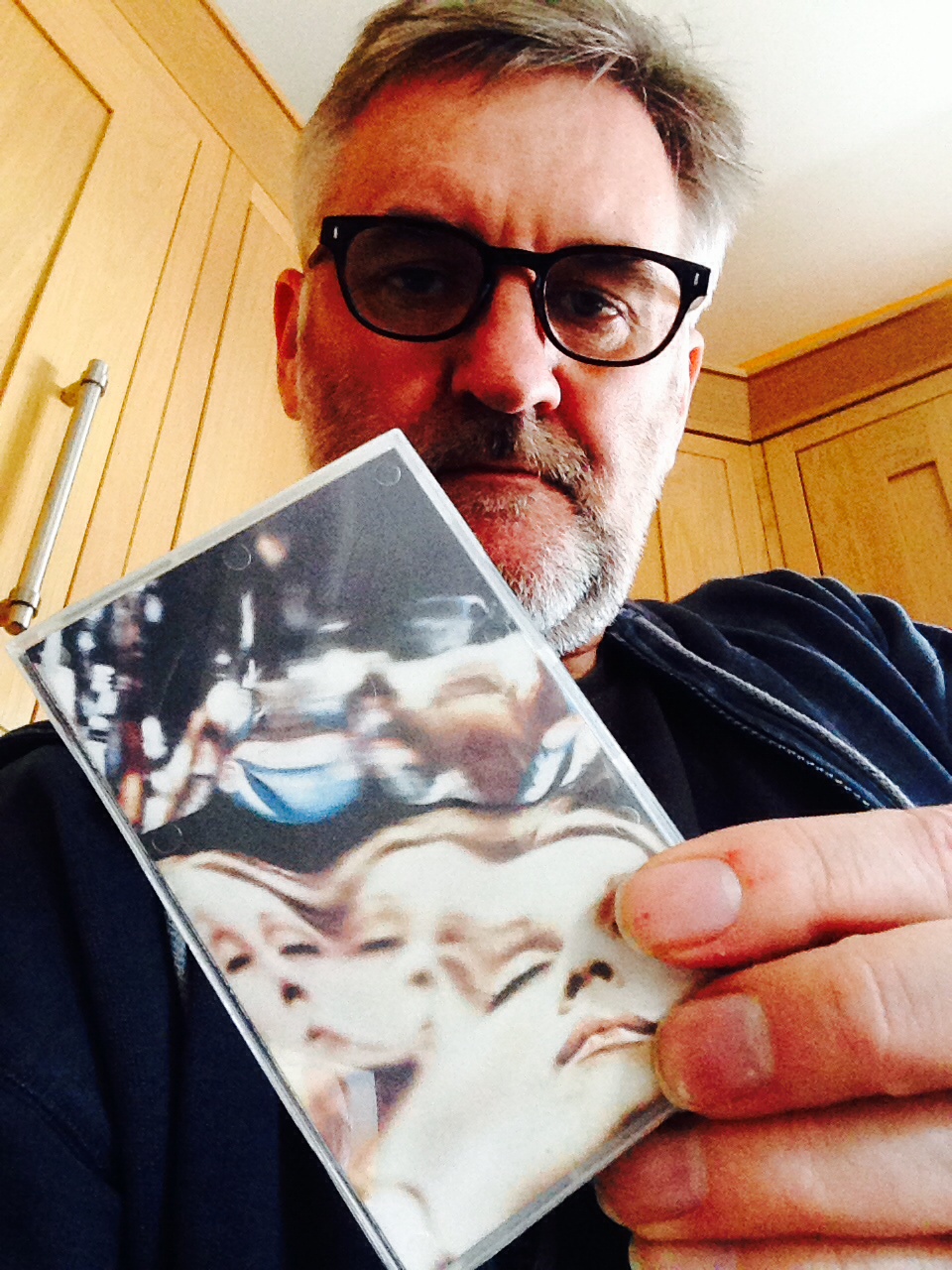
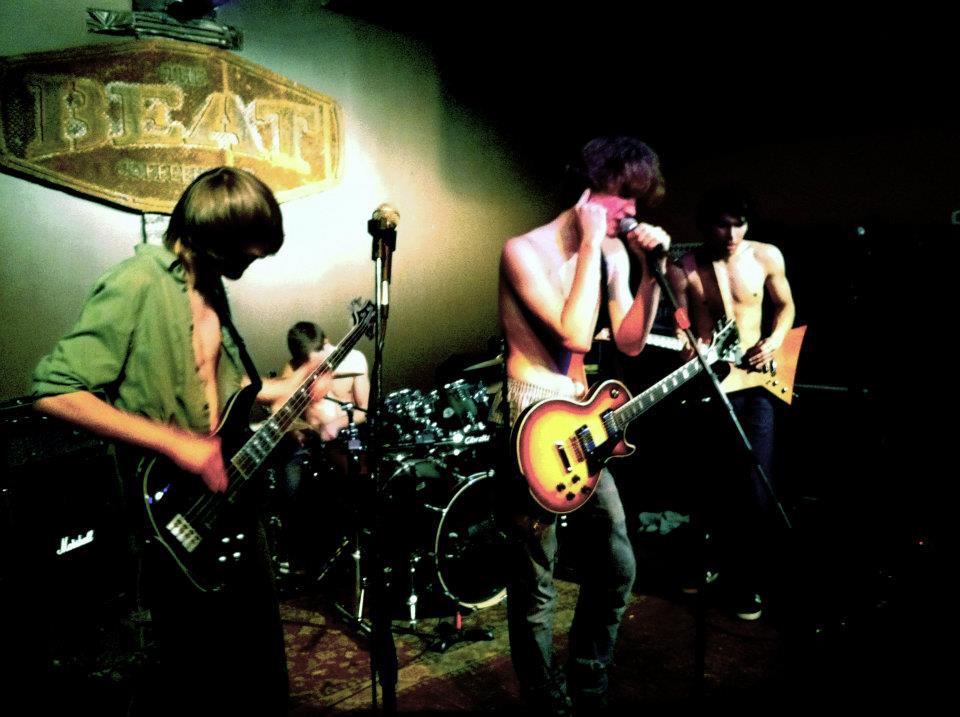
These photographs were influenced by Memum’s debut album ‘Became A Leaf’ which consists of subtle melancholy, tones of beauty, cloudy noise and ambience of deep woods. They were taken with Lofi camera and whilst strolling around the Wiltshire country wearing headphones.
Category Archives: Today I Stumbled upon
Today I Stumbled Upon: Sharp Medicine – Forty Five Revolutions Per-Minute
One of my favourite finds on Bandcamp this week. FORTY FIVE REVOLUTIONS PER-MINUTE is the debut release from The Sharp Medicine, a Proto-Rock band from Los Angeles. These songs were self-recorded at the band’s rehearsal space in downtown Los Angeles, and in the band member’s homes. Not a dollar was spent on recording equipment, studio space, or a producer.
This limited edition record comes in a silkscreen jacket, with a riso insert, kraft paper sleeves, and metallic silver type on uncoated black labels. Release edition of 300. All round perfection.
Today I Stumbled Upon: Ghost to Falco
I find myself walking alongside the River Thames. It’s a walk I take most Thursday evenings whilst making my way to Waterloo Station for the long train journey home. It is a pleasant evening as I occasionally glance over to the House of Commons, Big Ben, wearing my headphones and navigating the tourists, whilst flipping through the Bandcamp app on my iPhone. I’ve just pressed play. The Soft Shield album by Ghost to Falco kicks in with openner Enemies Calling and I instinctively stop, take a public seat and listen to the whole album whilst viewing the river and the features on the opposite riverbank. Finally finding my way home I purchased the album and email the brain child behind Ghost to Falco, Eric Crespo who lives in Portland, Oregon, USA. This blog mainly consists of email exchanges between Eric and myself, as well as the virtual digging I have managed to undertake. Portland of course has one of the most vibrant music scenes in the USA. My earliest recollection of a band from Portland was The Kingsmen, who had the hit Louie, Louie in the early 1960s. It’s a little know fact that In February 1964, an outraged parent wrote to Robert Kennedy, then the Attorney General of the United States, alleging that the lyrics of Louie Louie were obscene. The FBI investigated the complaint and, after four months of investigation, concluded that the recording could not be interpreted because it was “unintelligible at any speed”.
Eric Crespo was born in Los Angeles, California where he lived until eight years. at this ripe age his parents moved the family to Burlington a small town in North Carolina. Burlington is situated 40 minute drive from Chapel Hill, which would prove to be a critical influence to Eric given its underground rock music scene. Eric recalls Chapel Hill has a college town. “In the time (mid 90’s) there was a quite a scene there. The most noteworthy bands from Chapel Hill that were active when I started going to shows were Superchunk, Polvo, and Archers of Loaf. Polvo was my favorite out of those three but I’d go see all of them, and they’d usually have some other interesting bands on the bill with them. And all the touring bands would come through. While I was a teenager I
saw bands like Dirty Three, Mogwai, Guv’ner, Modest Mouse, Shudder to Think, Fugazi, June of 44, Pavement, Storm and Stress, Sebadoh, Blonde Redhead, US Maple, Elliot Smith, Unwound, and many more all playing at various small clubs–sometimes to about 10 people. I saw Sonic Youth play secret shows in Chapel Hill on two different occasions at a smallish club (probably 650 capacity?) called The Cat’s Cradle. I even saw Radiohead once at the Cat’s Cradle right after the Bends came out. I wasn’t really a fan (and I’m still not) but I’d just go to shows..” Eric then moved to Asheville, NC to go to college. In his sophomore year he found himself living with friends and rightfully having fun. “I knew I had to leave though. I felt like I was just waiting for something important to begin. I played in two bands that toured around the region a bit. We’d go play in Atlanta or DC, but my bandmates in those bands weren’t really up for touring like I was. Touring was all I really wanted to do at the time, so I was trying to come up with ways to play out alone just so I could tour as much as I wanted. I may have never started Ghost to Falco if the people in my bands really wanted to tour like I did.”
So how did the solo work start to evolve? “When I first started thinking of playing out solo my first idea was to go the acoustic guitar/singer-songwriter route. I had a nylon string classical acoustic guitar, but I felt like I needed a steel string acoustic for some reason, and oddly enough I actually ended up finding one on the street one day. In the middle of a crosswalk in downtown Asheville. It seemed like it had fallen out of a car or something. So I started trying to write songs on that but it wasn’t happening. I had no frame of reference really for being a singer-songwriter. I had no interest or knowledge of folk singers or anything like that. I kind of put the acoustic away after a few months (or weeks—I can’t remember). A little later I started messing around on my electric guitar with a looping pedal and I put my newly acquired monophonic 70’s analog synthesizer into the mix and I started making up these loose song structures that sounded pretty full even though I was the only one making the sounds, and that excited me. I thought maybe I could play shows like that but wasn’t sure. Around this time I was also getting interested in a lot more stuff that was outside of what I had grown up listening to. Minimalist composers (Steve Reich, etc.), late 70’s industrial music, Glenn Branca, and “freer” bands of the era. Another thing about starting Ghost to Falco is that I had played in bands since I was fourteen years old. I didn’t know how not to be in a band. It was, and still is the way I find friends, my motivation to travel, my motivation to do anything really. So, starting a band that could never break up unless I wanted it to was pretty appealing. I left North Carolina in October of 2001. My bands played our final shows, I got my wisdom teeth taken out, and then hit the road to Portland.”
The Ghost Falco moniker began in 2001 as a solo project consisting of electric guitar loops, synthesiser sounds and field recordings. The band has gone on to became something of an underground institution with a rotating door of musicians have joined for tours and recordings bringing with them a whole range of instruments. “The first Ghost to Falco show I ever played was in Athens, GA (a place I have never lived) on the way to Portland, followed by shows in Shreveport, Louisiana, Lubbock, Texas, and a kid’s garage in a suburb of Los Angeles. These shows were painstakingly booked by sending out a cassette of a song I sneakily recorded in the studio of my college on an exam day of my last semester. I didn’t really know how I would feel about doing Ghost to Falco live, but it turned out that I generally felt pretty good about it so I decided to keep doing it. I always thought I might add some band members to the mix at some point down the line and I did that in 2005 and live shows have gone back and forth between being me solo and having bandmates. Nowadays I prefer to have bandmates in the band.”
big whirlpool where everybody is paying each other. The noteworthy record labels, (not even talking major labels unless you count Merge, Sub Pop, and Matador as majors, which I guess are majors at this point) are probably like the sun that all the other planets of the industry revolve around. So these labels pay the PR firms. The labels buy advertising on Pitchfork and other popular blogs and music magazines. These popular blogs and music magazines are obligated to write about bands that are being pitched by PR firms who are hired by the record labels, who buy advertising on these blogs and in these music magazines, which pays the salaries of the people who run the blog or music magazine. When these bands get written about by the popular blogs and magazines then the booking agencies start calling and then these bands get a booking agent. The booking agent book the bands on high profile tours and festivals and the bands get popular. This system doesn’t work if the popular blogs and such write about anything that any nobody band sends them. Then no one gets paid. And the booking agents aren’t going to want to book a band with no hype behind them. You can’t blame people really. There’s only room for so many bands and writers and promotional agents and such in this world. And there’s even less room for people who are making risky music. To make a food analogy: Even a big city can only support a certain amount of high end vegan restaurants, while the pizza places on every other corner are turning a fine profit. People like pizza and it’s fast and it’s cheap and it fills you up. There’s nothing wrong with pizza. I like pizza. The music I tend to make requires a little more patience and a little more time, maybe it’s a little harder to find the entrance to the place, but I hope that in the end it’s going to be more nutritious.” Soft Shield is Ghost to Falco’s fourth full length album. The albums initial sessions began at the Portland-based Type Foundry Studio (known for producing recorded output by the likes of Dirty Projectors and R.E.M. among many others) in June of 2009. A few days after the first sessions Eric left town for six months of touring and traveling. When he came back with his limited funds, Eric realised that going into debt on an album at a top-of-the-line recording studio maybe wasn’t the smartest thing to do. But it was too late. He earned money from odd jobs and spent it on studio time, and/or relied on generous favours from recording engineers. It took three-and-a-half years to finish Soft Shield. Eight different studios were used in all. The album is properly the most cohesive of any record in Ghost to Falco’s discography.
Soft Shield still casts a wide net that marks most of Ghost to Falco’s output, one could find evidence of just about every rock- affiliated musical movement of the past fifty years, but Soft Shield corrals those disparate elements into a vision that feels firmly planted in the American-West. Trippy desert guitar lines and arid pedal steel are intertwined with a lush and intimate, Northwest-specific, Twin Peaks style of mystery— a duality that points to both Eric’s love of the American desert canyon country and his longtime Portland address. As Eric says, “There’s contentment, anger, humor, regret, fear—and hell, some of it you can even dance to” and I could not put it better myself.
During my virtual journey of discovering Eric and the Ghost to Falco’s back catalogue I came across another of Eric’s projects Centers, which was formed by Jay Demko and Eric Crespo in mid 2010. Whilst I absolutely adore the Ghost to Falco catalogue and have no hesitation in recommending them the Centers album is also a piece of magnificent beauty and worthy of any serious music collection.
Eric Crespo is a musical chameleon who weaves genres together and pushes creative boundaries, avant-garde sound structures, alt-country, world fusion with carefully crafted lyrics all blended together. He is the is type of artists we should increasingly celebrate given the quality of his work and the creative space he occupies often results in very few finding full commercial success. His craftsmanship finds itself at odds with the conveyer-belt of mass consumed music that is often found seeping through many a MP3 player. Neil Young is credited with saying, “When people start asking you to do the same thing over and over again, that’s when you know you’re way too close to something that you don’t want to be near.” It’s an interesting observation from an artists who is respected and who has influenced many. Neil Young of course had the means to take a left-field turn from middle of the road comfort before he cranked up his amplifier. In reality the true creative forces on this highway are artists like Eric Crespo, who did not take the middle of the road in the first place.
Today I Stumbled Upon: No Action
A sense of deja vu awaits as I leave the summer drizzle descending from the clouds hovering over Glasgow and the a 24 hour flight to reach Adelaide, Australia. Yet here I am in the capital city of South Australia, the country’s fifth-largest city with a resident population of 1.29 million and the next stop on my virtual Old Man Adventure in Bandcamp. Adelaide is city with many stories emerging from its humble history. Prior to 1836 Adelaide was inhabited by the indigenous Kaurna Aboriginal nation. Today it is another ‘modern’ industrialised city dealing with its aspirations and tensions, which provide the perfect conditions for creative forces. Adelaide is also home to the joyous No Action.
Patti Smith once said, “punk rock is just another word for freedom” which I can relate too and is reflected in the reinvigorating army of small, independent, lo-fi, do it yourself bands beavering away in towns and cities across the globe. I get jaundice with people, normally men my age, who have deluded themselves with romantic memories of the 1977 punk scene as some type of musical year zero. This was not the case. The DIY garage band ethic has always been a feature in modern music with artists swimming against the tide, challenging convention and giving the middle finger to the corporations. My enduring memory from this period is not the bands who swore and spat their way into the headlines, but the small regional bands. The bands consisting of the neighbourhood shy boy who had secretly been scribbling down lyrics and the kid who had managed to achieve a 3rd chord. A few weeks later they were to be found playing in a local pub, youth club or garage gig. The crap posters that seemed to look cool and the limited cassette run for your small group of fans. The results were often messy, but strangely beautiful given music ultimately is about people, having fun, celebration, connection and expression. No where is this reinvigoration more evident than through the band No Action a self titled soul punk rock group. I like the injection of soul given this creative tension sums up the band perfectly.
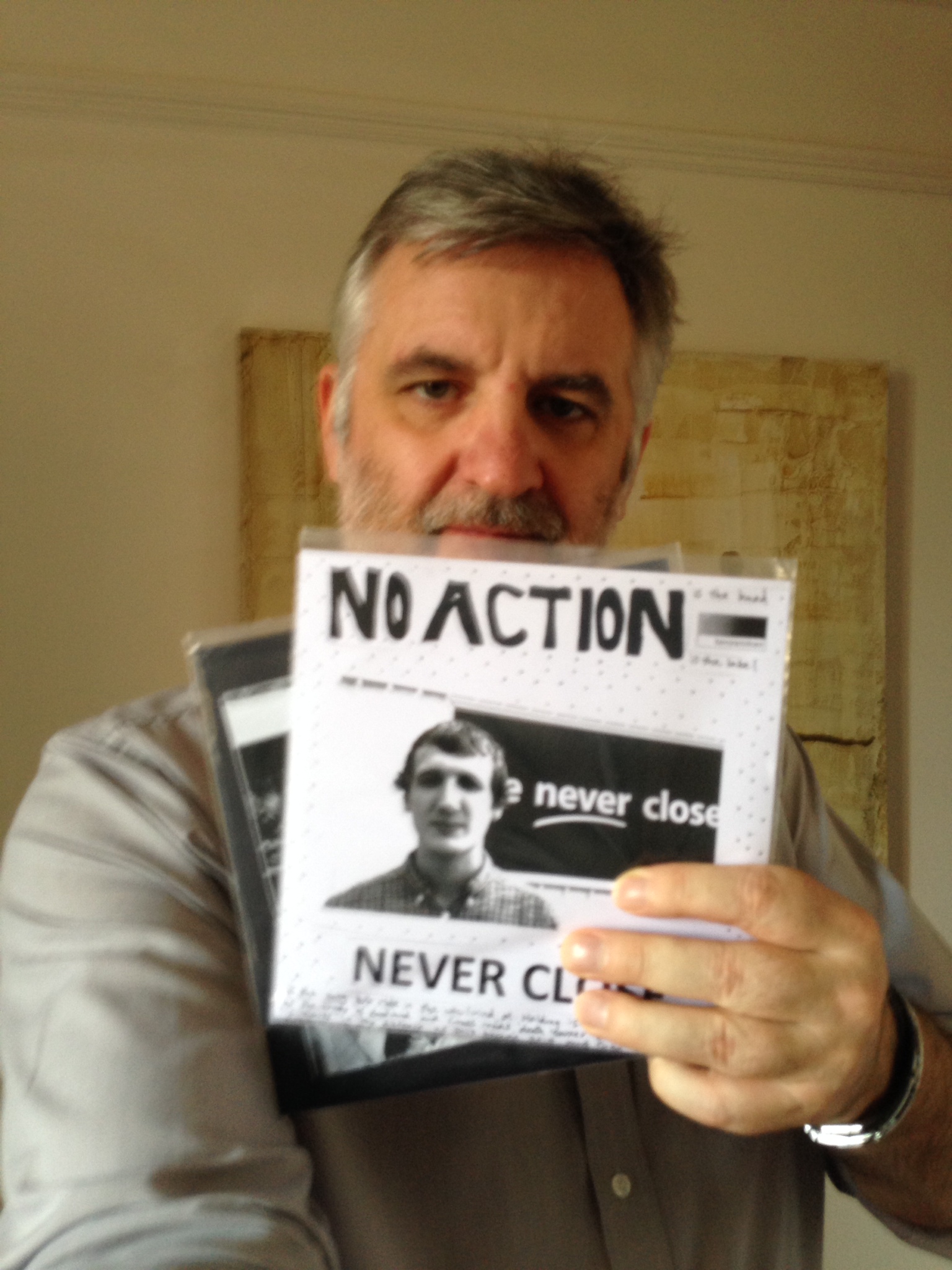
Bandcamp comes into its own when you stumble across bands like No Action, who are an absolute gem to discover. Unlike most bands of this genre you never quite know what you are going to get with No Action be it 3 minutes of punk, a reflective acoustic number or indeed a mixture of both in a single track. In an era of mass produced and corporately manufactured music No Action are a shining beacon of integrity. There blistering and brilliant 7″ vinyl Never Close/Riding in the Whirlwind is testament to this. Riding in the Whirlwind is a melancholic and bittersweet acoustic affair, “got a record no one wants to buy and a t shirt no one seems to fit. had a date with an empty bar” chronicling the struggles of a band and relationships. “Call me ungrateful, call me broke, call me when you’ve got the credit.”
Never Close is a different kettle of fish altogether, which opens up with pounding drums followed by a grinding bass. As Nick Godfrey (bassist with the band) explained to me, “The main influence on the Never Close song would be Silkworm and maybe Archers of Loaf but it sounds more like U2, the main influence on the Ride in the Whirlwind song was Comet Gain but it sounds more like You Am I or the Lucksmiths. The important lesson here is to BE YOURSELF and let your true creative voice shine through.” Personally, my observation would be the guitar work on Never Close is more aligned to Keith Levene (Public Image Limited) a quick search for PIL’s glorious Albatross track will confirm where U2’s The Edge stole his licks from.
A further No Action release I managed to obtain is the spilt cassette tape release (yes you heard me right a cassette tape), which paired No Action with UK band Plaids from Nottingham. Plaids provide a punchy angular punk/emo rock approach played out in frenetic pace against No Actions more subtle and gritty lo-fi tracks. So what where the influences behind the two tracks provided by No Action on the spilt release I asked Nick, “The tape is a funny story so I’ll start with that. The acoustic song was one we originally wrote when we found out we were going to do a split release with Roger King from Bakersfield California, home of Korn and Merle Haggard. Up until that point Roger King’s solo output had been acoustic stuff, so we wrote and recorded an acoustic song that would match that. Then he sent his track to us and he’d done a rockin’ plugged in track! So we ended up palming our acoustic song off to the Plaids split.”
The two No Action tracks, which appear on the cassette, Nick rates the second track Solar Steps, as his personal favourite by the band to date, “It’s the most fun to play on the bass. It was the second song we wrote and we probably haven’t got any better since then. The rockin’ plugged in version of the Solar Steps song which will appear on our one-day-to-be-relased debut album is good too” And the
obligatory Old Man question, If the band had the opportunity to collaborate with any other artist or band who would it be Nick, “John, this is a really tough question that I’ve been puzzling over all weekend. I like the Mars to Stay band and what they’re all about, so I’m going to say them.”
No Action are a very coherent and exciting band who in many ways defy logic. Bands like this tend to take a single approach when facing their musical crossroads. It is refreshing to hear a mix of influences as a platform rather than a band simply trying to replicate something they’ve heard elsewhere. So we end up with creative tensions. Grinding punk, which is not simply trying to get as much noise and lyrics stuffed into the required 3 minutes as possible, alongside subtle acoustic offerings. The lo-fi recordings just add the imperfections that make these recordings stand out from the crowd. I can’t wait for the album when it does finally appear.
You can also enjoy further No Action tracks on their Soundcloud site and keep up with their journey via their Facebook page. Enjoy and respect.
https://www.facebook.com/theresnoaction?fref=ts
https://soundcloud.com/theresnoaction
Today I Stumbled Upon: Electric Friends
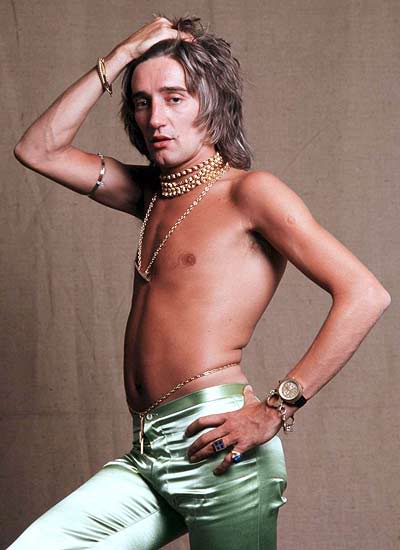
The long journey up north past my native North East over Hadrian’s Wall and to Glasgow where the wonderful Electric Company Label is beckoning me on the next stop of my old man adventures. Unknown to myself, well until I wrote this blog, I have a deep appreciation of the Scottish rock scene beyond the parody that is Rod Stewart. I will blame Rod for my ignorance given he inflicted his phoney Scottish jiggery pokery on me from a young age, caused serious trauma and inflicted Scottish blindness. At a time when any self respecting youngster was exploring The Clash, Pistols, Damned, Ramones and Buzzcocks, Rod in 1977 released his Hot Legs single from the equally bombastic album Footloose and Fancy Free. Unlike now there was no fast forward on live TV, so we duly had to sit through Rod swinging his thing before 3 minutes of punk was allotted its given time on Top of the Pops. My trauma was recently reinvigorated when I discovered Bon Jovi apparently perform Hot Legs occasionally as part of their live set, but a quick google search for Rod Stewart 1970s and then Jon Bon Jovi 1980s and it all makes perfect sense.
Anyway enough of this nonsense. A quick dig through my music collection whilst preparing this blog reveals Jesus and Mary Chain, Primal Scream, Teenage Fan Club, The Vaselines, The Rezillos, Belle and Sebastian, but to name a few all lurking there and all originate from Scottish shores. I hold my hand up in shame and accept my ignorance, which I take responsibility to tackle. As with any vibrant music scene an ecosystem is required, which is is independent, experimenting with the past and probing the future to produce a glorious wall of sound. This cultural ecosystems by its very nature is often known only to the locals until a buzz emerges, but the rise of the internet has created opportunities for the virtual traveler to be exposed to these gems. This is particularly rewarding when, if like me, you have a leaning towards lo-fi fussy guitar rock and sublime songwriting with twisted lyrics that often fail to penetrate the mainstream pop world. Yet it is these humble cultural ecosystems, which create the fertile ground for mighty musical oaks to grow and the catalogue of Glasgow’s Electric Company label sits there like a shiny emerald.
Launched in April 2013, Electric Company release and distribute music by some of the most exciting and forward-thinking artists, on a wide range of formats, including vinyl, cd, cassette and digital download. Boasting a passion for DIY ethics and armed with their own studio enables the label to support artists to be heard without the pull of corporate strings. This in turn creates a unique artistic hub where everything from recording, artwork and merchandise to live booking can be done in house and purely for the love of music. As with any small business running an independent music enterprise takes nerves, commitment and to a certain degree of passion bordering on obsession. So it is always an immense pleasure to stumble across a label like Electric Company. On my initial dip into the label’s catalogue I purchased 3 offerings.
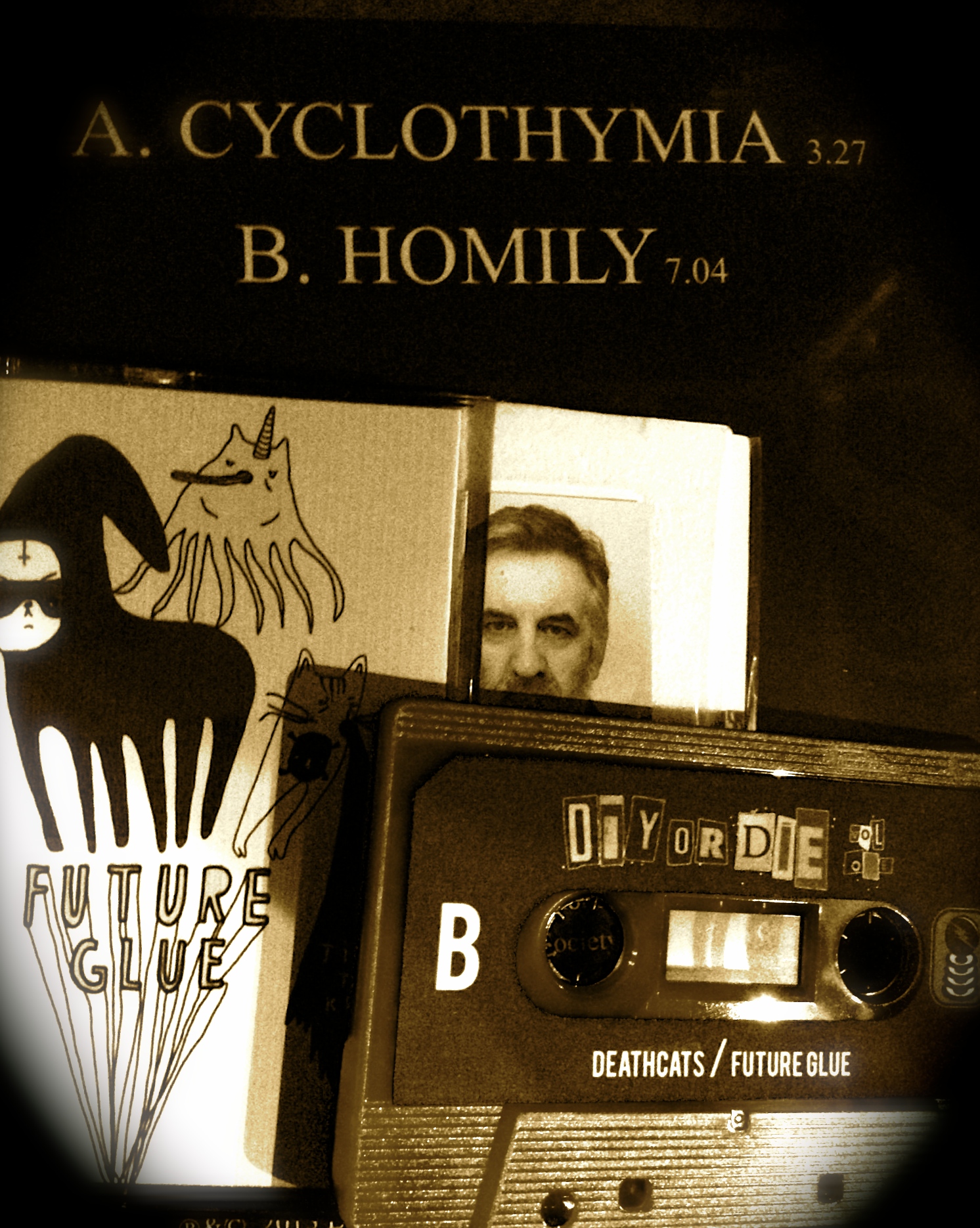
The New Fabian Society: Cyclothymia/Homily 7″ vinyl and digital download £5 (digital download £2)
Released on a limited run of 250 copies Cyclothymia is a pulsating 3 minutes 27 seconds of glorious guitar infused post punk delivered at Ramones break neck speed whilst Homily is reminiscent of Joy Division (before the hype) at their desolate best. The band follow up release Barbarossa which is also available on Bancamp (name your price offer) demonstrates a band growing in skill attitude and craft Provided with the right opportunities and presented with the necessary good luck all artists require this band have all the credentials to develop into something rather special.
The Dirty Lies: Release EP cassette and digital download £5
The Release EP is a collection of 6 brilliantly twisted pop songs. Athough I feel it only right to give you a little warning before you take a listen. Beneath the pleasant beats and harmonies are some rather spine chilling lyrics, which make one feel the songwriter was abandoned on the steps of a church at birth and left to be reared by a couple of zealots. The sublime opening lyrics to Shallow Grave, “I hope you fail in love, I hope you break your heart, I will be your enemy, I’ll be your shallow grave” are just about the most soberingly and brilliant opening lyrics for a track I’ve heard for quite some time. Each track on the cassette comes in at about 3 minutes, which means there is little too no fat in production and delivery.
Various: DIY or Die Volume 1 cassette and digital download £4
Four bands, four songs for four quid no bad going and a cassette thrown as well. The cassette opens with Twin Mirror’s New Edition a good old fashioned punk rally. Secret Motorbikes – Is Dis 4 real a swaggering pop anthem. Deathcats – Saturday Night Golden Retriever a guitar riffed to the ceiling romp. Future Glue – Time to Kill a burning blend of punk surf meets 1950s trash rock. All together this is a mighty fine split tape, which is ready made for rolling down the car window on a warm summers evening and terrifying the neighbourhood.
My ignorance has been well and truly laid to rest and like Bristol, Manchester, Liverpool and London, Glasgow is up there with the best and I thank Electric Company for the education.
Today I Stumbled Upon: Cloud Ensemble
Renowned and often credited with being the inventor of modern ambient music, which many try to emulate. A genius he maybe, but Brian Eno certainly as a lot to answer for in my view. Bandcamp is cluttered with lonely souls who are cramped up in desolate bedrooms with their laptops striving to create something interesting from overlaid, looped and distorted droned tones that are absent of traditional musical structures.
Personally I’ve always been a little susceptible to the odd Eno album and must admit to having a few in my collection, but it is the type of music I purchase very sparingly.
Advancement in technology has created access for most people regardless of capabilities to produce something that would have sounded groundbreaking back in the 70s and 80s. This is healthy and to be encouraged, but this is also one of my criticism of this music genre. We end up with a vast field of producers creating an abundance of medico material. I need to be brutally honest. Once you have heard one stretched out and droned note that has been processed to death on a computer, well it can be a down hill experience afterwards because the next offering is properly going to sound very much the same. Don’t get me wrong whilst I consider albums like Apex Twin’s ‘Selected Ambient Works Volume 2’ a certified classic. Many artists, including Radiohead, Lou Reed, U2 and Nick Cave have all dabbled in this genre with the results (in my view) being varied to say the least. 1995s Passengers (U2, Eno plus guests) Album ‘Original Soundtracks No 1’ was so pretentious that even U2’s Larry Mullen quite rightly observed, “There’s a thin line between interesting music and self-indulgence. We crossed it on the Passengers record.” The only saving grace for the album was the ‘Miss Sarajevo’ track , which featured the late Italian tenor Luciano Pavarotti on vocals.
It is when ambient music is not solely dependent upon the one trick pony of synthesised drones that the genre starts to come alive and provoke something interesting for me. Eno himself defines ambient music as, “evoking an atmospheric, visual, unobtrusive quality” and personally for me only a handful of albums over the past 15 years have stood out by using Eno’s template. Here is a selection from my collection:
- Asche and Spencer: Monster’s Ball
- Boards of Canada: Geogaddi
- Mum: Finally we are one
- Lampchop: Nixon
- Sigur Ros: Med Sud i Eyrum
- Laurie Anderson: Life on a String
The soundtrack from the film ‘Monster’s Ball’. The scores by Asche and Spencer are just spine chilling and fragility personified. The Boards of Canada ‘Geogaddi’ is a mesmerising kaleidoscope of sounds. Mum, ‘Finally we are no one’ is a beautiful and fragile landscape. I saw Lampchop perform ‘Nixon’ live at the Royal Albert Hall, London. I have never seen so many people on one stage create so little noise. Sigur Ros, ‘Med Sud i Eyrum’ album was for me their coming of age. The Laurie Anderson album ‘Life of a String’ is just beautifully haunting.
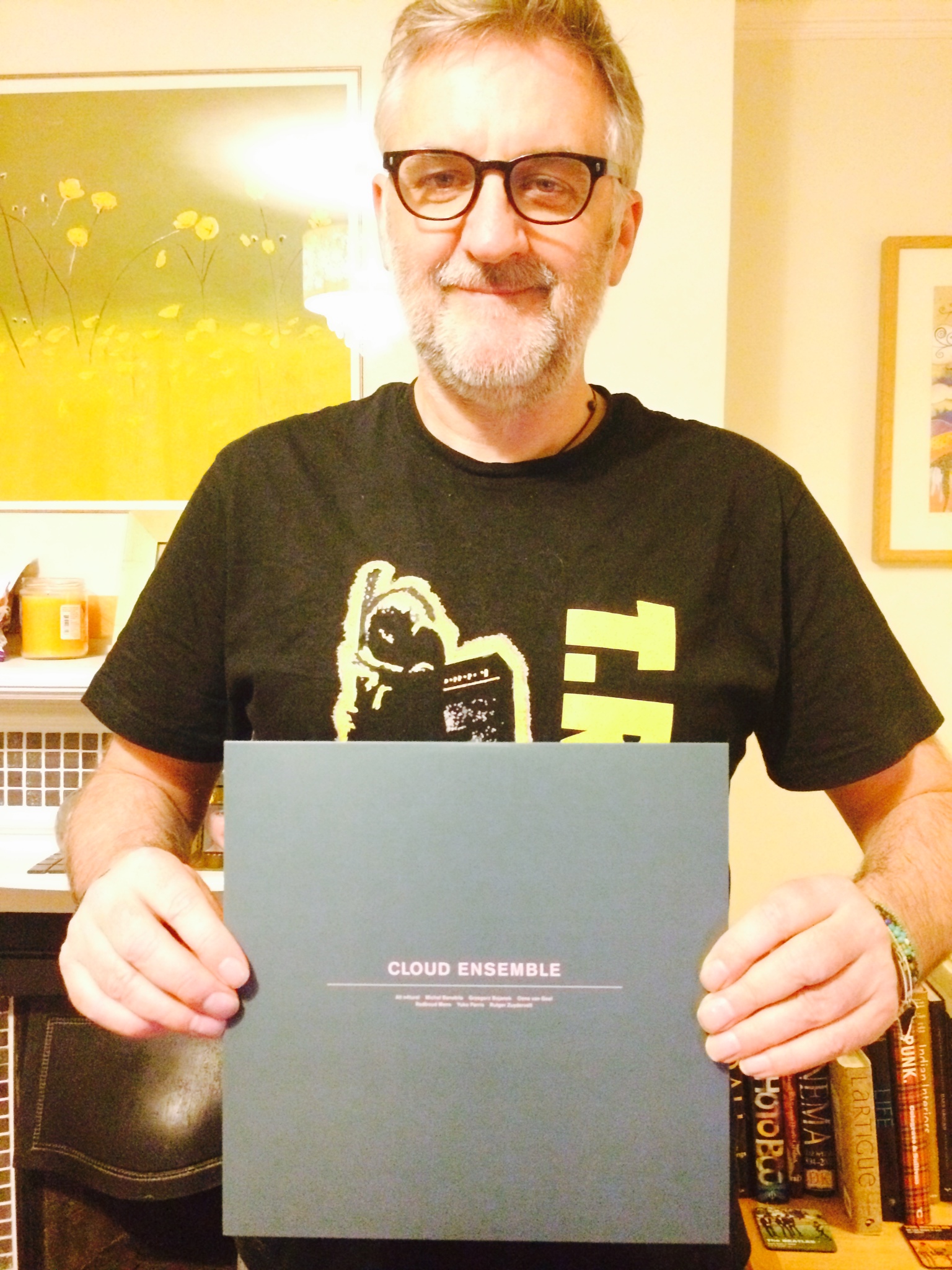
Cloud Ensemble
I have recently added a further release to this list. The EP ‘Cloud Ensemble’ by Cloud Ensemble, which consists of 3 tracks and is the product of a file sharing project between:
Michel Banabila : ebow, guitar, logic pro, field recordings
Grzegorz Bojanek : field recordings
Oene van Geel : viola, stroh violin
Radboud Mens : glass sounds, dopplo, treatments
Yuko Parris : voice, squeaky sounds, electric piano
Rutger Zuydervelt : philicorda organ
Here and There is a 10 minute soundscape that captures a mixture of delicate voices flowing over almost orchestrated instruments and field recordings. Perfectly blended with the voice samples the track is an absolutely sublime Friday evening wind down track, especially with headphones. Hide and Seek takes a different direction with whispered vocals the track builds and encompasses disjointed beat structures. Silent World the final track on the EP returns to the soundscape mode, but minus vocals.
I recently caught up with Michel Banabila from Cloud Ensemble and asked him the three Old Man questions:
JK: What was the main influences behind the album?
MB: Simply to collaborate. Everybody immediatly said yes. We like each others music of course. So I think there is an influence from everybody of the ensemble in the end result.
JK: Which is your favourite track and why?
MB: That might be for different for each of us. I like all three tracks. These three tracks are all a bit different from each other.
JK: If you could have a guest artist to appear on your next venture who would it be (dead or alive) and why?
MB: We are now working on the next recordings. I really hope we will do another album. So my favourite guest in future projects would simply be everybody from the Cloud Ensemble 🙂
The EP ventures into wide-eyed fairy-tale qualities at times by delivering simple melodic bliss to the listener. It will certainly not be for everybody, especially if your ear requires conventional song and rhythm structures, or crushing guitar solos. It is the conglomerate of instruments on the EP that initially gain attention, but ultimately the tender vocals on track 1 & 2 that add breadth to this beautiful journey.
There is 150 limited edition 1o” vinyl/hand numbered copies of the EP up for grabs via Bandcamp @ £6.40 (€8) plus postage, which also comes with an immediate download. A digital copy of the EP comes in @ £4.05 (€5). Enjoy.
Today I Stumbled Upon: Mogo Kutu
It’s 8.30am on route to work in an overcrowded train from Clapham Junction to Waterloo Station London, headphones on, volume gentle, the train carriage swaying, the occasional cough from a passenger, frustrated telephone conversation, or the steel on steel wheels churning beneath my feet find a way into my private world. I’m standing and gazing around incidentally wondering about the lives of others. The sardine squeeze, people protecting their personal space, upholding their rights via the unwritten protocols of facial expressions. Obsessively we are all consuming the latest news, sports and A list gossip that is constantly streamed to our mobile devices. Smiles, sadness, hopes, regret and fears all canned up in a train moving slowly towards the City. It’s a pleasant day and the tensions of dark wintery mornings are starting to evaporate.
THIS BANDCAMP ACCOUNT NO LONGER EXISTS
Oblivious to everybody Mogo Kutu is singing in my ears and I feel good.
4217 miles away it’s about 2.30am in St. Louis, Missouri, USA. A place renowned for its blues and jazz Music. Chuck Berry, Miles Davis, Imrat Khan, Scot Joplin, Donny Hathaway, Fontella Bass, Grant Green, Tina Tuner (I forgive you for the 80s Tina) and the legendary Isley Brothers all have a connection back to St. Louis. Some happy and some not so happy connection, but regardless this creative rich list humbles any serious music fan and it is here where by accident I bump into Mogo Kutu.
So who is Mogo Kutu? As his aptly named blog One of Us is Lying (http://missouri-oneofusislying.blogspot.co.uk) states, “Mogo Kutu is just a name, It is me. It is something old, something new. One step forward, a lifetime back. To keep it simple. I make stuff. Sometimes I make music. Other times I capture images. Sometimes I write. I build up and I tear down. I regret and I laugh. I live and breathe. I want you to like this, to like what I create because I think it is good. I would not waste your time otherwise.”
I managed to catch up with the man behind the Mogo Kutu project, Rob Woerther who has been a key figure in St. Louis contemporary songwriter scene for several years. “I have kept and maintained a home studio and sang and played in a handful of bands through the 90s, recorded a few CDs and then got tired of packing up gear, playing in bars and smelling like smoke. Started recording local singer-songwriters as well as myself and put out 2 compilations of St. Louis singer-songwriters – Sweat Equity and Elbow Grease.” After getting married, pursuing a career as a special education teacher, starting a family and finishing his doctorate Rob decided to give his academic career a well earned rest and start to take his songwriting and music more seriously. In December of 2013 he started to uploading his music to bandcamp.
At this point I will leave it to the storyteller, songwriter and singer to explain what is behind his collection of songs, which are now available on Bandcamp.
“Somewhere in middle America. The days are long. The creeks change with the season and at night you can still see just how small we are in this universe. When you are young all you can think of is leaving. Now I would give anything to go back.”
“G. Letters #1 started after I had found a box of letters my grandfather had written when he went off to fight in Germany during World War II. The letters, completely forgotten, had been found as we were cleaning out my Great grandmother’s house. Well into her 80s she saved a lot of our family’s history. From the family bible to these letters I slowly started to learn of my grandfather as a young man going through basic training.” “Ghost Waltz was one of the first songs I had written on a banjo. It was also written at a time I was working through my grandfather’s letters from the war. This song is a bit different in that the characters drift away from my grandfather to a couple that was not as fortunate. The woman in the story is waiting for her husband to return only to be visited by his ghost. The war taking another victim as a wife mourns her loss. “God’s eyes came from reading a collection of short stories by Zora Neale Hurston. Ms. Hurston began collecting stories from the black southern communities in an effort to save them from being forgotten and lost. Her work helped act as a foundation for the Harlem Renaissance. While not directly an interpretation of a particular short story the song follows the loose narrative of a young man pushing his luck to see just how far he can go to prove himself.”
“As my dad has gotten older his love of baseball has become more of his persona. I appreciate him more because of it. Baseball is America’s story. In this day of modern toys and access to any information with a few clicks of a keyboard we still will huddle around a transistor radio and catch nine innings of the Cardinals versus the Cubs. I come from a family of storytellers. Give us a good kitchen table, something to drink, and an unsuspecting audience and the laughter will echo through the house, out through the garage, and into the neighbor’s yard. It starts off innocent enough until some poor victim asks a question and then the yarns start to spin. I think I was always meant to be a songwriter because all those stories needed to go somewhere.”
“Mud dreams came out of the past. I spent my youth surrounded by trees, creeks, and mud. The thrill of an empty day along a wide and angry river puts me at rest. Take a sip and watch your pole. Feel the breeze. Listen to the water.”
Lyrics that make you smile and reminisce about the fights, scrapes, first teenage kiss, growing pains, sunny days, family, friendship, love and the tensions of adult relationships. Mogo Kutu is pursuing the noble art of observing life’s little swerve balls and transforming them into carefully crafted songs. I genuinely find this work endearing. There is lack of pretension and a sense of sincerity behind this artist who is writing and performing from the heart. It is indeed the type of songwriting that is a product or age, growing maturity and experience. I am thoroughly enjoying each release, which costs $1 (60p in the UK) for 3 tracks. Top quality music, a worthy addition to most collections, which comes highly recommended.
I walk into the office, sit down, take off my headphones, switch off the music, look around and smile. It’s a good day.
Today I Stumbled Upon: Clearance
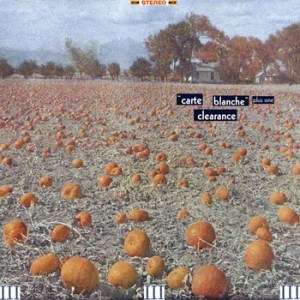
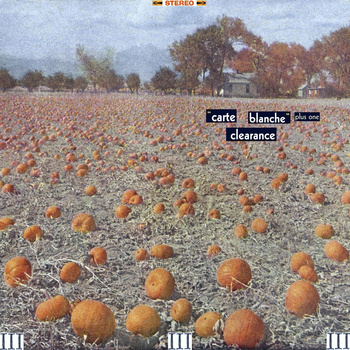
There are many mysteries in this world that continue to perplex, puzzle and confound scholars and intellectuals alike. What influenced the 71 year old Harrison Ford to suddenly pierce his left ear? The ever eccentric Mr T from the 1980s trash TV show The A Team simply begs the question why? And If there is a god, why did she/he take the legendary Curtis Mayfield from us at such an early age? Into the void of the great unknown these questions must remain. But one fact is undisputed Ford, Mr T and Mayfield all originate from Chicago, Illinois, USA. And it’s here in the great windy city where I come across the magnificent Clearance who have just released their third offering on Bandcamp “Carte Blanche” plus one .
In 1833, the Town of Chicago had a population of around 200. Today it is the 3rd most populous city in the United States with 2.7 million residents. It is also home to the annual Lollapalooza and PitchFork music festivals. The city has a vibrant and creative cocktail of rock, punk, soul, jazz, hiphop, house and rave music all pitching for their adoring audiences.
In the midst of Chicago’s musical tapestry Clearance find themselves in this vast scene that is broadly described as rock. Clearance are in the space of garage and LoFi band land, which has given us The Stooges, Danny Adler, The Fall, The Jesus and Mary Chain, Sonic Youth to but name a few. Its a hard place to work and achieve stardom from given today’s X-Factor route to riches would be counterintuitive to the art form.
I have a live Sex Pistols bootleg from 1977 and as the drums kick-in to the Pistols version of the Stooges No Fun Johnny Rotten mutters to the audience, “I bet you thought I came here to entertain you rather than you entertain me.” A classic chicken and egg metaphor, but one that sums up those bands who decide to follow a path of integrity and credibility to themselves. Musically it is this space that I personally find Clearance. Originally from Ann Arbor, Michigan a city renowned for its progressive politics the founding members of Clearance Mike Bellis and Arthur Velez relocated to Chicago and have since released two 7″ EP’s Dixie Motel Two-Step (April 2013) and Greensleeve (January 2014) on their own Microluxe imprint.
On the 29th March 2014 the band released their 3rd Bandcamp offering “Carte Blanche’ plus one.
The sign of a great band lies in their ability to evolve and expand their musical horizons with each new release. Based on the evidence to date Clearance are an embodiment of this notion. There are plenty of bands around who are more than capable of churning out medico material and with the help of a few production twitches and the ad man’s expertise quickly find their faces on anxiety ridden teenage T-shirts. With Clearance you get a real sense of a hard working band seeking to secure appreciation for their art form through a dedication to maintaining independent integrity. This of course is admirable and is worth the ticket price alone, but in reality this means little if the material is not consistent in quality.
Clearance seem to have any ability to toss out brilliant, catchy and intelligent songs. This all bolds well for the future given the solid platform they are building for themselves. The songs are built around clever lyrical structures and offset by guitar textures. Their songs can initially deceive the listener, but lurking beneath a few listens is a revealing depth and intelligence.
Carte Blanche plus one (March 2014)
I’ve listened to Carte Blanche on repeat loop and its one of them songs that never seems to get stale. Looking through the eye of life via a narrative of a road trip the track bounces about gleefully with amazing drum work underscoring the building guitar textures and the eloquent lyrics, “Darling don’t you dwell upon the exit sign and know that time is going to wound the heals.” The second track is a blend of Misdirection Prize/TV Exhaust is my personal favourite of this release and a supreme piece of work. The fade out and fade into TV Exhaust is at first a little baffling, but ends up providing a rye smile.
I managed to catch up with Mike Bellis from Clearance for a few Old Man questions about the new material:
Back to the Future
Clearance’s back catalogue is also available from Bandcamp – you will do music and the world a favour by purchasing them immediately.
Greensleeve
Full of amazing hooks and skewed observations this glorious 5 track EP is a little gem. Lo-fi maybe, but high quality throughout. My stand out track: Face the Frontier.
Dixie Motel Two – Step
The opening track Walking Papers is simply a classic and would not have gone a miss on an early Sonic Youth album. The EP is again full of hooks and heart warming riffs. In many ways the LoFi production of this early material make it so good.
I demand an LP and I want it now!
Today I Stumbled Upon: You’ll Never Get To Heaven
The snap of the letter box and a cassette lands on the doormat following my latest purchase from Bandcamp, which is the first cassette I’ve bought in many years. There is something subversive about cassette music, which can either label you a pretentious anorak or the member of a cool club. Whatever your preference I feel like a member of the cool club today. I find myself in Canada on the next stop of my adventure and I have arrived at the delicate ambient haze of Chuck Blazevic and Alice Hansen better known as You’ll Never Get to Heaven. They have recently issued the EP Adorn on a limited cassette format release, as well as download.
You’ll Never Get to Heaven are from London, Ontario and like the name sake on this side of the pond London is a melting pot of creative energy and influences. To the east we find New York, to the west Detroit to the north Toronto. London, Ontario is no stranger to musical innovation being home to the rather brilliant and eccentric Nihilist Spasm Band. A band with the ability to make the listener excited, laugh, cover their ears and appreciate all at the same time. Think of Captain Beefheart’s classic album Trout Face Replica in warped condition, playing backwards, at the wrong speed and you start to get the picture. I mention this purely to draw attention to the rich tapestry and creative environment You’ll Never Get to Heaven inhabit, which must surely provide immense influence.
You’ll Never Get to Heaven are the type of electronic band I enjoy greatly, but I must start with my prejudices. Having lived through the 1980s and the onslaught of synth drums infused in over produced medico music. At best this was highly regrettable, but thankfully quickly forgettable. For every Joy Division sat a myriad of New Romantic lost souls who sought self indulged enjoyment from wearing stupid customs, donning silly haircuts, trained like monkeys to press a few buttons rather than create music that would be savoured beyond its immediate sell by date. It is true the likes of Gary Numan, Orchestra Manoeuvres in the Dark and the Human League provided some initial interest, but you can only pretend to be a droid for so long until people start treating you like an elaborate teas-maid.
My key contention is aimed at the producers of the time who simply sought to replicate traditional instruments and song structures rather then use new technology to innovate. The effects of this bastardisation left scars in my psyche resulting in me instantly rejecting electronic music as a serious force other than Kraftwerk, Eno, Rodion G.A, Harold Budd, etc. Rightly, or wrongly my record collection would occasionally submit to the odd electronic based track, but nothing substantial. There was little change in my mindset until Aphex Twin’s sublime 1994 Selected Ambient Works Vol 2, which went on to unlock my ears to groups like Autechre.
More recently the increased accessibility to make electronic music with little effort through most computers has delivered a variety of outcomes from the sublime to the largely predictable. In this democratisation of music production it is refreshing to stumble across bands like You’ll Never Get to Heaven whose influences can be seen and heard, but importantly do not simply seek to replicate what has gone before.
The gentle distorted soundscapes, twisted samples and warped beats create a dream like platform for Alice Hansen’s fragile vocal to drift aimlessly like a child exploring a lost magical world. Firstly the influences I hear in their music. My record collection includes a variety of early Brian Eno albums and given the Adorn release makes reference to Eno this would be a rather lazy reference to make. Vocally I hear hints of early Elizabeth Fraser (The Cocteau Twins) or Tracey Thorn (Everything But The Girl), especially the tracks Thorn recorded with Massive Attack for the Protection album. The overall production I find interesting because whilst the aforementioned bands utilised more traditional beat and melody structures to create catchy pop songs You’ll Never Get to Heaven have ventured down a different lane. The result is creative tensions, which provide the freedom for the duo to roam, explore and experiment endlessly.
Lurking under the soundscape structures I find fragmental influences from the Boards of Canada (Geogaddi album) and early Sigur Ros (Lek album), which leans more to the structures of classical music than pop. Beats are deployed with intelligence, sometimes sparingly leaving silence to contribute effortlessly to the overall effect (especially when listening through headphones). Via my trusted laptop and the powers of email I managed to hook up with Chuck Blazevic and presented him with the Old Man Adventure questions.
JK: What was the main influences behind the album?
CB: We’re often inspired, either directly or indirectly, by the music we listen to on regular basis. We highly enjoyed listening to the following artists at various points during the making of Adorn: Jeunesse D’ivoire, Anna Domino, Antena, Brenda Ray, Ennio Morricone, Belong, X-Ray Pop, Durutti Column, Chromatics, & Cleaners From Venus.
JK: Which is favourite track and why?
CB: ‘Caught in Time, So Far Away’ is the most recent track on the EP, so, in this respect, it feels a bit more exciting to us than some of the older tracks on this release.
JK: If you could have a guest artist to appear on your next venture who would it be (dead or alive) and why?
CB: We’d love to work with Brenda Ray (of Naffi/Brenda and the Beachballs) if given the opportunity. She has the best vocals and her productions often strike that delicate balance between raw immediacy and ornate elegance.
You’ll Never Get To Heaven – Adorn
The Adorn EP opens with Caught in Time, So Far Away with its carefully crafted synth drum beat, textured layers and pitch perfect vocals make this a mighty and clever pop laden introduction. Whilst the track is highly enjoyable it also misleads the listener into a false sense of ease as we enter the deeper material contained on the EP.
By This River is a slower and more thoughtful piece all together. Simple and devastatingly in delivery. Unravel takes us deeper down like a gramophone record playing effortlessly in a cabin on the sinking Titanic. Adorn is a magnificent, dense textured 4.25 minutes of shoe gazing brilliance. The beat plays perfectly with the vocals to leave the listener slightly disorientated. Enfantillages Pittoresques: Berceuse is an intoxicating music box with slightly out of synchronised keys. Derived from the Erik Satie’s piece, which can also be found on the David Bowie ‘The Man Who Fell To Earth’ film. The result is truly haunting and beautiful.
The EP comes to an end with Closer, which is a further 2.44 minutes of soundscapes, but on this occasion the Titanic sits broken on the seabed until its discovery some 73 years later. Together this is one of the most beautiful set of tracks I have heard in this genre for a long time. Almost impeccable in making the listener warm, distant and slightly disorientated. It comes highly recommended from this adventurer.Buy it now.
Today I Stumbled Upon: The Lone Crows
Arriving home after my fragile adventure to New Zealand and found the vinyl album I had ordered via Bandcamp has managed to wing its way across the Atlantic. I tiptoe to Minneapolis, USA crank up the volume and enter the blues-rock world of The Lone Crows and their self-titled debut album. The album cover had been personally signed by each member of the band (thanks guys) and now sits on the turntable for this review.
My general rule of thumb concerning any new rock bands who define themselves in a specific genre and walk a path that has been well trodden before is (a) you need to be good and I mean really good, or (b) you better limit your ambitions to becoming a half decent covers band. There is no grey area between (a) and (b) after all if you are going to wear your influences on your sleeve then boy you need to be special or risk languishing in Spinal Tap purgatory.
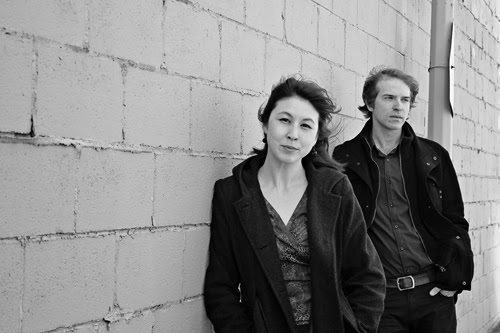
The Lone Crows have navigated themselves away from the danger of musical purgatory by producing one of the best debut blues-rock albums my ears have had the pleasure of hearing. Yes, The Lone Crows are that good. The album is a ludicrously self-confident effort without a hint of arrogance, which is equally impressive given its humble origins. The Lone Crows initially started gigging in 2009 and by mid 2011 their sound had matured into the blues rock style, which dominates this album. The band consist of Tim Barbeau– Guitar, Vocals, Julian Manzara– Guitar, Andy Battcher– Bassm Joe Goff- Drums, Percussion

Photo: Sif Nave https://www.facebook.com/sif.nave/photos_albums
https://www.facebook.com/sif.nave/photos_albums
With old man questions at the ready I spoke to Tim Barbeau and Julian Manzara about the album and their influences.
JK: What was the main influences behind the album?
JK: Which is your favourite track and why?
JK: If you could have a guest artist to appear on your next venture who would it be (dead or alive) and why?
Julian: John Paul Jones on organ. Who needs a another guitar player?
The Lone Crows – The Lone Crows
The Lone Crow opens the album and is built on the rock solid foundation of Joe Goff’s drilling drum work, which maintains the momentum throughout the tracks 3.30 minutes. The track is a fine opener that is either going to open a Pandora’s box of treats or runs the risk of firing the bands best shot first. The grinding blues chords of Can’t Go Home Again prick the ears up. The track contains all the characteristics of a classic stadium anthem. Bursting with its crowd induced chorus line. By this stage the listening ear is also thinking where the journey goes next. Heard You Call would not go a miss on a classic Thin Lizzy, or Santana album with its exquisite guitar work. You Got Nothing moves deeper into blues-rock territory and is properly the most accomplished track on the album as it builds and moves through various shifts in structure. Moonshine is the album’s thoughtful ode to loves drunken influences “You’ve got sunshine in you’re your heart and I’ve got moonshine in mine.” The Ghost is a 6-minute blues thumping instrumental romp, which reminds me of The Doors live at their poignant best. When I Move On takes us back up a notch with its hard rock swagger that Jimmy Page would be proud of. The Crawl bursting at the seams with pounding blues guitars and bass it weaves through its 5.12 minute existence to set up the albums final track brilliantly. Runnin’ Through My Head brings the album to its close with its pounding bass line. In 1974 somebody passed me a copy of The Free’s classic Fire and Water album. and Runnin’ Through My Head would not be a weak link if added to the Fire and Water Album. I cannot really pay the track a better complement.
Structural variation in both individual track and the manner in which the whole album has been put together keeps the listener engaged throughout. This is an album in the traditional sense rather than a collection of songs that have accidentally been pulled together. There has obviously been some handwork and thought given to it overall production. There are of course some flaws, but in the scheme of things they add to its character and do not undermine the solid foundation the band has made. I for one look forward with excitement to the next instalment, which I understand from the guys is currently in the pipeline.
Buy this album now! £4.80 for the download or good old vinyl for £7 (plus £6.20 postage). If you happen to be in Germany during May 2014 you can pop along to see the band play live. More details here https://www.facebook.com/freakvalley. I complete my listening, take the vinyl off the deck, carefully place back into the sleeve and put it on the shelf next to my Led Zeppelin vinyls.