Tag Archives: London

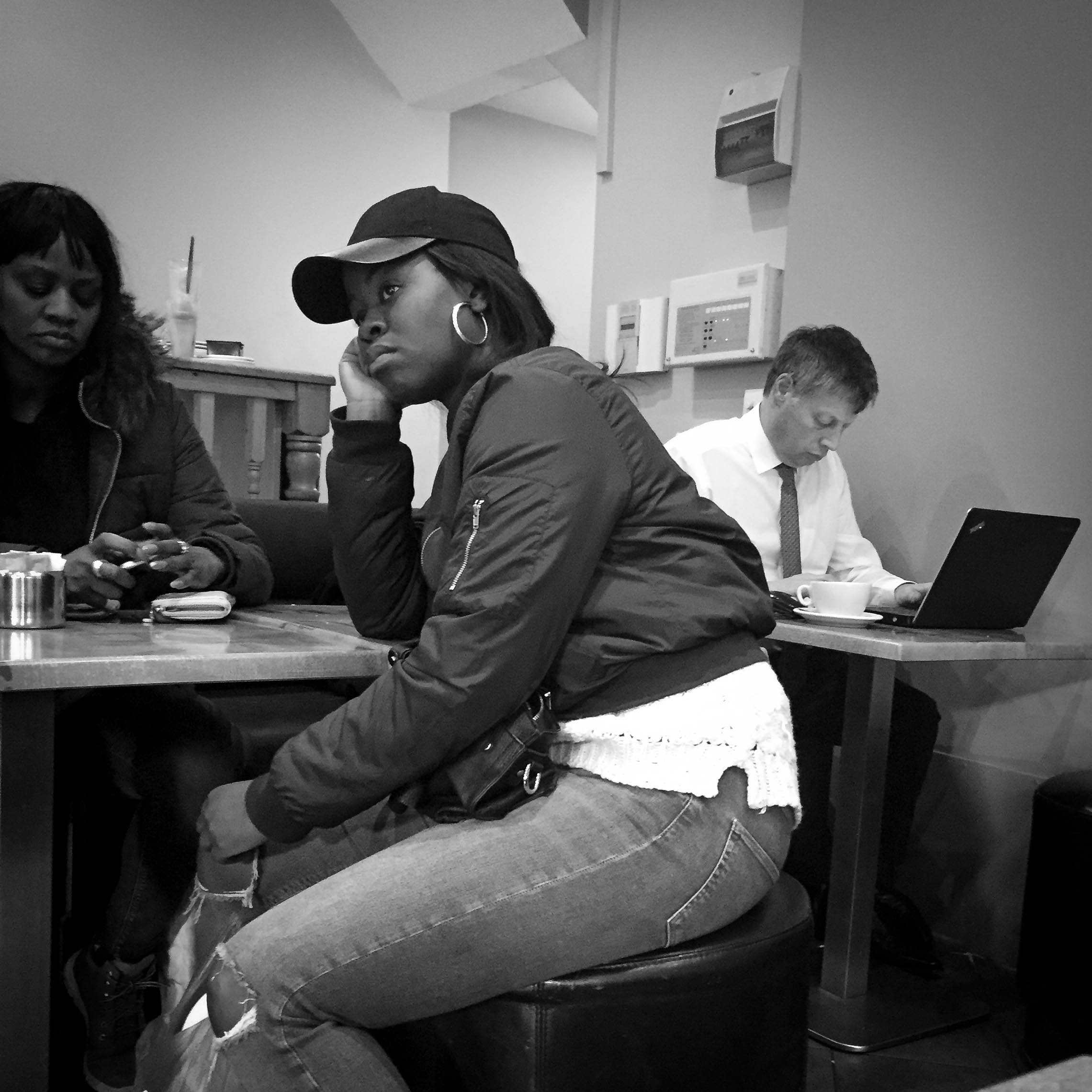
caught in a lift with A nostalgic playlist on loop

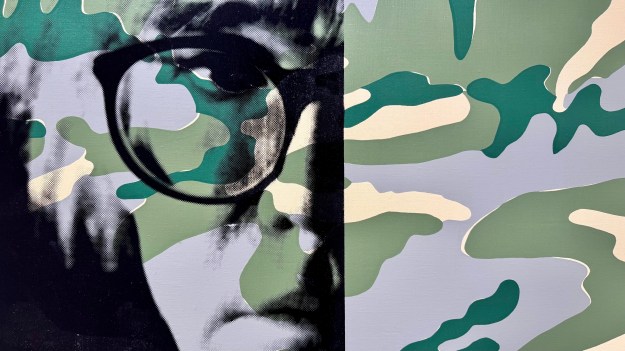
The Moco Museum in London assembles an enviable roster of late-20th-century cultural heavyweights: Banksy, Warhol, Emin, Basquiat, Haring, etc.

On paper, such a line-up ought to radiate urgency, wit, and the frisson of artistic risk. In situ, however, the experience is oddly inert — less a gathering of vital provocateurs than a tableau of hustlers, lingering on a street corner long after their work has been codified, packaged, and sold.

This inertia is not rooted in the intrinsic quality of the works, or indeed the artist themselves, but within Moco’s tightly curated, boutique-style environment, the edge is blunted. Warhol’s prints, originally a calculated affront to distinctions between art and commerce, now appear as well-worn brand assets, their iconography as familiar — and as unthreatening — as the consumer products they once critiqued.

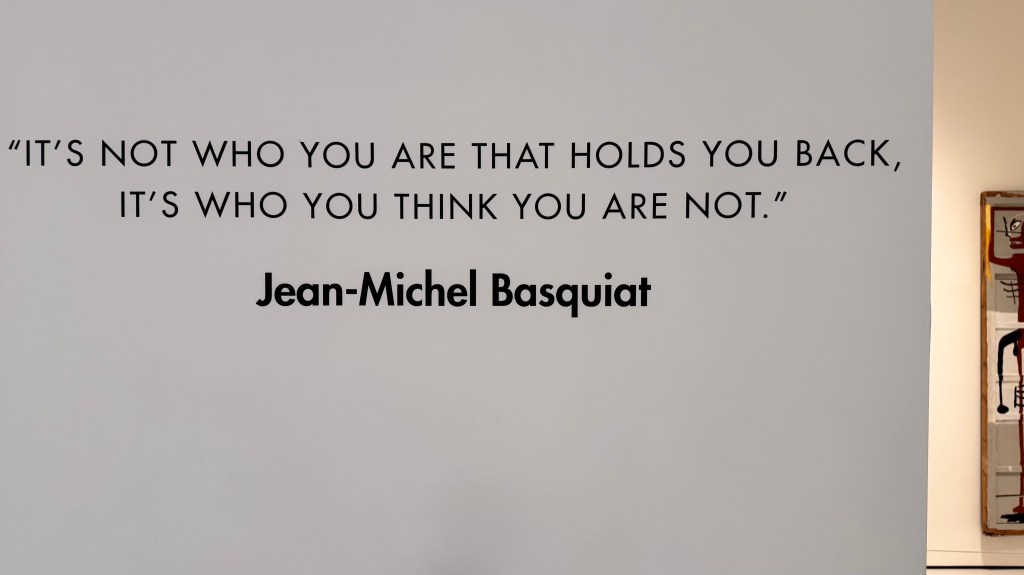
Similarly, Tracey Emin’s confessional works, initially brimming with the intensity of public vulnerability in this setting feel as a predictable as a drunk uncle retelling stories at a family gathering. Basquiat’s canvases, infused with graffiti influences and a sense of urban immediacy, are diminished to mere high-value décor, their socio-political significance overshadowed by the mitigating effects of wall text and carefully orchestrated lighting.
Banksy’s inclusion underscores the paradox. His practice depends upon context — the unmediated encounter on a city street, the intervention into public space — to function as political commentary. Here they are divorced from site and circumstance, the work shifts register: from subversive gesture to collectible commodity. The transaction becomes aestheticised rebellion, stripped of consequence.

The result is a museum experience that frames radicalism within a safe, consumable format. It invites visitors to encounter these figures not as insurgents within the cultural field, but as fixed points in a canon that has already been stabilised for mass circulation. The presentation favours recognisability over confrontation, producing an environment in which dissent has been fully domesticated.

What emerges is a broader institutional question: can works born of defiance retain their potency within the commercial and museological apparatus that ultimately validates them? Moco’s exhibition suggests that, once integrated into the art-market economy, even the most oppositional practices risk becoming part of the very system they once sought to disrupt.

If Moco’s upper floors feel like a nostalgic playlist on shuffle, the basement is a live wire. Go for that head to the basement for the Marina Abramović collection. Abramović’s work resists embalming because it was never about static images or neat objects. It is about endurance, presence, and the unmediated exchange between artist and audience. Even when translated into photographs, videos, and documentation, her performances retain a charge — the sense that something visceral, uncomfortable, and unpredictable once took place. The gaze still meets you. The tension still hums in the air. You can’t domesticate the feeling of holding another person’s gaze for minutes at a time. There is no easy reproduction, no endlessly shareable clip that captures the weight of the moment.

Standard tickets £25 with concessions for students, over 65s, etc.
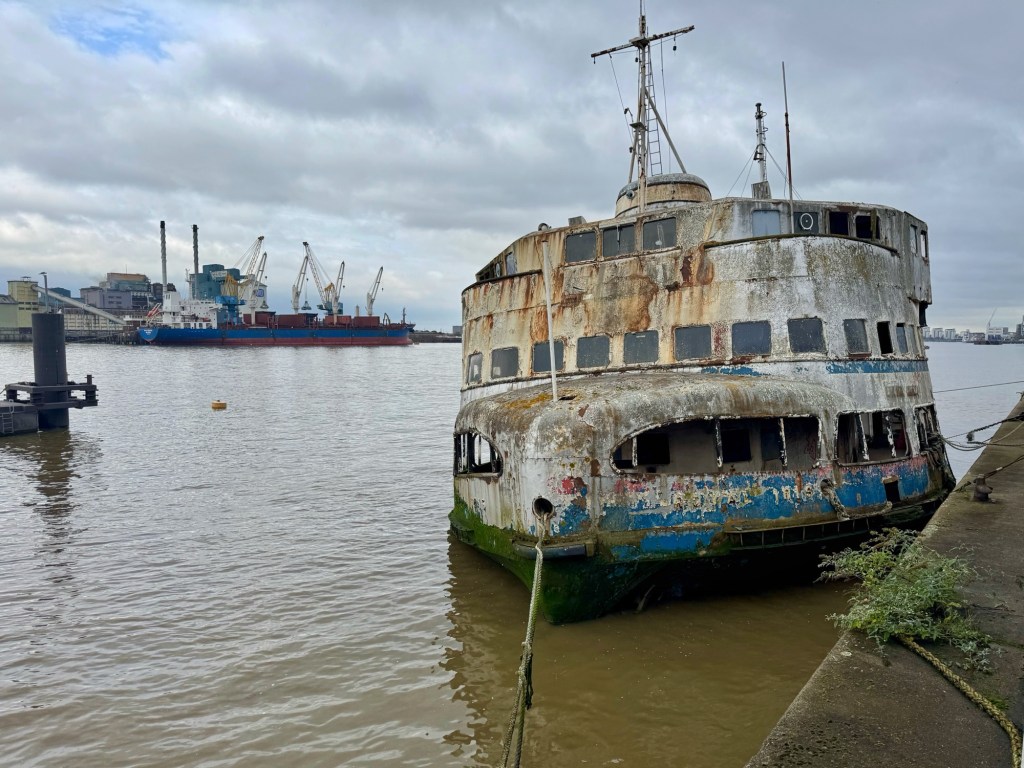
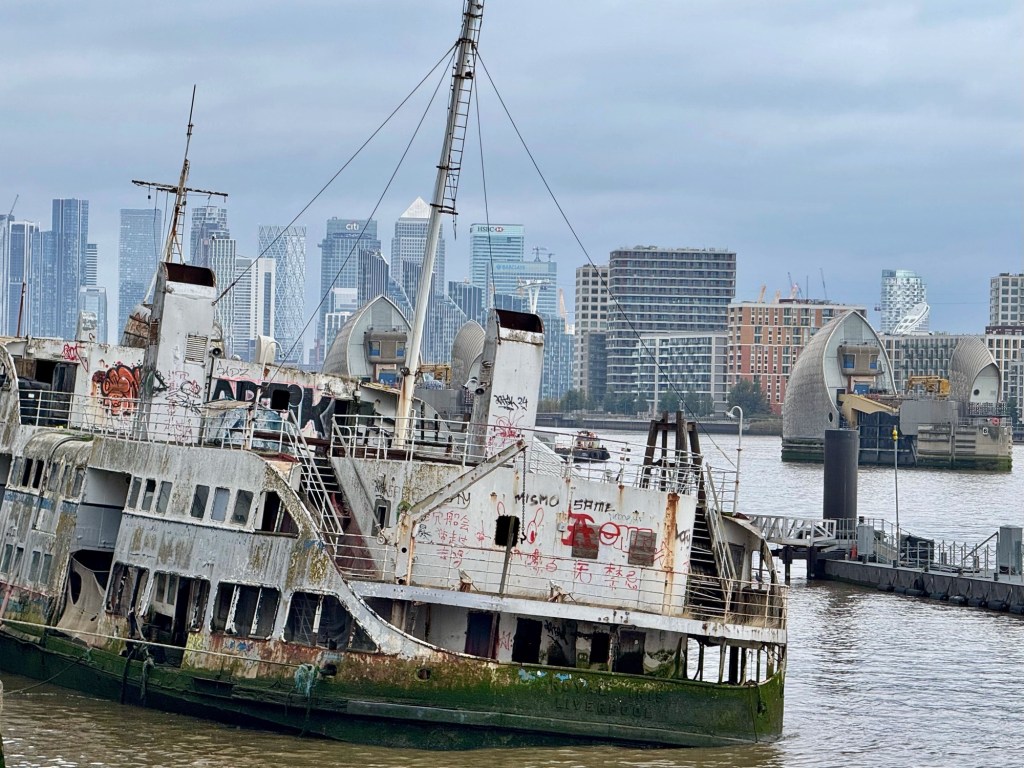
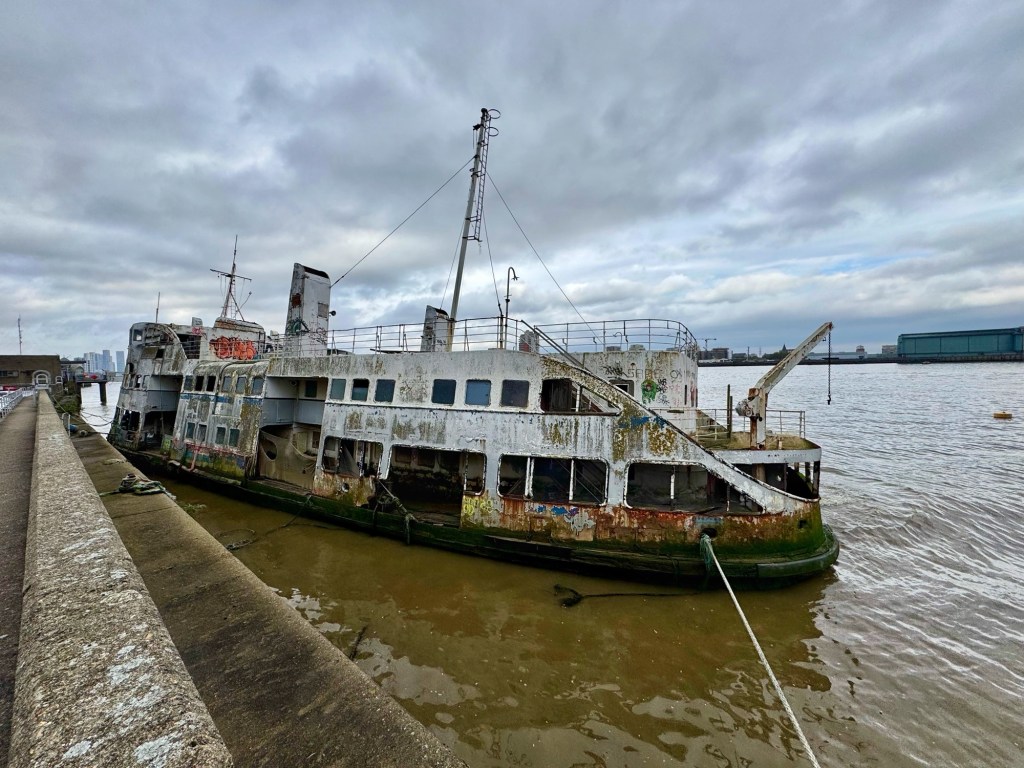
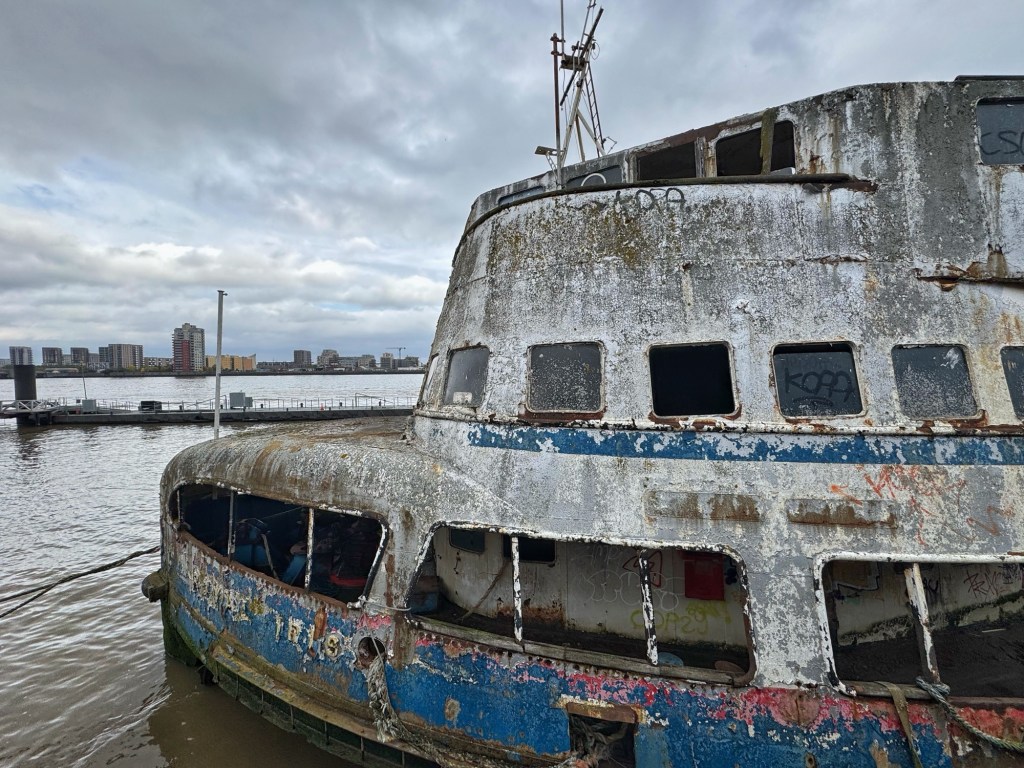
Royal Iris

The Royal Iris, originally named MV Mountwood, was constructed in 1950-1951 by William Denny and Brothers Shipbuilders in Dumbarton, Scotland.

Commissioned by the Wallasey Corporation to serve as a passenger ferry for the Mersey Ferry service, operating between Liverpool and the Wirral Peninsula.

First of its kind, being the first non-steam powered ferry to operate on the Mersey River. The Royal Iris was powered by diesel engines and had a capacity of over 2,000 passengers. Its sleek and modern design, with strong Art Deco influences, made it an iconic vessel of its time.

Serving as a passenger ferry for several decades, she became known for her comfortable seating, spacious decks, and panoramic windows that offered stunning views of the Mersey River. In addition to its regular passenger service, the Royal Iris also played a significant role in the music scene of Liverpool. In the 1960s, it became a popular venue for rock and roll concerts, hosting performances by well-known bands such as The Beatles, The Who, and Jerry Lee Lewis. These events, known as the “Riverboat Shuffles,” attracted large crowds and contributed to the vessel’s cultural significance.

However, as the years went by, the Royal Iris started facing financial challenges and was eventually decommissioned in 1991.

Although plans were made to convert the ferry into a floating entertainment venue, they did not materialize, and the Royal Iris fell into disrepair. Today, she rests on the banks of the River Thames near the Thames Barrier in London.

Commuters

I have to confess something: when I moved from Bristol to London in the late ’90s, I was like a kid with an oversized train set. The London Underground fascinated me. I never quite understood why my colleagues would arrive at work every morning with a chorus of complaints — the wails, the grunts, the exasperated sighs.

Sure, the Tube wasn’t always pleasant. Especially on a scorching day between Brixton and Vauxhall, crammed into an overcrowded carriage, waiting endlessly for the lights to change and listening to those unintelligible announcements from the driver.

Still, I found solace in slipping on my headphones and watching the underground world unfold around me. It was like its own secret society, governed by an unwritten set of rules enforced with iron discipline:

  • Don’t acknowledge anyone else.
  • Pretend you’re reading something important.
  • Do not disturb.
  • Avoid all physical contact.
  • Ignore others’ misdemeanours.
  • Master the art of pivoting and balancing against gravity.
  • Occasionally, gaze at your own reflection.
  • Rush hour? Be a complete and utter tosser.

Back then, social distancing was an art form. After a while, you might nod briefly at a familiar face — a small, silent greeting in the chaos.

During my first week working at Lambeth Council, I was still swimming through a sea of new names and faces. Boarding the Tube at Brixton one morning, I spotted one of my new colleagues at the far end of a fairly full carriage. I caught his eye and gave him a firm nod. Nothing. He looked away.

A few moments later, he glanced my way again. I smiled and nodded once more. Still no response — just the uncomfortable shuffle behind a fellow passenger, who acted as a human shield. His reflected gaze in the window met mine again. I returned the stare.

Feeling a bit miffed, I thought, Well, fuck it, you miserable sod.

As the train pulled into Stockwell, I noticed him glance again through the window’s reflection. I looked away, annoyed. Doors closing, next stop Vauxhall. Suddenly, he leapt off the train, leaving me behind.

He stood tall on the platform, locking eyes with me as the train pulled away. His gaze screamed, “Who the hell are you?”

It was only then I realised that my silent, unresponsive Tube companion was none other than Mick Jones — guitarist from The Clash.

And just like that, our paths never crossed again.

London 22nd March 2018

Confront hate with love. Let the people of hate know we are all better than this and we are not afraid. Thank you to the police, emergency services and ordinary people who sought to help the casualties. 

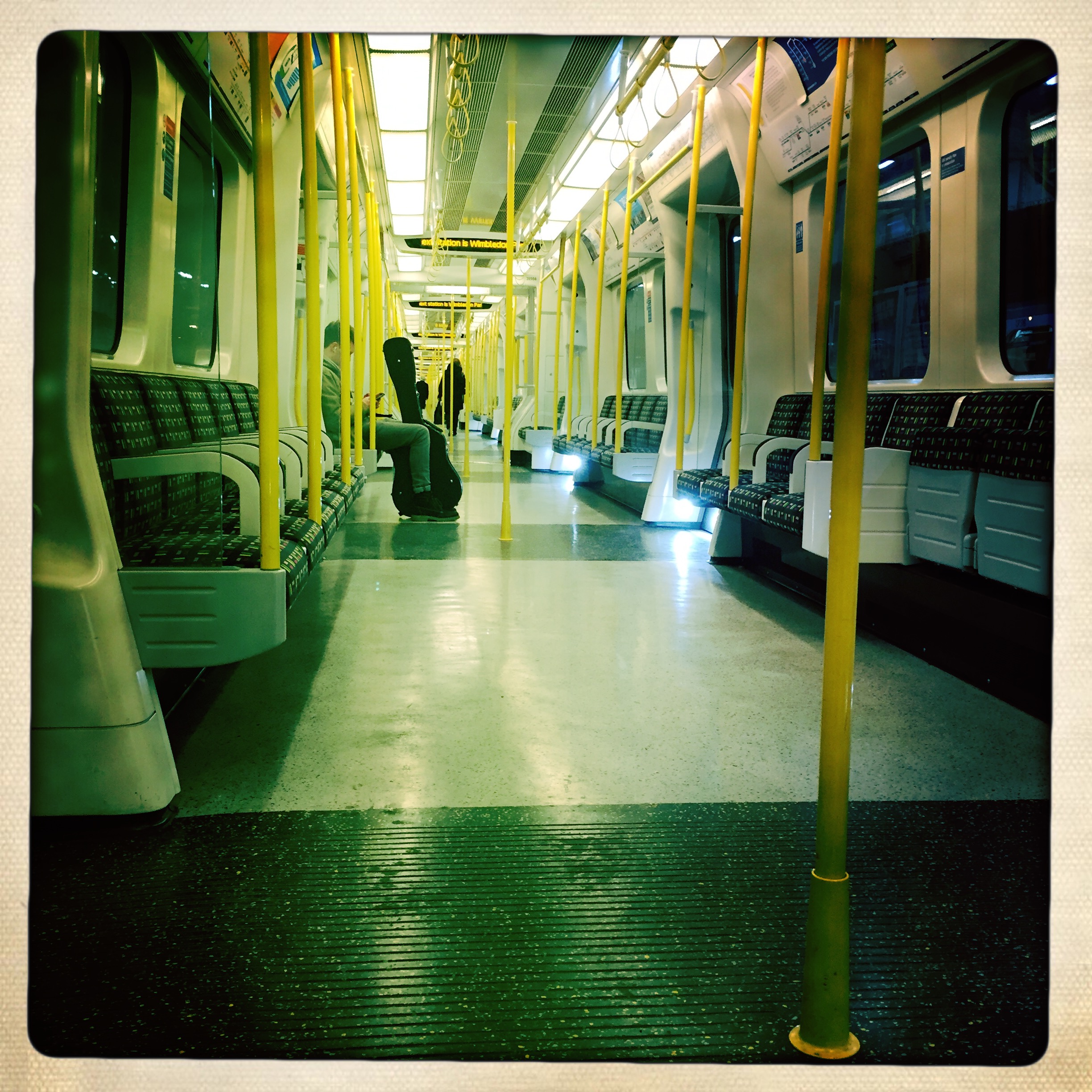
Babylon

The empty screeching late night tube train collides through its tunnels with ear piercing velocity.  The empty seats until the lonely musician gets on board for his journey. Another thankless gig no doubt, playing to a half caring audiences unaware of the struggles and the rip-off venues. He looks despondent, but no doubt tomorrow he will continue his search for his personal Babylon.

The hustle of the cafe and smells of coffee and food being prepared, the noise of street life penetrates through the open windows. searching for seats and amongst this background, people find time to contemplate and pause for thought.
26185255312_3e6cf96ef8_o

West Norwood Cemetery, London

West Norwood Cemetery embraces dignified silence, being reflective, there is a deeply respectful and humbling sensation from visiting this cemetery. An appreciation of ones own allotted space in this metropolis we call a world that carries on regardless of individual circumstances. The realisation that time is the most precious resource we have freely inherited from our parents. Cemeteries are indeed emotive spaces and nowhere is this more evident than West Norwood Cemetery.

One of the magnificent seven cemeteries of London and recognised as a site of major historical, architectural and ecological interest. West Norwood Cemetery has the reputation of holding one of the finest collections of sepulchral monuments in London, featuring 69 Grade II and Grade II listed buildings and structures, including a dedicated Greek Orthodox necropolis with 19 listed mausoleums and monuments. Its extensive Gothic Revival architecture qualifies it as one of the significant cemeteries in Europe. The cemetery has a very active Friends of Group that aim to increase knowledge and appreciation of the Cemetery. The group hold general tours on the first Sunday of every month, special themed tours of the cemetery during the summer, and meetings with talks during the winter.

Thames

I always find Camden to be one of those places that draws people for many reasons. The tourists, trendies, drunks and druggies all seem to collide together. As night falls the area becomes a little more tense and people start to be a little more aware of one another.