Author Archives: John Kerridge

Unknown's avatar

About John Kerridge

I have a camera, drink tea and trip on untied shoe​ laces.

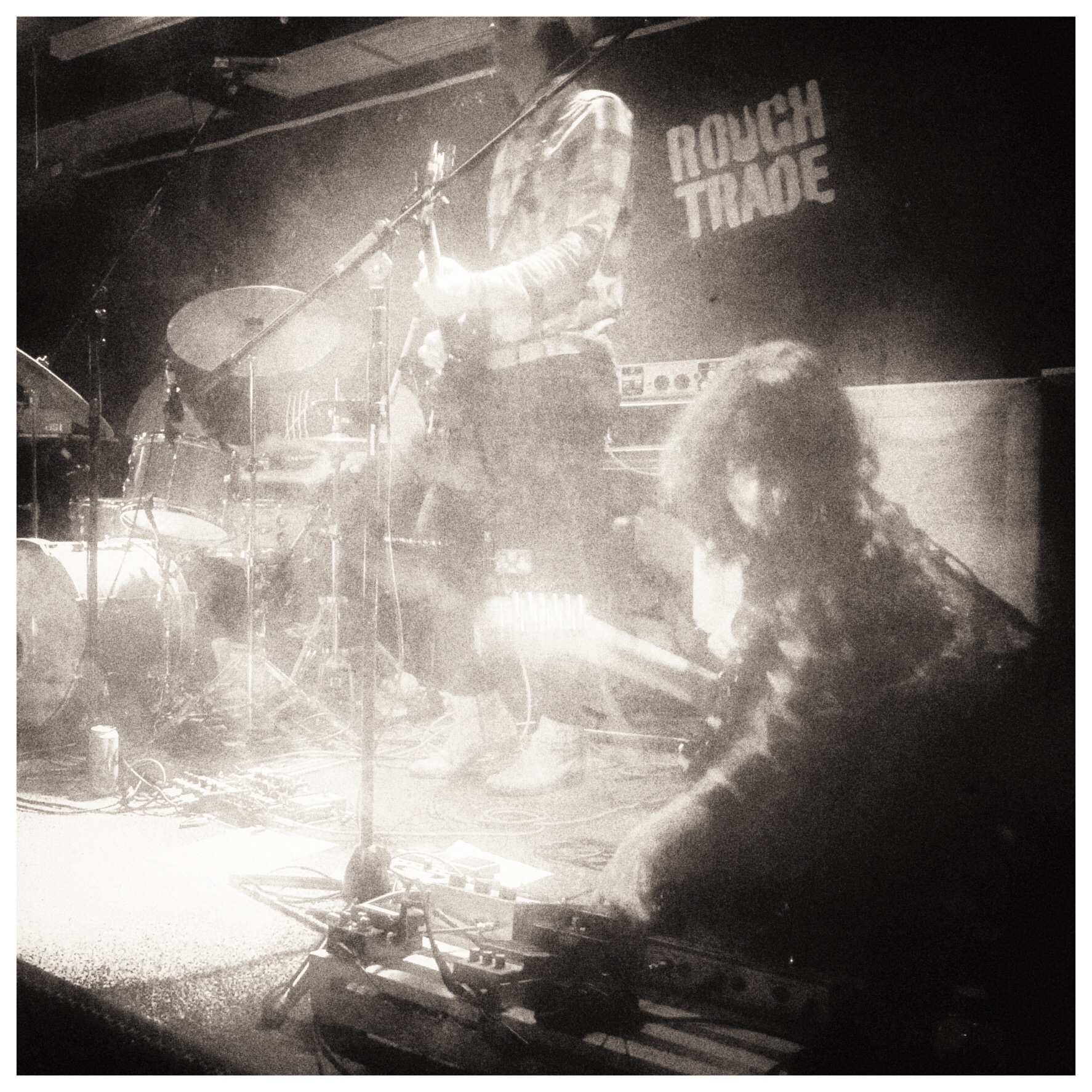
Lorelle Meets The Obsolete: Bristol Rough Trade 15.01.19

When the Person You Knew Becomes a Stranger

I want to share a recent experience that shines a small but revealing light on a troubling trend sweeping communities—not just here in the UK, but in the US and beyond. It’s about perception, personal accountability, and the double lives some people choose to live. It’s about how we engage and communicate as we shift between our real, everyday lives and the virtual world of social media, where the person you think you know can suddenly feel like a complete stranger.

Most importantly, it’s about how ignorance is preyed upon to deliberately fuel hate and toxicity—poison that has seeped deep into our culture and been weaponized by politicians. George Orwell’s classic 1984 introduced us to “doublespeak,” where words mean their opposite: when Big Brother says “Love,” he means hate; when he says “Peace,” he means war.

When my family and I left Salisbury after seven happy years and returned to Bristol, we left behind a circle of friends who enriched our lives and whom we still cherish. Our Salisbury neighbours, the vast majority, treated us with kindness and warmth. Among them was Peter—a handyman, a regular visitor, someone we trusted. Even our dog, Poppy, lit up at his voice. Peter was there when we needed him, or so we thought.

But once we settled in Bristol and reconnected with friends on Facebook, a harsh and unsettling truth emerged. Suddenly, hateful posts and images from extreme right-wing groups started appearing in my feed—posts far beyond shock-jock tastelessness and often linked to groups known for violence.

The source? Peter.

He posted ugly, offensive content. His obsession with reinstating the Golliwog doll as a symbol of “Britishness” was particularly disturbing. After my wife sent him a heartfelt message calling out his behaviour, he responded with nothing but a thumbs-up emoji—and carried on.

I decided to confront his hate head-on, not expecting to change his mind, but hoping to plant a seed of doubt in his followers and family who witnessed the online clash. It didn’t surprise me that hateful voices quickly retreat when challenged calmly, only to sneak back once they think no one is watching. That’s exactly what Peter did.

Recently, noticing his posts getting fewer likes, Peter launched attacks on my Facebook page. He’s a staunch supporter of Brexit, UKIP, and Trump-style politics—his bigotry clearly intertwined with his politics. Watching him stumble and flail as my friends challenged him online became one of my moments of the year.

Things escalated further after he tried to use Remembrance Sunday to score cheap political points. I simply asked him to show some respect for those who made the ultimate sacrifice. Not long after, he returned to his Golliwog fixation. When I challenged him again, he defended himself with the tired excuse of having non-white friends, then blocked me after I asked if he’d buy his friends’ children such a doll for Christmas.

Peter is a textbook case of Orwellian doublespeak. What he says and what he does are worlds apart. The toxic content he shares is fed to him by extremist groups he chooses to associate with—and in doing so, he becomes a reflection of them.

Why share this? First, I’m relieved Peter is no longer part of our lives. But more importantly, we live in dangerous times when decency and moderation seem out of fashion, and reactionary, nationalist, racist politics try to claim space. These voices are not the mainstream, and they never will be.

Those of us who know better must stand united, calmly resist, and push back the hate under the rocks it crawled out from. Have the courage to challenge those who mean harm, no matter who they are. And remember the wise words of Bill Hicks: “Love all the people all the time.”

Lensmen: Mr Wolfs, Bristol 29.10.18

29.10.18: As I’ve said previously about Lensmen that they are one of the best bands on the independent music circuit at the moment. I finally got to see them perform live Monday evening. A fair collection of vagabonds, strays and inquisitive minds are here tonight to witness them perform which is surprising given its a bitterly cold Monday evening outside. Lensmen are providing the headline set under the SongSmith event, which promotes new and emerging Bristol talent. Its a really solid performance, brooding bass, synths and beats hovering below twisted storytelling that grows in confidence as the set progresses. For those who prefer their music with intelligence then cast your eyes and ears in the direction of Lensmen. You will not be disappointed in my honest and humble opinion. My previous write up with links to the Lensmen’s music, future dates and adventures can be found here.

Tom Robinson (Band): It’s Yesterday Once More

24.10.18: Nostalgia is a ruthless beast.

I’ve always tried to keep it at arm’s length—especially after witnessing the Sex Pistols’ 1996 reunion at Finsbury Park. Watching legends unravel their hard-earned reputations in mere moments was a brutal lesson in how quickly credibility can crumble. Punk, that raw, rebellious force birthed in the late ’70s, has often been chewed up and spit out by time and nostalgia’s relentless grip.

But then there’s that winter of 1977, when I was just 16, clutching a ticket alongside my mate Ste (sadly no longer with us). We hopped a bus from our gritty hometown of Stockton-on-Tees to Middlesbrough’s Rock Garden, ready to soak in the live fire of the Tom Robinson Band.

This wasn’t just another gig—it was a rite of passage, minus parental permission, with a detour through the infamous North Eastern pub. There, I knocked back two pints of Double Diamond, soaked up the boorish testosterone-fueled banter—racist, sexist, unapologetically rough—and took my first shot at pub pool (utterly demolished). I chose a track on the jukebox, The Damned’s New Rose, for the first time, then made a flimsy excuse to rush outside, gulp fresh air, and embarrass myself by throwing up in a nearby alleyway.

But within an hour, I was lost in a throng of ragged young punks, guitars jangling and voices raw, belts echoing “Glad to be Gay.” Today, that anthem might barely raise an eyebrow—even in Britain’s most conservative corners. But back then? Singing those words carried the real, looming threat of violent attack—from the hostile crowds, from the police, from a world steeped in queer bashing and racial abuse as everyday horrors. Nowhere was this uglier than in the pubs and social clubs of 1970s working-class north-east England—a toxic stew of culture I was born into, complicated and difficult to untangle.

I remember Tom’s voice that night—nervous but fierce—as he introduced “Glad to be Gay.” The crowd was hesitant at first, unsure how to respond to this bold, singalong defiance. Sweat-soaked bodies bounced to the roaring guitars, eyes flickered between confusion and courage. By the second chorus, something shifted—a raw, electric unity erupted. It was a moment where change stirred, barely perceptible yet monumental.

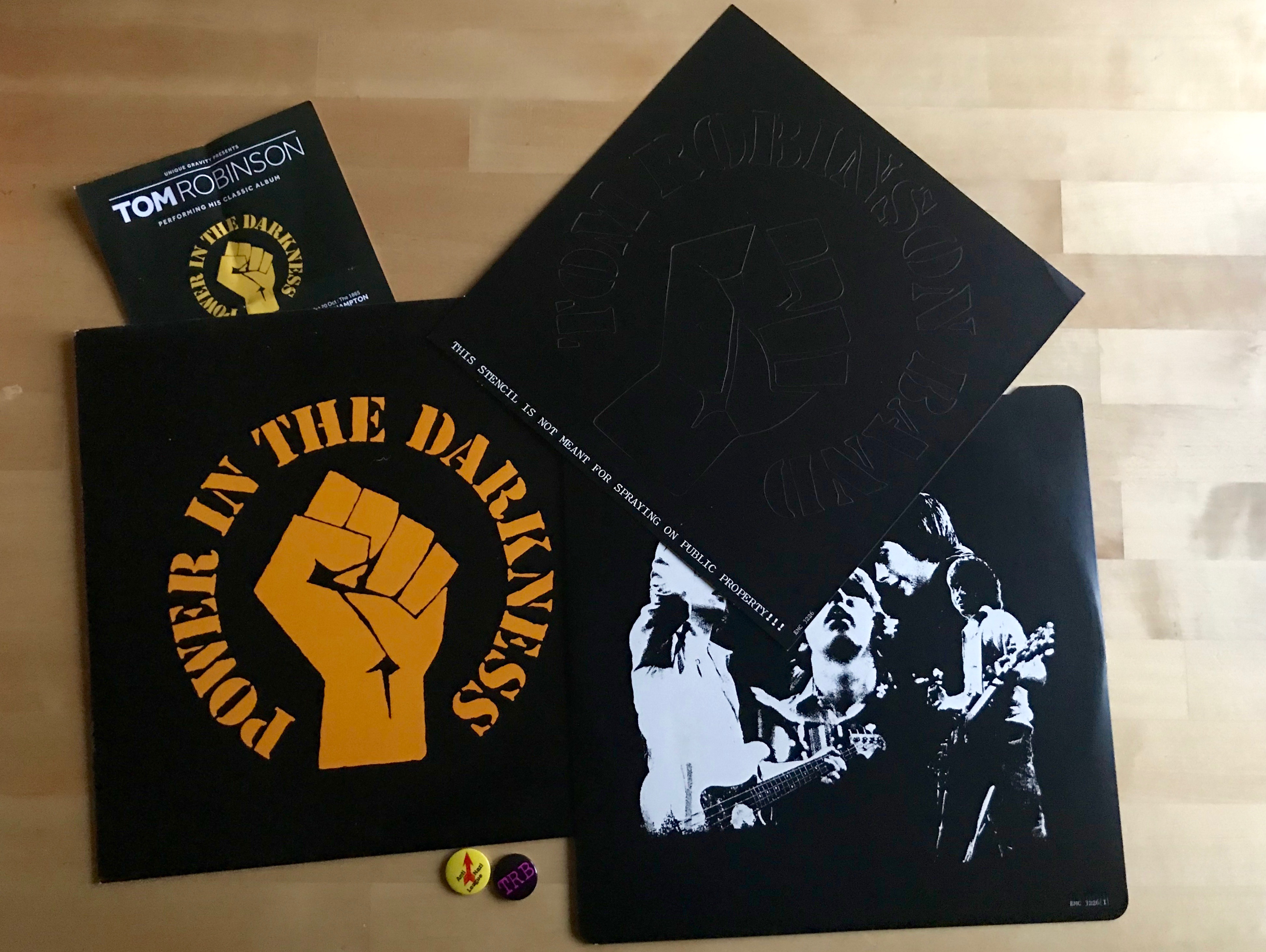
Fast-forward 41 years. Here I am at The Fleece in Bristol, capturing Tom Robinson performing his seminal Power in the Darkness album live, marking its 40th anniversary. And let me be clear—this remains a truly great rock record, blistering and bold. Its lyrics don’t just chart how far we’ve come—they’re a sobering reminder of how far we can still fall back into the shadows.

Tonight, I raise a glass—not only to my old mate Ste, but to Tom Robinson’s courage, his art, and the band of young rebels who crafted an album that shaped my politics, my understanding, and my fight.

Glasvagas: The Thekla, Bristol 17.10.18

— a vessel both unforgiving and electrifying.

For those who haven’t yet experienced the raw, gritty soul of Bristol’s Thekla, imagine an old ship moored deep in the Mud Dock, its wooden bones creaking under the weight of decades of music history. Bands who step on its stage shed any illusions of comfort — there’s no hiding here. Over the years, I’ve witnessed countless artists emerge from bedrooms, garages, and studios only to have their craft tested, stretched, and laid bare against the harsh, unforgiving elements of this floating fortress.

Tonight, the atmosphere buzzes with a tangible electricity. The 400-capacity room is packed to the rafters, a sell-out crowd buzzing with anticipation for Glasvegas—a band returning to the stage to perform their self-titled, platinum-selling debut album from 2008 in its entirety. A decade has slipped away since that landmark release, yet the album still resonates like a classic, effortlessly blending layers of swirling guitar feedback with harmonies reminiscent of the Ronettes. Frontman James Allan’s lyrics—brittle, raw, and steeped in loneliness, love, and loss—cut deep, proving timeless in their emotional weight.

From the moment the first chords ring out, there’s no sinking into the depths tonight. The opening thirty minutes unfold as near-perfect rock ‘n’ roll theater—tight, passionate, and filled with a palpable urgency. As the night progresses, something extraordinary happens. Four hundred voices rise in unison, singing word for word, line for line. The crowd’s devotion is so overwhelming that the band themselves pause, stepping back from their instruments to soak in the moment, the feedback, the powerful connection.

Glasvegas hasn’t just played their seminal album—they’ve resurrected it, reminding everyone in the room why this record still matters, why these songs still cut to the bone. Tonight, the old ship didn’t creak under the weight of nostalgia—it soared.