No matter what your politics. No matter what your faith. No matter what your class. No matter what your sexuality. No matter what your race. If you do not have hate in your heart I have common ground with you. At times like this we need to stick together and reject the dark extremists of hate who seek to cast a shadow over our sunlight. Love all the people all the time.
Start Point is a promontory in the South Hams district in Devon, England. Close to the most southerly point in the county, it marks the southern limit of Start Bay, which extends northwards to the estuary of the River Dart.
I’ve recently been working on the central themes for my first exhibition to be held in February 2015. One of these themes is likely to be Dungeness, which as my mate Derek will confirm forms the largest natural shingle beach in Europe. It is also classified as Britain’s only desert by the Met Office. In addition to its nuclear power station and lighthouse there is a scattered collection of dwellings, sheds and discarded boats. Some of the homes, small wooden houses in the main, many built around old railway coaches are owned and occupied by fishermen, whose working boats also lie on the beach. The most famous house is Prospect Cottage, formerly owned by the late artist and film director Derek Jarman. His garden reflects the bleak, windswept landscape of the peninsula. The garden is made of pebbles, driftwood, scrap metal and a few hardy plants. A further house of Dungeness is represented on the cover of Pink Floyd’s album “A collection of great dance songs”. These six shots are working drafts from the first batch of photographs I recently took.
On July 23, 2011 singer Amy Winehouse was found dead in her London apartment at the age of 27. During her short life, Winehouse accumulated a net worth of $10 million, but like so many other celebrities she may end up earning more money in death than in life. Dying young captures the eternal spirit of a musician and artist, which helps create a mythology that often projects the person behind their human fragility to one of almost god like status with fans increasingly desperate to be connected in some way with their deceased hero.
The first sign of this phenomena was actor James Dean who died in a car crash September 30, 1955 (aged 24). Dean’s major films identified him in roles like Jim Stark’s Rebel Without A Cause depicting the dilemmas of a teenager, who feels that no one, not even his peers, can understand him. During the 70s no self-respected adolescent facing the doomed prospect of being young would be seen without their James Dean t-shirt. Today James Dean merchandise is in abundance and fans can if they so wish reacquaint themselves with their hero via the James Dean doll for £25. Michael Jackson posthumously earned millions from music video marathons, radio airplay, and album sales immediately following his death. The dad of death merchandise goes to the proclaimed King of Rock n Roll Elvis Presley. who remains one of the most celebrated musicians of the 20th century. Commercially successful in many genres, including pop,blues and gospel, Elvis is the best-selling solo artist in the history of recorded music. He died August 16, 1977 (aged 42). The King of Rock ‘n’ Roll has long earned money after his death, largely due to an immense portfolio of licensing and merchandise deals and Graceland admissions. Given the manner of the Kings death some of the mechanise should, shall we say is beyond contempt?
Poor
Very Poor
Just bad
Purchasing one of these dolls is like buying Courtney Love lifelong memberships to the NRA. (copy right Bill Hicks)
“You Know You’re Right” was written in 1993, making it one of the last known Kurt Cobain compositions. A studio version of the song was recorded at Nirvana’s final session, on January 30, 1994. By 5th April 1994 Cobain was dead at the mere age of 27 following several attempts at suicide he finally succeeded. The recording became the object of much legal wrangling between Courtney Love and the surviving Nirvana bandmates Dave Grohl and Krist Novoselic. Grohl and Novoselic had wanted the song for a planned Nirvana box set, but Love blocked its release, and a battle over Nirvana’s legacy ensued. In September 2002, the lawsuit between Love and the surviving Nirvana members was settled, and it was announced that “You Know You’re Right” would arrive on a one-CD history of the band. What is not disputed is the business empire that emerged following Cobain’s death, books, films, posters and of course the obligatory t-shirt that is later years would also include Cobain’s suicide note. Fans may also want to purchase the Kurt Cobain doll with replicated rife, so to rein-act their heroes desperate final hours. Death of course does not stand in the way of the deceased artist contributing to new commercial venture. Several artists have been resurrected from the grave to help generate new sales and revenues streams for their “estate.” The advent of new technologies has also enabled new material to be produced (sic)! Unforgettable is a popular song written by Irving Gordon. The most popular version of the song was recorded by Nat King Cole in 1951. In 1991, after Elvis Presley’s musical director Joe Guercio had the idea, Cole’s original 1951 recording of the song was edited and remixed to create a duet with his daughter, Natalie.
John Lennon was resurrected in 1995 through the magic of technology to ghost voice with the remaining Beatles on the lacklustre Free as a Bird track that did little to undermine Lennon’s image as a creative icon. Originally recorded in 1977 as a home demo by John Lennon the track was released as a single by the Beatles, 25 years after the Beatles break-up and 15 years after the death of Lennon. George Martin, who had produced most of the Beatles’ 1960s recordings, turned down an invitation to produce Free as a Bird due to, “hearing problems” though he subsequently managed to produce and direct the Anthology series. The track ends with the voice of John Lennon played backwards.The message, when played in reverse, is “Turned out nice again.” A sentiment that would not be shared by many die hard Beatles fans given production for the track went to Jeff Lynne of Electric Light Orchestra fame. So it came to pass that the Beatles would be morphed into a derivative of the ELO sound and production. There was to be one more foray into Lennon’s demos with the equally suspicious Real Love track, which would be thankfully be the last released record of so called new material credited to the Beatles. The Beatles of course set the business template for pop merchandise during the 1960s with everything from t towels, models to lunch boxes being mass produced to support album releases. Given the band by the mid to late 60s were predominately a studio based enterprise this source of merchandise became an increasingly important element of their business.
Hmmmmm No.
When Dr. John Bannister pronounced Jimi Hendrix dead on September 18, 1970 the story of this iconic musician should have come to graceful ended with his legacy being the foundation for old and new fans alike, although unlike his predecessors Hendrix was already subject to the unscrupulous dealings of the dark side of the music business. By 1967, as Hendrix was gaining in popularity, many of his pre-Experience recordings were marketed to an unsuspecting public as Jimi Hendrix albums, sometimes with misleading later images of Hendrix.The recordings, which came under the control of producer Ed Chalpin, with whom Hendrix had signed a recording contract in 1965, were often re-mixed between their repeated reissues, and licensed to record companies. Hendrix publicly denounced the releases, describing them as “malicious” and “greatly inferior.” These unauthorized releases have long constituted a substantial part of Hendrix’s recording catalogue, amounting to hundreds of albums.In 1993, MCA Records delayed a multi-million dollar sale of Hendrix’s publishing copyrights because Hendrix’s father Al Hendrix was unhappy about the arrangement.Under a settlement reached in July 1995, Al Hendrix prevailed in his legal battle and regained control of his son’s song and image rights. He subsequently licensed the recordings to MCA through the family-run company Experience Hendrix LLC, formed in 1995. In August 2009, Experience Hendrix announced that it had entered a new licensing agreement with Sony Music Entertainment’s Legacy Recordings division which would take effect in 2010. Legacy and Experience Hendrix launched the 2010 Jimi Hendrix Catalog Project, starting with the release of Valleys of Neptune in March of that year.
In the months before his death, Hendrix recorded demos for a concept album tentatively titled Black Gold, which are now in the possession of Experience Hendrix LLC. The demo tapes consist of 16 songs, all created by a solo Hendrix armed only with his voice and a Martin acoustic guitar. Months later, at the Isle of Wight Festival, Hendrix gave the tapes to his drummer Mitch Mitchell to have him listen and comment on the necessary rhythm section requirements for recording the songs. After Hendrix’s death in September 1970, Mitchell simply forgot about the tapes, apparently unaware that they were one-of-a-kind masters. For 22 years, the Black Gold tapes sat in a black Ampex tape box that Hendrix tied shut with a headband and labelled “BG”. It was not until 1992 that Tony Brown, the avid Hendrix collector and biographer, interviewed Mitchell and learnt that the mythical Black Gold tapes, thought to have been stolen from Jimi’s apartment by vandals who ransacked it for collectibles soon after his death, were lying in Mitchell’s home in England. Mitchell also possessed the Martin guitar that was used to create the material. Brown was invited to review the tapes and published a summary of his account, but to date the material has not been released and is not available to Hendrix collectors. Mitch Mitchell’s association with Experience Hendrix LLC was an indicator that Black Gold might see worldwide release. Mitchell’s death, however, means that the future and whereabouts of Black Gold are even more uncertain. In March 2010, Janie Hendrix stated that Black Gold will be released this decade. “Suddenly November Morning” was included in the album West Coast Seattle Boy: The Jimi Hendrix Anthology, released in November 2010. This is the only track from Black Gold ever released.
Jim Morrison Infant Snapsuit
An American Prayer is the ninth and final studio album by the Doors.In 1978, seven years after lead singer Jim Morrison died and five years after the remaining members of the band broke up, Ray Manzarek, Robby Krieger, and John Densmore reunited and recorded backing tracks over Morrison’s poetry (originally recorded in 1969 and 1970). The album received mixed reviews and still divides critics, yet it has managed a platinum certification in the US. When the album was originally released, longtime Doors’ producer Paul Rothchild labeled the album the “rape of Jim Morrison.” Morrison himself, prior to leaving for his ill-fated Paris visit, had approached composer Lalo Schifrin as a possible contributor for the music tracks meant to accompany the poetry, with no participation from any of the other Doors members. Since the demise of The Doors as a functioning band their back catalogue of albums has been subjected to all forms of digital re-editing, special anniversary mixes, bonus material that inevitable consists of weak studio outtakes of classic tracks, as wells banal studio chitchat. The dreadful licensing of tracks to superstar DJ’s who in turn have managed single-handily to tear the heart of the material for a so called new generation of fans. Over 20 live official live albums have subsequently been released, including Live at the Aquarius Theatre: The First Performance and Live at the Aquarius Theatre: The Second Performance. In 2002 two of the original Doors, Ray Manzarek and Robby Krieger reunited and produced a new version of The Doors, called The Doors of the 21st Century. The lineup was fronted by Ian Astbury of The Cult.
John Densmore the bands original drummer subsequently claimed that he had not been invited to take part in the reunion. By February 2003, it was reported that Densmore filed an injunction against his former band mates, hoping to prevent them from using the name The Doors of the 21st Century. It was further reported that both Morrison’s family and that of Pamela Courson had joined Densmore in seeking to prevent Manzarek and Krieger from using The Doors’ name and in July 2005 Densmore and the Morrison estate won a permanent injunction. This caused the new band to switch to the name D21C. Densmore has been steadfast in refusing to license The Doors′ music for use in television commercials, including an offer of $15 million by Cadillac to lease the song “Break on Through (To the Other Side)”, feeling that that would be in violation of the spirit in which the music was created. Densmore wrote, “People lost their virginity to this music, got high for the first time to this music. I’ve had people say kids died in Vietnam listening to this music, other people say they know someone who didn’t commit suicide because of this music…. On stage, when we played these songs, they felt mysterious and magic. That’s not for rent.” I guess it cannot be put any better.
During a recent interview warbler Sam Smith explained the naming of his debut album (In the Lonely Hour) and he could not have not sounded more pitiful, “I wrote about being sad. Hopefully I’ll be happier soon and I’ll write about that.” Colin Vearncombe who briefly enjoyed mainstream success under the moniker Black was equally despondent with his miserably infused 1987 hit single Wonderful Life, but unlike Smith, Vearncombe was making a not so subtle reflection of the times he found himself in where yuppies scoured the earth like apologetic zombies swigging champagne from Berluti handmade shoes. The Welsh band Racing Cars plunged the depths of misery in 1977 with their one and only hit ‘They Shot Horses Don’t They.’The song, which is based on the film of the same name concerns itself with a man who in his youth saw a horse break its leg, after which it was shot and put out of its misery. Arguably the accolade for most miserable song ever recorded would properly go to Buddy Holly for his 1959 effort ‘Raining in my Heart.’The Beatles paraphrased ‘Raining in my Heart’ in their song ‘Dear Prudence’ as “The sun is up [instead of “out”]; the sky is blue.” In 1978 self styled sad clown Leo Sayer had a hit with ‘Raining in my Heart’ and to cement the songs claim Robert Wyatt included a piano based instrumental version on his 2003 album, Cuckooland.
Recorded in 1990 and initially hidden away on the box set Tracks (1998) the Bruce Springsteen song ‘Sad Eyes’ takes some beating. The song was produced at a time when Springsteen was apparently re-evaluating his life. Enrique Iglesias covered ‘Sad Eyes’ in 2000. Sadly, Inglesias’ video for the track failed to capture Springsteen’s original intent. The video was shelved due to its sexual content.It depicts Iglesias alone in a motel room indulging in erotic fantasies about a girl he sees in a phone-sex ad. If you have just ended a relationship and you are surrounded in downcast misery I suggest you avoid at any cost Dusty Springfield’s version of “I Just Don’t know what to do with myself.” First recorded by Tommy Hunt in 1962 Springfield recorded her version two years later with heart shattering effect Springfield delivered misery that has not often been matched, “I just don’t know what to do with my time, I’m so lonesome for you it’s a crime, going to a movie only makes me sad, parties make me feel as bad. When I’m not with you I just don’t know what to do.” The song reached number 3 in the summer of 1964 and remained Springfield’s highest charting UK hit until she reached Number 1 in 1966 with “You Don’t Have to Say You Love Me.”
The point being made is the maze of love, hate, loss and fear we humans are required to navigate has and will always continue to provide creative output. It is the story of our fragile existence. It has been played out in classical operas, Shakespearean plays, sugar coated pop hits, movies and novels. Leonard Cohen and Nick Cave have cultivated misery into an art form, but unlike the phoney sadness often portrayed in today’s onslaught of manufactured pop stars Cohen and Cave have dragged the essence of misery from the bowels of their human frailty into carefully crafted stories and songs. This is in contrast to the pity seeking artist feeding an equally self pitying audience, which we can increasingly witness today via disposable pop stars. The result is an overflowing eco-system of self flagellation between artist and audience, although there is of course benefits to an artist being in this predicament given they expect nothing good to happen in their miserable lives they will never feel disappointed or disillusioned by criticism. It is not the art of creating a carefully crafted song of heartache that should be of worry, but the sheer quantity of banal misery based entertainment currently being manufactured and pumped out to an absorbing audience that should be of concern. At the point of writing this blog of the top 25 chart singles 15 of the songs listed concern themselves with failed relationships, heartache and lost love with titles such as ‘me and my broken heart, love runs out and only love can hurt like this’.
Fear in particular is a powerful and primitive human emotion. It alerts us to the presence of danger and was critical in keeping our ancestors alive. Fear can actually be divided into two stages, biochemical response and emotional response. The biochemical response is universal and the emotional response is highly individualised. Whilst the majority of people will avoid situations in which there is a high risk of actual injury the experience of being scared in an environment that is actually safe has enabled an entire industry to be built. Horror films and violent video games are examples of this phenomenon, but repeated exposure to similar situations leads to familiarity. In turn this greatly reduces the resulting elation, leading people to seek out new and bigger responses to satisfy their needs. Sound familiar? Well, if you reflect upon the entertainment business over the past 30 years it tells its own story.
By the 1970s the tone towards more realism in motion pictures started to produce some harrowing films. Solider Blue was the third most popular movie at the British box office in 1971. Directed by Ralph Nelson and inspired by events of the 1864Sand Creek massacre in the Colorado Territory,USA. Released during the Vietnam War, shortly after public disclosure of the My Lai massacre, the film was controversial at the time not only for its subject matter, but also for its graphic depictions of violence. Nelson pushed the depiction of violence to explicit levels, showing nudity during rape scenes, as well as realistic close-up shots of bullets ripping into flesh. By 1992 Quieten Tarantino was shocking cinema goers with his debut film Reservoir Dog. The film received substantial criticism for its strong violence and language. One scene that viewers found particularly unnerving was the ear-cutting scene. It was reported that the actor Michael Madsen, who carried out the scene reportedly had great difficulty finishing it, especially after Kirk Baltz (playing the victim) ad-libbed the desperate plea “I’ve got a little kid at home.” Meanwhile It took several complaints before a poster campaign advertising the film The Last Exorcism, which featured an image of a girl in a blood-soaked dress to be removed because it was deemed unsuitable to be seen by children. The adverts were posted on bus stops and on the sides of buses. Optimum Releasing, which ran the ads, said that the campaign was designed to target a broad, mass-market audience and intended to position the movie as a mainstream horror release with imagery “within the fictional context of this genre”. Once it learned of the complaints the company instructed its media buying agency to remove any ads displayed near schools. Last year was a bumper year for horror films with the release of sequels, remakes and original materials with such titles as Dead before Dawn, Nothing Left to Fear, I Spit on your Grave 2, No One Lives, You’re Next, Evil Dead, etc.
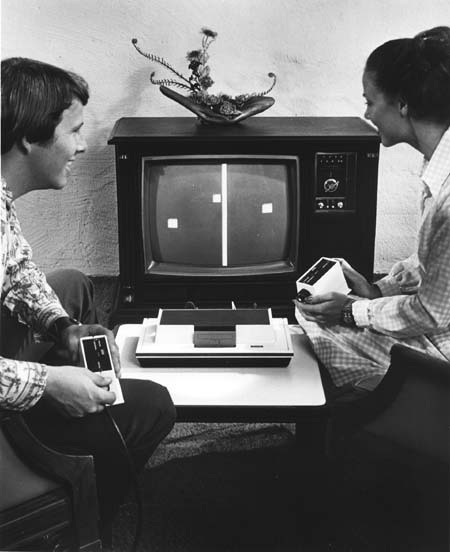
Atari set the whole videogame craze in motion with its 1972 coin-operated arcade game Pong. During the arcade years that followed, Atari made several coin-operated hits: Breakout, Atari Football, Asteroids, Battlezone, Missile Command, Centipede, Dig Dug, Pole Position, Marble Madness, Gauntlet, and even a Star Wars arcade game. While the graphics seem rudimentary by today’s near photo-realistic 3D gaming standards, when consoles were first released in the late 1970s it was revolutionary to be able to interact with your TV set in such a way. The simple aim of the game Pong is to defeat an opponent in a simulated table-tennis game by earning a higher score. Allan Alcorn created Ponga as a training exercise assigned to him by Atari co-founder Nolan Bushnell. Bushnell based the idea on an electronic ping-pong game included in the Magnavox Odyssey, which later resulted in a lawsuit against Atari. Surprised by the quality of Alcorn’s work, Bushnell decided to manufacture the game. Pong quickly became a success and is recognised as the the first commercially successful arcade video game machine, which helped to establish the video game industry along with the first home console. The violence in the 1997 Carmegeddon video gamecomes from the sheer ability to run people down in the most imaginatively brutal ways possible with a multi-purposed road hog reminiscent of those seen in the 1975 film Death Race 2000. What separated 2000s Soldier of Fortune from the others in the field of violent video games was the use of the GHOUL System, a physics-based game engine that enables the player, for a lack of a better term,torture and brutalise enemies at your most sadistic desires. By 2001 the video game Grand Theft Auto 3 was offering gamers the opportunity to be entertained by barbecuing prostitutes with flamethrowers. The top selling video games last year included Grand Theft Auto V, Assassin’s Creed V and the Last of Us.
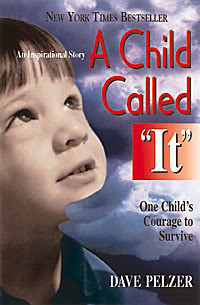
‘A Child Called It’ was published in 1995. Written by Dave Pelzer it is a brutal book concerning his childhood of being beaten and starved by his emotionally unstable, alcoholic mother. As one review highlighted, “Dave’s bed was an old army cot in the basement, and his clothes were torn and raunchy. When his mother allowed him the luxury of food, it was nothing more than spoiled scraps that even the dogs refused to eat.” Davewent on to pen:
The Lost Boy: A Foster Child’s Search for the Love of a Family,
A Man Named Dave: A Story of Triumph and Forgiveness,
Help Yourself: The Privilege of Youth, Help Yourself for Teens.
By 2009 Dave seemed to have addressed his demons in his book, Moving Forward. Richard Pelzer (Dave’s brother) shared his demons with ‘A Brother’s Journey’ detailing his experiences of witnessing and participating in the abuse of his older brother. He also penned A Teenager’s Journey. Both Dave and Richard are available for hire as motivational speakers. The tortures of human existence expressed through the medium of book shows little sign of slowing down with anybody who has managed to garnish 15 minutes of fame and willing to share their unique sadness. The top selling 2013 book on the Amazon website were The Fast Diet. Whilst real life “tragedy” biographies were dominated by the author Cathy Glass and her offerings,
Cut: The true story of an abandoned, abused little girl who was desperate to be part of a family.
Damaged: The Heartbreaking True Story of a Forgotten Childand
Another Forgotten Child.
Whilst an epidemic of similar books sold in their millions including cheerful titles like,
No One Wants You: A true story of a child forced into prostitution.
Shattered Lives: Children Who Live with Courage and Dignity.
Nobody Came: The appalling true story of brothers cruelly abused in a Jersey care home
Handstands In The Dark: A True Story of Growing Up and Survival.
On the opposite shelving from the ‘truth life stories’ the would be customer can also find an array of ‘self help books’ too. Should we even be bothered about the entertainment industry funding and commissioning such a high supply of doom ladened, miserable, violent, emotionally heartbreaking material? After all would it be to sinister to suggest the entertainment industry is seeking to manipulate your emotions……….
Facebook, the world’s biggest social networking site faced a storm of protest after it revealed it had discovered how to make its users feel happier or sadder with a few computer key strokes. In effect what Facebook did secretly, involved a study involving 689,000 users in which friends’ postings were moved to influence moods. Facebook were caught redhanded conducting a mass experiment in emotional manipulation. If government had been caught in the same way the outcry would properly have caused far more angry reaction. If manipulating our emotions is as simple as changing a few postings on our Facebook page what impact is the collective onslaught of misery based entertainment having on the populous in general? The key worry about the Facebook story is just how quickly it disappeared from the headlines and our subconscious. When did we become comfortable and accepting of big business holding so much personal information, which we have given up voluntarily and then enables them to utilise this information to manipulate our emotions?
Culture is of course the manifestation of what we do, think and feel. It is vital because it enables us to function with one another. Our culture is a way of life. It concerns itself with our behaviours, attitudes, beliefs, values, and symbols that we accept, generally without thinking about them, and this culture is passed along by communication and imitation from one generation to the next. Whilst violent force may win wars those who can influence a culture are more likely to have a bigger and more sustainable impact. Manipulating culture for a defined end, or to secure an interest is nothing new. Hermann Wilhelm Göring was a German politician, military leader, and leading member of the Nazi Party. He founded the Gestapo in 1933, and later gave command of it to Heinrich Himmler who was the psychopath behind the final solution. In 1941 Adolf Hitler designated Göring as his successor and deputy in all his offices. So altogether not a vey nice guy. Goring made the following observation, “Naturally, the common people don’t want war; neither in Russia nor in England nor in America nor, for that matter, in Germany. That is understood. But, after all, it is the leaders of the country who determine the policy and it is always a simple matter to drag the people along, whether it is a democracy or a fascist dictatorship or a Parliament or a Communist dictatorship. Voice or no voice, the people can always be brought to the bidding of the leaders. That is easy. All you have to do is tell them they are being attacked and denounce the pacifists for lack of patriotism and exposing the country to danger. It works the same way in any country.”
The sheer quantity of misery induced products being consumed may represent a race to the bottom of the entertainment barrel, whilst its creative producers are desperately mining our sensitivities trying to discover new ways of stimulating our increasing fatigue. Certain trends in society, which run alongside the increased level of misery induced products being consumed are interesting to read:
Research in the USA provided data indicate that the percentage of people treated for depression tripled in the early 1990s with a more modest increase in the early 2000 era. About 75% of the patients who were treated for depression received antidepressant medications. (Eugene Rubin MD, PhD and Charles Zorumski MD, Phycology Today)
The number of young people aged 15-16 with depression nearly doubled between the 1980s and the 2000s. (Office for National Statistics (1997): Psychiatric morbidity among young offenders in England and Wales).
The proportion of young people aged 15-16 with a conduct disorder more than doubled between 1974 and 1999, (Nuffield Foundation 2013 Social trends and mental health).
39,518 suicides were reported in the US in 2011, making suicide the 10th leading cause of death for Americans.
Suicide is a significant national social issue in the UK; 6,045, 5,608 and 5,675 people aged 15 and over committed suicide in 2011, 2010 and 2009 respectively.The number of male suicides in 2011 was the highest since 2002.
There is of course no scientific evidence linking the onslaught of misery produced entertainment with the statistics set out above. Our ignorance will be our ultimate downfall.












 Irregular Frequencies