Category Archives: Blog

Chewing the fat and talking bollocks.

No more heroes anymore

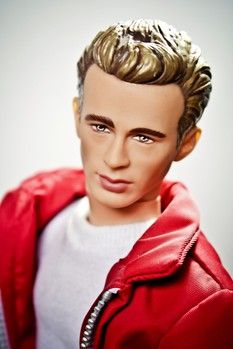
James Dean Doll

James Dean Doll

On July 23, 2011 singer Amy Winehouse was found dead in her London apartment at the age of 27.  During her short life, Winehouse accumulated a net worth of $10 million, but like so many other celebrities she may end up earning more money in death than in life. Dying young captures the eternal spirit of a musician and artist, which helps create a mythology that often projects the person behind their human fragility to one of almost god like status with fans increasingly desperate to be connected in some way with their deceased hero.

The first sign of this phenomena was actor James Dean who died in a car crash September 30, 1955 (aged 24). Dean’s major films identified him in roles like Jim Stark’s Rebel Without A Cause depicting the dilemmas of a teenager, who feels that no one, not even his peers, can understand him. During the 70s no self-respected adolescent facing the doomed prospect of being young would be seen without their James Dean t-shirt. Today James Dean merchandise is in abundance and fans can if they so wish reacquaint themselves with their hero via the James Dean doll for £25. Michael Jackson posthumously earned millions from music video marathons, radio airplay, and album sales immediately following his death. The dad of death merchandise goes to the proclaimed King of Rock n Roll Elvis Presley. who remains one of the most celebrated musicians of the 20th century. Commercially successful in many genres, including pop,blues and gospel, Elvis  is the best-selling solo artist in the history of recorded music. He died August 16, 1977 (aged 42). The King of Rock ‘n’ Roll has long earned money after his death, largely due to an immense portfolio of licensing and merchandise deals and Graceland admissions. Given the manner of the Kings death some of the mechanise should, shall we say is beyond contempt?

Kurt Cobain doll

Purchasing one of these dolls is like buying Courtney Love lifelong memberships to the NRA. (copy right Bill Hicks)

“You Know You’re Right” was written in 1993, making it one of the last known Kurt Cobain compositions. A studio version of the song was recorded at Nirvana’s final session, on January 30, 1994.  By 5th April 1994 Cobain was dead at the mere age of 27 following several attempts at suicide he finally succeeded. The recording became the object of much legal wrangling between Courtney Love and the surviving Nirvana bandmates Dave Grohl and Krist Novoselic. Grohl and Novoselic had wanted the song for a planned Nirvana box set, but Love blocked its release, and a battle over Nirvana’s legacy ensued. In September 2002, the lawsuit between Love and the surviving Nirvana members was settled, and it was announced that “You Know You’re Right” would arrive on a one-CD history of the band. What is not disputed is the business empire that emerged following Cobain’s death, books, films, posters and of course the obligatory t-shirt that is later years would also include Cobain’s suicide note. Fans may also want to purchase the Kurt Cobain doll with replicated rife, so to rein-act their heroes desperate final hours. Death of course does not stand in the way of the deceased artist contributing to new commercial venture. Several artists have been resurrected from the grave to help generate new sales and revenues streams for their “estate.” The advent of new technologies  has also enabled new material to be produced (sic)! Unforgettable is a popular song written by Irving Gordon. The most popular version of the song was recorded by Nat King Cole in 1951. In 1991, after Elvis Presley’s musical director Joe Guercio had the idea, Cole’s original 1951 recording of the song was edited and remixed to create a duet with his daughter, Natalie.

John Lennon was resurrected in 1995 through the magic of technology to ghost voice with the remaining Beatles on the lacklustre Free as a Bird track that did little to undermine Lennon’s image as a creative icon. Originally recorded in 1977 as a home demo by John Lennon the track was released as a single by the Beatles, 25 years after the Beatles break-up and 15 years after the death of Lennon. George Martin, who had produced most of the Beatles’ 1960s recordings, turned down an invitation to produce Free as a Bird due to, “hearing problems” though he subsequently managed to produce and direct the Anthology series. The track ends with the voice of John Lennon played backwards. The message, when played in reverse, is “Turned out nice again.” A sentiment that would not be shared by many die hard Beatles fans given production for the track went to Jeff Lynne of Electric Light Orchestra fame. So it came to pass that the Beatles would be morphed into a derivative of the ELO sound and production. There was to be one more foray into Lennon’s demos with the equally suspicious Real Love track, which would be thankfully be the last released record of so called new material credited to the Beatles. The Beatles of course set the business template for pop merchandise during the 1960s with everything from t towels, models to lunch boxes being mass produced to support album releases. Given the band by the mid to late 60s were predominately a studio based enterprise this source of merchandise became an increasingly important element of their business.
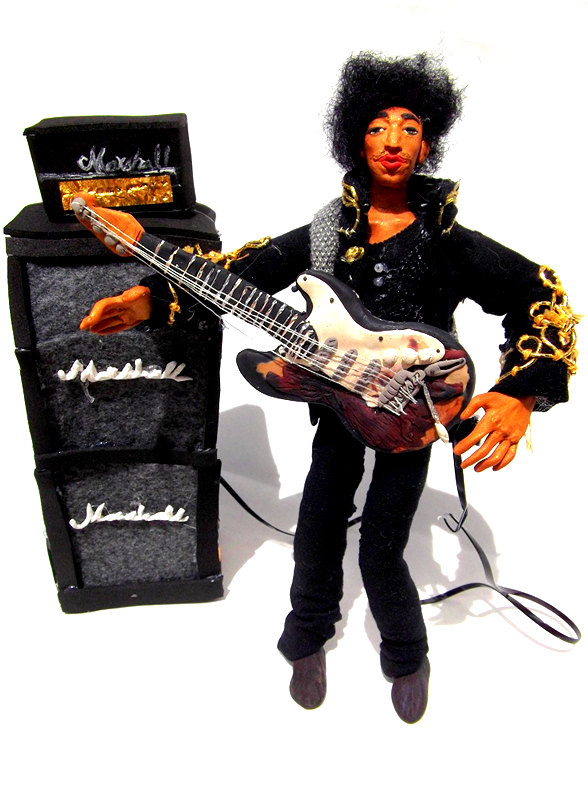
il_fullxfull.269872251

Hmmmmm No.

When Dr. John Bannister pronounced Jimi Hendrix dead on September 18, 1970 the story of this iconic musician should have come to graceful ended with his legacy being the foundation for old and new fans alike, although unlike his predecessors Hendrix was already subject to the unscrupulous dealings of the dark side of the music business. By 1967, as Hendrix was gaining in popularity, many of his pre-Experience recordings were marketed to an unsuspecting public as Jimi Hendrix albums, sometimes with misleading later images of Hendrix. The recordings, which came under the control of producer Ed Chalpin, with whom Hendrix had signed a recording contract in 1965, were often re-mixed between their repeated reissues, and licensed to record companies. Hendrix publicly denounced the releases, describing them as “malicious” and “greatly inferior.” These unauthorized releases have long constituted a substantial part of Hendrix’s recording catalogue, amounting to hundreds of albums.  In 1993, MCA Records delayed a multi-million dollar sale of Hendrix’s publishing copyrights because Hendrix’s father Al Hendrix was unhappy about the arrangement. Under a settlement reached in July 1995, Al Hendrix prevailed in his legal battle and regained control of his son’s song and image rights. He subsequently licensed the recordings to MCA through the family-run company Experience Hendrix LLC, formed in 1995. In August 2009, Experience Hendrix announced that it had entered a new licensing agreement with Sony Music Entertainment’s Legacy Recordings division which would take effect in 2010. Legacy and Experience Hendrix launched the 2010 Jimi Hendrix Catalog Project, starting with the release of Valleys of Neptune in March of that year.  

In the months before his death, Hendrix recorded demos for a concept album tentatively titled Black Gold, which are now in the possession of Experience Hendrix LLC. The demo tapes consist of 16 songs, all created by a solo Hendrix armed only with his voice and a Martin acoustic guitar. Months later, at the Isle of Wight Festival, Hendrix gave the tapes to his drummer Mitch Mitchell to have him listen and comment on the necessary rhythm section requirements for recording the songs. After Hendrix’s death in September 1970, Mitchell simply forgot about the tapes, apparently unaware that they were one-of-a-kind masters. For 22 years, the Black Gold tapes sat in a black Ampex tape box that Hendrix tied shut with a headband and labelled “BG”. It was not until 1992 that Tony Brown, the avid Hendrix collector and biographer, interviewed Mitchell and learnt that the mythical Black Gold tapes, thought to have been stolen from Jimi’s apartment by vandals who ransacked it for collectibles soon after his death, were lying in Mitchell’s home in England. Mitchell also possessed the Martin guitar that was used to create the material. Brown was invited to review the tapes and published a summary of his account, but to date the material has not been released and is not available to Hendrix collectors. Mitch Mitchell’s association with Experience Hendrix LLC was an indicator that Black Gold might see worldwide release. Mitchell’s death, however, means that the future and whereabouts of Black Gold are even more uncertain. In March 2010, Janie Hendrix stated that Black Gold will be released this decade. “Suddenly November Morning” was included in the album West Coast Seattle Boy: The Jimi Hendrix Anthology, released in November 2010.  This is the only track from Black Gold ever released.

Jim Morrison Infant Snapsuit

Jim Morrison Infant Snapsuit

An American Prayer is the ninth and final studio album by the Doors. In 1978, seven years after lead singer Jim Morrison died and five years after the remaining members of the band broke up, Ray Manzarek, Robby Krieger, and John Densmore reunited and recorded backing tracks over Morrison’s poetry (originally recorded in 1969 and 1970). The album received mixed reviews and still divides critics, yet it has managed a platinum certification in the US. When the album was originally released, longtime Doors’ producer Paul Rothchild labeled the album the “rape of Jim Morrison.” Morrison himself, prior to leaving for his ill-fated Paris visit, had approached composer Lalo Schifrin as a possible contributor for the music tracks meant to accompany the poetry, with no participation from any of the other Doors members. Since the demise of The Doors as a functioning band their back catalogue of albums has  been subjected to all forms of digital re-editing, special anniversary mixes, bonus material that inevitable consists of weak studio outtakes of classic tracks, as wells banal studio chitchat. The dreadful licensing of tracks to superstar DJ’s who in turn have managed single-handily to tear the heart of the material for a so called new generation of fans. Over 20 live official live albums have subsequently been released, including Live at the Aquarius Theatre: The First Performance and Live at the Aquarius Theatre: The Second Performance. In 2002 two of the original Doors, Ray Manzarek and Robby Krieger reunited and produced a new version of The Doors, called The Doors of the 21st Century. The lineup was fronted by Ian Astbury of The Cult.

John Densmore the bands original drummer subsequently claimed that he had not been invited to take part in the reunion. By February 2003, it was reported that Densmore filed an injunction against his former band mates, hoping to prevent them from using the name The Doors of the 21st Century. It was further reported that both Morrison’s family and that of Pamela Courson had joined Densmore in seeking to prevent Manzarek and Krieger from using The Doors’ name and in July 2005 Densmore and the Morrison estate won a permanent injunction. This caused the new band to switch to the name D21C. Densmore has been steadfast in refusing to license The Doors′ music for use in television commercials, including an offer of $15 million by Cadillac to lease the song “Break on Through (To the Other Side)”, feeling that that would be in violation of the spirit in which the music was created. Densmore wrote, “People lost their virginity to this music, got high for the first time to this music. I’ve had people say kids died in Vietnam listening to this music, other people say they know someone who didn’t commit suicide because of this music…. On stage, when we played these songs, they felt mysterious and magic. That’s not for rent.”  I guess it cannot be put any better.

Woebegone

sam-smith

Don’t worry son the bus will turn up soon

During a recent interview warbler Sam Smith explained the naming of his debut album (In the Lonely Hour) and he could not have not sounded more pitiful, “I wrote about being sad. Hopefully I’ll be happier soon and I’ll write about that.”  Colin Vearncombe who briefly enjoyed mainstream success under the moniker Black was equally despondent with his miserably infused 1987 hit single Wonderful Life, but unlike Smith, Vearncombe was making a not so subtle reflection of the times he found himself in where yuppies scoured the earth like apologetic zombies swigging champagne from Berluti handmade shoes. The Welsh band Racing Cars plunged the depths of misery in 1977 with their one and only hitThey Shot Horses Don’t They.’  The song, which is  based on the film of the same name concerns itself with a man who in his youth saw a horse break its leg, after which it was shot and put out of its misery. Arguably the accolade for most miserable song ever recorded would properly go to Buddy Holly for his 1959 effort ‘Raining in my Heart.’  The Beatles paraphrased ‘Raining in my Heart’ in their song ‘Dear Prudence’ as “The sun is up [instead of “out”]; the sky is blue.”  In 1978 self styled sad clown Leo Sayer had a hit with ‘Raining in my Heart’ and to cement the songs claim Robert Wyatt included a piano based instrumental version on his 2003 album, Cuckooland.

Recorded in 1990 and initially hidden away on the box set Tracks (1998) the Bruce Springsteen song ‘Sad Eyes’ takes some beating. The song was produced at a time when Springsteen was apparently re-evaluating his life. Enrique Iglesias covered ‘Sad Eyes’ in 2000. Sadly, Inglesias’ video for the track failed to capture Springsteen’s original intent. The video was shelved due to its sexual content. It depicts Iglesias alone in a motel room indulging in erotic fantasies about a girl he sees in a phone-sex ad. If you have just ended a relationship and you are surrounded in downcast misery I suggest you avoid at any cost Dusty Springfield’s version of “I Just Don’t know what to do with myself.”  First recorded by Tommy Hunt in 1962 Springfield recorded her version two years later with heart shattering effect Springfield delivered misery that has not often been matched, “I just don’t know what to do with my time, I’m so lonesome for you it’s a crime, going to a movie only makes me sad, parties make me feel as bad. When I’m not with you I just don’t know what to do.” The song reached number 3 in the summer of 1964 and remained Springfield’s highest charting UK hit until she reached Number 1 in 1966 with “You Don’t Have to Say You Love Me.”  

clown_468x582The point being made is the maze of love, hate, loss and fear we humans are required to navigate has and will always continue to provide creative output. It is the story of our fragile existence. It has been played out in classical operas, Shakespearean plays, sugar coated pop hits, movies and novels. Leonard Cohen and Nick Cave have cultivated misery into an art form, but unlike the phoney sadness often portrayed in today’s onslaught of manufactured pop stars Cohen and Cave have dragged the essence of misery from the bowels of their human frailty into carefully crafted stories and songs.  This is in contrast to the pity seeking artist feeding an equally self pitying audience, which we can increasingly witness today via disposable pop stars. The result is an overflowing eco-system of self flagellation between artist and audience, although there is of course benefits to an artist being in this predicament given they expect nothing good to happen in their miserable lives they will never feel disappointed or disillusioned by criticism.  It is not the art of creating a carefully crafted song of heartache that should be of worry, but the sheer quantity of banal misery based entertainment currently being manufactured and pumped out to an absorbing audience that should be of concern.  At the point of writing this blog of the top 25 chart singles 15 of the songs listed concern themselves with failed relationships, heartache and lost love with titles such as ‘me and my broken heart, love runs out and only love can hurt like this’.  

Fear in particular is a powerful and primitive human emotion. It alerts us to the presence of danger and was critical in keeping our ancestors alive. Fear can actually be divided into two stages, biochemical response and emotional response. The biochemical response is universal and the emotional response is highly individualised.  Whilst the majority of people will avoid situations in which there is a high risk of actual injury the experience of being scared in an environment that is actually safe has enabled an entire industry to be built. Horror films and violent video games are examples of this phenomenon, but repeated exposure to similar situations leads to familiarity. In turn this greatly reduces the resulting elation, leading people to seek out new and bigger responses to satisfy their needs. Sound familiar? Well, if you reflect upon the entertainment business over the past 30 years it tells its own story.

By the 1970s the tone towards more realism in motion pictures started to produce some harrowing films. Solider Blue was the third most popular movie at the British box office in 1971. Directed by Ralph Nelson and inspired by events of the 1864Sand Creek massacre in the Colorado Territory,USA. Released during the Vietnam War, shortly after public disclosure of the My Lai massacre, the film was controversial at the time not only for its subject matter, but also for its graphic depictions of violence. Nelson pushed the depiction of violence to explicit levels, showing nudity during rape scenes, as well as realistic close-up shots of bullets ripping into flesh. By 1992 Quieten Tarantino was shocking cinema goers with his debut film Reservoir Dog. The film received substantial criticism for its strong violence and language. One scene that viewers found particularly unnerving was the ear-cutting scene. It was reported that the actor Michael Madsen, who carried out the scene reportedly had great difficulty finishing it, especially after Kirk Baltz (playing the victim) ad-libbed the desperate plea “I’ve got a little kid at home.”  Meanwhile It took several complaints before a poster campaign advertising the film The Last Exorcism, which featured an image of a girl in a blood-soaked dress to be removed because it was deemed unsuitable to be seen by children. The adverts were posted on bus stops and on the sides of buses. Optimum Releasing, which ran the ads, said that the campaign was designed to target a broad, mass-market audience and intended to position the movie as a mainstream horror release with imagery “within the fictional context of this genre”. Once it learned of the complaints the company instructed its media buying agency to remove any ads displayed near schools. Last  year was a bumper year for horror films with the release of sequels, remakes and original materials with such titles as Dead before Dawn, Nothing Left to Fear, I Spit on your Grave 2, No One Lives, You’re Next, Evil Dead, etc.

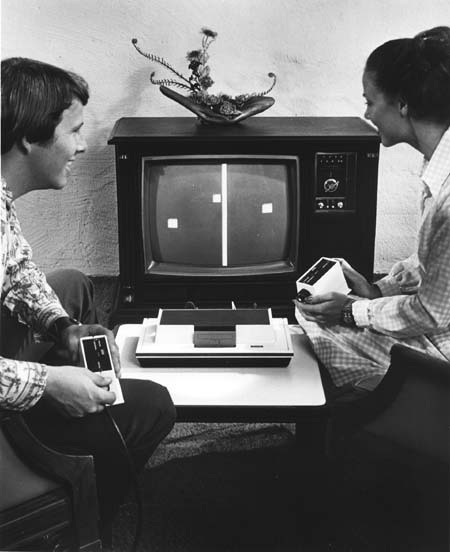
Atari set the whole videogame craze in motion with its 1972 coin-operated arcade game Pong. During the arcade years that followed, Atari made several coin-operated hits: Breakout, Atari Football, Asteroids, Battlezone, Missile Command, Centipede, Dig Dug, Pole Position, Marble Madness, Gauntlet, and even a Star Wars arcade game. While the graphics seem rudimentary by today’s near photo-realistic 3D gaming standards, when consoles were first released in the late 1970s it was revolutionary to be able to interact with your TV set in such a way. The simple aim of the game Pong is to defeat an opponent in a simulated table-tennis game by earning a higher score. Allan Alcorn created Ponga as a training exercise assigned to him by Atari co-founder Nolan Bushnell. Bushnell based the idea on an electronic ping-pong game included in the Magnavox Odyssey, which later resulted in a lawsuit against Atari. Surprised by the quality of Alcorn’s work, Bushnell decided to manufacture the game. Pong quickly became a success and is recognised as the the first commercially successful arcade video game machine, which helped to establish the video game industry along with the first home console. The violence in the 1997 Carmegeddon video game comes from the sheer ability to run people down in the most imaginatively brutal ways possible with a multi-purposed road hog reminiscent of those seen in the 1975 film Death Race 2000.  What separated 2000s Soldier of Fortune from the others in the field of violent video games was the use of the GHOUL System, a physics-based game engine that enables the player, for a lack of a better term,torture and brutalise enemies at your most sadistic desires. By 2001 the video game Grand Theft Auto 3 was offering gamers the opportunity to be entertained by barbecuing prostitutes with flamethrowers. The top selling video games last year included Grand Theft Auto V, Assassin’s Creed V and the Last of Us.  

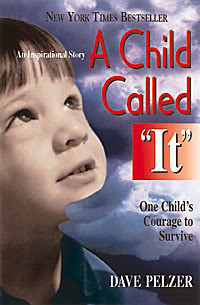
‘A Child Called It’ was published in 1995. Written by Dave Pelzer it is a brutal book concerning his childhood of being beaten and starved by his emotionally unstable, alcoholic mother. As one review highlighted, “Dave’s bed was an old army cot in the basement, and his clothes were torn and raunchy. When his mother allowed him the luxury of food, it was nothing more than spoiled scraps that even the dogs refused to eat.”  Dave went on to pen:

  • The Lost Boy: A Foster Child’s Search for the Love of a Family,
  • A Man Named Dave: A Story of Triumph and Forgiveness,
  • Help Yourself: The Privilege of Youth, Help Yourself for Teens.

By 2009 Dave seemed to have addressed his demons in his book, Moving Forward.  Richard Pelzer (Dave’s brother) shared his demons with ‘A Brother’s Journey’ detailing his experiences of witnessing and participating in the abuse of his older brother. He also penned A Teenager’s Journey. Both Dave and Richard are available for hire as motivational speakers. The tortures of human existence expressed through the medium of book shows little sign of slowing down with anybody who has managed to garnish 15 minutes of fame and willing to share their unique sadness. The top selling 2013 book on the Amazon website were The Fast Diet. Whilst real life “tragedy” biographies were dominated by the author Cathy Glass and her offerings,

  • Cut: The true story of an abandoned, abused little girl who was desperate to be part of a family. 
  • Damaged: The Heartbreaking True Story of a Forgotten Child and
  • Another Forgotten Child. 

Whilst an epidemic of similar books sold in their millions including cheerful titles like,

  • No One Wants You: A true story of a child forced into prostitution.
  • Shattered Lives: Children Who Live with Courage and Dignity.
  • Nobody Came: The appalling true story of brothers cruelly abused in a Jersey care home
  • Handstands In The Dark: A True Story of Growing Up and Survival. 

On the opposite shelving from the ‘truth life stories’ the would be customer can also find an array of ‘self help books’ too. Should we even be bothered about the entertainment industry funding and commissioning such a high supply of  doom ladened, miserable, violent, emotionally heartbreaking material? After all would it be to sinister to suggest the entertainment industry is seeking to manipulate your emotions……….

Facebook, the world’s biggest social networking site faced a storm of protest after it revealed it had discovered how to make its users feel happier or sadder with a few computer key strokes.  In effect what Facebook did secretly, involved a study involving 689,000 users in which friends’ postings were moved to influence moods. Facebook were caught redhanded conducting a mass experiment in emotional manipulation. If government had been caught in the same way the outcry would properly have caused far more angry reaction. If manipulating our emotions is as simple as changing a few postings on our Facebook page what impact is the collective onslaught of misery based entertainment having on the populous in general? The key worry about the Facebook story is just how quickly it disappeared from the headlines and our subconscious.  When did we become comfortable and accepting of big business holding so much personal information, which we have given up voluntarily and then enables them to utilise this information to manipulate our emotions?

Culture is of course the manifestation of what we do, think and feel. It is vital because it enables us  to function with one another. Our culture is a way of life. It concerns itself with our behaviours, attitudes, beliefs, values, and symbols that we accept, generally without thinking about them, and this culture is passed along by communication and imitation from one generation to the next. Whilst violent force may win wars those who can influence a culture are more likely to have a bigger and more sustainable impact.  Manipulating culture for a defined end, or to secure an interest is nothing new. Hermann Wilhelm Göring was a German politician, military leader, and leading member of the Nazi Party. He founded the Gestapo in 1933, and later gave command of it to Heinrich Himmler who was the psychopath behind the final solution. In 1941 Adolf Hitler designated Göring as his successor and deputy in all his offices. So altogether not a vey nice guy. Goring made the following observation, “Naturally, the common people don’t want war; neither in Russia nor in England nor in America nor, for that matter, in Germany. That is understood. But, after all, it is the leaders of the country who determine the policy and it is always a simple matter to drag the people along, whether it is a democracy or a fascist dictatorship or a Parliament or a Communist dictatorship. Voice or no voice, the people can always be brought to the bidding of the leaders. That is easy. All you have to do is tell them they are being attacked and denounce the pacifists for lack of patriotism and exposing the country to danger. It works the same way in any country.”  

The sheer quantity of misery induced products being consumed may represent a race to the bottom of the entertainment barrel, whilst its creative producers are desperately mining  our sensitivities trying to discover new ways of stimulating our increasing fatigue. Certain trends in society, which run alongside the increased level of misery induced products being consumed are interesting to read:

  • Research in the USA provided data indicate that the percentage of people treated for depression tripled in the early 1990s with a more modest increase in the early 2000 era. About 75% of the patients who were treated for depression received antidepressant medications. (Eugene Rubin MD, PhD and Charles Zorumski MD, Phycology Today)
  • The number of young people aged 15-16 with depression nearly doubled between the 1980s and the 2000s. (Office for National Statistics (1997): Psychiatric morbidity among young offenders in England and Wales).
  • The proportion of young people aged 15-16 with a conduct disorder more than doubled between 1974 and 1999, (Nuffield Foundation 2013 Social trends and mental health).
  • 39,518 suicides were reported in the US in 2011, making suicide the 10th leading cause of death for Americans.
  • Suicide is a significant national social issue in the UK; 6,045, 5,608 and 5,675 people aged 15 and over committed suicide in 2011, 2010 and 2009 respectively.The number of male suicides in 2011 was the highest since 2002.

There is of course no scientific evidence linking the onslaught of misery produced entertainment with the statistics set out above. Our ignorance will be our ultimate downfall.

When The Wheels Stopped Turning

Beethoven was deaf

Beethoven was deaf

The normal format for the TV programme Britain’s Got Talent starts with the judges scouring the land to discover those they consider may have the magical talent. The initial auditions are like a medieval crusade with a host of cringe worthy performances by eccentrics paraded in front of the TV camera, screened directly into our living rooms and considered ‘light family entertainment.’ It is a short cut to celebrity stardom for a handful of budding artists, which plucked Susan Boyle from obscurity in 2009. Boyle finished 2nd place in the competition to the dance troupe Diversity. The day after the final she was admitted to The Priory, a private psychiatric clinic in London.   Her stay in hospital attracted widespread attention. The Press Complaints Commission following press reports about Boyle’s erratic behaviour and speculation concerning her mental condition,  wrote to remind editors about clause 3 (privacy) of their code of press conduct.  Her family reported “she’s been battered non-stop for the last seven weeks and it has taken its toll, but her dream is very much alive,”  Boyle left the clinic 3 days after her admission. Bullied at school and cruelly nicknamed ‘Susie Simple’ by fellow classmates Boyle spent most of her young life believing she had a learning disability, although she was  later diagnosed with Asperger syndrome. Boyle continues to be subjected to ridicule by professional comics and one liner joke merchants who trade on her physical appearance and disability as a crutch for their own creative limitations. There is in existence whole pages on the internet dedicated to cruel observations of Boyle, yet it is hard to imagine Andrea Bocelli the blind Italian opera singer being subject to the same level of ridicule.  What is evident with Boyle is that she is faced with a multi layered onslaught of discriminatory attitudes cutting across disability, gender and class. If becoming a successful musician was not difficult enough, becoming a successful musician whilst disabled is simply remarkable regardless of the genre of music and demands respect.

It is an aspiration many disabled artists are increasingly unlikely to achieve given the obsession with image and safe marketing that often results in disabled people being portrayed as secondary characters, weak individuals, to be made fun of, or to be pitied. Transport issues and inaccessible venues are just some of the issues facing musicians with a disability. Yet the existing and historical musical landscape is a rich, diverse and creative movement that has borne witness to disabled people as creative pioneers and leaders.

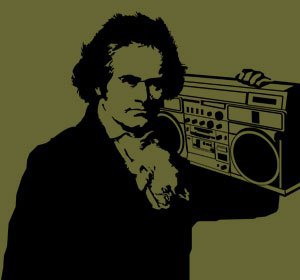
As Ludwig Beethoven (properly the worlds first punk) approached his 26th year in 1796 he was already facing deteriorating hearing and by the time he composed his 9th and final symphony he was totally deaf.  Richard Dale Miller was born November 28, 1942 in Dallas County, Little Richard Miller Born Without Arms or Legs.Texas. An evangelist, travelling across US preaching his interpretation of the Gospel through song and testimony. Richard Miller’s full stage name is Little Richard Miller Born Without Arms or Legs. He is an organist and guitarists who has recorded several albums mainly in the country style.

Robert Wyatt was the drummer and vocalist in the band Soft Machine, part of the so called ‘Canterbury Scene.’  A loosely based network of progressive rock, avant-garde, jazz musicians based around the city of Canterbury, Kent, UK. Since an accident in 1973, when he fell drunkenly from a fourth-floor window at a party, he has been paraplegic and confined to using a wheelchair for general mobility. In the 1970s the producer of BBC 1 ‘Top of the Pops‘ programme wanted Wyatt to perform from a normal chair on the grounds that his use of a wheelchair ‘was not considered suitable for family viewing.’ After strong arguments and support from his fellow band members, which included Nick Mason (Pink Floyd) and a young Andy Summers (The Police) Wyatt won the day. In September 1974 Wyatt performed his cover version of ‘I’m a believer’ on national TV in his wheel chair, whilst the audience danced along. Wyatt also recorded, what many still consider to be one of the finest anti war songs ever recorded, ‘Shipbuilding’ a song written by Elvis Costello.

If like me you have fumbled about with a guitar trying to learn 3 chords and then desperately sought to put these twisted sounds together in order, so they rendered the simplest of recognisable tunes. Then you can hardly start to imagine what it takes to do the same without the sense of sight.  During the 1960s Bob Dylan chose the pseudonym Blind Boy Grunt for an early recording session. His choice of pseudonym was a nod to the delta blues singers, who were such an influential to him. Arthur Blind Blake (1893-1933), Blind Willie Johnson (1897–1945), Blind Boy Fuller (1907–1941), Blind Willie McTell (1898–1959), Blind Lemon Jefferson (1893–1929) to name a few.

Following in the footsteps of these incredible musicians Ray Charles (1930-2004) was a true musical pioneer and genius.  During the 1950s he started to fuse together rhythm and blues and gospel music.  This style emerged into the blueprint we now understand as popular soul music. Stevie Wonder was to take this blueprint and push it to another level during the 1970s via classic albums like Talking Book, Innervisions and Songs in the Key of Life. At the same time an unpretentious, middle-of-the-road cabaret act scored a massive hit that would elevate them to international stardom. Lennie Peters (1933-1992) was one half of the duo Peters and Lee. Peters was an uncle of Rolling Stones’ drummer Charlie Watts. He had  lost the sight of one eye at 3 years old. He lost the sight in his remaining eye when 16 and immersed himself in music by teaching  himself to play the piano. Peters & Lee enjoyed their number-one hit ‘Welcome Home’ in July 1973 and went on to become platinum album artists with two and a half million sales enjoying 4 British top 20 hits and 4 top 10 albums.

At the age of 7 the genius singer, song writer and actor Ian Dury (1942-2000) was stricken by polio. He suffered the long-term effects of the disease throughout his life, which left it hard for him to walk. In 1981 Dury released the song Spasticus Autisticus, which was written to show his disdain for that year’s International Year of Disabled Persons, which he saw as patronising and counter-productive. The song was banned by the BBC given the lyrics were uncompromising, “so place your hard-earned peanuts in my tin and thank the creator you’re not in the state I’m in, so long have I been languished on the shelf. I must give all proceedings to myself.”  

In August 1990, a lighting rig fell on soul legend Curtis Mayfield (1942-1999) during a sound check before a New York concert. His 3rd, 4th and 5th vertebrae were all broken, leaving him paralyzed from the neck down. Despite the fact that he was unable to play an instrument, Mayfield would lie on his back in order to catch enough breath to sing. Mayfield created another album before his death. In 1984, Rick Allen the drummer with Def Leppard was involved in a car accident that resulted in the loss of his left arm. To accommodate his missing arm, Allen had a specially made drum kit and continues to performed to this day. Adrian Anantawan is one of the world’s most accomplished young violinists. The young man sometimes closes his eyes as he plays, as if lost in the music. If his audience closed their eyes, too, they would never know the violinist standing before them has no right hand.  Social networks and assistive technology have allowed blind jazz keyboardist/pianist Andre Louis to perform, even though getting to gigs is a real challenge.  “None of the gigs I’d like to do are near where I live in west London. If I were to take public transport, it would be me, a laptop, a keyboard stand and a cane, trying to navigate the underground. Taxis would be around £35 so costs would get high quickly.” 

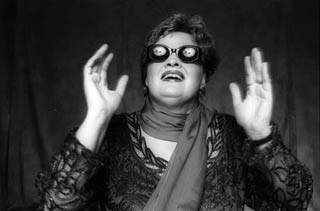
Toyah Willcox was born with a twisted spine, clawed feet, a clubbed right foot, one leg two inches shorter than the other and no hip sockets.Dianne Shuur Because of this she endured years of painful operations and physiotherapy. Her physical condition was a cause of difficult times at school. “When I was bullied at school, it was coz of my character. I was a weak child, I was incredibly small. I had a speech impediment, I was the perfect bait for bullying”. Willcox had 8 Top 40 singles, released over 20 albums, written two books, appeared in over 40 stage plays and 10 feature films, and voiced and presented numerous television shows.  Diane Schuur is an American jazz singer and pianist. Nicknamed “Deedles”, she has won two Grammy Awards, headlined many of the world’s most prestigious music venues, including Carnegie Hall and has toured the world performing with the likes of Quincy Jones, Stan Getz, B. B. King, Dizzy Gillespie, Maynard Ferguson, Ray Charles, Joe Williams and Stevie Wonder. Like Stevie Wonder, Schuur was blinded at birth due to retinopathy of prematurity.

It was the 3rd of November 2001 when I managed to see perform an artist who would go on to become one of my personal favourites. It was at the Barbican Hall, London and the event was billed as Beyond Nashville with Howie Gleb and others.

I was invited by a friend (Derek) and to be honest I had mixed feelings about going. My approach to music is very much slow burning. It normally takes quite a while after a particular music genre has been hip before my musical taste catches up and so it was to be with the so called Americana genre. The Others referred to on the concert billing, included an astounding array of bands and solo artists, Giant Sand, PJ Harvey, Evan Dando, Kurt Wagner, Mark Linkous, as well as Vic Chesnutt.

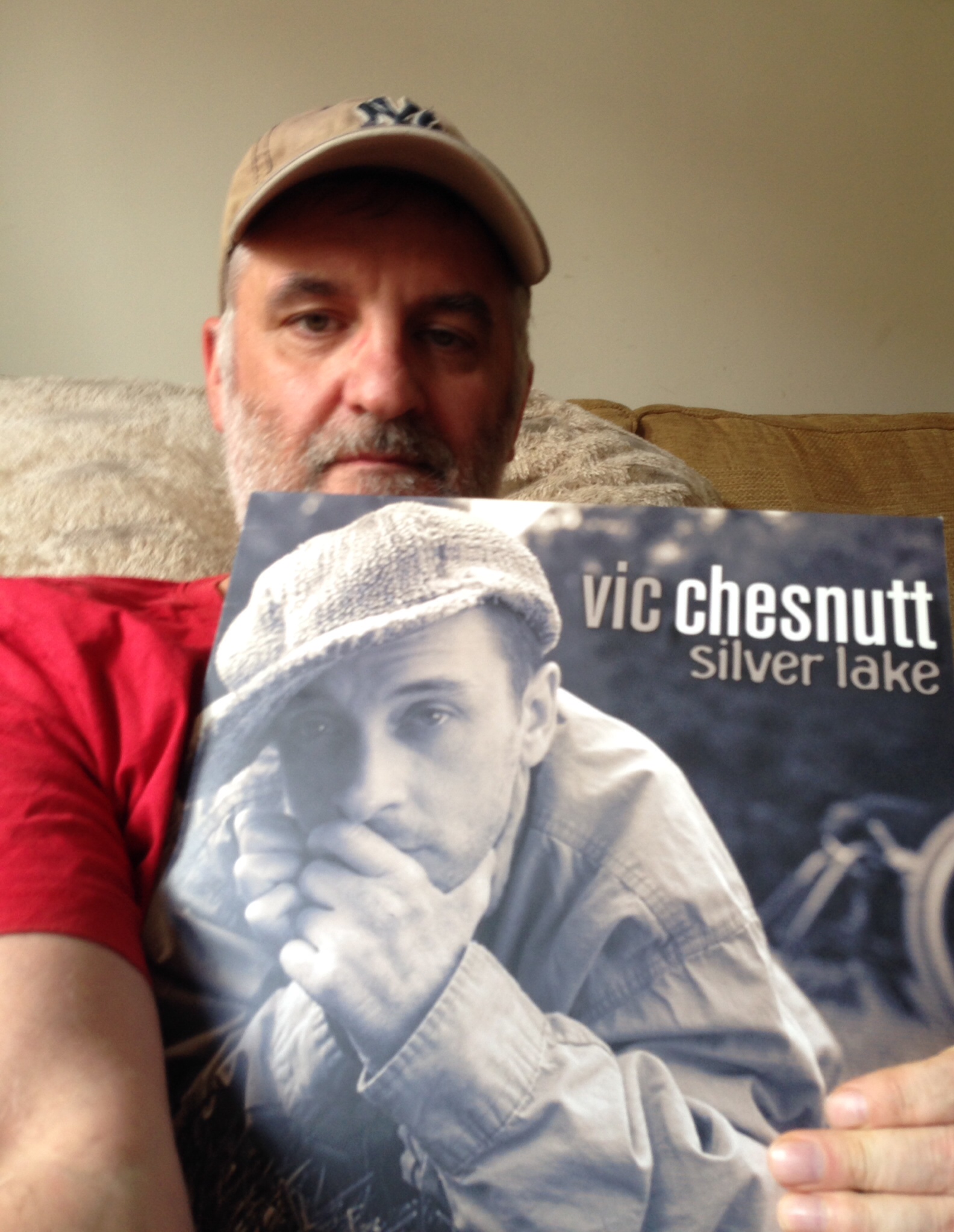
6a00d83451b93369e20120a786de68970bVic Chesnutt (1964–2009) was a truly remarkable talent. Involved in a car accident in 1983, which left him partially paralyzed; he used a wheelchair and had limited use of his hands. During his career he released a total of 17 albums (2 produced by Michael Stipe of REM fame). Chesnutt performed 5 or 6 songs that evening with Kurt Wagner (Lampchop), which were haunting, funny and poignant including, Is A Women, Girls Say and My Blue Wave. An unassuming man on stage, sitting in his wheelchair, strumming his guitar with a delicate voice that brought a concentrated silence from across the whole audience. Chesnutt described his relationship with his native America as “centred around the love/hate axis with a bit of Stockholm syndrome thrown in.” It was the many contradictions of the worlds richest country, which  provided him with the source for such of his material, alienation, isolation, human failings of the body and heart, hope, war and everyday observations.

JK - Silver LakeSilver Lake was Chesnutt’s 11th Album and while it sounds like a Vic Chesnutt album through and through, it is a better than average introduction to his work, filled with quirks. The album kicks of with the emotionally shattering ‘I’m through’ one my favourite Chesnutt tracks. The corner stone of any Chesnutt album are the stories that underpin each song.  The songs on Silver Lake are honest and pull on every emotional chord possible no matter how surreal the narrative. Throughout Silver Lake you will hear heart-tugging beauty. On December 25, 2009, at the age of 45, Chesnutt died from an overdose of muscle relaxants that had left him in a coma. Chesnutt had attempted suicide 3 or 4 times before.  According to Chesnutt, being “uninsurable” due to his quadriplegia left him $50,000 in debt from his medical bills, and had been putting off surgery for a year. A tragic, unnecessary and sad end to a remarkable genius and one of the reasons which  you need to give Silver Lake an honored space in your record collection.

Jonny Greenwood – Glastonbury 2014

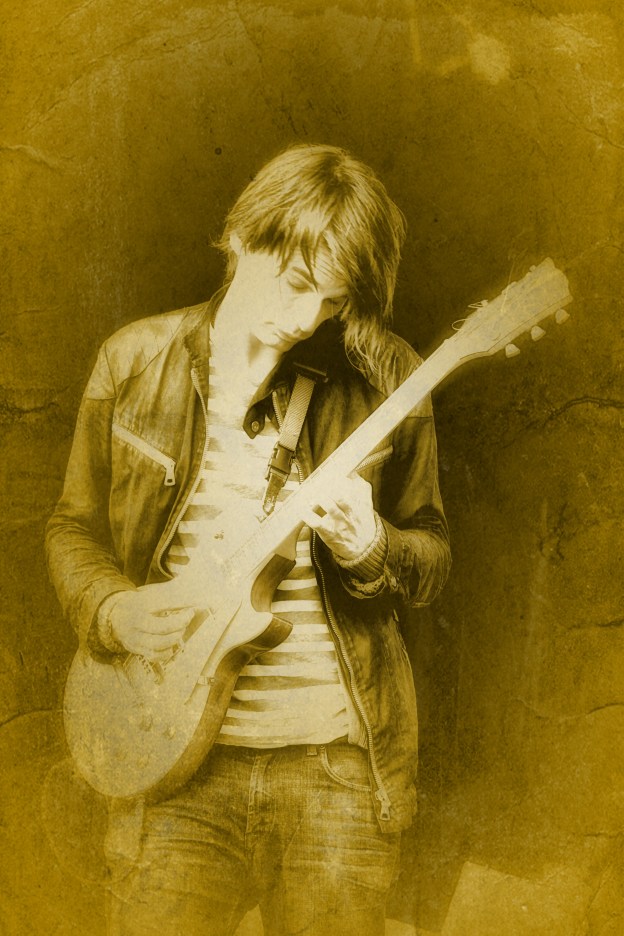
I took these photographs on Friday 27th July 2014 when the London Sinfonietta opened the West Holts Stage at Glastonbury, performing Steve Reich’s iconic Music for 18 Musicians with Synergy Vocals. Jonny Greenwood from Radiohead performed Electric Counterpoint for solo guitar.

Know Thy Enemy – Glastonbury Festival, West Holts Stage 2013

It was a dash over to the Pyramid Stage to see a few numbers by the Rolling Stones and then quickly back to the West Holts Stage to photograph the legendary Public Enemy deliver a thunderous set.

They Only Wanted To Be Loved

No Fun

The Sex Pistols No Fun

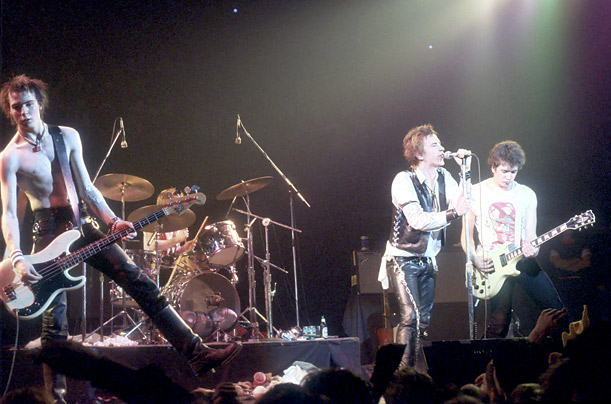
14th January 1978, The Winterland Ballroom, San Francisco, USA and the Sex Pistols have just brought their set to an end with a version of the classic Stooges song No Fun.  As the final traces of feedback belch from the amplifiers and over the heads of the assembled audience Johnny Rotten is poised, crouched down and defiantly staring at the crowd. He utters the immortal words, which  are etched on the toilet walls of the Rock N Roll Hall of Fame, “ha, ha ever get the feeling you’ve been cheated.”  

No sooner had the band left the stage the disintegration started and within days the Sex Pistols crumbled into dust. Guitarist Steve Jones and drummer Paul Cook went on to prostitute what dignity remained of the band. The ex manager (Malcolm McClaren) desperately cobbled together an embarrassing film called The Great Rock n Roll Swindle with a very dubious narrative. By February 1979 Sid Vicious (bass player) died a lonely and squalid death from a heroin overdose whilst being under investigation for the murder of his girlfriend. Meanwhile  former frontman John Lydon (aka Johnny Rotten) had jetted off to Jamaica with no other than Richard Branson to scout reggae bands for Branson’s Virgin record label. The Sex Pistols were to leave behind a maze of legal wrangles and bad taste. The punk scene sunk into wall to wall leather jackets and mohican haircuts.

In the hands of McClaren The Sex Pistols legacy was to become a parody, although what emerged from the ashes was to be much more musically interesting. By May 1978 John Lydon was already assembling his new band and later that year under the name Public Image Ltd they released their self titled single ‘Public Image’  The record was well received and reached No.9 in the UK charts.

As a teenage fan of Lydon I recall dashing down town on release day to scour local record stores and seek out a copy that also featured a limited edition newspaper insert. At the time the single with its insert were considered the holy grail and from small independent record shops to the high street dealers I ventured, bus journey’s to the neighbouring town (Middlesbrough) my crusade continued through the day and occasionally bumping into fellow fans on the same crusade. The song written by Lydon whilst still a member of the Sex Pistols bares the hallmarks of a Pistols track with its sneering lyrics directly aimed at his ex band mates. The A-side of the single was not a major departure and as such held little surprise. It was the singles B-side the aptly entitled The Cowboy Song that was to provided a glimpse of where the band were heading. The Cowboy Song sounded like a rambling assortment of studio outtakes and random noises all mashed together in no particular order. Uponfirst listening it was easily forgettable. Lydon himself viewed the track, “it cost us approximately £1 to make. It’s just a jolly good disco record and it came about cos we were bored and couldn’t think of a b-side.”  It was not until the first album appeared that the creative manifesto for the band started to be exposed to their fans.

A beautiful mess

A beautiful mess

Public Image, First Edition was released in December 1978 is now considered groundbreaking, but at the time of its release the record polarised fans and was met with outright hostility from music critics. The earlier single release had provided a false sense of expectation for those fans seeking solace in Public Image Ltd becoming The Sex Pistols mark 2. The album was in effect pulling in two different directions. A type of confused halfway half way house between looking backwards and pointing forward.

Dub baselines, traditional rock/pop tracks, screeching guitar work, a poem left many fans confused given the albums lack of focus and mixing seemed disjointed. This was no doubt a consequence of the band running out of money during its production, which necessitated recording sessions to be concluded hastily. The album to this day remains one of experimentation, a band findings its way with mixed results from the sublime ‘Low Life’ assault on the personality Sid Vicious had became towards the end of his life and through to the amusing, but largely forgettable ‘Fodderstompf’.  Record boss Richard Branson who commissioned the LP was reported to be less then impressed. Whilst the record was a moderate success in the UK staying in the album charts for 11 weeks and peaking at 22. It would take until 2013 before the album received its full American release given it was deemed to be far too uncommercial for American ears by record executives.  Love or hate this album its importance cannot be disputed given it laid down the blueprint for what many would call the post punk period.

The results were far from pretty, but to the credit of Lydon and his fellow bandmates they had decided upon a route away from the commercial mainstream, which at the time was an open door beckoning for Lydon after the demise of the Sex Pistols.With the first album completed PIL ventured out into the world to perform live. Playing 4 concerts in late 1978, Brussels Theatre Belgium on 20th December, Paris Le Stadium 22nd December and Christmas Day and Boxing Day at the Rainbow Theatre, London. By early 1979 PIL were left with the challenge that often demolishes many bands – the fatal 2nd album.

Its all in a tin

Its all in a tin

The glorious Metal Box/Second Edition LP arrived in November 1979 and is generally considered to be one of the most influential albums of all time. In many ways the album was a radical departure from the first album and ventured more towards avant-garde territory. With its cryptic lyrics, brooding baselines, tribal drum patterns, metallic guitar, synthesised drones and random noises the album was unlike anything before in sound or presentation. The original album packaging consisted of a 16mm film canister tin embossed with the bands logo, which contained three 12″ singles. The album drew from several influences including deep-dub-raggae in particular the early work of dub pioneer Keith Hudson known as the “dark prince off reggae” and bands like Can. The opening track Albatross sets the standard. Recorded in free form the track gathers  a life of its own as it weaves along. The songs structure is reminisce of the interplay between Jim Morrison and the Doors when their performed live.

Check the line up

Check the line up

Metal Box/Second Edition was a far more focused effort, which unlike its predecessor  was received with critical acclaim and considered a classic of its genre sitting alongside the likes of Can and Captain Beefheart. The albums influence cannot be emphasised enough, Sonic Youth, The Strokes, Simple Minds, REM, Joy Division, Portishead, Manic Street Preachers, Massive Attack, Radiohead have all drawn influence from the album.

In 2001 Thom Yorke during an interview with The Wire Magazine said, “We could never do a record on a par with Metal Box.'”  The Rolling Stone Magazine listed Metal Box in the top 500 albums of all time. With album literally in the tin PIL started to increasingly perform live, although  like their studio output the norm was not to be expected. In New York the band decided to perform behind large screens creating a physical barrier between them and a bewildered audience who had come to see the band perform a more traditional rock show. The resulting disturbances required the concert to be cancelled mid way through as the crowd throw items at the screen and started to dismantle the stage equipment.

In Leeds the band were met with hostility when the audience became bored with the new material and demanded Sex Pistols songs. PIL ignored the audience, often turn their backs against them and carried on until they simply walked off stage.

The 1980 live album ‘Paris au Printemps’ offered little to nothing in terms of creative output. In fact Lydon reputedly advised fans not to buy it because the band only got involved in the project to earn enough money to pay for Metal Box. By 1981 and the bands 3rd album The Flowers of Romance” the wheels had already started to fall off the first incarnation of the band. Jah Wobble who provided the brooding bass on the first two albums had been sacked for allegedly using PIL material as backing tracks for his solo work. The name ‘The Flowers of Romance’ was taken from an early band Sid Vicious and Jah Wobble were members,  as well as it being the title of a very early Sex Pistols track, which was never studio recorded and released.

Not for the faint hearted

Not for the faint hearted

The stark, severe and minimum style of the album is in contrast with the bass heavy influences of Metal Box. A variety of sources were deployed and used to generate sounds for the album including amplified wristwatches, reversed piano, televised opera. John Lydon played violin and saxophone, although he was not know to be trained to play any particular instrument. Keith Levane the groups pioneering guitarist played through reversed tapes, treble distortion and synthesisers drones.

Interviewed at the time Levene pointed out that, “AII it amounts to is that we don’t like any music at the moment.” John Lydon added,  “well it ain’t rock & roll, that’s for sure.”  The album quickly gained  a reputation for being the most uncommercial LP to have been made and presented to a mainstream record company.

The Flowers Of Romance entered the UK Charts where it stayed for 5 weeks and reached No. 11 in April 1981. The album spawned a minor hit single in the same year that reached No. 24 and stayed in the charts for 4 weeks. The third studio album for many concluded PIL’s pioneering period. Similar to Jah Wobble original guitarist Keith Levene left the band acrimoniously shortly afterwards. John Lydon then shifted the sound and structure of the band towards a more commercially friendly zone with differing results given the creative challenges were not putting the breaks, or shaping some of Lydon’s ideas. By the late 80s PIL effectively Lydon and an assortment of musicians were touring America extensively, including a support slot for the Australian band  INXS on their Kick tour.

The end for PIL was more a damp fizzle than bang. By 1992 and with a lack of interest from the general public Lydon put PIL into hiatus whilst he concentrated on other projects, including his autobiography, TV work and ultimately regrouping with the original Sex Pistols line up for a number of lucrative tours, which properly provided the only real opportunity for the original  4 members to earn any significant cash from their legacy. In September 2009 Lydon announced that PiL would reform for five UK shows, their first live appearance in 17 years.  The regrouping of PIL was financed via the money Lydon earned through a UK television commercial, “The money that I earned from that has now gone completely – lock stock and barrel – into reforming PiL” The pursuing concerts were warmly received and the band has continued to perform live since, as well as releasing new material.

36 years later

Like father like daughter

As one review of the first 3 PIL albums states,  “PIL managed to avoid boundaries for the first four years of their existence, and Metal Box is undoubtedly the apex it hardly sounds like anything of the past, present, or future”.   These first 3 albums, including the glorious Metal Box/Second Edition alone has secured my enduring respect for Lydon.

30th June 2013 and 35 years after buying the first Public Image Ltd single (with the limited edition newspaper insert) I find myself with my 14 year old daughter walking aimlessly through the Glastonbury Festival site.  We have not paid much attention to the running list on the various stages. We are just soaking up the atmosphere, floating along with the crowd and just stopping to watch whatever emerges before us. Its a glorious summers days and in the near distance I hear driving base of PIL’s Death Disco vibrating through the air.  We quickly make our way to the Other Stage and sure enough we find John Lydon and co.

I look to my daughter and ask if she is enjoying it? She relies, “yes.”  I turn my attention back to the stage, feel the sun on the back of my neck, scan the large crowd and look back at my daughter – we smile at each other. Sometimes things just fall into place for all the right reason.

Oh bondage up yours!

This girl is no fool

This women is nobody’s fool

“Biblically chauvinistic” is how the Rolling Stone magazine described the James Brown 1966 record “It’s a Man’s Man’s Man’s World.” As a record it certainly takes some beating when promoting a stereotype. A stereotype, which has been continuously reinforced throughout the music business since its conception.

Whilst the mainstream charts may be dominated by female artists research constantly reveals that women working in the music business earn far less than their male counterparts – a staggering 47% of women in the music business earn less then £10,000 per year.

It is a business that is dominated by male executives who control its means of production, marketing and recording output. Recording artist Lily Allen recently observed, “You will also notice of the big successful female artists, there is always a ‘man behind the woman’ piece. If it’s Beyoncé, it’s Jay Z. If it’s Adele, it’s Paul Epworth. Me? It was Mark Ronson and the same with Amy Winehouse.”  These attitudes prevail throughout the music business right down to the basement end of manufactured pop. The banality of Miley Cyrus ‘tweaking’ caused a media stir, which was possibly related to Cyrus’s history as a child star for the Disney Corporation. Whilst Cyrus’s performance might be seen as silly and tedious the fact is Iggy Pop has been ‘twerking’ for 40 years, including the odd penis exposure as well as regularly humping his amplifiers on stage – yet he is considered a rock god.

There is something very disturbing about a popular culture that increasingly portrays women as disposable commodities frequently being hunted down by a serial killer or subjected to the creepy attention of a male artist who is acting like a potential candidate for inclusion on the sex offenders register. Although given the recent spate of celebrities facing sexual assault charges in the UK they may not be acting. Equally repugnant are those fellow men who shout “political correctness has gone mad” every time these issues are raised. Let’s be honest if you are the type of tool who enjoys women being portrayed in this way then it is highly unlikely you have read this far into this blog and you are properly jerking off to that misogynist Robin Thicke video.

“Ignore it” you may say after all there is an off button I can push  Well I did, but ignoring it does not make it a right. Switching off a TV does not mean switching off your brain and that is the real choice here. I am not for one minute advocating censorship far from it. In my view those who produce this material should be exposed to additional taxation. The revenues generated should be earmarked for support services for women who become victims of male violence. If a sovereign country was inflicting such harm on another country surely we would be expecting intervention, possibly economic sanctions.

Those women who have stood up, challenged and turned the tables on the status quo have faced ridicule or worse. The singer-songwriter, multi-instrumentalist, actress, author and philanthropist Dolly Parton has throughout her career been the subject of ridicule from taunts of trailer trash, cheap, dumb blonde and least we forget the breast obsession. Web sites are dedicated to crude jokes about Parton.  Realising these circumstances Dolly Parton played the card of self-parody as well as deploying her very clever business brain. This has enabled her to amass a financial fortune and make music that she wants to make.  This attitude towards women is not a modern phenomenon, which has  been cooked up by dead beat rappers with their pathetic lyrics of ‘hoes and bitches.’

holiday

Billie Holliday – used and abused

The harrowing demise of Billie Holliday in the 1950s is a prime example. Most media stories concerning Holliday’s torturous death tend to focus on sexual violence and illicit substances. What is often overlooked is that in her final years Holliday was swindled out of her earnings and died with $0.70 in the bank.  As an incredibly gifted, yet troubled artist Holliday was hounded to the very end. Whilst dying police raided her hospital room and placed her under arrest until she passed away on 17th July 1959. She was 44 years old.

The magnificent Nina Simone became the catalyst for change in the 1960s. Strong, intelligent, outspoken and a versatile musician she became a role model for musicians (female and male). Simone started playing the piano at 3 years old and by the age of 10, she was perfuming piano recital in the town library. Like Holliday, she was ripped off by the record companies. She saw very little money from her first record, the top 20 hit of “I Love You Porgy.” Simone always characterised record companies as “pirates.”   

Over the coming decades, Simone took increased control over her career and destiny as an artist, which not only provided financial rewards but enabled increased creative freedom. At the time this was unparalleled for both a female and Black artist.  The song Mississippi Goddamn, which she released in 1964 was written by Simone after the murder of Medgar Evers. Although the song contains a jolly rhythm it is a scathing anti-racist tour de force.  Towards the end of her life Simone became increasingly erratic with legendary mood swings. In 1985 she fired a gun at a record executive whom she considered was stealing her royalties claiming that she tried to kill him, “but missed.”

The 1960s produced many iconic female artists Dusty Springfield, Nico (Velvet Underground) Grace Slick (Jefferson Airplane) and Janis Joplin for example. It is a decade that increasingly witnessed the use of  ‘tabloid sensationalism’ as a weapon against women. Singer, songwriter and actress Marion Faithfull were subjected to sordid and untrue media reports in 1967 concerning her sexual relationship with Mick Jagger. Whilst the headlines and speculation did little to hinder Jagger’s career. In fact, the stories further enhanced his bad-boy reputation, but for Faithfull, her career was badly damaged. 27 years later Faithfull observed, “It destroyed me, a  woman in that situation becomes a slut.” Before Beyonce, there was Diana Ross (formerly of The Supremes).

The Supremes were a product of Barry Gordy’s Motown conveyor belt of popular hits during the 60s and 70s. Gordy was the original Simon Cowell with the gift of identifying and bringing together pop talent, along with tightly controlling and carefully managing their public image. Whilst Ross and Gordy were romantically entwined for Gordy it quickly became a case of biting off more than you could chew syndrome when it came to Diana Ross.

Whilst The Supremes were on a UK tour in the 1960s Gordy insisted The Supremes perform a version of Dean Martin’s “You’re Nobody Till Somebody Loves You.” Gordy believed that such a performance would enable The Supremes to access a slot on a mainstream UK television programme. Ross refused outright. “I could not explain anything that made sense to her,” Gordy said. “She refused to do it completely.” That’s when Gordy realised, “if she didn’t do it, I knew I could not manage them.” Ross went on to become one of the biggest selling female solo artists in music history.

Joni Mitchell produced and released her seminal Blue album in the early 70s whilst at the same time Jazz drummer Karen Carpenter was persuaded to move centre stage and sing for the brother/sister duo the Carpenters. It may have taken until 1979 for Suzi Quatro to score a hit in her country of birth (USA), but Quatro was a constant presence throughout the 70s in the UK charts. Quatro’s trademark leather jacket, jeans, bass playing leadership and pop-rock anthems presented an altogether edgier imagine that had a significant influence and impact. An influence that has sadly been underestimated given for many young people Suzi Quatro was the first female artists who were seen to be the leader of the pop-rock group on mainstream TV. By the mid-70s Kate Bush and Patti Smith emerged. Two diametrically opposed artist who commanded respect through their craft. Smith went on to release what many still consider to be one of the most quintessential and influential rock album’s of all time ‘Horses.’  

1975 also saw the release of the electro-pop ‘Love to Love You Baby’ by Donna Summer that pounded the dance floors of every credible disco. The song, which featured Summer moaning and groaning as if in the raptures of an organism would cause controversy around the world. It also presented the artist in a highly sexually charged way that would take Summer years to shake off. The song and its producers eventually left Summer feeling like she had no control over her life and went on to suffer from bouts of depression and insomnia. Summer would later become a born-again Christian and sue the producers of the record. After the legal settlement Summer decided to exclude “Love to Love You Baby” from her concert playlists and did not perform it until 25 years later.

As the 1970s were drawing to a close there was something quite different about the female artists who were emerging outside the mainstream. Whilst the recording output varied according to taste. The confidence and attitude of the female artists was not in dispute. Operating within an increasingly political environment a whole bunch of strong, independent, intelligent and often conformational female artists were playing a leading roll in the rock scene.  It was a time when Siouxsie Sioux (Siouxsie and the Banshees), Fay Fife (The Rezillos), Gaye Advert (The Adverts), Debbie Harry (Blondie), The Slits, Pauline Murray (Penetration),  Tina Weymouth,(Talking Heads), Joan Jett (The Runaways) and the glorious Poly Styrene (X-Ray Spex) to name a few took a male-dominated world and shook it by the throat. A quick search on Google for Penetration performing ‘Don’t Dictate’ live will emphasis the point as Pauline Murray tackles men in the audience head-on. It was another song from this period, which had a greater influence on me personally.

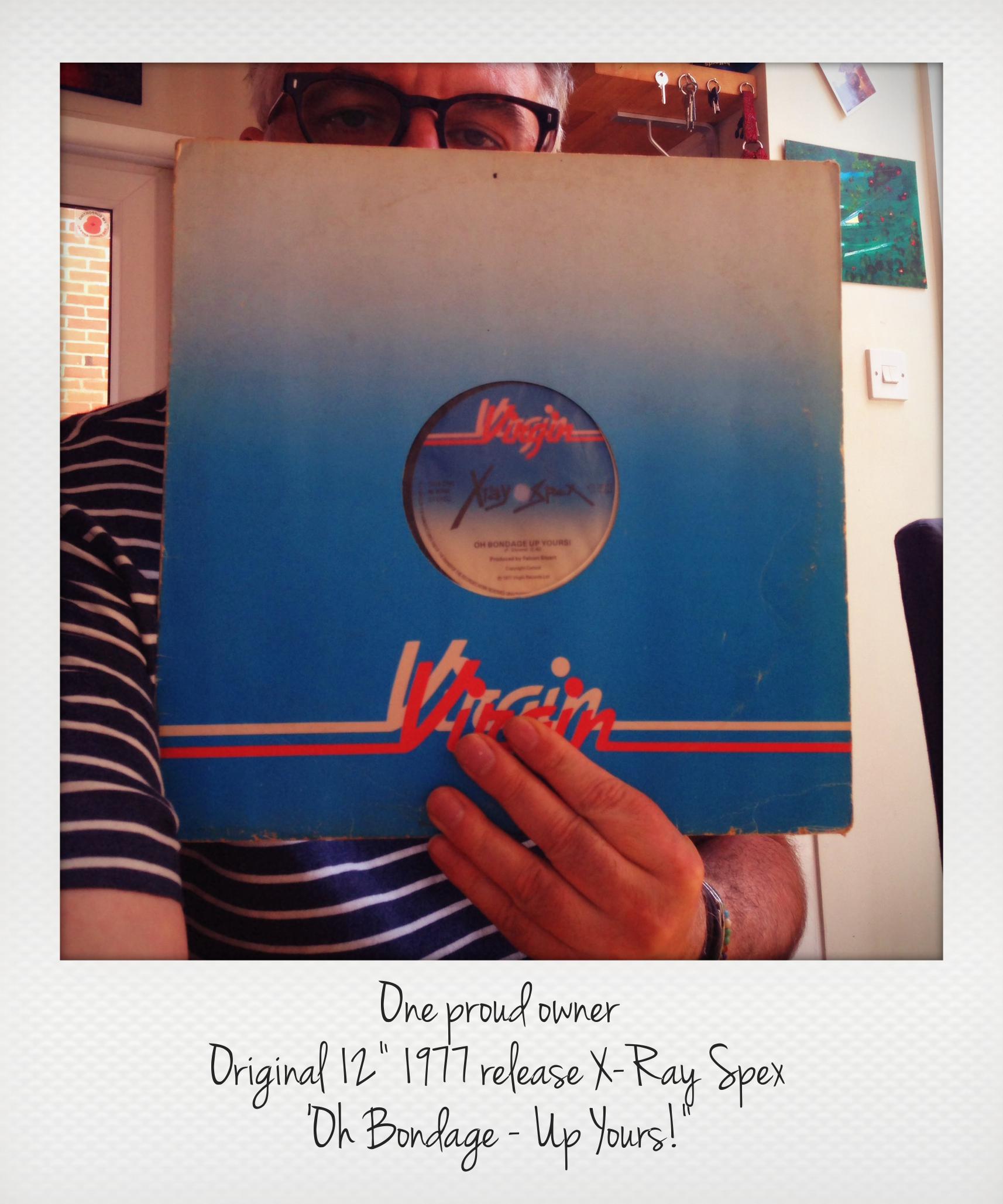
Released in 1977 “Oh bondage up yours” was the debut single by X-Ray Spex.  Polly Styrene was the bands’ lead singer and main songwriter who described the song, “as a call for liberation. It was saying: ‘Bondage—forget it! I’m not going to be bound by the laws of consumerism or bound by my own senses.’ It has that line in it: ‘Chain smoke, chain gang, I consume you all’: you are tied to these activities for someone else’s profit.” 

As I grow older and start to see the world more holistically I can often look back at key moments when a stake was placed in the shifting sands of my life. These stakes are important because they create a focus point when somethings clicked. When I get a cold chill after being exposed to yet another pile of misogynist crap by a retarded hunk in plastic bling rubbing his small codpiece against a scantily dressed women. I can point back to buying the original 12″ vinyl version of “Oh bondage up yours” in 1977.

Every cause has a counter effect and what had been achieved in the 1970s was to be challenged throughout the 1980s free for all and sod thy neighbour attitude. Samantha Fox’s was 16 years old when her mother submitted several photographs of her daughter in lingerie to a Sunday tabloid newspaper competition (Girl of the Year amateur modelling contest). By the 198os Samantha Fox was a popular topless glamour model in a daily tabloid. In 1986 Fox choose to take up a new career as a pop star. Her first release was the tacky ‘Touch Me (I Want Your Body)’ that reached No. 1 in seventeen different countries. She went on to sell more than 30 million albums and co-wrote the song “Dreams” for girl group All Saints’s 2000 album, Saints & Sinners. Although she was credited as “Karen Wilkin” because the group refused to record the song if Fox’s real name was used. In 1984 Sheena Eastern had a hit with a Prince written song ‘Sugar Walls’ a pseudonym for Eastern’s vagina.  By the close of the 80s Cher was to be seen cavorting around a battleship in a fishnet body stocking rattling out the hideous ‘If I could turn back time.’  Amongst this drivel there were occasional rays of sunshine from the likes of Chrissie Hynde (The Pretenders) and the Sugarcubes whose lead singer Bjork was to became one of the most original and innovative female recording artists of all time.

2778_Bjork_photo_1

Thank god for Bjork

As with most cases in life, it is not those at the vanguard who reap the rewards of their struggles. Kim Gordon (Sonic Youth), Courtney Love (Hole), PJ Harvey, Riot Grrrl, Sleater-Kinney, Grace Jones, Beth Ditto (Gossip), Poison Ivy Rorschach (The Cramps) and the stunning Skin (Skunk Anansie) were to find their journeys just that little bit more easier because of the women who had gone before. In turn, this made for a more creative and fertile music scene for the rest of us to enjoy. It would of be interesting to hear the views of these female artists regarding female artists in the mainstream pop world today. I can only guess that for many it will be a case of raised eyebrows and recognition that syrup manufactured girl pop groups will always have a place.

I struggle to envisage many will sign up to the ‘girl power’ of the Spice Girls call to arms, “I wanna, I wanna, I wanna, I wanna, I wanna really really really wanna zigazig ha.”  In truth, their struggle and achievements will seldom be recognised in the mainstream, because the mainstream needs to be controlled and manipulated from above. The advent of technologies has in many ways released the creative artist to pursue their particular path, but success on a scale that will enable economic independence remains a long way off for many female artists.  As a father of 3 daughters, it is with great relief that when foraging around Bandcamp I have discovered such an amazing range of female artists who are producing some truly magnificent material. To name a few:

xray


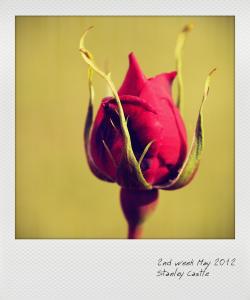
Stanley’s Magical Rose

2nd week May 2012Silence. The fragility of stillness is like numb and paralysed limbs void of energy, redundant. Disturbed only by the rhythm of breathing. Life’s ever-decreasing cycle, unachieved ambitions. Closed eyes and memory flickered dreams projected like old camera films on stained wood chip walls. The taught rituals of work from the first day to first weeks pay. Good days, the bad days and the in-between days, but always the grind. Homemade sandwiches, canteen-banter. Dirt pitted hands, stewed tea, page 3 and practical jokes. Dust in the hot foundry that told no lies and hid no secrets. Shudders and cries of sweat covered men as splashes from molting metal discovered unprotected skin. The cranking cogs that churn day in and day out. Sulfated sands. Weakened lungs are wheezing accidental poetry. Now speeches are made, and words evaporate from unintended lips. A £250.00 gift voucher. A shake of hands. A promise of continued friendships followed by a thoughtful,“ goodbye.”

Awaken. The first sense is confirmation of surrounds. Open eyes. Traffic was passing without intent. A chilly June morning beckons as the 6 am alarm sounds. The first domino of the day falls for Stanley, and the momentum starts anew. A routine of acceptances had to be maintained. A deceiving Sunbeam has penetrated the gaps of his faded paisley curtains. Across the polka dot duvet, it searches up the chimney breast, glancing the photograph of his parents who offer warmth in returning judgments.

The bookshelves constructed while listening to a transistor radio and interruptions from his mother with offers of tea,  one sugar, tuna fish sandwiches, and a custard cream biscuit. The shelves crammed with diaries, poetry books, autobiographies, George Orwell novels, photograph albums and the occasional treasure discovered in second-hand bookshops. A shower and piss down the plughole. Watching the yellow whirlpool dilute and disappear.

Dressed, tea, two pieces of toast. Stanley stands by the front door, pauses, inhales a profound conscious breath, turns the lock, and opens the door and steps outside. The housing estate is quiet. It’s young inhabitants whose lives seem full of noise and disputes sleep, recharging their batteries like the mobile phones they possess on pay as you go contracts with unlimited texts. Stanley stands motionless. The bus is late. The glass panels of the shelter lay shattered and, like the fragmented lives, he witnesses on most days nobody was keen to pick up the pieces and put it back together again. Warm breath lifts like clouds. The shattered glass grates under his feet as he steps onto the bus. He nods to the driver who nods back; no words are exchanged, none is necessary, and the bus pass is presented.

Faraway places were to remain distant places for Stanley. Although he envied those who travelled he was not bitter, he celebrated their fortune and sought any opportunity to find travellers to discuss their experiences. Often disappointed with tales of cheap alcohol, crowded beaches, and industrialised hotels. Since his redundancy from work five years ago Stanley had been volunteering three days a week at a local charity bookshop. The shop had become his universe where he learned and explored faraway cultures from abandoned books delivered to the stores from house clearances after an elderly death.

2nd week in May 2012, It was 3 years ago when cleaning old stock from the dark basement that he came across a book entitled ‘Physic Transformational Meditation, as Practiced by the North Korean Talesi Monks.’ Little is known of the Talesi Monks, and it was the only book Stanley discovered on the subject after extensive searches of local libraries, the Internet and retail bookshops.

Feared by their Japanese rulers in the early 1900s and the secretive North Korean regime all Talesi monasteries had been systematically destroyed, their practices outlawed, old monks sent to isolation camps and the separated young to state re-education programmes. The book brought instant warmth to his hands when he picked it up, which had encouraged him to set it aside. Upon opening the book, he discovered a small white-foiled package, which was acting as a bookmark for the section entitled ‘Teaki the practice of dreaming and dying.’

The little white-foiled packet contained a single seed. An individual child Stanley was born to parents who were much older than any of his peers. By 15, he became the part-time carer for his aging parents. His parents had both died while Stanley was in his 50s. Now he found himself at 71 years old living alone in the house where he was born, brought up and no doubt one day would die in. Reflecting on his circumstances, he knew his choices, which he had made without regret.

To avoid the constant disputes between neighbours, children beavering away like a colony of worker ants intent on dismantling the housing estate brick by brick and the regular intrusion of police raids seeking to extract the latest suspect for questioning Stanley timed his arrival home in the early evening. It was March when Stanley planted the seed and placed the small pot by the kitchen window. He had tendered to its every need with daily dedication. When the foliage was about 2 inches long, he feeds the plant a high nitrogen food to encourage foliage and stem growth. When the stems started to elongate, he had decreased the nitrogen feed to promote a full bloom. During late May, the buds began to open and expose the delicate dark red petals.

The following morning Stanley had followed his routine. With a spade in one hand and potted rose in the other Stanley made his way to the large grassed common area that lay in the centre of the housing estate. In the heart of the common area, he dug a small hole, knelt down, planted the rose and stood back. Immediately the sun’s rays broke through the morning clouds. A tender, sweet smell emerged from the rose and entered Stanley’s nostrils. He stood perfectly still. It was one hour before his neighbour Angie Ward, who had been peering at Stanley for 45 minutes through her bedroom curtains, came over to see what he was doing.

2nd-week June 2012When Angie Ward caught a smell of the tender fragrance she too immediately stood still, relaxed, let out a deep sigh and closed her eyes.Next, it’s was Tom Ridbridge, the neighbourhood thug who was to succumb then Jenny Heartbelt, one by one this reoccurrence was maintained until 11.45am. By this time every resident of the estate was standing in a large circle 100 people deep, in a state of total bliss and calm.

By 12noon the police were in attendance, but were powerless due to the numbers and density of the residents they could not access the centre of the circle to ascertain the cause nor were they able to smell the fragrance of the red rose. No matter how many times they demanded information the residents did not respond and only continued to remain silent, head slightly bowed, as if in deep sleep.

TV crews from the local media arrived. Politicians, who had not been seen on the estate for many years pronounced theories and point accusations at their opponents. Noble people from the town hall held discussions into the phenomena, which was taking place in their jurisdiction and without their consent. They passed emergency resolutions demanding the residents to disband and return home, but to no avail. As the day slowly became, night police helicopters hovered above with piercing searchlights scanning the crowd below. Barriers were erected to prevent people from entering or leaving the estate. At 11 pm the chief of police Edmond Clarke addressed the residents through his standard police issue loudhailer, “I have been ordered to disperse you all from this unlicensed gathering. I will give you until midnight to do so. If needed, I will use force, so please disperse peacefully now,” but no response was forthcoming.

At 11.55pm, Stanley opened his eyes, bent down and removed the red rose from the soil and placed it back into the pot. He stood up and like a regimented army his fellow residents slowly came to their senses, smiled, turned and calmly started to make their way back to their homes in silence.

10 am the day after; Stanley was sitting in his front room enjoying a cup of tea when he realised a calmness he had not felt for a long time was emanating from the streets outside. Calmness he had not experienced since before his parents had died. He glanced at the rose, which he had placed on the living room table. Its colour had drained. Leaning forwards Stanley took a photograph with his Polaroid Camera and wrote a single word and the date on the photo.

He sat back, closed his eyes, inhaled gently, smiled, and exhaled a deep sigh followed by a low murmur. His hands relaxed and opened on each arm of the chair. His body eased into the contours of the seat. A warm glow appeared in front of him.

Teaki


I took these photos of Steven Gene Wold, commonly known as Seaside Steve during his set at last years Glastonbury Festival where alongside John Paul Jones (bass) and Dan Magnusson (drums) he delivered the goods on the West Holts Stage. Before the gig and backstage I managed to see him play a nafty hand of table tennis too.


The Men Who Sold The World (1971 – 1973)

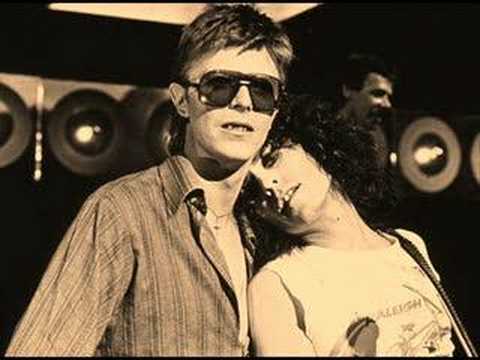
As David Bowie scans the New York skyline from his semi retirement watch tower he surely must occasionally ponder the different phases of his illustrious career and the artists he has shared it with. John Lennon, Bing Crosby, Iggy Pop, Apex Twin, Massive Attack to name a few. Bowie has not been afraid to mix it up, although normally on his terms. His joint venture with Queen ‘Under Pressure’ allegedly faced several creative challenges with Bowie and Mercury going hammer and tong at each other, although the embryonic version of the song was a Queen demo called Feel Like’ written by Queen drummer Roger Taylor. Bowie of course has his critics.  The media hyped feud with Elton John, which can be traced back 40 years when John accused Bowie of “talking shit….being a silly little boy” during a Rolling Stone interview after Bowie referenced Elton John, “the Liberace….the token queen of rock.” 

There was a time of course when Bowie did not pull all the strings. A time when he had an equal who would be both friend and rival. Creative competition can produce brilliance, or alternatively flood the world with stagnated repetition. It can instil innovation or cripple confidence. Chinese Democracy the 6th album by rock juggernaut Guns and Roses for example took 14 years (1994 -2008) to release. In complete contract 36 months in the early 1970s resulted with two incredible artists releasing 6 albums of impeccable standard. A period that would influence popular music from there on.

1971- 1973

article_4e184652f12e9223_1345445269_9j-4aaqskThe 1960s had vanished in a dust bowl of psychedelic ash. The hippy party was over and from the rubble rock music increasing splintered and spun off in all types of directions. Heroin had replaced LSD as the drug of creative choice, which brought a harder and darker edge.  Music on TV, cheap HiFi equipment on the high street made recorded music more obtainable to teenagers. Record sales in both single and album formats were at an all time high. The top selling 15 singles between 1970 and 1979 sold on average over 1 million copies each. In contrast to the present day when the average No 1 single sells around 100,000 copies , a top 10 requires 30,000 and 6,000 will normally achieve a top 40.

Black Sabbath were to release 3 albums during 1971 – 1973. Led Zeppelin performed Stair Way to Heaven live for the first time whilst Pink Floyd performed Dark Side of the Moon live for the first time. The Paul McCartney single ‘Give Ireland Back to the Irish’ was banned by the BBC. The First Glastonbury Festival was held. The Electric Light Orchestra were to perform live for the first time. Mike Oldfields Tubular Bells was released on Richard Branson’s fledgling Virgin Label.  Slade (the link between the Beatles and Oasis) released their classic Slayed album. Synth pioneers Kraftwerk released 2 albums. In these 36 incredible months the legendary CBGB Music Club opened its doors in New York, The Who released Quadrophenia.  Dr Feelgood, Neu, Sister Sledge, New York Dolls,  Roxy Music, ACDC, Cheap Trick, Bad Company, The Sugar Hill Gang, Television, The Tubes (to name a few) are formed.

Bowie/BolanIt was during this musical juncture that two young artists, whose paths had crossed in the previous decade would end up ruling popular music in new decade. They would individually create 3 classic pop-rock albums of original material each,  spawn 17 top twenty hits and 4 number 1’s.

Legend has it that David Bowie and Marc Bolan had first met each other in the offices of a talent scout in 1964.

Bowie nearly 18 years old, Bolan not quite 17 were ambitious to make it as performing artists in the music business and each had been experimenting with various sounds and styles of the day. Their attraction was instant and their friendship endured over the years and their creative rivalry was to reach its peak in the chart battles of 1971 -1973.

This blog is not about who was the best artist. It is simply a celebration of this amazing time and two artists at the top of their game.

Singles

Hot Love released in 1971 was a T Rex chart success. By 1972 David Bowie was hitting the charts with Starman, John I’m Only Dancing and The Jean Genie, but it was Bolan who was setting the pace with No. 1s Telegram Sam and Metal Guru. By 1973 Bowie’s Life On Mars  and Bolan’s 20th Century Boy all made the top 5.

Albums

Putting aside the Bolan compilation Bolan’s Boogie (1972) released when Bolan had left Fly Records to form his own distribution company and Bowie’s covers album Pin Ups, which Bowie released in 1973 predominately for the American. It is the 3 original albums they released each during 1971-1973, which have set the standard.

First of the mark was T Rex with Electric Warrior (24th September 1971) Bowie released Hunky Dory (17th December 1971) followed by his break through The Rise and Fall of Ziggy Stardust and the Spiders from Mars (6th June 1972). T Rex released The Slider (21st July 1972) and Tanx (16th March 1973). Bowie then went on to release Aladdin Sane (13th April 1973).

It may have seemed they had declared creative war on each other, but Keith Altham, who over the years acted as publicist for both artists recalled that they were very close, ‘There was a real love there. They were very similar, in so many ways. They could have been brothers.’ Bolan’s breakthrough came thanks to the American Tony Visconti, then a musician and fledgling producer.  His partnership with T Rex established Bolan as the undisputed king of glam rock. Visconti was to later transfer his professional affection from Bolan to Bowie, and this partnership would ultimately create some of the most original and enduring rock music ever recorded, including Young Americans, Low, Heroes, Lodger, Scary Monsters……

The legendary British DJ John Peel was an early champion of T Rex, but by 1970 Bolan had shifted the band from its folk roots on to a more rock structured format with its occasional homage to the likes of Eddie Cochran. This formate would help provide the template for many songs across the 3 T Rex albums during 1971-1973 and beyond.

Electric Warrior is my personal favourite and contains the classic tracks ‘Jeepster‘ and ‘Get it on.’ The Slider (album photos by Ringo Starr) contains the stomping ‘Metal Guru‘ and ‘Telegram Sam.‘ My favourite track on the Tanx album is the opener to side two ‘Mad Donna.’ An album full of melancholy ballads and rich production, Tanx showcased the T. Rex sound bolstered by extra instrumental embellishments such as Mellotron and saxophone.  Tanx would mark the end of the classic T. Rex lineup and a slow decline for Bolan until a resurgence after a spring UK tour with punk band the Damned garnered positive reviews 1977.  Whilst driving home early in the morning on 16th September of the same year Bolan was killed in a car crash, two weeks before his 30th birthday.

His death ended the band given he wrote and composed all the material. Tragedy was to fall upon all the remaining members of the band. In 1980 Steve Took (drummer) died of asphyxiation after his throat was numbed by a cocktail of morphine and magic mushrooms.  Steve Currie was to also die in a car crash by 1981. Mickey Finn died following a short illness in 2003 and Peter ‘Dino’ Dines died of a heart attack in 2004. 

All I want is easy action baby

David Bowie would also use the rock n roll structures to the max, especially  on the Ziggy Stardust and Aladdin Sane albums. But unlike Bolan, Bowie was prepared to take risks and be more adventurous and push the boundaries. He was also a genius at absorbing musical emerging trends. Bowie’s scope as an artist was simply broader and deeper in both influence and ambition.

The Hunky Dory album has two of my favourite Bowie tracks on it, ‘Kooks‘ and ‘Changes‘ whilst it also contains one of his most pretentious and forgettable offerings ‘Song for Bob Dylan.‘ Whilst most people will point to Ziggy Stardust as the classic album with obvious and credible reasons. It is Aladdin Sane that has become my favourite over the years. Coming as it did after the Ziggy Stardust episode Aladdin Sane is full of confidence and variation. Bowie and his side kick Mick Ronson meddle with the Rolling Stones, whilst  absorbing influences from the Stooges to Jacques Brel.

As a teenager it was the album cover. The lightening across the face. A vision that would be drawn religiously by adolescent boys in art classes for years to come.

On the 2nd June 1991 Bowie joined Morrissey on stage to perform the T Rex track Cosmic Dancer. A fitting tribute on several leaves.

Two great artist and 6 classic albums, which should grace the shelves of most record collections.