If, for some baffling cosmic glitch, you’ve never met Supersonic Man, allow me to be your guide. Released in 1979, this cinematic gem proudly claims the title of “best worst movie ever made”—a bona fide classic of glorious absurdity that you simply can’t miss. Think superhero camp meets cosmic chaos, wrapped up in a package so wonderfully flawed, it’s impossible not to love.
February 2021 Marks 50 Years Since the Release of Tago Mago — One of Rock’s Greatest Masterpieces
As February 2021 approaches, music lovers worldwide prepare to celebrate the 50th anniversary of Tago Mago, the groundbreaking album by the German experimental rock band Can. Recorded in November 1970, Tago Mago emerged from a series of daring sessions that fused jazz, funk, avant-garde tape editing, and early sampling techniques into a singular, hypnotic soundscape.
Released in February 1971, this landmark record was the first to showcase the talents of vocalist Damo Suzuki, who stepped in after the departure of original singer Malcolm Mooney in 1970. Tago Mago remains a towering influence on progressive, psychedelic, and experimental music — a testament to Can’s fearless innovation and enduring impact on the rock canon.
A Bold New Chapter
Recorded in November 1970, Tago Mago was born out of a pivotal moment for Can. The band had just parted ways with Malcolm Mooney, their original frontman, whose manic energy defined their early work. Enter Damo Suzuki, whose ethereal, improvisational vocal style ushered in a radically new phase. His voice often feels less like singing and more like an instrument itself—sometimes hypnotic, sometimes primal—blurring boundaries between lyricism and pure sound.
Innovative Fusion of Styles
Tago Mago thrives on contradiction and contrast. It draws from jazz’s improvisational freedom, funk’s hypnotic grooves, and the avant-garde’s disruptive spirit. What sets it apart is Can’s pioneering use of tape editing and early sampling techniques—a bold approach that stitched together jam sessions into complex, unpredictable compositions.
Tracks like “Halleluhwah” unfold over 18 minutes of intricate polyrhythms, swirling textures, and repeated motifs, drawing listeners into a trance-like state. “Aumgn” ventures into eerie, otherworldly territory with its experimental soundscapes, while “Mushroom” offers a haunting, rhythmic pulse beneath Suzuki’s enigmatic vocals.
Legacy and Influence
Upon release in February 1971, Tago Mago baffled some but thrilled those open to new sonic frontiers. Its impact would ripple far beyond the Krautrock movement from which it emerged, influencing genres as varied as post-punk, ambient, electronica, and alternative rock.
Artists ranging from Radiohead to Sonic Youth have cited Can’s work as a touchstone. The album’s fusion of raw energy and meticulous studio craftsmanship opened new possibilities for what rock music could be—not just a set of songs but a journey, an immersive experience.
Why Tago Mago Still Matters
Half a century on, Tago Mago endures because it defies easy categorisation. It’s challenging and rewarding in equal measure, inviting repeated listens to uncover its layers. In an era of instant gratification, its sprawling, patient compositions demand attention and presence.
More than that, it stands as a testament to artistic courage—of a band willing to break their own rules, embrace imperfection, and trust in collective intuition. For listeners willing to take the plunge, Tago Mago remains an exhilarating, timeless masterpiece, a landmark in the ever-evolving landscape of rock.
Pretending to feel the warmth of sun rays on my neck, I wandered from the garden into the kitchen—only to be pulled from my thoughts by the ringing telephone. The moment I lifted the receiver, I knew it was Mysterious Vee’s voice on the other end, ready to whisk me away once again.
This time, her journey was unlike any other: an eclectic dive into the pulsating rhythms and otherworldly textures of the Japanese soundscape. Every note promised to transport me somewhere new, a place where tradition and innovation collide in electrifying harmony.
If you crave a sonic adventure that defies expectation and awakens your senses, tune in—and let Mysterious Vee guide you through this mesmerizing musical voyage.
From Punjab with Love (and Synths): Vee’s Sonic Postcard
The line crackles, carrying the faint hum of cicadas and the occasional honk of a passing truck. Somewhere in rural Punjab, in a weatherworn telephone booth that’s seen more monsoon rains than missed calls, the ever-enigmatic Vee dials in her latest transmission for Lost in a Wide Open Field.
This time, her compass spins toward a single, shimmering point of obsession: the synth. Not the cold, mechanical caricature of ‘80s clichés, but the warm-blooded, story-telling kind — the one that can both punch you in the chest and pull at your heartstrings in the same breath.
Vee’s latest set is a curated constellation: established names whose fingerprints are already etched into the circuitry of modern sound, and hidden gems whose work hums like a secret power source waiting to be discovered. Each track, whether wrapped in neon gloss or stripped to minimalist pulse, celebrates the honourable synth as both instrument and alchemist, capable of turning the mundane into the transcendent.
It’s more than a playlist — it’s a late-night drive across sonic landscapes, from city skylines blinking in electronic Morse code to wide open fields where the stars themselves seem sequenced. And like that crackling phone line from Punjab, Vee’s voice is the tether: intimate, knowing, and just mysterious enough to keep you hooked for the next call.
Vee’s Krautrock Transmission: From the Middle of Nowhere, Straight to Your Ears
Somewhere in the dead centre of a wide open field, a lone telephone booth stands like an art installation that wandered out too far and forgot the way home. Inside, the mysterious Vee leans against the glass, the wind whistling in the receiver as she beams her latest Lost in a Wide Open Field broadcast across the ether.
This time, it’s over an hour of pure, undiluted Krautrock — 10 tracks that chart the genre’s hypnotic, head-expanding terrain. Some are well-trodden classics, others are ghosts from long-deleted pressings, the kind of vinyl that obsessive collectors chase with the tenacity of archaeologists hunting lost civilisations.
The crown jewel? A raw, improvised spark from Can, lifted straight from their legendary John Peel session in the 1970s — a performance that still feels like a live wire running through the decades. The rest of the set spans motorik rhythms, cosmic synth odysseys, and guitar lines that seem to dissolve into the stratosphere.
From her improbable command centre in the grasslands, Vee stitches together a soundtrack that’s equal parts archive dig and cosmic pilgrimage — proof that even in the most isolated places, the right signal can still find you.
30 minutes mix of digitally transferred phonograph records from the age of 78rpm, which changed the face of music forever and ushered in the age of rock n roll. Things would never be the same again with the exception that as then and as today the musician gets ripped off. Expect the odd crackle, pop and the unexpected. For those who went before and to those who stand on their shoulders. I salute you.
I recently stumbled upon a dusty box of old cassette tapes—handcrafted mixtapes I either recorded myself or swapped with friends back when I was about 16 or 17, sometime between 1977 and 1979. Now carefully digitized and uploaded here, these tapes open a raw, authentic window into the gritty DIY punk scene of the late 1970s.
The tracks on these recordings have likely been buried in obscurity for decades, featuring a treasure trove of bands from my native north-east — most of whom I was lucky enough to see live in those chaotic, electric days. When better-known groups appear, I’ve deliberately picked lesser-known cuts to keep the spirit underground alive.
As you might expect, the sound quality is a little rough around the edges—authentic tape hiss and all—but that’s part of the charm. So buckle up for 45 minutes of unfiltered noise and rebellion, captured at a time when the internet was still a wild dream, and punk was a loud, vivid reality.
Vol.1: Leo’s Sunshipp, Pete El Conde Rodriguez, Johnny Hammond, Orchestra Harlow, Billy Stewart, Chuck Carbo, Robert Parker, Broadneck, Johnny Otis Show, The Gil Evans Orchestra.
Vol.2: Ofege, People’s Choice, Funkadelic, Edwin Star, Betty Davis, Lil Buck & The Top Cats, Skip Easterling, Cymande, Fabulous Emotions, Barry White.
Vol.3: Robert Belfour, Sly & The Revolutionaries, Charlie Louvin, Centers, The Lafayette Afro Rock Band, Afrissipi, The Selector.
Vol.4: Air, Mum, The Bees, 1 Giant Leap, Craig Armstrong, Moby, Badmarsh and Shri.
I’ve always tried to keep it at arm’s length—especially after witnessing the Sex Pistols’ 1996 reunion at Finsbury Park. Watching legends unravel their hard-earned reputations in mere moments was a brutal lesson in how quickly credibility can crumble. Punk, that raw, rebellious force birthed in the late ’70s, has often been chewed up and spit out by time and nostalgia’s relentless grip.
But then there’s that winter of 1977, when I was just 16, clutching a ticket alongside my mate Ste (sadly no longer with us). We hopped a bus from our gritty hometown of Stockton-on-Tees to Middlesbrough’s Rock Garden, ready to soak in the live fire of the Tom Robinson Band.
This wasn’t just another gig—it was a rite of passage, minus parental permission, with a detour through the infamous North Eastern pub. There, I knocked back two pints of Double Diamond, soaked up the boorish testosterone-fueled banter—racist, sexist, unapologetically rough—and took my first shot at pub pool (utterly demolished). I chose a track on the jukebox, The Damned’s New Rose, for the first time, then made a flimsy excuse to rush outside, gulp fresh air, and embarrass myself by throwing up in a nearby alleyway.
But within an hour, I was lost in a throng of ragged young punks, guitars jangling and voices raw, belts echoing “Glad to be Gay.” Today, that anthem might barely raise an eyebrow—even in Britain’s most conservative corners. But back then? Singing those words carried the real, looming threat of violent attack—from the hostile crowds, from the police, from a world steeped in queer bashing and racial abuse as everyday horrors. Nowhere was this uglier than in the pubs and social clubs of 1970s working-class north-east England—a toxic stew of culture I was born into, complicated and difficult to untangle.
I remember Tom’s voice that night—nervous but fierce—as he introduced “Glad to be Gay.” The crowd was hesitant at first, unsure how to respond to this bold, singalong defiance. Sweat-soaked bodies bounced to the roaring guitars, eyes flickered between confusion and courage. By the second chorus, something shifted—a raw, electric unity erupted. It was a moment where change stirred, barely perceptible yet monumental.
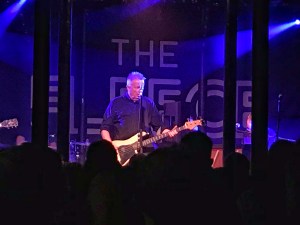
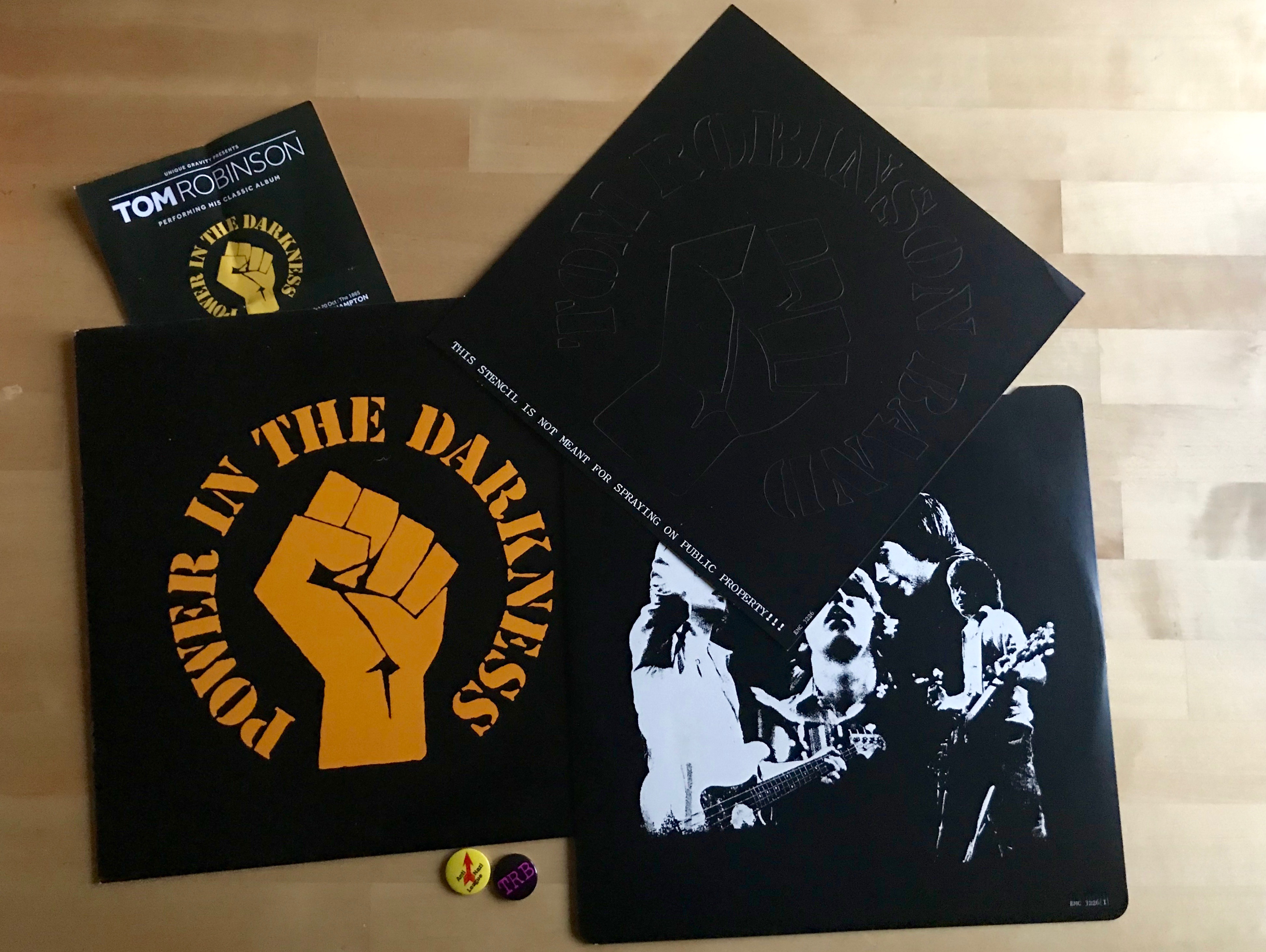
Fast-forward 41 years. Here I am at The Fleece in Bristol, capturing Tom Robinson performing his seminal Power in the Darkness album live, marking its 40th anniversary. And let me be clear—this remains a truly great rock record, blistering and bold. Its lyrics don’t just chart how far we’ve come—they’re a sobering reminder of how far we can still fall back into the shadows.
Tonight, I raise a glass—not only to my old mate Ste, but to Tom Robinson’s courage, his art, and the band of young rebels who crafted an album that shaped my politics, my understanding, and my fight.
 30 minutes mix of digitally transferred phonograph records from the age of 78rpm, which changed the face of music forever and ushered in the age of rock n roll. Things would never be the same again with the exception that as then and as today the musician gets ripped off. Expect the odd crackle, pop and the unexpected. For those who went before and to those who stand on their shoulders. I salute you.
 Irregular Frequencies