Category Archives: Chewing the Fat

Woebegone

sam-smith

Don’t worry son the bus will turn up soon

During a recent interview warbler Sam Smith explained the naming of his debut album (In the Lonely Hour) and he could not have not sounded more pitiful, “I wrote about being sad. Hopefully I’ll be happier soon and I’ll write about that.”  Colin Vearncombe who briefly enjoyed mainstream success under the moniker Black was equally despondent with his miserably infused 1987 hit single Wonderful Life, but unlike Smith, Vearncombe was making a not so subtle reflection of the times he found himself in where yuppies scoured the earth like apologetic zombies swigging champagne from Berluti handmade shoes. The Welsh band Racing Cars plunged the depths of misery in 1977 with their one and only hitThey Shot Horses Don’t They.’  The song, which is  based on the film of the same name concerns itself with a man who in his youth saw a horse break its leg, after which it was shot and put out of its misery. Arguably the accolade for most miserable song ever recorded would properly go to Buddy Holly for his 1959 effort ‘Raining in my Heart.’  The Beatles paraphrased ‘Raining in my Heart’ in their song ‘Dear Prudence’ as “The sun is up [instead of “out”]; the sky is blue.”  In 1978 self styled sad clown Leo Sayer had a hit with ‘Raining in my Heart’ and to cement the songs claim Robert Wyatt included a piano based instrumental version on his 2003 album, Cuckooland.

Recorded in 1990 and initially hidden away on the box set Tracks (1998) the Bruce Springsteen song ‘Sad Eyes’ takes some beating. The song was produced at a time when Springsteen was apparently re-evaluating his life. Enrique Iglesias covered ‘Sad Eyes’ in 2000. Sadly, Inglesias’ video for the track failed to capture Springsteen’s original intent. The video was shelved due to its sexual content. It depicts Iglesias alone in a motel room indulging in erotic fantasies about a girl he sees in a phone-sex ad. If you have just ended a relationship and you are surrounded in downcast misery I suggest you avoid at any cost Dusty Springfield’s version of “I Just Don’t know what to do with myself.”  First recorded by Tommy Hunt in 1962 Springfield recorded her version two years later with heart shattering effect Springfield delivered misery that has not often been matched, “I just don’t know what to do with my time, I’m so lonesome for you it’s a crime, going to a movie only makes me sad, parties make me feel as bad. When I’m not with you I just don’t know what to do.” The song reached number 3 in the summer of 1964 and remained Springfield’s highest charting UK hit until she reached Number 1 in 1966 with “You Don’t Have to Say You Love Me.”  

clown_468x582The point being made is the maze of love, hate, loss and fear we humans are required to navigate has and will always continue to provide creative output. It is the story of our fragile existence. It has been played out in classical operas, Shakespearean plays, sugar coated pop hits, movies and novels. Leonard Cohen and Nick Cave have cultivated misery into an art form, but unlike the phoney sadness often portrayed in today’s onslaught of manufactured pop stars Cohen and Cave have dragged the essence of misery from the bowels of their human frailty into carefully crafted stories and songs.  This is in contrast to the pity seeking artist feeding an equally self pitying audience, which we can increasingly witness today via disposable pop stars. The result is an overflowing eco-system of self flagellation between artist and audience, although there is of course benefits to an artist being in this predicament given they expect nothing good to happen in their miserable lives they will never feel disappointed or disillusioned by criticism.  It is not the art of creating a carefully crafted song of heartache that should be of worry, but the sheer quantity of banal misery based entertainment currently being manufactured and pumped out to an absorbing audience that should be of concern.  At the point of writing this blog of the top 25 chart singles 15 of the songs listed concern themselves with failed relationships, heartache and lost love with titles such as ‘me and my broken heart, love runs out and only love can hurt like this’.  

Fear in particular is a powerful and primitive human emotion. It alerts us to the presence of danger and was critical in keeping our ancestors alive. Fear can actually be divided into two stages, biochemical response and emotional response. The biochemical response is universal and the emotional response is highly individualised.  Whilst the majority of people will avoid situations in which there is a high risk of actual injury the experience of being scared in an environment that is actually safe has enabled an entire industry to be built. Horror films and violent video games are examples of this phenomenon, but repeated exposure to similar situations leads to familiarity. In turn this greatly reduces the resulting elation, leading people to seek out new and bigger responses to satisfy their needs. Sound familiar? Well, if you reflect upon the entertainment business over the past 30 years it tells its own story.

By the 1970s the tone towards more realism in motion pictures started to produce some harrowing films. Solider Blue was the third most popular movie at the British box office in 1971. Directed by Ralph Nelson and inspired by events of the 1864Sand Creek massacre in the Colorado Territory,USA. Released during the Vietnam War, shortly after public disclosure of the My Lai massacre, the film was controversial at the time not only for its subject matter, but also for its graphic depictions of violence. Nelson pushed the depiction of violence to explicit levels, showing nudity during rape scenes, as well as realistic close-up shots of bullets ripping into flesh. By 1992 Quieten Tarantino was shocking cinema goers with his debut film Reservoir Dog. The film received substantial criticism for its strong violence and language. One scene that viewers found particularly unnerving was the ear-cutting scene. It was reported that the actor Michael Madsen, who carried out the scene reportedly had great difficulty finishing it, especially after Kirk Baltz (playing the victim) ad-libbed the desperate plea “I’ve got a little kid at home.”  Meanwhile It took several complaints before a poster campaign advertising the film The Last Exorcism, which featured an image of a girl in a blood-soaked dress to be removed because it was deemed unsuitable to be seen by children. The adverts were posted on bus stops and on the sides of buses. Optimum Releasing, which ran the ads, said that the campaign was designed to target a broad, mass-market audience and intended to position the movie as a mainstream horror release with imagery “within the fictional context of this genre”. Once it learned of the complaints the company instructed its media buying agency to remove any ads displayed near schools. Last  year was a bumper year for horror films with the release of sequels, remakes and original materials with such titles as Dead before Dawn, Nothing Left to Fear, I Spit on your Grave 2, No One Lives, You’re Next, Evil Dead, etc.

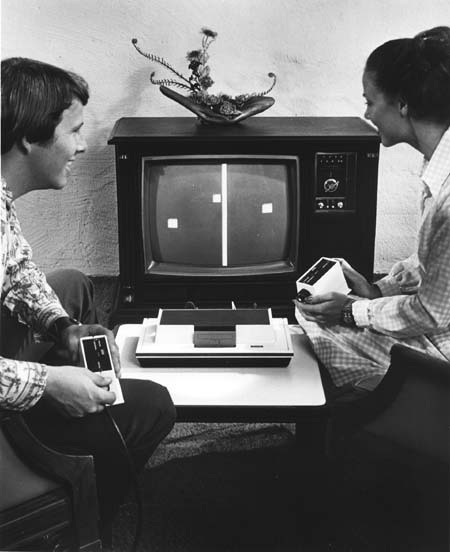
Atari set the whole videogame craze in motion with its 1972 coin-operated arcade game Pong. During the arcade years that followed, Atari made several coin-operated hits: Breakout, Atari Football, Asteroids, Battlezone, Missile Command, Centipede, Dig Dug, Pole Position, Marble Madness, Gauntlet, and even a Star Wars arcade game. While the graphics seem rudimentary by today’s near photo-realistic 3D gaming standards, when consoles were first released in the late 1970s it was revolutionary to be able to interact with your TV set in such a way. The simple aim of the game Pong is to defeat an opponent in a simulated table-tennis game by earning a higher score. Allan Alcorn created Ponga as a training exercise assigned to him by Atari co-founder Nolan Bushnell. Bushnell based the idea on an electronic ping-pong game included in the Magnavox Odyssey, which later resulted in a lawsuit against Atari. Surprised by the quality of Alcorn’s work, Bushnell decided to manufacture the game. Pong quickly became a success and is recognised as the the first commercially successful arcade video game machine, which helped to establish the video game industry along with the first home console. The violence in the 1997 Carmegeddon video game comes from the sheer ability to run people down in the most imaginatively brutal ways possible with a multi-purposed road hog reminiscent of those seen in the 1975 film Death Race 2000.  What separated 2000s Soldier of Fortune from the others in the field of violent video games was the use of the GHOUL System, a physics-based game engine that enables the player, for a lack of a better term,torture and brutalise enemies at your most sadistic desires. By 2001 the video game Grand Theft Auto 3 was offering gamers the opportunity to be entertained by barbecuing prostitutes with flamethrowers. The top selling video games last year included Grand Theft Auto V, Assassin’s Creed V and the Last of Us.  
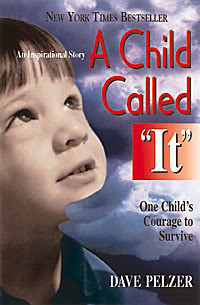
‘A Child Called It’ was published in 1995. Written by Dave Pelzer it is a brutal book concerning his childhood of being beaten and starved by his emotionally unstable, alcoholic mother. As one review highlighted, “Dave’s bed was an old army cot in the basement, and his clothes were torn and raunchy. When his mother allowed him the luxury of food, it was nothing more than spoiled scraps that even the dogs refused to eat.”  Dave went on to pen:

  • The Lost Boy: A Foster Child’s Search for the Love of a Family,
  • A Man Named Dave: A Story of Triumph and Forgiveness,
  • Help Yourself: The Privilege of Youth, Help Yourself for Teens.

By 2009 Dave seemed to have addressed his demons in his book, Moving Forward.  Richard Pelzer (Dave’s brother) shared his demons with ‘A Brother’s Journey’ detailing his experiences of witnessing and participating in the abuse of his older brother. He also penned A Teenager’s Journey. Both Dave and Richard are available for hire as motivational speakers. The tortures of human existence expressed through the medium of book shows little sign of slowing down with anybody who has managed to garnish 15 minutes of fame and willing to share their unique sadness. The top selling 2013 book on the Amazon website were The Fast Diet. Whilst real life “tragedy” biographies were dominated by the author Cathy Glass and her offerings,
  • Cut: The true story of an abandoned, abused little girl who was desperate to be part of a family. 
  • Damaged: The Heartbreaking True Story of a Forgotten Child and
  • Another Forgotten Child. 

Whilst an epidemic of similar books sold in their millions including cheerful titles like,

  • No One Wants You: A true story of a child forced into prostitution.
  • Shattered Lives: Children Who Live with Courage and Dignity.
  • Nobody Came: The appalling true story of brothers cruelly abused in a Jersey care home
  • Handstands In The Dark: A True Story of Growing Up and Survival. 

On the opposite shelving from the ‘truth life stories’ the would be customer can also find an array of ‘self help books’ too. Should we even be bothered about the entertainment industry funding and commissioning such a high supply of  doom ladened, miserable, violent, emotionally heartbreaking material? After all would it be to sinister to suggest the entertainment industry is seeking to manipulate your emotions……….

Facebook, the world’s biggest social networking site faced a storm of protest after it revealed it had discovered how to make its users feel happier or sadder with a few computer key strokes.  In effect what Facebook did secretly, involved a study involving 689,000 users in which friends’ postings were moved to influence moods. Facebook were caught redhanded conducting a mass experiment in emotional manipulation. If government had been caught in the same way the outcry would properly have caused far more angry reaction. If manipulating our emotions is as simple as changing a few postings on our Facebook page what impact is the collective onslaught of misery based entertainment having on the populous in general? The key worry about the Facebook story is just how quickly it disappeared from the headlines and our subconscious.  When did we become comfortable and accepting of big business holding so much personal information, which we have given up voluntarily and then enables them to utilise this information to manipulate our emotions?

Culture is of course the manifestation of what we do, think and feel. It is vital because it enables us  to function with one another. Our culture is a way of life. It concerns itself with our behaviours, attitudes, beliefs, values, and symbols that we accept, generally without thinking about them, and this culture is passed along by communication and imitation from one generation to the next. Whilst violent force may win wars those who can influence a culture are more likely to have a bigger and more sustainable impact.  Manipulating culture for a defined end, or to secure an interest is nothing new. Hermann Wilhelm Göring was a German politician, military leader, and leading member of the Nazi Party. He founded the Gestapo in 1933, and later gave command of it to Heinrich Himmler who was the psychopath behind the final solution. In 1941 Adolf Hitler designated Göring as his successor and deputy in all his offices. So altogether not a vey nice guy. Goring made the following observation, “Naturally, the common people don’t want war; neither in Russia nor in England nor in America nor, for that matter, in Germany. That is understood. But, after all, it is the leaders of the country who determine the policy and it is always a simple matter to drag the people along, whether it is a democracy or a fascist dictatorship or a Parliament or a Communist dictatorship. Voice or no voice, the people can always be brought to the bidding of the leaders. That is easy. All you have to do is tell them they are being attacked and denounce the pacifists for lack of patriotism and exposing the country to danger. It works the same way in any country.”  

The sheer quantity of misery induced products being consumed may represent a race to the bottom of the entertainment barrel, whilst its creative producers are desperately mining  our sensitivities trying to discover new ways of stimulating our increasing fatigue. Certain trends in society, which run alongside the increased level of misery induced products being consumed are interesting to read:

  • Research in the USA provided data indicate that the percentage of people treated for depression tripled in the early 1990s with a more modest increase in the early 2000 era. About 75% of the patients who were treated for depression received antidepressant medications. (Eugene Rubin MD, PhD and Charles Zorumski MD, Phycology Today)
  • The number of young people aged 15-16 with depression nearly doubled between the 1980s and the 2000s. (Office for National Statistics (1997): Psychiatric morbidity among young offenders in England and Wales).
  • The proportion of young people aged 15-16 with a conduct disorder more than doubled between 1974 and 1999, (Nuffield Foundation 2013 Social trends and mental health).
  • 39,518 suicides were reported in the US in 2011, making suicide the 10th leading cause of death for Americans.
  • Suicide is a significant national social issue in the UK; 6,045, 5,608 and 5,675 people aged 15 and over committed suicide in 2011, 2010 and 2009 respectively.The number of male suicides in 2011 was the highest since 2002.

There is of course no scientific evidence linking the onslaught of misery produced entertainment with the statistics set out above. Our ignorance will be our ultimate downfall.
When The Wheels Stopped Turning

Beethoven was deaf

Beethoven was deaf

The normal format for the TV programme Britain’s Got Talent starts with the judges scouring the land to discover those they consider may have the magical talent. The initial auditions are like a medieval crusade with a host of cringe worthy performances by eccentrics paraded in front of the TV camera, screened directly into our living rooms and considered ‘light family entertainment.’ It is a short cut to celebrity stardom for a handful of budding artists, which plucked Susan Boyle from obscurity in 2009. Boyle finished 2nd place in the competition to the dance troupe Diversity. The day after the final she was admitted to The Priory, a private psychiatric clinic in London.   Her stay in hospital attracted widespread attention. The Press Complaints Commission following press reports about Boyle’s erratic behaviour and speculation concerning her mental condition,  wrote to remind editors about clause 3 (privacy) of their code of press conduct.  Her family reported “she’s been battered non-stop for the last seven weeks and it has taken its toll, but her dream is very much alive,”  Boyle left the clinic 3 days after her admission. Bullied at school and cruelly nicknamed ‘Susie Simple’ by fellow classmates Boyle spent most of her young life believing she had a learning disability, although she was  later diagnosed with Asperger syndrome. Boyle continues to be subjected to ridicule by professional comics and one liner joke merchants who trade on her physical appearance and disability as a crutch for their own creative limitations. There is in existence whole pages on the internet dedicated to cruel observations of Boyle, yet it is hard to imagine Andrea Bocelli the blind Italian opera singer being subject to the same level of ridicule.  What is evident with Boyle is that she is faced with a multi layered onslaught of discriminatory attitudes cutting across disability, gender and class. If becoming a successful musician was not difficult enough, becoming a successful musician whilst disabled is simply remarkable regardless of the genre of music and demands respect.

It is an aspiration many disabled artists are increasingly unlikely to achieve given the obsession with image and safe marketing that often results in disabled people being portrayed as secondary characters, weak individuals, to be made fun of, or to be pitied. Transport issues and inaccessible venues are just some of the issues facing musicians with a disability. Yet the existing and historical musical landscape is a rich, diverse and creative movement that has borne witness to disabled people as creative pioneers and leaders.

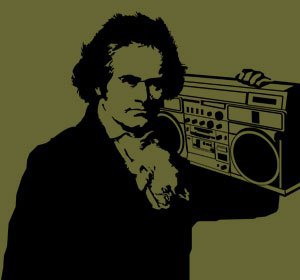
As Ludwig Beethoven (properly the worlds first punk) approached his 26th year in 1796 he was already facing deteriorating hearing and by the time he composed his 9th and final symphony he was totally deaf.  Richard Dale Miller was born November 28, 1942 in Dallas County, Little Richard Miller Born Without Arms or Legs.Texas. An evangelist, travelling across US preaching his interpretation of the Gospel through song and testimony. Richard Miller’s full stage name is Little Richard Miller Born Without Arms or Legs. He is an organist and guitarists who has recorded several albums mainly in the country style.

Robert Wyatt was the drummer and vocalist in the band Soft Machine, part of the so called ‘Canterbury Scene.’  A loosely based network of progressive rock, avant-garde, jazz musicians based around the city of Canterbury, Kent, UK. Since an accident in 1973, when he fell drunkenly from a fourth-floor window at a party, he has been paraplegic and confined to using a wheelchair for general mobility. In the 1970s the producer of BBC 1 ‘Top of the Pops‘ programme wanted Wyatt to perform from a normal chair on the grounds that his use of a wheelchair ‘was not considered suitable for family viewing.’ After strong arguments and support from his fellow band members, which included Nick Mason (Pink Floyd) and a young Andy Summers (The Police) Wyatt won the day. In September 1974 Wyatt performed his cover version of ‘I’m a believer’ on national TV in his wheel chair, whilst the audience danced along. Wyatt also recorded, what many still consider to be one of the finest anti war songs ever recorded, ‘Shipbuilding’ a song written by Elvis Costello.

If like me you have fumbled about with a guitar trying to learn 3 chords and then desperately sought to put these twisted sounds together in order, so they rendered the simplest of recognisable tunes. Then you can hardly start to imagine what it takes to do the same without the sense of sight.  During the 1960s Bob Dylan chose the pseudonym Blind Boy Grunt for an early recording session. His choice of pseudonym was a nod to the delta blues singers, who were such an influential to him. Arthur Blind Blake (1893-1933), Blind Willie Johnson (1897–1945), Blind Boy Fuller (1907–1941), Blind Willie McTell (1898–1959), Blind Lemon Jefferson (1893–1929) to name a few.

Following in the footsteps of these incredible musicians Ray Charles (1930-2004) was a true musical pioneer and genius.  During the 1950s he started to fuse together rhythm and blues and gospel music.  This style emerged into the blueprint we now understand as popular soul music. Stevie Wonder was to take this blueprint and push it to another level during the 1970s via classic albums like Talking Book, Innervisions and Songs in the Key of Life. At the same time an unpretentious, middle-of-the-road cabaret act scored a massive hit that would elevate them to international stardom. Lennie Peters (1933-1992) was one half of the duo Peters and Lee. Peters was an uncle of Rolling Stones’ drummer Charlie Watts. He had  lost the sight of one eye at 3 years old. He lost the sight in his remaining eye when 16 and immersed himself in music by teaching  himself to play the piano. Peters & Lee enjoyed their number-one hit ‘Welcome Home’ in July 1973 and went on to become platinum album artists with two and a half million sales enjoying 4 British top 20 hits and 4 top 10 albums.

At the age of 7 the genius singer, song writer and actor Ian Dury (1942-2000) was stricken by polio. He suffered the long-term effects of the disease throughout his life, which left it hard for him to walk. In 1981 Dury released the song Spasticus Autisticus, which was written to show his disdain for that year’s International Year of Disabled Persons, which he saw as patronising and counter-productive. The song was banned by the BBC given the lyrics were uncompromising, “so place your hard-earned peanuts in my tin and thank the creator you’re not in the state I’m in, so long have I been languished on the shelf. I must give all proceedings to myself.”  

In August 1990, a lighting rig fell on soul legend Curtis Mayfield (1942-1999) during a sound check before a New York concert. His 3rd, 4th and 5th vertebrae were all broken, leaving him paralyzed from the neck down. Despite the fact that he was unable to play an instrument, Mayfield would lie on his back in order to catch enough breath to sing. Mayfield created another album before his death. In 1984, Rick Allen the drummer with Def Leppard was involved in a car accident that resulted in the loss of his left arm. To accommodate his missing arm, Allen had a specially made drum kit and continues to performed to this day. Adrian Anantawan is one of the world’s most accomplished young violinists. The young man sometimes closes his eyes as he plays, as if lost in the music. If his audience closed their eyes, too, they would never know the violinist standing before them has no right hand.  Social networks and assistive technology have allowed blind jazz keyboardist/pianist Andre Louis to perform, even though getting to gigs is a real challenge.  “None of the gigs I’d like to do are near where I live in west London. If I were to take public transport, it would be me, a laptop, a keyboard stand and a cane, trying to navigate the underground. Taxis would be around £35 so costs would get high quickly.” 

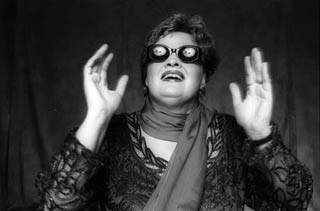
Toyah Willcox was born with a twisted spine, clawed feet, a clubbed right foot, one leg two inches shorter than the other and no hip sockets.Dianne Shuur Because of this she endured years of painful operations and physiotherapy. Her physical condition was a cause of difficult times at school. “When I was bullied at school, it was coz of my character. I was a weak child, I was incredibly small. I had a speech impediment, I was the perfect bait for bullying”. Willcox had 8 Top 40 singles, released over 20 albums, written two books, appeared in over 40 stage plays and 10 feature films, and voiced and presented numerous television shows.  Diane Schuur is an American jazz singer and pianist. Nicknamed “Deedles”, she has won two Grammy Awards, headlined many of the world’s most prestigious music venues, including Carnegie Hall and has toured the world performing with the likes of Quincy Jones, Stan Getz, B. B. King, Dizzy Gillespie, Maynard Ferguson, Ray Charles, Joe Williams and Stevie Wonder. Like Stevie Wonder, Schuur was blinded at birth due to retinopathy of prematurity.

It was the 3rd of November 2001 when I managed to see perform an artist who would go on to become one of my personal favourites. It was at the Barbican Hall, London and the event was billed as Beyond Nashville with Howie Gleb and others.

I was invited by a friend (Derek) and to be honest I had mixed feelings about going. My approach to music is very much slow burning. It normally takes quite a while after a particular music genre has been hip before my musical taste catches up and so it was to be with the so called Americana genre. The Others referred to on the concert billing, included an astounding array of bands and solo artists, Giant Sand, PJ Harvey, Evan Dando, Kurt Wagner, Mark Linkous, as well as Vic Chesnutt.

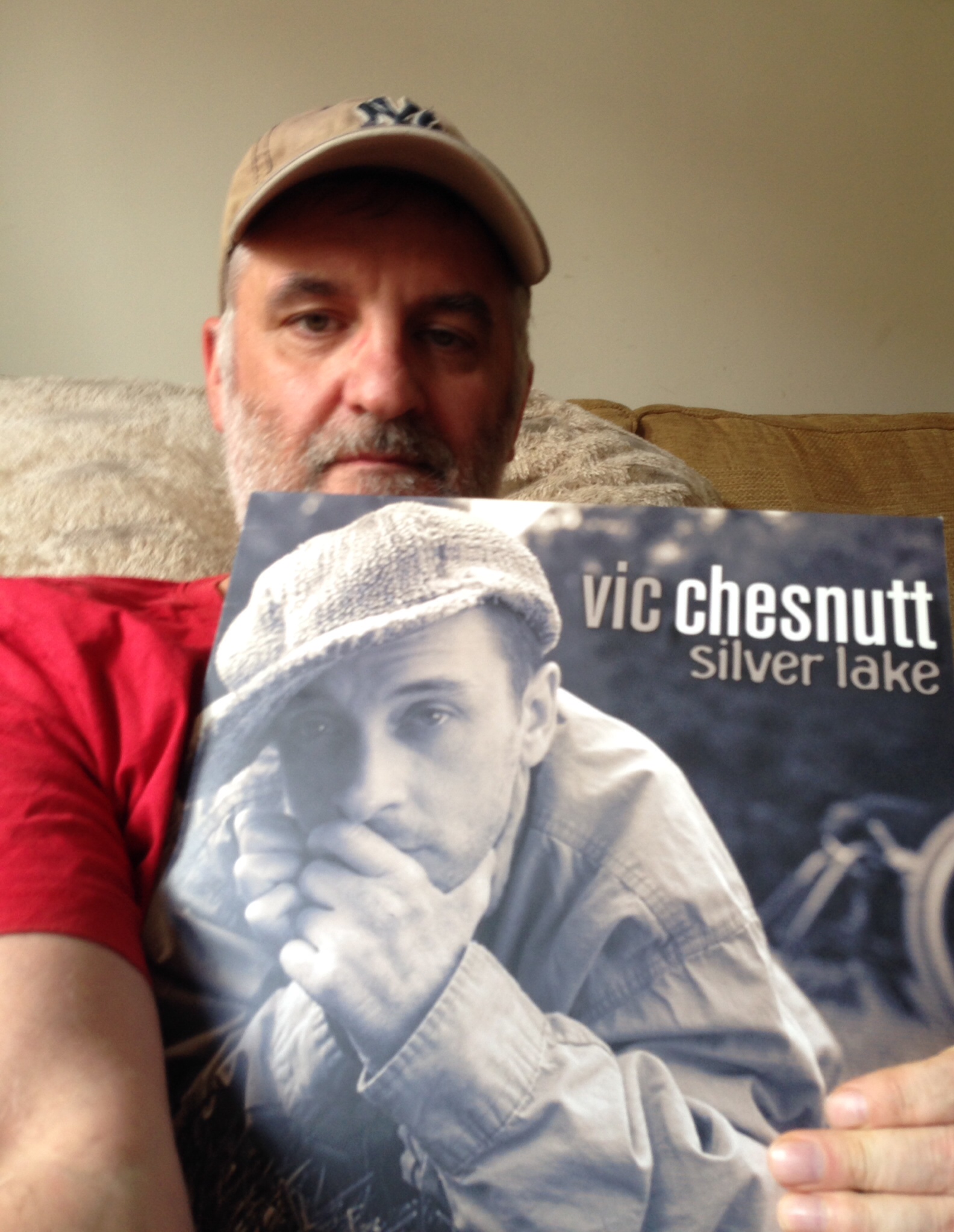
6a00d83451b93369e20120a786de68970bVic Chesnutt (1964–2009) was a truly remarkable talent. Involved in a car accident in 1983, which left him partially paralyzed; he used a wheelchair and had limited use of his hands. During his career he released a total of 17 albums (2 produced by Michael Stipe of REM fame). Chesnutt performed 5 or 6 songs that evening with Kurt Wagner (Lampchop), which were haunting, funny and poignant including, Is A Women, Girls Say and My Blue Wave. An unassuming man on stage, sitting in his wheelchair, strumming his guitar with a delicate voice that brought a concentrated silence from across the whole audience. Chesnutt described his relationship with his native America as “centred around the love/hate axis with a bit of Stockholm syndrome thrown in.” It was the many contradictions of the worlds richest country, which  provided him with the source for such of his material, alienation, isolation, human failings of the body and heart, hope, war and everyday observations.

JK - Silver LakeSilver Lake was Chesnutt’s 11th Album and while it sounds like a Vic Chesnutt album through and through, it is a better than average introduction to his work, filled with quirks. The album kicks of with the emotionally shattering ‘I’m through’ one my favourite Chesnutt tracks. The corner stone of any Chesnutt album are the stories that underpin each song.  The songs on Silver Lake are honest and pull on every emotional chord possible no matter how surreal the narrative. Throughout Silver Lake you will hear heart-tugging beauty. On December 25, 2009, at the age of 45, Chesnutt died from an overdose of muscle relaxants that had left him in a coma. Chesnutt had attempted suicide 3 or 4 times before.  According to Chesnutt, being “uninsurable” due to his quadriplegia left him $50,000 in debt from his medical bills, and had been putting off surgery for a year. A tragic, unnecessary and sad end to a remarkable genius and one of the reasons which  you need to give Silver Lake an honored space in your record collection.

They Only Wanted To Be Loved

No Fun

The Sex Pistols No Fun

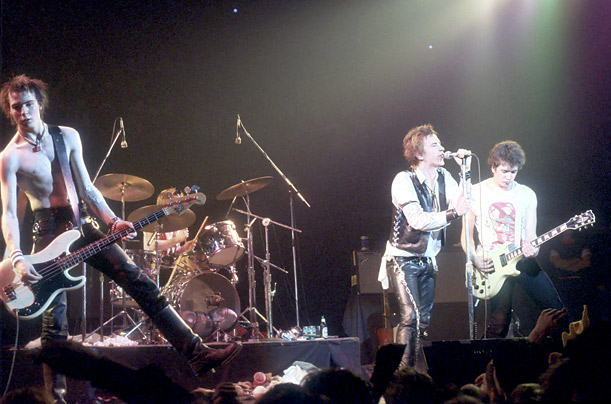
14th January 1978, The Winterland Ballroom, San Francisco, USA and the Sex Pistols have just brought their set to an end with a version of the classic Stooges song No Fun.  As the final traces of feedback belch from the amplifiers and over the heads of the assembled audience Johnny Rotten is poised, crouched down and defiantly staring at the crowd. He utters the immortal words, which  are etched on the toilet walls of the Rock N Roll Hall of Fame, “ha, ha ever get the feeling you’ve been cheated.”  

No sooner had the band left the stage the disintegration started and within days the Sex Pistols crumbled into dust. Guitarist Steve Jones and drummer Paul Cook went on to prostitute what dignity remained of the band. The ex manager (Malcolm McClaren) desperately cobbled together an embarrassing film called The Great Rock n Roll Swindle with a very dubious narrative. By February 1979 Sid Vicious (bass player) died a lonely and squalid death from a heroin overdose whilst being under investigation for the murder of his girlfriend. Meanwhile  former frontman John Lydon (aka Johnny Rotten) had jetted off to Jamaica with no other than Richard Branson to scout reggae bands for Branson’s Virgin record label. The Sex Pistols were to leave behind a maze of legal wrangles and bad taste. The punk scene sunk into wall to wall leather jackets and mohican haircuts.

In the hands of McClaren The Sex Pistols legacy was to become a parody, although what emerged from the ashes was to be much more musically interesting. By May 1978 John Lydon was already assembling his new band and later that year under the name Public Image Ltd they released their self titled single ‘Public Image’  The record was well received and reached No.9 in the UK charts.

As a teenage fan of Lydon I recall dashing down town on release day to scour local record stores and seek out a copy that also featured a limited edition newspaper insert. At the time the single with its insert were considered the holy grail and from small independent record shops to the high street dealers I ventured, bus journey’s to the neighbouring town (Middlesbrough) my crusade continued through the day and occasionally bumping into fellow fans on the same crusade. The song written by Lydon whilst still a member of the Sex Pistols bares the hallmarks of a Pistols track with its sneering lyrics directly aimed at his ex band mates. The A-side of the single was not a major departure and as such held little surprise. It was the singles B-side the aptly entitled The Cowboy Song that was to provided a glimpse of where the band were heading. The Cowboy Song sounded like a rambling assortment of studio outtakes and random noises all mashed together in no particular order. Uponfirst listening it was easily forgettable. Lydon himself viewed the track, “it cost us approximately £1 to make. It’s just a jolly good disco record and it came about cos we were bored and couldn’t think of a b-side.”  It was not until the first album appeared that the creative manifesto for the band started to be exposed to their fans.

A beautiful mess

A beautiful mess

Public Image, First Edition was released in December 1978 is now considered groundbreaking, but at the time of its release the record polarised fans and was met with outright hostility from music critics. The earlier single release had provided a false sense of expectation for those fans seeking solace in Public Image Ltd becoming The Sex Pistols mark 2. The album was in effect pulling in two different directions. A type of confused halfway half way house between looking backwards and pointing forward.

Dub baselines, traditional rock/pop tracks, screeching guitar work, a poem left many fans confused given the albums lack of focus and mixing seemed disjointed. This was no doubt a consequence of the band running out of money during its production, which necessitated recording sessions to be concluded hastily. The album to this day remains one of experimentation, a band findings its way with mixed results from the sublime ‘Low Life’ assault on the personality Sid Vicious had became towards the end of his life and through to the amusing, but largely forgettable ‘Fodderstompf’.  Record boss Richard Branson who commissioned the LP was reported to be less then impressed. Whilst the record was a moderate success in the UK staying in the album charts for 11 weeks and peaking at 22. It would take until 2013 before the album received its full American release given it was deemed to be far too uncommercial for American ears by record executives.  Love or hate this album its importance cannot be disputed given it laid down the blueprint for what many would call the post punk period.

The results were far from pretty, but to the credit of Lydon and his fellow bandmates they had decided upon a route away from the commercial mainstream, which at the time was an open door beckoning for Lydon after the demise of the Sex Pistols.With the first album completed PIL ventured out into the world to perform live. Playing 4 concerts in late 1978, Brussels Theatre Belgium on 20th December, Paris Le Stadium 22nd December and Christmas Day and Boxing Day at the Rainbow Theatre, London. By early 1979 PIL were left with the challenge that often demolishes many bands – the fatal 2nd album.

Its all in a tin

Its all in a tin

The glorious Metal Box/Second Edition LP arrived in November 1979 and is generally considered to be one of the most influential albums of all time. In many ways the album was a radical departure from the first album and ventured more towards avant-garde territory. With its cryptic lyrics, brooding baselines, tribal drum patterns, metallic guitar, synthesised drones and random noises the album was unlike anything before in sound or presentation. The original album packaging consisted of a 16mm film canister tin embossed with the bands logo, which contained three 12″ singles. The album drew from several influences including deep-dub-raggae in particular the early work of dub pioneer Keith Hudson known as the “dark prince off reggae” and bands like Can. The opening track Albatross sets the standard. Recorded in free form the track gathers  a life of its own as it weaves along. The songs structure is reminisce of the interplay between Jim Morrison and the Doors when their performed live.

Check the line up

Check the line up

Metal Box/Second Edition was a far more focused effort, which unlike its predecessor  was received with critical acclaim and considered a classic of its genre sitting alongside the likes of Can and Captain Beefheart. The albums influence cannot be emphasised enough, Sonic Youth, The Strokes, Simple Minds, REM, Joy Division, Portishead, Manic Street Preachers, Massive Attack, Radiohead have all drawn influence from the album.

In 2001 Thom Yorke during an interview with The Wire Magazine said, “We could never do a record on a par with Metal Box.'”  The Rolling Stone Magazine listed Metal Box in the top 500 albums of all time. With album literally in the tin PIL started to increasingly perform live, although  like their studio output the norm was not to be expected. In New York the band decided to perform behind large screens creating a physical barrier between them and a bewildered audience who had come to see the band perform a more traditional rock show. The resulting disturbances required the concert to be cancelled mid way through as the crowd throw items at the screen and started to dismantle the stage equipment.

In Leeds the band were met with hostility when the audience became bored with the new material and demanded Sex Pistols songs. PIL ignored the audience, often turn their backs against them and carried on until they simply walked off stage.

The 1980 live album ‘Paris au Printemps’ offered little to nothing in terms of creative output. In fact Lydon reputedly advised fans not to buy it because the band only got involved in the project to earn enough money to pay for Metal Box. By 1981 and the bands 3rd album The Flowers of Romance” the wheels had already started to fall off the first incarnation of the band. Jah Wobble who provided the brooding bass on the first two albums had been sacked for allegedly using PIL material as backing tracks for his solo work. The name ‘The Flowers of Romance’ was taken from an early band Sid Vicious and Jah Wobble were members,  as well as it being the title of a very early Sex Pistols track, which was never studio recorded and released.

Not for the faint hearted

Not for the faint hearted

The stark, severe and minimum style of the album is in contrast with the bass heavy influences of Metal Box. A variety of sources were deployed and used to generate sounds for the album including amplified wristwatches, reversed piano, televised opera. John Lydon played violin and saxophone, although he was not know to be trained to play any particular instrument. Keith Levane the groups pioneering guitarist played through reversed tapes, treble distortion and synthesisers drones.

Interviewed at the time Levene pointed out that, “AII it amounts to is that we don’t like any music at the moment.” John Lydon added,  “well it ain’t rock & roll, that’s for sure.”  The album quickly gained  a reputation for being the most uncommercial LP to have been made and presented to a mainstream record company.

The Flowers Of Romance entered the UK Charts where it stayed for 5 weeks and reached No. 11 in April 1981. The album spawned a minor hit single in the same year that reached No. 24 and stayed in the charts for 4 weeks. The third studio album for many concluded PIL’s pioneering period. Similar to Jah Wobble original guitarist Keith Levene left the band acrimoniously shortly afterwards. John Lydon then shifted the sound and structure of the band towards a more commercially friendly zone with differing results given the creative challenges were not putting the breaks, or shaping some of Lydon’s ideas. By the late 80s PIL effectively Lydon and an assortment of musicians were touring America extensively, including a support slot for the Australian band  INXS on their Kick tour.

The end for PIL was more a damp fizzle than bang. By 1992 and with a lack of interest from the general public Lydon put PIL into hiatus whilst he concentrated on other projects, including his autobiography, TV work and ultimately regrouping with the original Sex Pistols line up for a number of lucrative tours, which properly provided the only real opportunity for the original  4 members to earn any significant cash from their legacy. In September 2009 Lydon announced that PiL would reform for five UK shows, their first live appearance in 17 years.  The regrouping of PIL was financed via the money Lydon earned through a UK television commercial, “The money that I earned from that has now gone completely – lock stock and barrel – into reforming PiL” The pursuing concerts were warmly received and the band has continued to perform live since, as well as releasing new material.

36 years later

Like father like daughter

As one review of the first 3 PIL albums states,  “PIL managed to avoid boundaries for the first four years of their existence, and Metal Box is undoubtedly the apex it hardly sounds like anything of the past, present, or future”.   These first 3 albums, including the glorious Metal Box/Second Edition alone has secured my enduring respect for Lydon.

30th June 2013 and 35 years after buying the first Public Image Ltd single (with the limited edition newspaper insert) I find myself with my 14 year old daughter walking aimlessly through the Glastonbury Festival site.  We have not paid much attention to the running list on the various stages. We are just soaking up the atmosphere, floating along with the crowd and just stopping to watch whatever emerges before us. Its a glorious summers days and in the near distance I hear driving base of PIL’s Death Disco vibrating through the air.  We quickly make our way to the Other Stage and sure enough we find John Lydon and co.

I look to my daughter and ask if she is enjoying it? She relies, “yes.”  I turn my attention back to the stage, feel the sun on the back of my neck, scan the large crowd and look back at my daughter – we smile at each other. Sometimes things just fall into place for all the right reason.

Oh bondage up yours!

This girl is no fool

This women is nobody’s fool

“Biblically chauvinistic” is how the Rolling Stone magazine described the James Brown 1966 record “It’s a Man’s Man’s Man’s World.” As a record it certainly takes some beating when promoting a stereotype. A stereotype, which has been continuously reinforced throughout the music business since its conception.

Whilst the mainstream charts may be dominated by female artists research constantly reveals that women working in the music business earn far less than their male counterparts – a staggering 47% of women in the music business earn less then £10,000 per year.

It is a business that is dominated by male executives who control its means of production, marketing and recording output. Recording artist Lily Allen recently observed, “You will also notice of the big successful female artists, there is always a ‘man behind the woman’ piece. If it’s Beyoncé, it’s Jay Z. If it’s Adele, it’s Paul Epworth. Me? It was Mark Ronson and the same with Amy Winehouse.”  These attitudes prevail throughout the music business right down to the basement end of manufactured pop. The banality of Miley Cyrus ‘tweaking’ caused a media stir, which was possibly related to Cyrus’s history as a child star for the Disney Corporation. Whilst Cyrus’s performance might be seen as silly and tedious the fact is Iggy Pop has been ‘twerking’ for 40 years, including the odd penis exposure as well as regularly humping his amplifiers on stage – yet he is considered a rock god.

There is something very disturbing about a popular culture that increasingly portrays women as disposable commodities frequently being hunted down by a serial killer or subjected to the creepy attention of a male artist who is acting like a potential candidate for inclusion on the sex offenders register. Although given the recent spate of celebrities facing sexual assault charges in the UK they may not be acting. Equally repugnant are those fellow men who shout “political correctness has gone mad” every time these issues are raised. Let’s be honest if you are the type of tool who enjoys women being portrayed in this way then it is highly unlikely you have read this far into this blog and you are properly jerking off to that misogynist Robin Thicke video.

“Ignore it” you may say after all there is an off button I can push  Well I did, but ignoring it does not make it a right. Switching off a TV does not mean switching off your brain and that is the real choice here. I am not for one minute advocating censorship far from it. In my view those who produce this material should be exposed to additional taxation. The revenues generated should be earmarked for support services for women who become victims of male violence. If a sovereign country was inflicting such harm on another country surely we would be expecting intervention, possibly economic sanctions.

Those women who have stood up, challenged and turned the tables on the status quo have faced ridicule or worse. The singer-songwriter, multi-instrumentalist, actress, author and philanthropist Dolly Parton has throughout her career been the subject of ridicule from taunts of trailer trash, cheap, dumb blonde and least we forget the breast obsession. Web sites are dedicated to crude jokes about Parton.  Realising these circumstances Dolly Parton played the card of self-parody as well as deploying her very clever business brain. This has enabled her to amass a financial fortune and make music that she wants to make.  This attitude towards women is not a modern phenomenon, which has  been cooked up by dead beat rappers with their pathetic lyrics of ‘hoes and bitches.’

holiday

Billie Holliday – used and abused

The harrowing demise of Billie Holliday in the 1950s is a prime example. Most media stories concerning Holliday’s torturous death tend to focus on sexual violence and illicit substances. What is often overlooked is that in her final years Holliday was swindled out of her earnings and died with $0.70 in the bank.  As an incredibly gifted, yet troubled artist Holliday was hounded to the very end. Whilst dying police raided her hospital room and placed her under arrest until she passed away on 17th July 1959. She was 44 years old.

The magnificent Nina Simone became the catalyst for change in the 1960s. Strong, intelligent, outspoken and a versatile musician she became a role model for musicians (female and male). Simone started playing the piano at 3 years old and by the age of 10, she was perfuming piano recital in the town library. Like Holliday, she was ripped off by the record companies. She saw very little money from her first record, the top 20 hit of “I Love You Porgy.” Simone always characterised record companies as “pirates.”   

Over the coming decades, Simone took increased control over her career and destiny as an artist, which not only provided financial rewards but enabled increased creative freedom. At the time this was unparalleled for both a female and Black artist.  The song Mississippi Goddamn, which she released in 1964 was written by Simone after the murder of Medgar Evers. Although the song contains a jolly rhythm it is a scathing anti-racist tour de force.  Towards the end of her life Simone became increasingly erratic with legendary mood swings. In 1985 she fired a gun at a record executive whom she considered was stealing her royalties claiming that she tried to kill him, “but missed.”

The 1960s produced many iconic female artists Dusty Springfield, Nico (Velvet Underground) Grace Slick (Jefferson Airplane) and Janis Joplin for example. It is a decade that increasingly witnessed the use of  ‘tabloid sensationalism’ as a weapon against women. Singer, songwriter and actress Marion Faithfull were subjected to sordid and untrue media reports in 1967 concerning her sexual relationship with Mick Jagger. Whilst the headlines and speculation did little to hinder Jagger’s career. In fact, the stories further enhanced his bad-boy reputation, but for Faithfull, her career was badly damaged. 27 years later Faithfull observed, “It destroyed me, a  woman in that situation becomes a slut.” Before Beyonce, there was Diana Ross (formerly of The Supremes).

The Supremes were a product of Barry Gordy’s Motown conveyor belt of popular hits during the 60s and 70s. Gordy was the original Simon Cowell with the gift of identifying and bringing together pop talent, along with tightly controlling and carefully managing their public image. Whilst Ross and Gordy were romantically entwined for Gordy it quickly became a case of biting off more than you could chew syndrome when it came to Diana Ross.

Whilst The Supremes were on a UK tour in the 1960s Gordy insisted The Supremes perform a version of Dean Martin’s “You’re Nobody Till Somebody Loves You.” Gordy believed that such a performance would enable The Supremes to access a slot on a mainstream UK television programme. Ross refused outright. “I could not explain anything that made sense to her,” Gordy said. “She refused to do it completely.” That’s when Gordy realised, “if she didn’t do it, I knew I could not manage them.” Ross went on to become one of the biggest selling female solo artists in music history.

Joni Mitchell produced and released her seminal Blue album in the early 70s whilst at the same time Jazz drummer Karen Carpenter was persuaded to move centre stage and sing for the brother/sister duo the Carpenters. It may have taken until 1979 for Suzi Quatro to score a hit in her country of birth (USA), but Quatro was a constant presence throughout the 70s in the UK charts. Quatro’s trademark leather jacket, jeans, bass playing leadership and pop-rock anthems presented an altogether edgier imagine that had a significant influence and impact. An influence that has sadly been underestimated given for many young people Suzi Quatro was the first female artists who were seen to be the leader of the pop-rock group on mainstream TV. By the mid-70s Kate Bush and Patti Smith emerged. Two diametrically opposed artist who commanded respect through their craft. Smith went on to release what many still consider to be one of the most quintessential and influential rock album’s of all time ‘Horses.’  

1975 also saw the release of the electro-pop ‘Love to Love You Baby’ by Donna Summer that pounded the dance floors of every credible disco. The song, which featured Summer moaning and groaning as if in the raptures of an organism would cause controversy around the world. It also presented the artist in a highly sexually charged way that would take Summer years to shake off. The song and its producers eventually left Summer feeling like she had no control over her life and went on to suffer from bouts of depression and insomnia. Summer would later become a born-again Christian and sue the producers of the record. After the legal settlement Summer decided to exclude “Love to Love You Baby” from her concert playlists and did not perform it until 25 years later.

As the 1970s were drawing to a close there was something quite different about the female artists who were emerging outside the mainstream. Whilst the recording output varied according to taste. The confidence and attitude of the female artists was not in dispute. Operating within an increasingly political environment a whole bunch of strong, independent, intelligent and often conformational female artists were playing a leading roll in the rock scene.  It was a time when Siouxsie Sioux (Siouxsie and the Banshees), Fay Fife (The Rezillos), Gaye Advert (The Adverts), Debbie Harry (Blondie), The Slits, Pauline Murray (Penetration),  Tina Weymouth,(Talking Heads), Joan Jett (The Runaways) and the glorious Poly Styrene (X-Ray Spex) to name a few took a male-dominated world and shook it by the throat. A quick search on Google for Penetration performing ‘Don’t Dictate’ live will emphasis the point as Pauline Murray tackles men in the audience head-on. It was another song from this period, which had a greater influence on me personally.

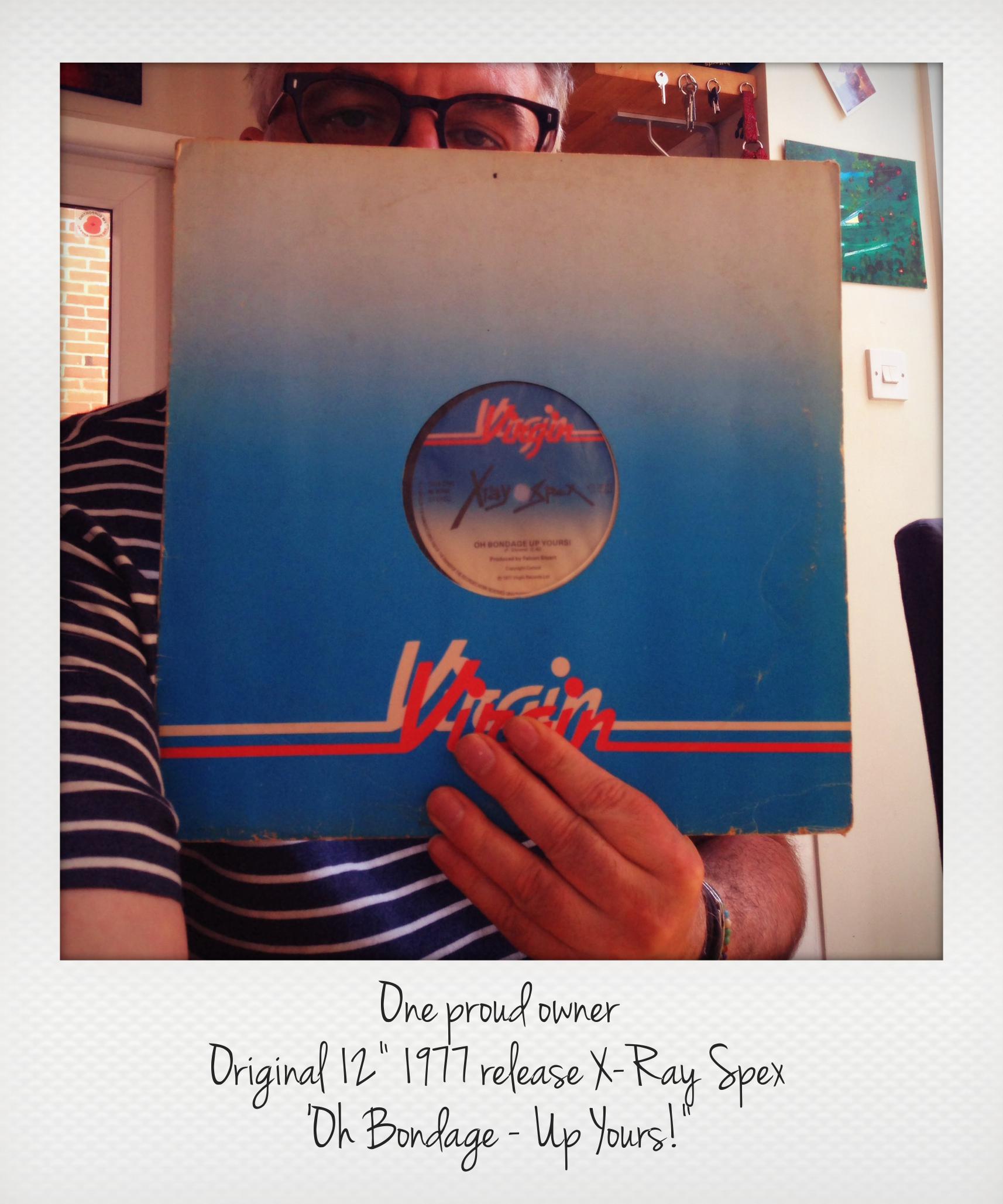
Released in 1977 “Oh bondage up yours” was the debut single by X-Ray Spex.  Polly Styrene was the bands’ lead singer and main songwriter who described the song, “as a call for liberation. It was saying: ‘Bondage—forget it! I’m not going to be bound by the laws of consumerism or bound by my own senses.’ It has that line in it: ‘Chain smoke, chain gang, I consume you all’: you are tied to these activities for someone else’s profit.” 

As I grow older and start to see the world more holistically I can often look back at key moments when a stake was placed in the shifting sands of my life. These stakes are important because they create a focus point when somethings clicked. When I get a cold chill after being exposed to yet another pile of misogynist crap by a retarded hunk in plastic bling rubbing his small codpiece against a scantily dressed women. I can point back to buying the original 12″ vinyl version of “Oh bondage up yours” in 1977.

Every cause has a counter effect and what had been achieved in the 1970s was to be challenged throughout the 1980s free for all and sod thy neighbour attitude. Samantha Fox’s was 16 years old when her mother submitted several photographs of her daughter in lingerie to a Sunday tabloid newspaper competition (Girl of the Year amateur modelling contest). By the 198os Samantha Fox was a popular topless glamour model in a daily tabloid. In 1986 Fox choose to take up a new career as a pop star. Her first release was the tacky ‘Touch Me (I Want Your Body)’ that reached No. 1 in seventeen different countries. She went on to sell more than 30 million albums and co-wrote the song “Dreams” for girl group All Saints’s 2000 album, Saints & Sinners. Although she was credited as “Karen Wilkin” because the group refused to record the song if Fox’s real name was used. In 1984 Sheena Eastern had a hit with a Prince written song ‘Sugar Walls’ a pseudonym for Eastern’s vagina.  By the close of the 80s Cher was to be seen cavorting around a battleship in a fishnet body stocking rattling out the hideous ‘If I could turn back time.’  Amongst this drivel there were occasional rays of sunshine from the likes of Chrissie Hynde (The Pretenders) and the Sugarcubes whose lead singer Bjork was to became one of the most original and innovative female recording artists of all time.

2778_Bjork_photo_1

Thank god for Bjork

As with most cases in life, it is not those at the vanguard who reap the rewards of their struggles. Kim Gordon (Sonic Youth), Courtney Love (Hole), PJ Harvey, Riot Grrrl, Sleater-Kinney, Grace Jones, Beth Ditto (Gossip), Poison Ivy Rorschach (The Cramps) and the stunning Skin (Skunk Anansie) were to find their journeys just that little bit more easier because of the women who had gone before. In turn, this made for a more creative and fertile music scene for the rest of us to enjoy. It would of be interesting to hear the views of these female artists regarding female artists in the mainstream pop world today. I can only guess that for many it will be a case of raised eyebrows and recognition that syrup manufactured girl pop groups will always have a place.

I struggle to envisage many will sign up to the ‘girl power’ of the Spice Girls call to arms, “I wanna, I wanna, I wanna, I wanna, I wanna really really really wanna zigazig ha.”  In truth, their struggle and achievements will seldom be recognised in the mainstream, because the mainstream needs to be controlled and manipulated from above. The advent of technologies has in many ways released the creative artist to pursue their particular path, but success on a scale that will enable economic independence remains a long way off for many female artists.  As a father of 3 daughters, it is with great relief that when foraging around Bandcamp I have discovered such an amazing range of female artists who are producing some truly magnificent material. To name a few:

xray


The Men Who Sold The World (1971 – 1973)

As David Bowie scans the New York skyline from his semi retirement watch tower he surely must occasionally ponder the different phases of his illustrious career and the artists he has shared it with. John Lennon, Bing Crosby, Iggy Pop, Apex Twin, Massive Attack to name a few. Bowie has not been afraid to mix it up, although normally on his terms. His joint venture with Queen ‘Under Pressure’ allegedly faced several creative challenges with Bowie and Mercury going hammer and tong at each other, although the embryonic version of the song was a Queen demo called Feel Like’ written by Queen drummer Roger Taylor. Bowie of course has his critics.  The media hyped feud with Elton John, which can be traced back 40 years when John accused Bowie of “talking shit….being a silly little boy” during a Rolling Stone interview after Bowie referenced Elton John, “the Liberace….the token queen of rock.” 

There was a time of course when Bowie did not pull all the strings. A time when he had an equal who would be both friend and rival. Creative competition can produce brilliance, or alternatively flood the world with stagnated repetition. It can instil innovation or cripple confidence. Chinese Democracy the 6th album by rock juggernaut Guns and Roses for example took 14 years (1994 -2008) to release. In complete contract 36 months in the early 1970s resulted with two incredible artists releasing 6 albums of impeccable standard. A period that would influence popular music from there on.

1971- 1973

article_4e184652f12e9223_1345445269_9j-4aaqskThe 1960s had vanished in a dust bowl of psychedelic ash. The hippy party was over and from the rubble rock music increasing splintered and spun off in all types of directions. Heroin had replaced LSD as the drug of creative choice, which brought a harder and darker edge.  Music on TV, cheap HiFi equipment on the high street made recorded music more obtainable to teenagers. Record sales in both single and album formats were at an all time high. The top selling 15 singles between 1970 and 1979 sold on average over 1 million copies each. In contrast to the present day when the average No 1 single sells around 100,000 copies , a top 10 requires 30,000 and 6,000 will normally achieve a top 40.

Black Sabbath were to release 3 albums during 1971 – 1973. Led Zeppelin performed Stair Way to Heaven live for the first time whilst Pink Floyd performed Dark Side of the Moon live for the first time. The Paul McCartney single ‘Give Ireland Back to the Irish’ was banned by the BBC. The First Glastonbury Festival was held. The Electric Light Orchestra were to perform live for the first time. Mike Oldfields Tubular Bells was released on Richard Branson’s fledgling Virgin Label.  Slade (the link between the Beatles and Oasis) released their classic Slayed album. Synth pioneers Kraftwerk released 2 albums. In these 36 incredible months the legendary CBGB Music Club opened its doors in New York, The Who released Quadrophenia.  Dr Feelgood, Neu, Sister Sledge, New York Dolls,  Roxy Music, ACDC, Cheap Trick, Bad Company, The Sugar Hill Gang, Television, The Tubes (to name a few) are formed.

Bowie/BolanIt was during this musical juncture that two young artists, whose paths had crossed in the previous decade would end up ruling popular music in new decade. They would individually create 3 classic pop-rock albums of original material each,  spawn 17 top twenty hits and 4 number 1’s.

Legend has it that David Bowie and Marc Bolan had first met each other in the offices of a talent scout in 1964.

Bowie nearly 18 years old, Bolan not quite 17 were ambitious to make it as performing artists in the music business and each had been experimenting with various sounds and styles of the day. Their attraction was instant and their friendship endured over the years and their creative rivalry was to reach its peak in the chart battles of 1971 -1973.

This blog is not about who was the best artist. It is simply a celebration of this amazing time and two artists at the top of their game.

Singles

Hot Love released in 1971 was a T Rex chart success. By 1972 David Bowie was hitting the charts with Starman, John I’m Only Dancing and The Jean Genie, but it was Bolan who was setting the pace with No. 1s Telegram Sam and Metal Guru. By 1973 Bowie’s Life On Mars  and Bolan’s 20th Century Boy all made the top 5.

Albums

Putting aside the Bolan compilation Bolan’s Boogie (1972) released when Bolan had left Fly Records to form his own distribution company and Bowie’s covers album Pin Ups, which Bowie released in 1973 predominately for the American. It is the 3 original albums they released each during 1971-1973, which have set the standard.

First of the mark was T Rex with Electric Warrior (24th September 1971) Bowie released Hunky Dory (17th December 1971) followed by his break through The Rise and Fall of Ziggy Stardust and the Spiders from Mars (6th June 1972). T Rex released The Slider (21st July 1972) and Tanx (16th March 1973). Bowie then went on to release Aladdin Sane (13th April 1973).

It may have seemed they had declared creative war on each other, but Keith Altham, who over the years acted as publicist for both artists recalled that they were very close, ‘There was a real love there. They were very similar, in so many ways. They could have been brothers.’ Bolan’s breakthrough came thanks to the American Tony Visconti, then a musician and fledgling producer.  His partnership with T Rex established Bolan as the undisputed king of glam rock. Visconti was to later transfer his professional affection from Bolan to Bowie, and this partnership would ultimately create some of the most original and enduring rock music ever recorded, including Young Americans, Low, Heroes, Lodger, Scary Monsters……

The legendary British DJ John Peel was an early champion of T Rex, but by 1970 Bolan had shifted the band from its folk roots on to a more rock structured format with its occasional homage to the likes of Eddie Cochran. This formate would help provide the template for many songs across the 3 T Rex albums during 1971-1973 and beyond.

Electric Warrior is my personal favourite and contains the classic tracks ‘Jeepster‘ and ‘Get it on.’ The Slider (album photos by Ringo Starr) contains the stomping ‘Metal Guru‘ and ‘Telegram Sam.‘ My favourite track on the Tanx album is the opener to side two ‘Mad Donna.’ An album full of melancholy ballads and rich production, Tanx showcased the T. Rex sound bolstered by extra instrumental embellishments such as Mellotron and saxophone.  Tanx would mark the end of the classic T. Rex lineup and a slow decline for Bolan until a resurgence after a spring UK tour with punk band the Damned garnered positive reviews 1977.  Whilst driving home early in the morning on 16th September of the same year Bolan was killed in a car crash, two weeks before his 30th birthday.

His death ended the band given he wrote and composed all the material. Tragedy was to fall upon all the remaining members of the band. In 1980 Steve Took (drummer) died of asphyxiation after his throat was numbed by a cocktail of morphine and magic mushrooms.  Steve Currie was to also die in a car crash by 1981. Mickey Finn died following a short illness in 2003 and Peter ‘Dino’ Dines died of a heart attack in 2004. 

All I want is easy action baby

David Bowie would also use the rock n roll structures to the max, especially  on the Ziggy Stardust and Aladdin Sane albums. But unlike Bolan, Bowie was prepared to take risks and be more adventurous and push the boundaries. He was also a genius at absorbing musical emerging trends. Bowie’s scope as an artist was simply broader and deeper in both influence and ambition.

The Hunky Dory album has two of my favourite Bowie tracks on it, ‘Kooks‘ and ‘Changes‘ whilst it also contains one of his most pretentious and forgettable offerings ‘Song for Bob Dylan.‘ Whilst most people will point to Ziggy Stardust as the classic album with obvious and credible reasons. It is Aladdin Sane that has become my favourite over the years. Coming as it did after the Ziggy Stardust episode Aladdin Sane is full of confidence and variation. Bowie and his side kick Mick Ronson meddle with the Rolling Stones, whilst  absorbing influences from the Stooges to Jacques Brel.

As a teenager it was the album cover. The lightening across the face. A vision that would be drawn religiously by adolescent boys in art classes for years to come.

On the 2nd June 1991 Bowie joined Morrissey on stage to perform the T Rex track Cosmic Dancer. A fitting tribute on several leaves.

Two great artist and 6 classic albums, which should grace the shelves of most record collections.


Hey, hey, mama, said the way you move, gonna make you sweat, gonna make you groove.

I was 7 years old when Led Zeppelin were formed in London 1968. Consisting of guitarist Jimmy Page, singer Robert Plant, bassist and keyboardist John Paul Jones, and drummer John Bonham they were the quintessential English rock band who went on to personify the ultimate rock band worldwide. Many have sought to emulate, many have copied, but none have equalled.

A quick listen of the first two Queen albums released in 1973 and 1974 respectively exposes Freddie and the boys original blueprint. Brian May, whilst a highly gifted guitarist could never match the swagger and presence of Jimmy Page strutting his stuff across the stage. Queen went on to become in effect the worlds biggest cabaret act whilst  Led Zeppelin managed to remain solid as a rock even if later albums experimented with funk, disco, or African infused rhythms. They also retained a sense of humour. The final track on the Houses of the Holy album The Crunge with its tongue in cheek nod to James Brown for example.

Rock bands had become so ostentatious during the 1970s that a bedroom poster was the nearest I would came to seeing Led Zeppelin live. There remains the faintest of hopes that they may reform as they did for the one off concert in 2007, but I will not be holding my breath. Yet perversely it was  un-obtainability that seems to have drawn me (and 1000s of others) closer to their enigma. This was in total contrast to my affinity with Pink Floyd, which was shattered by the punk explosion in the UK (1977-78). I did not listen to a full Pink Floyd album for many years afterwards, although I did regain my senses in time for their Pulse Tour resulting in a quite amazing evening on 20th October 1994 at  Earls Court Exhibition Centre, London.

Led Zeppelin where also at the top of their game as both a recording and live band when the UK pop charts were dominated with the likes of the Bay City Rollers singing Bye, Bye, Baby, Pete Shelley, Love Me Love My Dog and even Laurel and Hardy charted with The Trail of the Lonesome Pine. It is clear to see now given the quality of pop music on one hand and the rock dinosaurs on the other that pop and rock music where driving into a car crash that would fuel the brief, but necessary punk period. Punk fizzled out like a damp torturous fart from a septic stomach with its ultimately boring and predictable uniform of wall to wall mohican haircuts, tartan trousers and biker jackets.

Whilst monster bands like Emerson, Lake and Palmer  were never to rediscover their self indulgent status after the punk period Led Zeppelin remained unscathed, which is pretty surprising given their 1979 weak album offering In Through the Out Door. Led Zeppelin had not performed live for two years since the death of Robert Plant’s son during the band’s 1977 North American tour, and they had not performed in the United Kingdom for four years.  It was the bands manager Peter Grant who decided that the band should perform at what is now renowned as the classic Knebworth concerts instead of embarking on a lengthy tour. A estimated 400,000 people attended the two Knebworth events on 4th and 11th August 1979.

The death of drummer John Bonham in 1980 all but brought the curtains down on the band. The reunion (with Phil Collins on drums) at Live Aid 1985 was such a disaster that they refused to allow it to be included on the Live Aid DVD release. Collins still remains sore about his Live Aid jam with Led Zeppelin 25 years after the gig and recently revealed that he almost walked off stage in mid-set. Collins and Chic drummer Tony Thompson had both apparently been drafted in as replacements for the late John Bonham.

Jimmy Page blamed the replacement drummers for not learning their parts, but Collins claims it was Page, Plant and Jones who ruined the experience.  “They weren’t very good and I was made to feel a little uncomfortable by the dribbling Jimmy Page.” Collins concluded recently.

O2 Arena, 2007.

It was an ignominious farewell and one that would dog any potential reunion for years to come. Fans were kept at bay by Jimmy Page’s remastering and repackaging releases of the bands historical material. That was until the Ahmet Ertegun Tribute Concert held in memory of the music executive at The O2 Arena, London on 10th December 2007. The band performed their first full-length concert since the death of Bonham in 1980 and in a fitting touch for this one-off reunion Bonham’s son Jason played drums during the set.

The 02 concert seems to have provided the band with an exorcism of the Live Aid debacle and unlike the Live Aid concert the 02 concert was formally released as both a CD and DVD under the title of Celebration Day, but for the fan it added nothing to what had gone before.

Led Zeppelin IV

The first Zeppelin album I recall buying was 1971s Led Zeppelin IV, although I would have purchased it later circa 1974-75. Over the course of a year I went on to purchase all their available albums, which was no mean feat in those days. Initially attracted to the album through the seminal track ‘Stairway to Heaven.’ which seemed to filter into my brain at night as I lay beneath my bed sheets, transistor radio pressed against ear hoping my parents would not detect the sound of the tuning radio. Inevitably they did and the said radio would be confiscated and so the cycle between generations would turn and grind around.

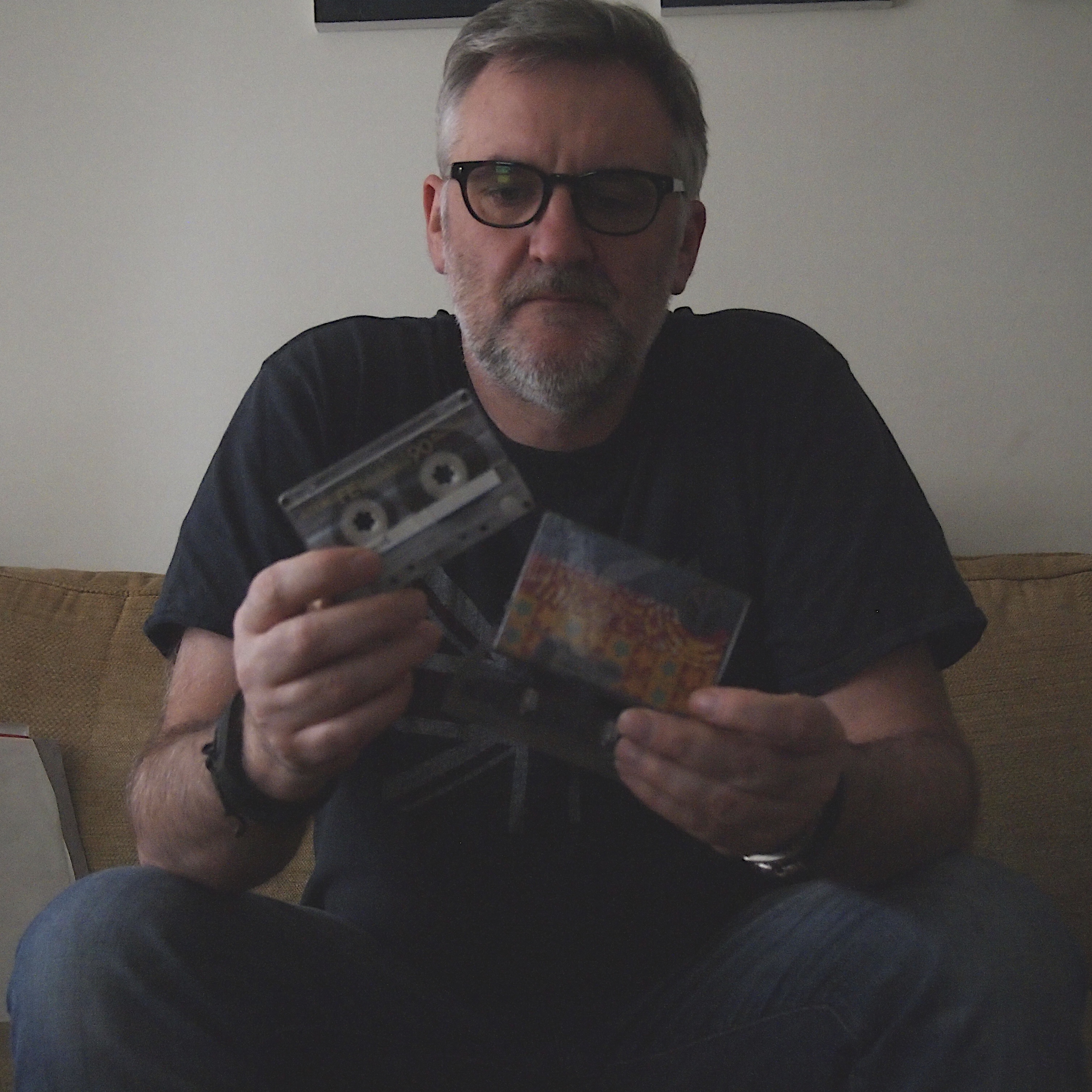
It was about this time I obtained my first cassette recorder, so with transistor radio perched safety I would hold the small cassette recorder microphone close to the transistor and tape the music. Building up c60 or c90 cassette tape to be traded at school with my fellow spotty, greasy haired and adolescent boys we were like desperate junkies.

What in eck do you do with this?

What in eck do you do with this?

This is how I  was  introduced to the likes of The Beatles, Hendrix, Dylan, The Doors and all those bands that did not penetrate the mainstream pop shows on TV. The cassette case, which housed the tape had self-made inserts normally constructed from a magazine photo that would somehow relate to the music contained on the tape. I still have a few cassettes from those days.

Oh my goodness so much goodness

Oh my goodness so much goodness

Whilst Stairway to Heaven holds a special place. It is a track, which has been slaughtered to many times by warbling tight trousered rock crooners who simply have had too much hair and hairspray at their disposal. Each counterfeiter dreadfully seeks to represent their own interpretation, which makes listening to the original feel like a Vietnam veterans flash back of carnage, panics and cold sweats. Led Zeppelin 4 also has possibly the two finest opening tracks of any rock album in history.  I defy anybody to dispute this.  ‘Black Dog’ and ‘Rock n Roll’ set a standard that has simply not been matched.

It started with the Beatles Anthology where literally anything picked up by the microphone in the recording studio, including instrument tuning, conversations. mistakes, practice warm ups and lack lustre mixes were to be given a formal release. The classic Doors and Hendrix albums were given the same treatment. Pink Floyd’s followed with their immersion box set releases. Now we are to be subjected to yet another repackaged and remastered release of Led Zeppelin’s first three albums with the “super deluxe box set” coming in at a whopping £91.00 ($150.00) each.

When it comes to making money from fans with Led Zeppelin the song definitely remains the same with each “super deluxe box set” the buyer will receive:

  • CD1: Original album newly remastered in vinyl replica gatefold sleeve
  • CD2: Companion audio in a new sleeve, featuring previously unreleased studio outtakes
  • Vinyl 1: Original album newly remastered in gatefold sleeve replicating the original album on 180 gram vinyl
  • Vinyl 2: Companion audio on 180 gram vinyl in a new sleeve featuring negative artwork based on the original album artwork, and featuring previously unreleased studio outtakes
  • HD Download Card with original album and companion audio in 96 kHz/24 bit
  • LP sized, individually numbered, high quality print of the original album cover
  • Album-size hardback book (80 pages)

Led Zeppelin are one of the most successful, innovative and influential rock groups in history. If the 1960s belong to the Beatles then the 1970s belong to Led Zeppelin.  I’ve taken a look at these “super deluxe box set” you know what? I’m going to stick with my old vinyl.

Teenage kicks don’t have to hurt

Saturday 14th December 2013 and the London air is heavy with winter darkness. I’m cold and making a side step shuffle movement to keep warm. The type of side step shuffle normally associated with granddads dancing at wedding parties. I am the lone 52 years old man standing in a long queue that twirls itself around the Camden backstreets streets past a chaotic petrol station where queue members frequently abandon these static ranks to purchase an assortment of chocolate, crisps and dubiously coloured hi velocity caffein drinks.

Tourists armed with bags make their way back to Chalk Farm tube station after perusing Camden market. They take a second glance at the old man standing head and shoulders above his fellow queue participants. The street sweepers battle against the odds as a fine drizzle of rain starts to descend. I find myself surrounded by 1000s of teenage girls, high on their Molotov cocktail of crisps, sugar, caffeine and frenzied excitement.

I recall an interview with Keith Richards where he is asked about his early touring days with the Rolling Stones during the 1960s. Looking into the camera with reflective fear Richards recalled running the gauntlet of young girls after each gig from the backstage to the waiting car. Here I am in the whirlwind Keith, but all I can hear is rather sensible discussions about fashion, music and world events causing concern. Each short advanced movement by the queue is greeted with a collective high pitched shout that bears the capabilities to shatter wine glass in a 3 mile radius.

I am with my 15 year old daughter and her friend and we are about to enter the London Roundhouse to witness an evening with The Black Veil Brides plus support bands. I have been dreading tonight. The age ninja creeps through the undergrowth of life. You know its there because you hear it tussle in the undergrowth occasionally, but you are easily distracted until ‘wham!’ its to late. Running is futile. The age ninja brings many gifts, pot belly, aching joints, declining hairline, corduroy trousers and the graviton pull of the mighty cynicism and no where is this cynicism more revealing than in the world of popular music.

We the 50+ generation smirk with contempt because we are the generation with the musical kaleidoscope, The Beatles, Hendrix, Joplin, The Doors, Smokey Robinson, Sly and the Family Stone, Bob Marley. The glam of David Bowie and T.REX. Musical juggernauts Led Zeppelin, Emerson Lake and Palmer, Pink Floyd. The refreshing blast of punk and the 1000s of 3 chord wonders that followed.

Our principal band or artist became our fashion adviser by proxy. Marc Bolan and David Bowie lookalikes popped up in abundance with their ambiguous sexuality flaunting the nerves of parents and neighbourhoods. These brave lookalikes would often be seen galloping down streets being heckled and chased by older boys with shouts of “get the poof!” A personal musical journey is like a rights of passage. The proprietors of record shops were the the gate keepers of heaven or hell.  A well meaning retailer had the power to provide a gentle nudge towards Dylan. A less informed retailer could slam into the teenage oblivion of Alvin Stardust or mock rock n roll Showaddywaddy train pipe trousers.
My cynical eyes cast over todays popular music landscape and I witness corporate safe niceness penetrating its way through TV screens via the X Factor serving up its cover versions of soppy sugar induced love ballads. I see teenagers walking like zombies with little understanding of individuality who have become mere consumers to be told what to buy and when.

The cold air of London shakes me out of this cynicism and brings me back. I have purposely refrained myself from voicing negative observations in the build up to tonight. This is my daughters musical journey. I am simply carrying out my duty to ensure protection during her first big indoor rock concert.

The drive to London was the first eye opener. My daughter had made a compilation CD, which is to be played on route and prepare the ears for the onslaught. My fears must have been tattooed on my face when news of this CD reached me. I was offered immediate counselling by my wife.

The first internalised sigh of cynicism was swiftly slapped away when the opening vocal lines and chords of Led Zeppelins Black Dog blasts through the car speakers. The CD featured a blend of old and new. My Chemical Romance followed by Zeppelin, followed by Bring Me the Horizon followed by The Ramones, etc. The surprising factor was watching two teenagers in the rear of singing along to each song.

As we make our way towards the venue we increasingly encounter a beautiful rainbow of young people individually dressed in self made outfits, dyed hair, Dr Martin Boots and an attitude that would make the average X Factor fan run to the nearest TK Maxx store for retail safety.

In the venue, sensibly I make the rational decision to stay at the rear and away from the growing mayhem. My daughter and her friend nervously ask permission to go join the crowd, I nervously agree and with a blink of an eye they are gone. My baby whom I have safely tended too over for 15 years is now submerged in army of metal chaos that bounces and sways to every pounding bass, crunching guitar cord and gravel lyrical projectile thrown at them by tattooed muscled musicians.

Occasionally I catch a glimpse of the two teenagers. Their faces totally enthralled with the proceedings as they bond with the crowd  and with growing confidence they push back to protect their space at the front of the stage, which had been hard won.

Two support bands and the pyrotechnic induced Black Veil Brides later I witnesses two sweat drenched, exhausted and beaming faced young ladies stumble back to our prearranged meeting place. Unable to speak due to their shouting back of lyrics, no spoken words are required. I left the Roundhouse that night knowing the musical rights of passage had been navigated. Its not cynicism that creeps up on you as you get older. Its laziness. Laziness that is coupled with being prepared to sit back and absorbing what ever is easily obtained through mainstream media. A sense of adventure and discovery can often be lost.

As a teenager myself the tussle and lengths I endured to buy an allusive vinyl album is simply matched by the complex over supply of downloadable options. Fantastic music and bands exist today, as they did when I was younger. To find them still remains a journey, requiring dedication and determination.

On the 2 and 1/2 hour drive back from London two young ladies have finally drifted into exhausted sleep. I switch the car radio on, tune in and listen to classic FM. Did you know Beethoven was a punk?


Link

I was never a great Lou Reed fan, but did feel a sad loss for one of musics big mavericks, especially when the mainstream seems to increasingly recycle itself . I saw him play live in Bristol many years ago. The memories are quite faded now, but what I recall from the performance had the hallmark of the attitude that influenced generations to come. This was my small photo tribute.LRRIP

Coup d’état of a Song

It is very rare that a coup d’état of a song becomes a magical moment. It only happens when the artists who carries out the coup d’état takes the song on a different adventure envisaged by the original writer and artist. When it does happen it gives the work a fresh emphasis and purpose to the listener. It can also introduce the masses to an unknown, forgotten and often undervalued artist. It also tends to happen best when a song is further compounded by present circumstances, or a certain mythology has developed around the song.

A coup d’état of a song takes place when it is overthrown by an artist who sticks a flag in it like an adventurer on newly discovered land. The impostor goes on to claim the integrity of the song.  A coup d’état of a song goes far beyond the banal multitude of manufactured cover songs that pollute the environment through talentless TV shows. One of the best examples for the coup d’état of a song in recent years is the Leonard Cohen song ‘Hallelujah’.

Legend has it that Cohen wrote around 80 draft verses for the song whilst alone in a hotel room. Apparently the song had reduced him to sitting on the floor, in underwear and alleviating the creative pressure by banging his head on the floor in frustration. Cohen’s original version of Hallelujah emerged on the 1984 album ‘Various Positions’ and was largely ignored until John Cale carried out a song coup d’état in 1991 as part of the Cohen tribute album ‘I’m Your Fan.’

Cohen’s original version went for the choir backing, electric piano, drums and echoed lead vocal – full on production. Cale’s version was structured more delicately around a single vocal and grand piano that gave the song a much more personal, haunting and dramatic production.  Its Cale’s version that is more likely to be performed by artists, including Cohen himself who during his latest round of tours performed Cale’s version. It is also the Cale version that appears in the 2001 Shrek film and not the Jeff Buckley one, as many believe, although interestingly the Cale version did not appear on the soundtrack album for the film.
He never got to meet his musical heroes.

He never got to meet his musical heroes.

The commercially successful coup d’état of the song was of course undertaken by Jeff Buckley who in turn was inspired by the Cale coup d’état rather than Cohen’s original. Buckley’s coup d’état has become the best known and featured on his only complete album, Grace from 1994. The song was released to great commercial success during 2006/07 when it charted around the world.Buckley sadly did not live long enough to witness this success after dying in tragic circumstances at the age of 30 in 1997. His Grace album did not go Gold until 2002, nine years after its original release.
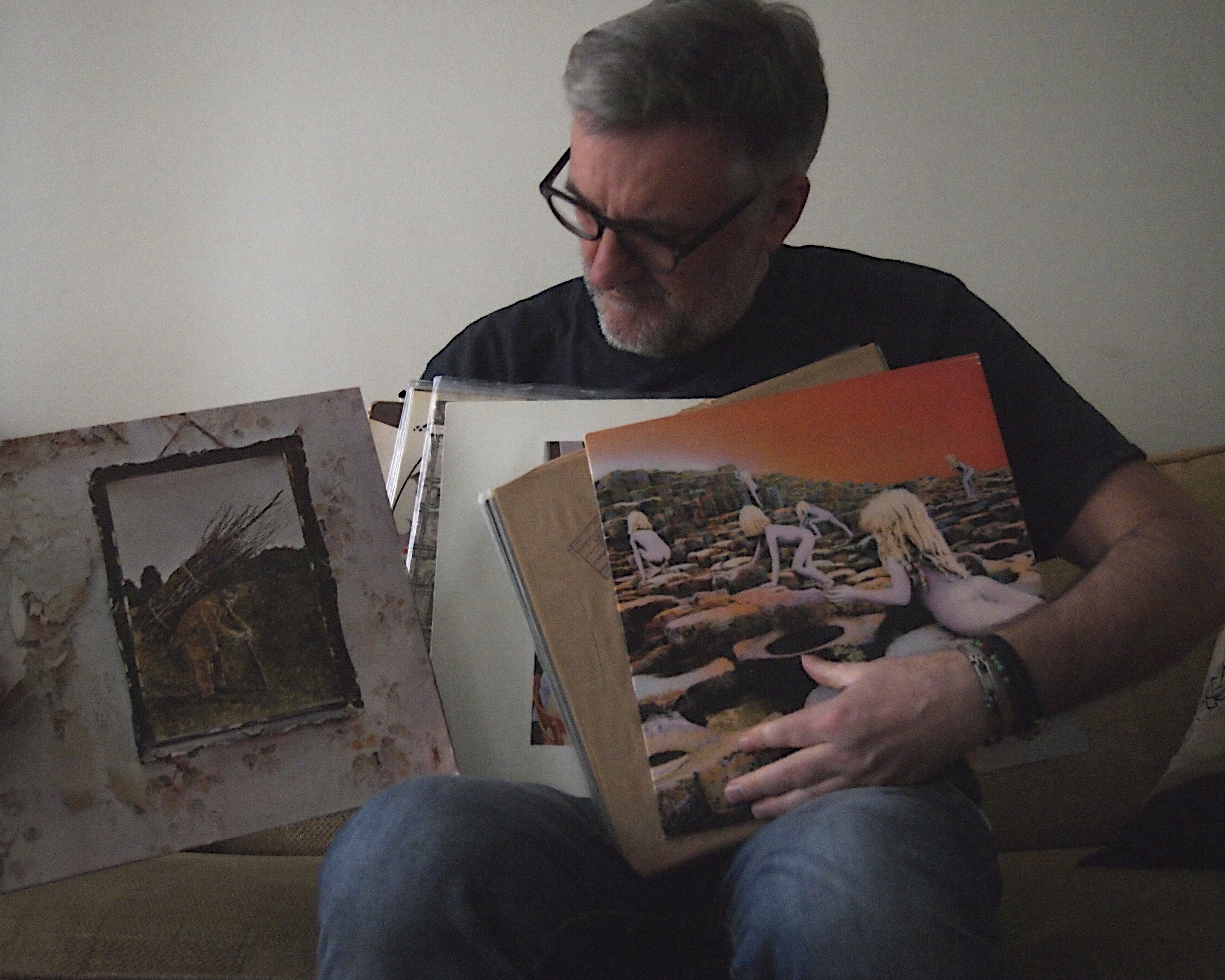

These tragic circumstances added further mystery to the Buckley coup d’état of Hallelujah, which had further intrigue given that Jeff Buckley is the son of Tim Buckley the legendary folk singer from the 1960s/70 who also died young at the age of 28 in 1975.

Musical history is littered with the missed possibilities for creative partnerships caused by egos, untimely deaths, or simply artists not being around and kicking at the same time. So whilst sitting alone one Sunday morning listening to a few CD’s, sipping coffee and pondering aimlessly I thought about some of our sadly demised artists and the songs that were published after their death, which in my view they would have graced with a glorious coup d’état. Here are my top 5 selections.

1. Billie Holiday: The Rolling Stones ‘As Tears Go By’.

By 1959 Billie Holiday’s ravished life of rape, prostitution, alcohol abuse and drug addiction had come to an end. On May 31 of that year Holiday had been taken to Metropolitan Hospital in New York suffering from liver and heart disease. She was arrested for drug possession as she lay dying, and her hospital room was raided by the authorities.

In 1994 the Jazz label Verve released a collection of tracks by Holiday entitled The Great American Songbook, which captures some of her final recordings. The glory days were well and truly gone by now. Holiday struggles to hit the notes and her voice is noticeable cracking, often slurred in delivery. In her glory days Holiday was renowned to be one of the greatest female vocalists in the world with a vocal that could melt an audience into submission with ease. The Great American Songbook collection of songs leaves a harrowing legacy that faced many Black artists, especially Black women who were exploited, abused and ultimately lost their life in pursuit of their art and in the hand of the ruthless men controlling the music business. I can think of no more fitting song than the Rolling Stones ‘As Tears Go By”

This song was written by Jagger, Richards and their then manager. The song was originally given the female treatment by Marianne Faithful and was initially earmarked for the ‘b’ side of her record in the early 1960s, but upon hearing the demo her record company decided to switch the track to the ‘a’ side and it went on to Chart. It took a few years until the Stones actually released their version of the song. Faithful delivered a credible effort, but imagine Holiday with her life experience and lady day voice transforming this song into a pain of beauty and making angels cry.

2. Miles Davis: Radiohead’s ‘The National Anthem’

In 2001 Radiohead released ‘Amnesiac’ their fifth studio album. The final track on the album is entitled, ‘Living in a Glasshouse.’ Radiohead’s Jonny Greenwood wrote to the ageing British jazz trumpeter Humphrey Lyttelton asking him to play on the track because the band was “a bit stuck.” Lyttelton apparently agreed to help after his daughter shared their 1997 classic album OK Computer with him. This event informed my next imaginary venture. I take you back one Radiohead album to set out my next coup d’état of a song.

Kid A Radiohead’s fourth studio album was written, conceived and recorded around the same time as Amnesiac. The 3rd track on Kid A is the thunderous, “The National Anthem’ with is driving bass line and disjointed electronics. It would be absolutely breathtaking to have witnessed a free flowing, at his best, Miles Davis kicking into this track, which would not have been to much out of place given the music styles Davis was experimenting with in the 1970s.

In 1970 Davis released the controversially titled, ‘Bitches Brew’ that continued his experimentation into using electric instruments and a loser rock-influenced improvisational style. The Album received mixed responses and reviews upon its release, due to its unconventional style and sound, although it is now gained recognition as one of jazz’s greatest albums and a progenitor of the jazz rock genre, as well as a major influence on rock musicians…..like Radiohead no doubt.

Davis died in 1991 and is generally recognised as one of the most influential musicians of the 20th century who was at the forefront of major developments in jazz music, including bebop, cool jazz, hard bop, modal jazz, and jazz fusion.

http://vimeo.com/51713268

Davis and Radiohead a marriage made in heaven and divorce played out in hell.

3. Curtis Mayfield: Tom Waits ‘Alice’

Two of my favourite artists of all time. This is a collaboration that sends shivers down my spine and one that if existed would be demanded at my funeral. Curtis Mayfield wrote and sang from the heart with truth, love and passion. Often overlooked and generally only credited by the masses via his soul classic ‘Move on up’ that has gone on to be bastardised through many a TV commercial and dreadful remix.

Mayfield died in 1999 and left a back catalogue, which is enough to put most of today’s recording artists to shame. Recognised as a pioneering soul, funk, R&B, singer and songwriter Mayfield was grounded in the radical politics of the 1960s Civil Rights Movement and composed the soundtrack for the blaxploitation film Super Fly. He was also a multi-instrumentalist who played the guitar, bass, piano, saxophone, and drums. Mayfield was paralysed from the neck down after stage lighting equipment fell on him during an outdoor concert at Wingate Field in Flatbush, Brooklyn, New York. He was unable to play guitar again, but he wrote, sang, and directed the recording of his last album, New World Order. Mayfield’s vocals for the album were painstakingly recorded, usually line-by-line while lying on his back.

Alice is an album by Tom Waits, released in 2002. The album contains the majority of songs written for the play/opera of the same name that was adapted by Robert Wilson. The play/opera explores the obsessive relationship between Lewis Carroll and the little girl who inspired Alice in Wonderland, Alice Liddell.

The opening track of the album entitled Alice guides you into a false sense of security; a lovely, candle-flickering tune, drums brushed around a breathy sax and gently chiming vibes. What comes afterwards is a journey into the darkest regions of obsession, insecurity and personal fears played out in the tone, structure and vocal tortures that Tom Waits is perfect at producing. It is the title track Alice that I can imagine Mayfield bringing glory too.

The creative clash between these completely different artists and style in my view (and imagination) would generate something of immense beauty, equally it could be a right mess just like Joe Strummers duet with Johnny Cash where they jointly warbled the Bob Marley’s classic Redemption Song – what a trio Cash, Strummer and Marley all dead, all legends, yet somethings should never escape the studio.

4. Janis Joplin: The Milks Carton Kid ‘Michigan’

The Milk Carton Kid’s album Prologue, 2011 in my view is a modern folk classic. The album bursts with confidence lyrically from its opening track ‘Michigan’. The band consist of singers and guitarists Kenneth Pattengale and Joey Ryan. At the point of writing their first two albums are free to download from the bands website: http://www.themilkcartonkids.com/

Janis Joplin died in 1970 and was an American singer-songwriter who first rose to prominence in the late 1960s as the lead singer of the psychedelic-acid rock band Big Brother and the Holding Company. On the 4th October 1970 her absence from the recording studio was causing concern. She was found dead on the floor of her bedroom that day with the official cause of death being an overdose of heroin combined with alcohol.

Although Joplin had a remarkable, powerful and distinctive voice, it was also tinged with a fragile tone that could turn a song on its head whilst in the middle of delivering.  Whilst Michigan the place is a place of natural beauty, its largest city is Detroit, with its proud musical heritage has succumb to dramatic industrial and social decline witnessed by on a few major cities. These conflicting dilemmas play out in the song and add to its depth.

http://vimeo.com/28768380

Joplin would have taken this song by its throat and transformed it from its delicate folk interpretation into wailing epitaph in honour of a once great city, its people, families and community. No rock will have been left unturned, every emotion would have been exposed and cast at our feet to ponder.

5. John Lennon: Low ‘Plastic Cup’

There is the Beatles. There is John Lennon as a solo artist and there is the mythology that surrounds Lennon. Personally I’m not a great fan of his solo work, which I often find pretentious, but this of course does not diminish the great man from my reflections. Plastic Cup appears on the Low album Invisible Ways.

Formed in 1993 the music of Low is characterised by slow tempos and minimalist arrangements. The track Plastic Cup represents typical Low territory with it’s brooding, unhurried, dark, but yet warm produced by Wilco’s Jeff Tweedy. Lennon will have been at his best singing the words of Plastic Cup, “And now they make you piss into a plastic cup and give it up. The cup will probably be here long after we’re gone, what’s wrong?” The type of lyric I can image him writing in and around the time the Beatles imploded resulting in his fractured separation from Paul McCartney.

By the early 70s Lennon and McCartney where is creative war with one another. First of the blocks was McCartney with his studio album ‘Ram’ that contained the track “Too Many People” which McCartney confessed was a dig at Lennon. The response was not long in the waiting when Lennon released the ‘Imagine’ album later the same year, which contained the infamous track ‘How do you sleep at night?’ The lyrics of Lennon’s track, “The only thing you done was yesterday alongside “Those freaks was right when they said you was dead” leave little to the imagination as to the festering hatred that was eating away in Lennon.

Lennon was known for his politically left leaning sympathies and his last known act of political activism was a statement in support of the striking sanitation workers in San Francisco on 5 December 1980. He and Ono planned to join the workers’ protest on 14 December. Lennon was shot dead on 8 December 1980 in New York. He was was forty years old and on that day the corporate music elite lost all hope of a Beatles reunion, but it remains a sad note to the world that Lennon and McCartney where not able to work it out.

http://vimeo.com/18623136

Nadine Shah – A Touch of Class

Nadine Shah’s Love Your Dum and Mad is, without question, my standout album of 2013 to date. While critics will no doubt continue to lean on easy comparisons to Radiohead, Nick Cave, and PJ Harvey, such shorthand does a disservice to Shah’s bold and distinct artistry. This isn’t just a nod to her influences—it’s a fully realised, immersive journey that demands to be appreciated on its own terms.

From the opening track, Aching Bones, Shah immediately pulls the listener into a shadowy, almost menacing soundscape anchored by a brooding bass line that sets a compelling, intense tone for the album. This is not music made for casual pop consumers; it’s a deeply textured, richly layered experience that challenges and rewards in equal measure.

Beyond the music itself, Shah occupies a unique and important space in the male-dominated sphere of alternative and indie rock. As a woman of Pakistani heritage, she brings a fresh perspective and an unyielding seriousness to her craft—pushing boundaries and defying clichés with every song. While her cultural background is sometimes reduced to a talking point in reviews, it is Shah’s undeniable talent and vision that should take center stage.

I first discovered Shah on Maya Jane Coles’ album Comfort, where Shah’s vocals perfectly complemented Coles’ electronic beats and flirted confidently with Massive Attack and Tricky’s trip-hop territory. Yet it is Love Your Dum and Mad that truly captures my admiration—a record that asserts Shah’s unique voice in a crowded musical landscape.

In an era saturated with sanitized chart fodder and predictable formulae, Nadine Shah and Maya Jane Coles stand out as two fiercely talented women leading the charge toward something more authentic, compelling, and daring. Do yourself a favor—listen to both albums and experience music that refuses to be ordinary or mundane.