Famous for its prehistoric stone circles at Avebury and Stonehenge and shrouded in mystery, myth and legend the Wiltshire countryside is beautiful. On weekends I often find myself immersed myself in overgrown paths, walking the dog and taking photographs. The vast fields where huge cloud formations sweep across open skies and weather conditions change in a few minutes.
The normal format for the TV programme Britain’s Got Talent starts with the judges scouring the land to discover those they consider may have the magical talent. The initial auditions are like a medieval crusade with a host of cringe worthy performances by eccentrics paraded in front of the TV camera, screened directly into our living rooms and considered ‘light family entertainment.’ It is a short cut to celebrity stardom for a handful of budding artists, which plucked Susan Boyle from obscurity in 2009. Boyle finished 2nd place in the competition to the dance troupe Diversity. The day after the final she was admitted to The Priory, a private psychiatric clinic in London. Her stay in hospital attracted widespread attention. The Press Complaints Commission following press reports about Boyle’s erratic behaviour and speculation concerning her mental condition, wrote to remind editors about clause 3 (privacy) of their code of press conduct. Her family reported “she’s been battered non-stop for the last seven weeks and it has taken its toll, but her dream is very much alive,” Boyle left the clinic 3 days after her admission. Bullied at school and cruelly nicknamed ‘Susie Simple’ by fellow classmates Boyle spent most of her young life believing she had a learning disability, although she was later diagnosed with Asperger syndrome. Boyle continues to be subjected to ridicule by professional comics and one liner joke merchants who trade on her physical appearance and disability as a crutch for their own creative limitations. There is in existence whole pages on the internet dedicated to cruel observations of Boyle, yet it is hard to imagine Andrea Bocelli the blind Italian opera singer being subject to the same level of ridicule. What is evident with Boyle is that she is faced with a multi layered onslaught of discriminatory attitudes cutting across disability, gender and class. If becoming a successful musician was not difficult enough, becoming a successful musician whilst disabled is simply remarkable regardless of the genre of music and demands respect.
It is an aspiration many disabled artists are increasingly unlikely to achieve given the obsession with image and safe marketing that often results in disabled people being portrayed as secondary characters, weak individuals, to be made fun of, or to be pitied. Transport issues and inaccessible venues are just some of the issues facing musicians with a disability. Yet the existing and historical musical landscape is a rich, diverse and creative movement that has borne witness to disabled people as creative pioneers and leaders.
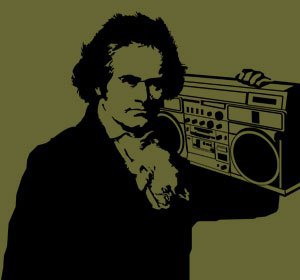
As Ludwig Beethoven (properly the worlds first punk) approached his 26th year in 1796 he was already facing deteriorating hearing and by the time he composed his 9th and final symphony he was totally deaf. Richard Dale Miller was born November 28, 1942 in Dallas County, Texas. An evangelist, travelling across US preaching his interpretation of the Gospel through song and testimony. Richard Miller’s full stage name is Little Richard Miller Born Without Arms or Legs. Heis an organist and guitarists who has recorded several albums mainly in the country style.
Robert Wyatt was the drummer and vocalist in the band Soft Machine, part of the so called ‘Canterbury Scene.’ A loosely based network of progressive rock, avant-garde, jazz musicians based around the city of Canterbury, Kent, UK. Since an accident in 1973, when he fell drunkenly from a fourth-floor window at a party, he has been paraplegic and confined to using a wheelchair for general mobility. In the 1970s the producer of BBC 1 ‘Top of the Pops‘ programme wanted Wyatt to perform from a normal chair on the grounds that his use of a wheelchair ‘was not considered suitable for family viewing.’ After strong arguments and support from his fellow band members, which included Nick Mason (Pink Floyd) and a young Andy Summers (The Police) Wyatt won the day. In September 1974 Wyatt performed his cover version of ‘I’m a believer’ on national TV in his wheel chair, whilst the audience danced along. Wyatt also recorded, what many still consider to be one of the finest anti war songs ever recorded, ‘Shipbuilding’ a song written by Elvis Costello.
If like me you have fumbled about with a guitar trying to learn 3 chords and then desperately sought to put these twisted sounds together in order, so they rendered the simplest of recognisable tunes. Then you can hardly start to imagine what it takes to do the same without the sense of sight. During the 1960s Bob Dylan chose the pseudonym Blind Boy Grunt for an early recording session. His choice of pseudonym was a nod to the delta blues singers, who were such an influential to him. Arthur Blind Blake (1893-1933), Blind Willie Johnson (1897–1945), Blind Boy Fuller (1907–1941), Blind Willie McTell (1898–1959), Blind Lemon Jefferson (1893–1929) to name a few.
Arthur Blind Blake
Blind Willie Johnson
Blind Boy Fuller
Blind William McTell
Blind Lemon Jefferson
Following in the footsteps of these incredible musicians Ray Charles (1930-2004) was a true musical pioneer and genius. During the 1950s he started to fuse together rhythm and blues and gospel music. This style emerged into the blueprint we now understand as popular soul music. Stevie Wonder was to take this blueprint and push it to another level during the 1970s via classic albums like Talking Book, Innervisions and Songs in the Key of Life. At the same time an unpretentious, middle-of-the-road cabaret act scored a massive hit that would elevate them to international stardom. Lennie Peters (1933-1992) was one half of the duo Peters and Lee. Peters was an uncle of Rolling Stones’ drummer Charlie Watts. He had lost the sight of one eye at 3 years old. He lost the sight in his remaining eye when 16 and immersed himself in music by teaching himself to play the piano. Peters & Lee enjoyed their number-one hit ‘Welcome Home’ in July 1973 and went on to become platinum album artists with two and a half million sales enjoying 4 British top 20 hits and 4 top 10 albums.
Ian Dury
Peters and Lee
Toyah Willcox
At the age of 7 the genius singer, song writer and actor Ian Dury (1942-2000) was stricken by polio. He suffered the long-term effects of the disease throughout his life, which left it hard for him to walk. In 1981 Dury released the song Spasticus Autisticus, which was written to show his disdain for that year’s International Year of Disabled Persons, which he saw as patronising and counter-productive. The song was banned by the BBC given the lyrics were uncompromising, “so place your hard-earned peanuts in my tin and thank the creator you’re not in the state I’m in, so long have I been languished on the shelf. I must give all proceedings to myself.”
In August 1990, a lighting rig fell on soul legend Curtis Mayfield (1942-1999) during a sound check before a New York concert. His 3rd, 4th and 5th vertebrae were all broken, leaving him paralyzed from the neck down. Despite the fact that he was unable to play an instrument, Mayfield would lie on his back in order to catch enough breath to sing. Mayfield created another album before his death. In 1984, Rick Allen the drummer with Def Leppard was involved in a car accident that resulted in the loss of his left arm. To accommodate his missing arm, Allen had a specially made drum kit and continues to performed to this day. Adrian Anantawan is one of the world’s most accomplished young violinists. The young man sometimes closes his eyes as he plays, as if lost in the music. If his audience closed their eyes, too, they would never know the violinist standing before them has no right hand. Social networks and assistive technology have allowed blind jazz keyboardist/pianist Andre Louis to perform, even though getting to gigs is a real challenge. “None of the gigs I’d like to do are near where I live in west London. If I were to take public transport, it would be me, a laptop, a keyboard stand and a cane, trying to navigate the underground. Taxis would be around £35 so costs would get high quickly.”
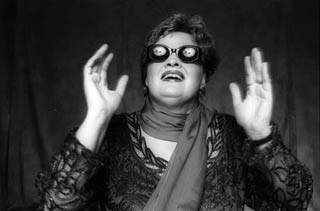
Toyah Willcox was born with a twisted spine, clawed feet, a clubbed right foot, one leg two inches shorter than the other and no hip sockets. Because of this she endured years of painful operations and physiotherapy.Her physical condition was a cause of difficult times at school. “When I was bullied at school, it was coz of my character. I was a weak child, I was incredibly small. I had a speech impediment, I was the perfect bait for bullying”. Willcox had 8 Top 40 singles, released over 20 albums, written two books, appeared in over 40 stage plays and 10 feature films, and voiced and presented numerous television shows. Diane Schuur is an American jazz singer and pianist. Nicknamed “Deedles”, she has won two Grammy Awards, headlined many of the world’s most prestigious music venues, including Carnegie Hall and has toured the world performing with the likes of Quincy Jones, Stan Getz, B. B. King, Dizzy Gillespie, Maynard Ferguson, Ray Charles, Joe Williams and Stevie Wonder. Like Stevie Wonder, Schuur was blinded at birth due to retinopathy of prematurity.
It was the 3rd of November 2001 when I managed to see perform an artist who would go on to become one of my personal favourites. It was at the Barbican Hall, London and the event was billed as Beyond Nashville with Howie Gleb and others.
I was invited by a friend (Derek) and to be honest I had mixed feelings about going. My approach to music is very much slow burning. It normally takes quite a while after a particular music genre has been hip before my musical taste catches up and so it was to be with the so called Americana genre. The Others referred to on the concert billing, included an astounding array of bands and solo artists, Giant Sand, PJ Harvey, Evan Dando, Kurt Wagner, Mark Linkous, as well as Vic Chesnutt.
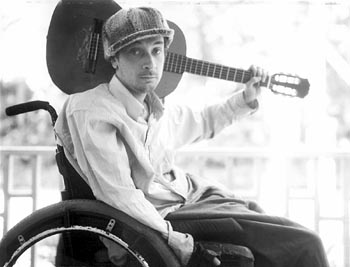
Vic Chesnutt (1964–2009) was a truly remarkable talent. Involved in a car accident in 1983, which left him partially paralyzed; he used a wheelchair and had limited use of his hands. During his career he released a total of 17 albums (2 produced by Michael Stipe of REM fame). Chesnutt performed 5 or 6 songs that evening with Kurt Wagner (Lampchop), which were haunting, funny and poignant including, Is A Women, Girls Say and My Blue Wave. An unassuming man on stage, sitting in his wheelchair, strumming his guitar with a delicate voice that brought a concentrated silence from across the whole audience. Chesnutt described his relationship with his native America as “centred around the love/hate axis with a bit of Stockholm syndrome thrown in.” It was the many contradictions of the worlds richest country, which provided him with the source for such of his material, alienation, isolation, human failings of the body and heart, hope, war and everyday observations.
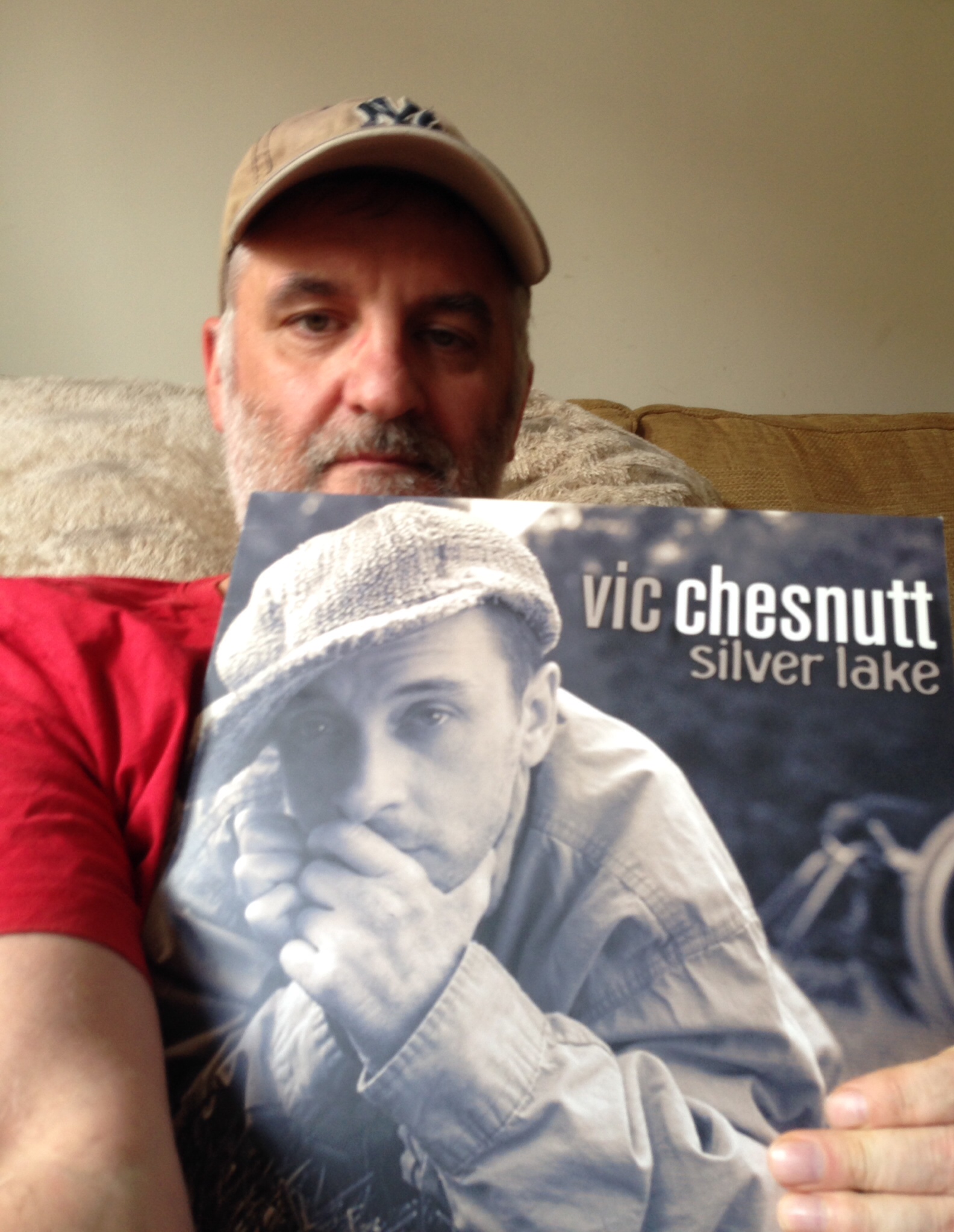
Silver Lake was Chesnutt’s 11th Album and while it sounds like a Vic Chesnutt album through and through, it is a better than average introduction to his work, filled with quirks. The album kicks of with the emotionally shattering ‘I’m through’ one my favourite Chesnutt tracks. The corner stone of any Chesnutt album are the stories that underpin each song. The songs on Silver Lake are honest and pull on every emotional chord possible no matter how surreal the narrative. Throughout Silver Lake you will hear heart-tugging beauty. On December 25, 2009, at the age of 45, Chesnutt died from an overdose of muscle relaxants that had left him in a coma. Chesnutt had attempted suicide 3 or 4 times before. According to Chesnutt, being “uninsurable” due to his quadriplegia left him $50,000 in debt from his medical bills, and had been putting off surgery for a year. A tragic, unnecessary and sad end to a remarkable genius and one of the reasons which you need to give Silver Lake an honored space in your record collection.
I find myself walking alongside the River Thames. It’s a walk I take most Thursday evenings whilst making my way to Waterloo Station for the long train journey home. It is a pleasant evening as I occasionally glance over to the House of Commons, Big Ben, wearing my headphones and navigating the tourists, whilst flipping through the Bandcamp app on my iPhone. I’ve just pressed play. The Soft Shield album by Ghost to Falco kicks in with openner Enemies Calling and I instinctively stop, take a public seat and listen to the whole album whilst viewing the river and the features on the opposite riverbank. Finally finding my way home I purchased the album and email the brain child behind Ghost to Falco, Eric Crespo who lives in Portland, Oregon, USA. This blog mainly consists of email exchanges between Eric and myself, as well as the virtual digging I have managed to undertake. Portland of course has one of the most vibrant music scenes in the USA. My earliest recollection of a band from Portland was The Kingsmen, who had the hit Louie, Louie in the early 1960s. It’s a little know fact that In February 1964, an outraged parent wrote to Robert Kennedy, then the Attorney General of the United States, alleging that the lyrics of Louie Louie were obscene. The FBI investigated the complaint and, after four months of investigation, concluded that the recording could not be interpreted because it was “unintelligible at any speed”.
Eric Crespo was born in Los Angeles, California where he lived until eight years. at this ripe age his parents moved the family to Burlington a small town in North Carolina. Burlington is situated 40 minute drive from Chapel Hill, which would prove to be a critical influence to Eric given its underground rock music scene. Eric recalls Chapel Hill has a college town. “In the time (mid 90’s) there was a quite a scene there. The most noteworthy bands from Chapel Hill that were active when I started going to shows were Superchunk, Polvo, and Archers of Loaf. Polvo was my favorite out of those three but I’d go see all of them, and they’d usually have some other interesting bands on the bill with them. And all the touring bands would come through. While I was a teenager I saw bands like Dirty Three, Mogwai, Guv’ner, Modest Mouse, Shudder to Think, Fugazi, June of 44, Pavement, Storm and Stress, Sebadoh, Blonde Redhead, US Maple, Elliot Smith, Unwound, and many more all playing at various small clubs–sometimes to about 10 people. I saw Sonic Youth play secret shows in Chapel Hill on two different occasions at a smallish club (probably 650 capacity?) called The Cat’s Cradle. I even saw Radiohead once at the Cat’s Cradle right after the Bends came out. I wasn’t really a fan (and I’m still not) but I’d just go to shows..” Eric then moved to Asheville, NC to go to college. In his sophomore year he found himself living with friends and rightfully having fun. “I knew I had to leave though. I felt like I was just waiting for something important to begin. I played in two bands that toured around the region a bit. We’d go play in Atlanta or DC, but my bandmates in those bands weren’t really up for touring like I was. Touring was all I really wanted to do at the time, so I was trying to come up with ways to play out alone just so I could tour as much as I wanted. I may have never started Ghost to Falco if the people in my bands really wanted to tour like I did.”
So how did the solo work start to evolve? “When I first started thinking of playing out solo my first idea was to go the acoustic guitar/singer-songwriter route. I had a nylon string classical acoustic guitar, but I felt like I needed a steel string acoustic for some reason, and oddly enough I actually ended up finding one on the street one day. In the middle of a crosswalk in downtown Asheville. It seemed like it had fallen out of a car or something. So I started trying to write songs on that but it wasn’t happening. I had no frame of reference really for being a singer-songwriter. I had no interest or knowledge of folk singers or anything like that. I kind of put the acoustic away after a few months (or weeks—I can’t remember). A little later I started messing around on my electric guitar with a looping pedal and I put my newly acquired monophonic 70’s analog synthesizer into the mix and I started making up these loose song structures that sounded pretty full even though I was the only one making the sounds, and that excited me. I thought maybe I could play shows like that but wasn’t sure. Around this time I was also getting interested in a lot more stuff that was outside of what I had grown up listening to. Minimalist composers (Steve Reich, etc.), late 70’s industrial music, Glenn Branca, and “freer” bands of the era. Another thing about starting Ghost to Falco is that I had played in bands since I was fourteen years old. I didn’t know how not to be in a band. It was, and still is the way I find friends, my motivation to travel, my motivation to do anything really. So, starting a band that could never break up unless I wanted it to was pretty appealing. I left North Carolina in October of 2001. My bands played our final shows, I got my wisdom teeth taken out, and then hit the road to Portland.”
The Ghost Falco moniker began in 2001 as a solo project consisting of electric guitar loops, synthesiser sounds and field recordings. The band has gone on to became something of an underground institution with a rotating door of musicians have joined for tours and recordings bringing with them a whole range of instruments. “The first Ghost to Falco show I ever played was in Athens, GA (a place I have never lived) on the way to Portland, followed by shows in Shreveport, Louisiana, Lubbock, Texas, and a kid’s garage in a suburb of Los Angeles. These shows were painstakingly booked by sending out a cassette of a song I sneakily recorded in the studio of my college on an exam day of my last semester. I didn’t really know how I would feel about doing Ghost to Falco live, but it turned out that I generally felt pretty good about it so I decided to keep doing it. I always thought I might add some band members to the mix at some point down the line and I did that in 2005 and live shows have gone back and forth between being me solo and having bandmates. Nowadays I prefer to have bandmates in the band.”
So what are the challenges facing an artist like yourself? “Probably the biggest challenge in getting my music out there is the music I’m making! It’s sort of always existed between worlds. I designed it like that initially. I liked avant-garde music and I liked good songs with singing. I sort of wanted to do something to unite these two worlds, and in doing so I didn’t really create a new scene, but I just sort of made Ghost to Falco this free floating entity. When you’re doing something different and it doesn’t adhere to the tenets of an established scene, or have enough people involved to create a new scene you just end up existing as a free floating anomaly. People might agree that it’s good but people want to align themselves with things that make them a member of a tribe or a community. People want connection. Most of the time it takes some kind of noted tastemaker (preferably with lots of money) to step up and champion it before even a decent amount of people will take notice. We’ve had a few minor taste makers sing our praises over the years, and that’s why today we can boast that we have 980 Facebook likes”
Then there’s the whole music establishment? “Let me just go off on this for a minute, because I’ve been meaning to write this down for a little while. Within the realm of the kind of music we’re making, this is my perception of how things generally work (of course there are exceptions): It’s a big whirlpool where everybody is paying each other. The noteworthy record labels, (not even talking major labels unless you count Merge, Sub Pop, and Matador as majors, which I guess are majors at this point) are probably like the sun that all the other planets of the industry revolve around. So these labels pay the PR firms. The labels buy advertising on Pitchfork and other popular blogs and music magazines. These popular blogs and music magazines are obligated to write about bands that are being pitched by PR firms who are hired by the record labels, who buy advertising on these blogs and in these music magazines, which pays the salaries of the people who run the blog or music magazine. When these bands get written about by the popular blogs and magazines then the booking agencies start calling and then these bands get a booking agent. The booking agent book the bands on high profile tours and festivals and the bands get popular. This system doesn’t work if the popular blogs and such write about anything that any nobody band sends them. Then no one gets paid. And the booking agents aren’t going to want to book a band with no hype behind them. You can’t blame people really. There’s only room for so many bands and writers and promotional agents and such in this world. And there’s even less room for people who are making risky music. To make a food analogy: Even a big city can only support a certain amount of high end vegan restaurants, while the pizza places on every other corner are turning a fine profit. People like pizza and it’s fast and it’s cheap and it fills you up. There’s nothing wrong with pizza. I like pizza. The music I tend to make requires a little more patience and a little more time, maybe it’s a little harder to find the entrance to the place, but I hope that in the end it’s going to be more nutritious.”
Back to the whirlpool, “there are bands that get thrown into it and don’t connect with people that happens all the time, and then they just fade away. And some are on the edges of the whirlpool and some are right in the middle of it. Ghost to Falco has never been in this whirlpool at all and never really had the chance to connect with a lot of people in this way. No one at a popular label (or management company who gets you on the popular label) has had enough of an interest to take Ghost to Falco on. I wonder how we would do if we were to get thrown into that whirlpool. We might do fine, but who knows? It’d be nice to be able to connect with a lot more people, but it’s sort of cool running the band how we do. We only tour when we want to and we can play whatever kind of venue and play with whatever bands we want to play with. No one is shaping our career. It is a freedom I appreciate. We don’t really make money, but it’s never a situation of the label is making us tour, this sucks, kind of thing. I’ve had friends in those situations and it seems terrible.”
Soft Shield is Ghost to Falco’s fourth full length album. The albums initial sessions began at the Portland-based Type Foundry Studio (known for producing recorded output by the likes of Dirty Projectors and R.E.M. among many others) in June of 2009. A few days after the first sessions Eric left town for six months of touring and traveling. When he came back with his limited funds, Eric realised that going into debt on an album at a top-of-the-line recording studio maybe wasn’t the smartest thing to do. But it was too late. He earned money from odd jobs and spent it on studio time, and/or relied on generous favours from recording engineers. It took three-and-a-half years to finish Soft Shield. Eight different studios were used in all. The album is properly the most cohesive of any record in Ghost to Falco’s discography.
Soft Shield still casts a wide net that marks most of Ghost to Falco’s output, one could find evidence of just about every rock- affiliated musical movement of the past fifty years, but Soft Shield corrals those disparate elements into a vision that feels firmly planted in the American-West. Trippy desert guitar lines and arid pedal steel are intertwined with a lush and intimate, Northwest-specific, Twin Peaks style of mystery— a duality that points to both Eric’s love of the American desert canyon country and his longtime Portland address. As Eric says, “There’s contentment, anger, humor, regret, fear—and hell, some of it you can even dance to” and I could not put it better myself.
During my virtual journey of discovering Eric and the Ghost to Falco’s back catalogue I came across another of Eric’s projects Centers, which was formed by Jay Demko and Eric Crespo in mid 2010. Whilst I absolutely adore the Ghost to Falco catalogue and have no hesitation in recommending them the Centers album is also a piece of magnificent beauty and worthy of any serious music collection.
Eric Crespo is a musical chameleon who weaves genres together and pushes creative boundaries, avant-garde sound structures, alt-country, world fusion with carefully crafted lyrics all blended together. He is the is type of artists we should increasingly celebrate given the quality of his work and the creative space he occupies often results in very few finding full commercial success. His craftsmanship finds itself at odds with the conveyer-belt of mass consumed music that is often found seeping through many a MP3 player. Neil Young is credited with saying, “When people start asking you to do the same thing over and over again, that’s when you know you’re way too close to something that you don’t want to be near.” It’s an interesting observation from an artists who is respected and who has influenced many. Neil Young of course had the means to take a left-field turn from middle of the road comfort before he cranked up his amplifier. In reality the true creative forces on this highway are artists like Eric Crespo, who did not take the middle of the road in the first place.
I took these photographs on Friday 27th July 2014 when the London Sinfonietta opened the West Holts Stage at Glastonbury, performing Steve Reich’s iconic Music for 18 Musicians with Synergy Vocals. Jonny Greenwood from Radiohead performed Electric Counterpoint for solo guitar.
Untypical Glastonbury weather greeted me on arrival yesterday. Very sunny and very hot. The chances of it remaining like this are not likely according to forecasts with rain expected in the next 48 hours, but to be honest it will be a relief as long as it is not a downpour and the wellies are not required. No matter the weather it remains an exciting place to be. I took these pictures on a wonder around the site today. The smells emanating from food stalls cooking their assorted and universal menus are starting to infuse the site. The yearly bustle of cider drinkers at the Brothers Bar (West Holts) is well and truly underway. Live music is due to start tomorrow and teams of technicians are working hard to complete the final pieces of the jigsaw. Sound systems can be heard across the site and people are smiling. Let the show begin.
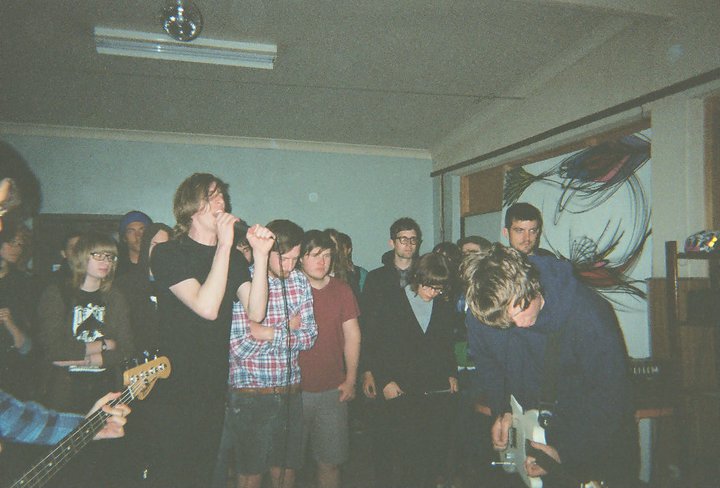
A sense of deja vu awaits as I leave the summer drizzle descending from the clouds hovering over Glasgow and the a 24 hour flight to reach Adelaide, Australia. Yet here I am in the capital city of South Australia, the country’s fifth-largest city with a resident population of 1.29 million and the next stop on my virtual Old Man Adventure in Bandcamp. Adelaide is city with many stories emerging from its humble history. Prior to 1836 Adelaide was inhabited by the indigenous Kaurna Aboriginal nation. Today it is another ‘modern’ industrialised city dealing with its aspirations and tensions, which provide the perfect conditions for creative forces. Adelaide is also home to the joyous No Action.
Patti Smith once said, “punk rock is just another word for freedom” which I can relate too and is reflected in the reinvigorating army of small, independent, lo-fi, do it yourself bands beavering away in towns and cities across the globe. I get jaundice with people, normally men my age, who have deluded themselves with romantic memories of the 1977 punk scene as some type of musical year zero. This was not the case. The DIY garage band ethic has always been a feature in modern music with artists swimming against the tide, challenging convention and giving the middle finger to the corporations. My enduring memory from this period is not the bands who swore and spat their way into the headlines, but the small regional bands. The bands consisting of the neighbourhood shy boy who had secretly been scribbling down lyrics and the kid who had managed to achieve a 3rd chord. A few weeks later they were to be found playing in a local pub, youth club or garage gig. The crap posters that seemed to look cool and the limited cassette run for your small group of fans. The results were often messy, but strangely beautiful given music ultimately is about people, having fun, celebration, connection and expression. No where is this reinvigoration more evident than through the band No Action a self titled soul punk rock group. I like the injection of soul given this creative tension sums up the band perfectly.
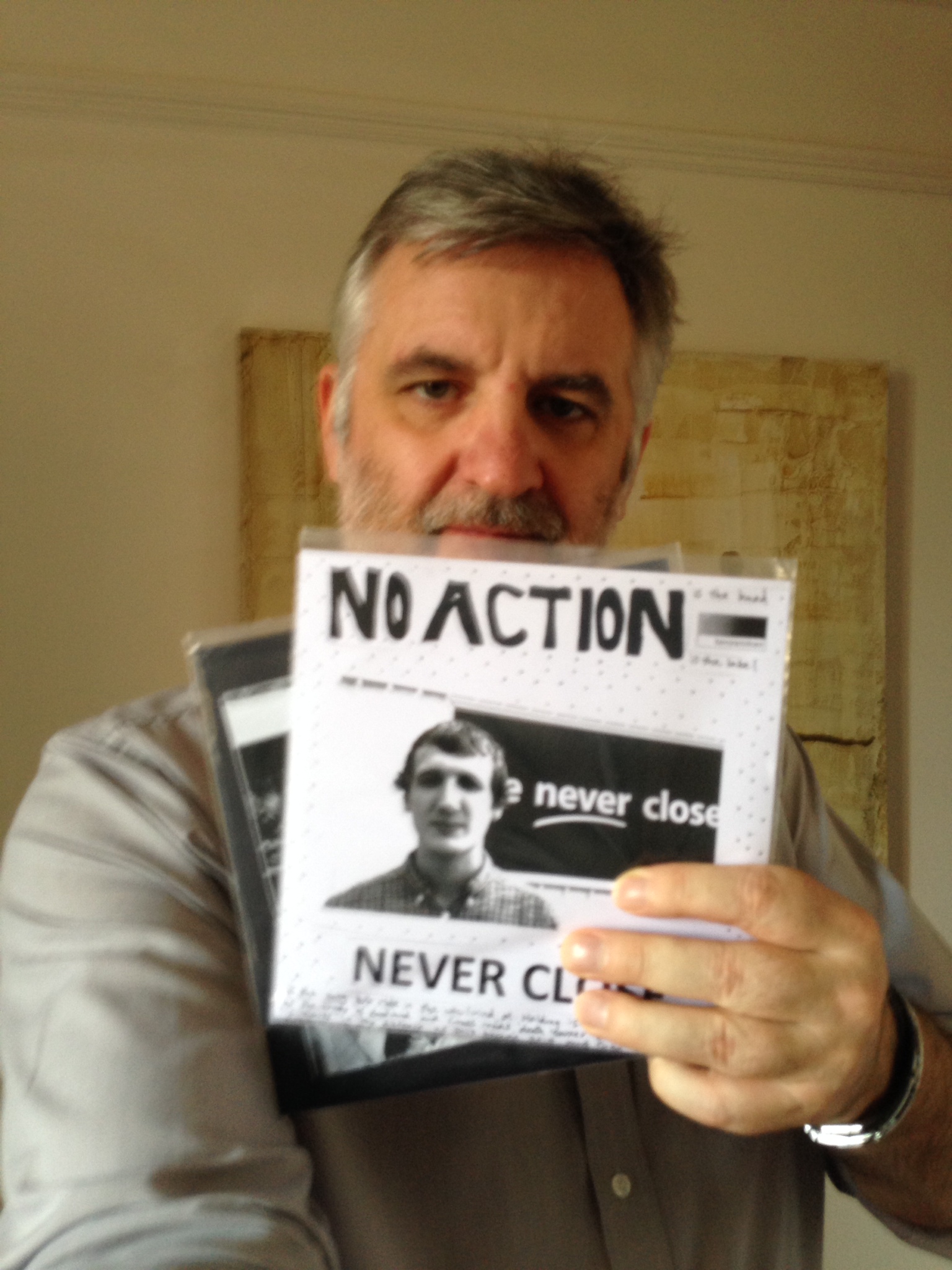
Bandcamp comes into its own when you stumble across bands like No Action, who are an absolute gem to discover. Unlike most bands of this genre you never quite know what you are going to get with No Actionbe it 3 minutes of punk, a reflective acoustic number or indeed a mixture of both in a single track. In an era of mass produced and corporately manufactured music No Action are a shining beacon of integrity. There blistering and brilliant 7″ vinyl Never Close/Riding in the Whirlwind is testament to this. Riding in the Whirlwind is a melancholic and bittersweet acoustic affair, “got a record no one wants to buy and a t shirt no one seems to fit. had a date with an empty bar” chronicling the struggles of a band and relationships. “Call me ungrateful, call me broke, call me when you’ve got the credit.”
Never Close is a different kettle of fish altogether, which opens up with pounding drums followed by a grinding bass. As Nick Godfrey (bassist with the band) explained to me, “The main influence on the Never Close song would be Silkworm and maybe Archers of Loaf but it sounds more like U2, the main influence on the Ride in the Whirlwind song was Comet Gain but it sounds more like You Am I or the Lucksmiths. The important lesson here is to BE YOURSELF and let your true creative voice shine through.” Personally, my observation would be the guitar work on Never Close is more aligned to Keith Levene (Public Image Limited) a quick search for PIL’s glorious Albatross track will confirm where U2’s The Edge stole his licks from.
A further No Action release I managed to obtain is the spilt cassette tape release (yes you heard me right a cassette tape), which paired No Actionwith UK band Plaids from Nottingham. Plaids provide a punchy angular punk/emo rock approach played out in frenetic pace against No Actions more subtle and gritty lo-fi tracks. So what where the influences behind the two tracks provided by No Action on the spilt release I asked Nick, “The tape is a funny story so I’ll start with that. The acoustic song was one we originally wrote when we found out we were going to do a split release with Roger King from Bakersfield California, home of Korn and Merle Haggard. Up until that point Roger King’s solo output had been acoustic stuff, so we wrote and recorded an acoustic song that would match that. Then he sent his track to us and he’d done a rockin’ plugged in track! So we ended up palming our acoustic song off to the Plaids split.”
The two No Action tracks, which appear on the cassette, Nick rates the second track Solar Steps, as his personal favourite by the band to date, “It’s the most fun to play on the bass. It was the second song we wrote and we probably haven’t got any better since then. The rockin’ plugged in version of the Solar Steps song which will appear on our one-day-to-be-relased debut album is good too” And the obligatory Old Man question, If the band had the opportunity to collaborate with any other artist or band who would it be Nick, “John, this is a really tough question that I’ve been puzzling over all weekend. I like the Mars to Stay band and what they’re all about, so I’m going to say them.”
No Action are a very coherent and exciting band who in many ways defy logic. Bands like this tend to take a single approach when facing their musical crossroads. It is refreshing to hear a mix of influences as a platform rather than a band simply trying to replicate something they’ve heard elsewhere. So we end up with creative tensions. Grinding punk, which is not simply trying to get as much noise and lyrics stuffed into the required 3 minutes as possible, alongside subtle acoustic offerings. The lo-fi recordings just add the imperfections that make these recordings stand out from the crowd. I can’t wait for the album when it does finally appear.
You can also enjoy further No Action tracks on their Soundcloud site and keep up with their journey via their Facebook page. Enjoy and respect.
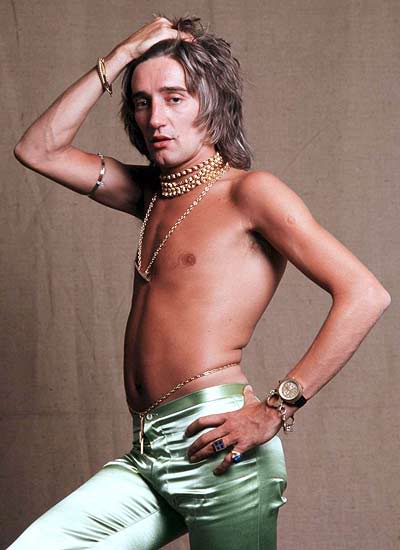
The long journey up north past my native North East over Hadrian’s Wall and to Glasgow where the wonderful Electric Company Label is beckoning me on the next stop of my old man adventures. Unknown to myself, well until I wrote this blog, I have a deep appreciation of the Scottish rock scene beyond the parody that is Rod Stewart. I will blame Rod for my ignorance given he inflicted his phoney Scottish jiggery pokery on me from a young age, caused serious trauma and inflicted Scottish blindness. At a time when any self respecting youngster was exploring The Clash, Pistols, Damned, Ramones and Buzzcocks, Rod in 1977 released his Hot Legs single from the equally bombastic album Footloose and Fancy Free. Unlike now there was no fast forward on live TV, so we duly had to sit through Rod swinging his thing before 3 minutes of punk was allotted its given time on Top of the Pops. My trauma was recently reinvigorated when I discovered Bon Jovi apparently perform Hot Legs occasionally as part of their live set, but a quick google search for Rod Stewart 1970s and then Jon Bon Jovi 1980s and it all makes perfect sense.
Like Sun
Anyway enough of this nonsense. A quick dig through my music collection whilst preparing this blog reveals Jesus and Mary Chain, Primal Scream, Teenage Fan Club, The Vaselines, The Rezillos, Belle and Sebastian, but to name a few all lurking there and all originate from Scottish shores. I hold my hand up in shame and accept my ignorance, which I take responsibility to tackle. As with any vibrant music scene an ecosystem is required, which is is independent, experimenting with the past and probing the future to produce a glorious wall of sound. This cultural ecosystems by its very nature is often known only to the locals until a buzz emerges, but the rise of the internet has created opportunities for the virtual traveler to be exposed to these gems. This is particularly rewarding when, if like me, you have a leaning towards lo-fi fussy guitar rock and sublime songwriting with twisted lyrics that often fail to penetrate the mainstream pop world. Yet it is these humble cultural ecosystems, which create the fertile ground for mighty musical oaks to grow and the catalogue of Glasgow’s Electric Company label sits there like a shiny emerald.
Launched in April 2013, Electric Company release and distribute music by some of the most exciting and forward-thinking artists, on a wide range of formats, including vinyl, cd, cassette and digital download. Boasting a passion for DIY ethics and armed with their own studio enables the label to support artists to be heard without the pull of corporate strings. This in turn creates a unique artistic hub where everything from recording, artwork and merchandise to live booking can be done in house and purely for the love of music. As with any small business running an independent music enterprise takes nerves, commitment and to a certain degree of passion bordering on obsession. So it is always an immense pleasure to stumble across a label like Electric Company. On my initial dip into the label’s catalogue I purchased 3 offerings.
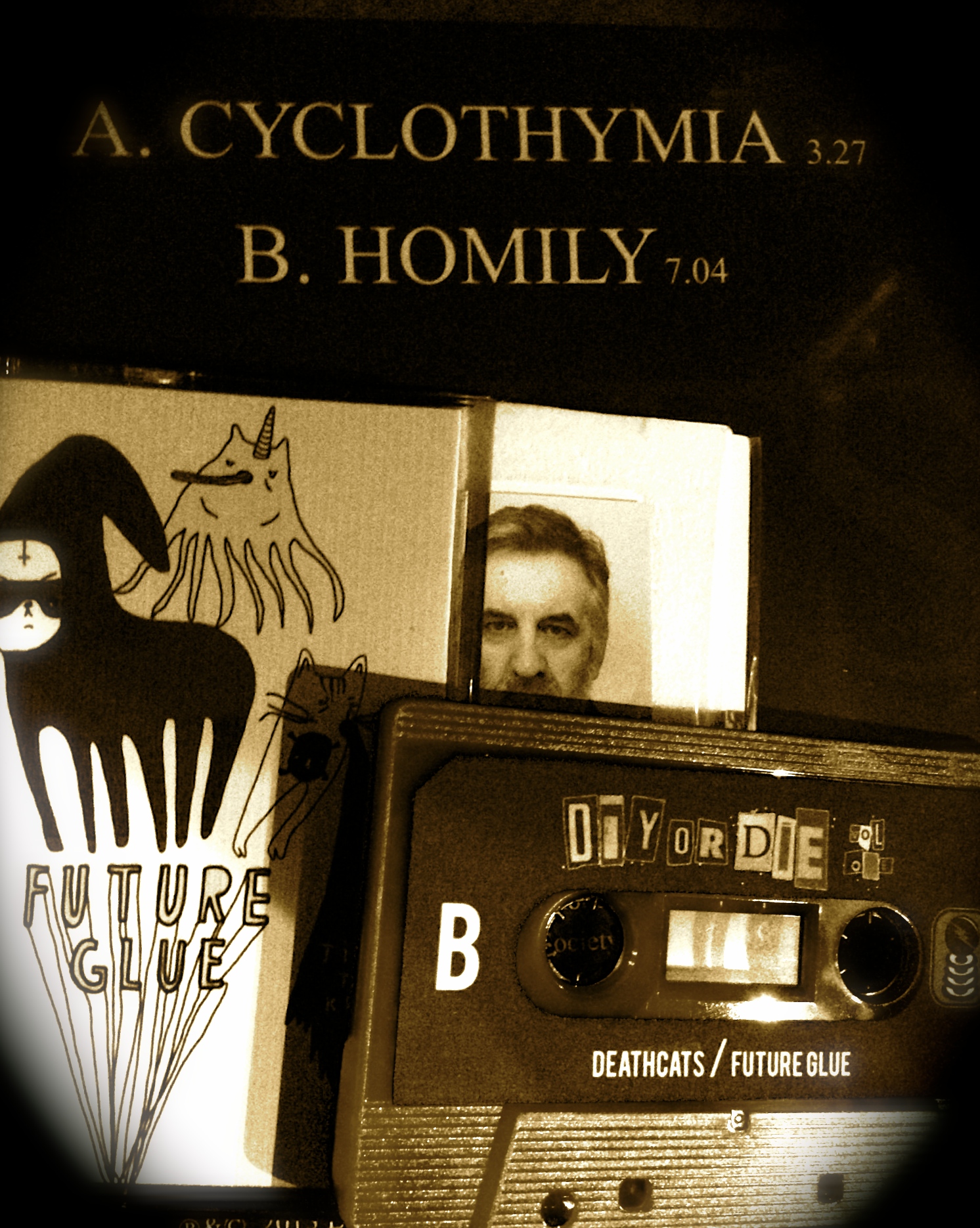
The New Fabian Society: Cyclothymia/Homily 7″ vinyl and digital download £5 (digital download £2)
Released on a limited run of 250 copies Cyclothymia is a pulsating 3 minutes 27 seconds of glorious guitar infused post punk delivered at Ramones break neck speed whilst Homily is reminiscent of Joy Division (before the hype) at their desolate best. The band follow up release Barbarossa which is also available on Bancamp (name your price offer) demonstrates a band growing in skill attitude and craft Provided with the right opportunities and presented with the necessary good luck all artists require this band have all the credentials to develop into something rather special.
The Dirty Lies: Release EP cassette and digital download £5
The Release EP is a collection of 6 brilliantly twisted pop songs. Athough I feel it only right to give you a little warning before you take a listen. Beneath the pleasant beats and harmonies are some rather spine chilling lyrics, which make one feel the songwriter was abandoned on the steps of a church at birth and left to be reared by a couple of zealots. The sublime opening lyrics to Shallow Grave, “I hope you fail in love, I hope you break your heart, I will be your enemy, I’ll be your shallow grave” are just about the most soberingly and brilliant opening lyrics for a track I’ve heard for quite some time. Each track on the cassette comes in at about 3 minutes, which means there is little too no fat in production and delivery.
Various: DIY or Die Volume 1 cassette and digital download £4
Four bands, four songs for four quid no bad going and a cassette thrown as well. The cassette opens with Twin Mirror’sNew Edition a good old fashioned punk rally. Secret Motorbikes – Is Dis 4 real a swaggering pop anthem. Deathcats – Saturday Night Golden Retriever a guitar riffed to the ceiling romp. Future Glue – Time to Kill a burning blend of punk surf meets 1950s trash rock. All together this is a mighty fine split tape, which is ready made for rolling down the car window on a warm summers evening and terrifying the neighbourhood.
My ignorance has been well and truly laid to rest and like Bristol, Manchester, Liverpool and London, Glasgow is up there with the best and I thank Electric Company for the education.
It was a dash over to the Pyramid Stage to see a few numbers by the Rolling Stones and then quickly back to the West Holts Stage to photograph the legendary Public Enemy deliver a thunderous set.














 Irregular Frequencies